


































.png)











![[HOONIGAN] Ken Block's GYMKHANA NINE](https://img.youtube.com/vi/_bkX5VkZg8U/maxresdefault.jpg)
































































![[HOONIGAN] KEN BLOCK'S GYMKHANA SEVEN: WILD IN THE STREETS OF LOS ANGELES](https://cdn.motor1.com/images/mgl/2KlO4/s1/ken-block-london-tour-directors-cut.jpg)





























Best Cheap Cars for 2026 First-Time Buyers: The Only Guide You Actually Need
Buying your first car in 2026? We've picked the best cheap cars in the UK — from the Dacia Sandero to the Renault Clio — that won't destroy your wallet on insurance or running costs.
So, You've Just Passed Your Test — Now What?
There's a moment, right after you get that pink slip in your hand, where the world feels genuinely wide open. The freedom of it is intoxicating — no more waiting for the bus, no more borrowing your mate's car, no more being at the mercy of someone else's sat nav. But then, pretty quickly, reality creeps in. Because before you can enjoy any of that freedom, you've got a big decision to make, and it's one that's going to follow you around for years: what car should you actually buy?
The problem is, the internet is absolutely drowning in advice on this one. Every car magazine, comparison site, and well-meaning uncle has an opinion, and half of them contradict each other. So let's cut through all of that noise and give you something genuinely useful. This guide is specifically built for first-time buyers in 2026 who want something cheap to buy, cheap to insure, and cheap to run — without ending up in a car that makes you want to cry every time you turn the key. We've looked at what's actually on sale right now, what the insurance groups look like, and what real-world ownership feels like. Whether you're after a brand-new bargain or a solid used gem, there's something in here for you.
Over at Stance Auto Magazine, we've been talking about first cars for a while now, and the conversation always comes back to the same thing: it's not just about the sticker price. It's about the total package — and that's exactly what we're focusing on here.
Why Buying Cheap in 2026 Is Harder Than You Think
Let's be honest with each other for a second. The days of walking into a dealership and driving away with a brand-new car, insurance, a year's servicing, and road tax all wrapped up for under £10,000? Those days are gone. The cheapest new cars you can buy on UK roads right now sit comfortably in the £14,000 to £18,000 range, and that's before you've even thought about insurance or fuel. The cost of living has squeezed everything tighter, and car prices haven't been spared.
But here's the thing — and this is genuinely good news — the cars available at that price point in 2026 are miles better than what you could have got for the same money even five years ago. Safety technology has come on leaps and bounds, standard equipment levels have gone up across the board, and some genuinely clever manufacturers are working overtime to give you more car for your money. The trick is knowing where to look and what to prioritise.
For first-time buyers, the equation is slightly different to everyone else's. You're not just thinking about what you want — you're thinking about what you can actually afford to own. And for most new drivers, insurance is the single biggest cost after the car itself. That's why choosing the right car isn't just a lifestyle decision; it's a financial one. Cars are placed into one of 50 insurance groups by the Association of British Insurers, and as a new driver, you want to be as close to group one as possible. Small engines, low repair costs, good safety ratings — these are the things that keep your premium from going through the roof.
So with all of that in mind, let's get into the cars themselves.
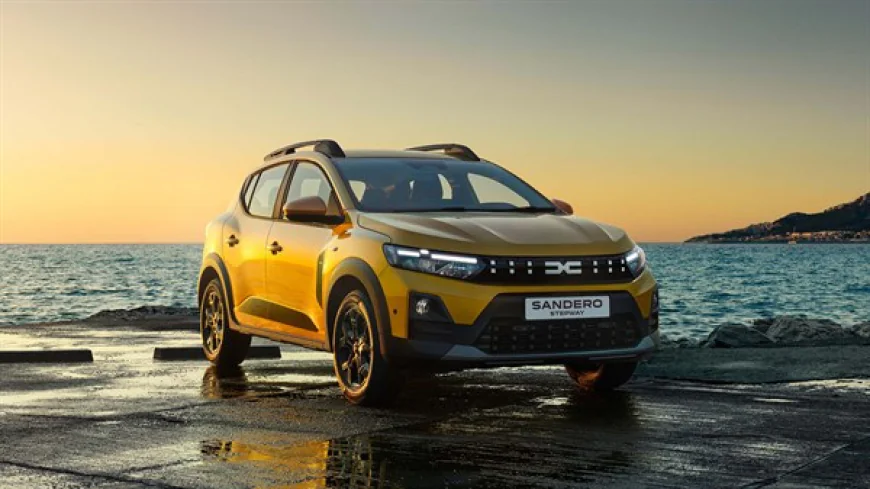
The Dacia Sandero: The King of Cheap (And It Actually Deserves the Crown)
If there's one car that keeps popping up in every single "cheapest car" conversation in the UK, it's the Dacia Sandero. And for good reason. The Sandero has long worn the crown as the cheapest petrol-powered car on sale in Britain, and in 2026, it's still sitting right at the top of that particular throne. Starting from around £15,000 for a brand-new example, it undercuts pretty much everything else on the market without feeling like you've made some terrible sacrifice to get there.
Now, the entry-level Sandero is admittedly a bit bare-bones. You're not going to find soft leather or a premium sound system in there. But don't let that put you off, because underneath that no-nonsense exterior sits a genuinely capable little car. The latest generation comes with a 90hp turbocharged 1.0-litre engine, which is a proper step up from the non-turbo units that previous models offered. It means the Sandero actually handles motorway journeys with a sense of purpose now, rather than feeling like it's being physically dragged up every incline. The 318-litre boot is decent for the size, and there's a surprisingly usable amount of room inside for day-to-day life.
For the truly budget-conscious, there's also a dual-fuel version — a 101hp 1.0-litre unit that can run on either petrol or LPG. If you've got access to a gas pump near you, this can genuinely cut your fuel costs down to almost nothing. You'll see around 50mpg on petrol, and running costs on LPG are even more laughably low. Insurance sits around group 10 on the latest models, which isn't quite the absolute lowest on the market, but it's perfectly reasonable for what you're getting.
The Sandero is the kind of car that doesn't pretend to be anything it's not. It's practical, it's affordable, and it'll get you from A to B safely and reliably. For a first-time buyer on a tight budget, it's genuinely hard to beat.
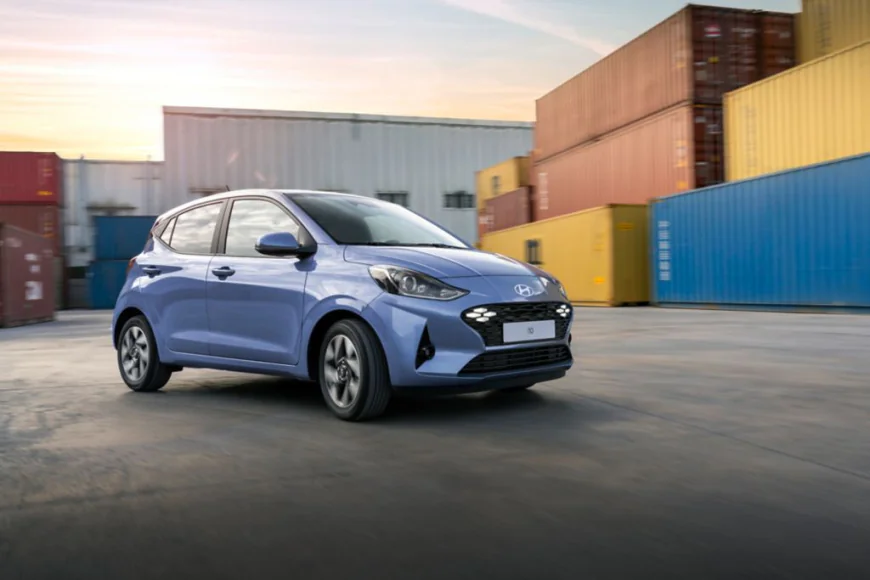
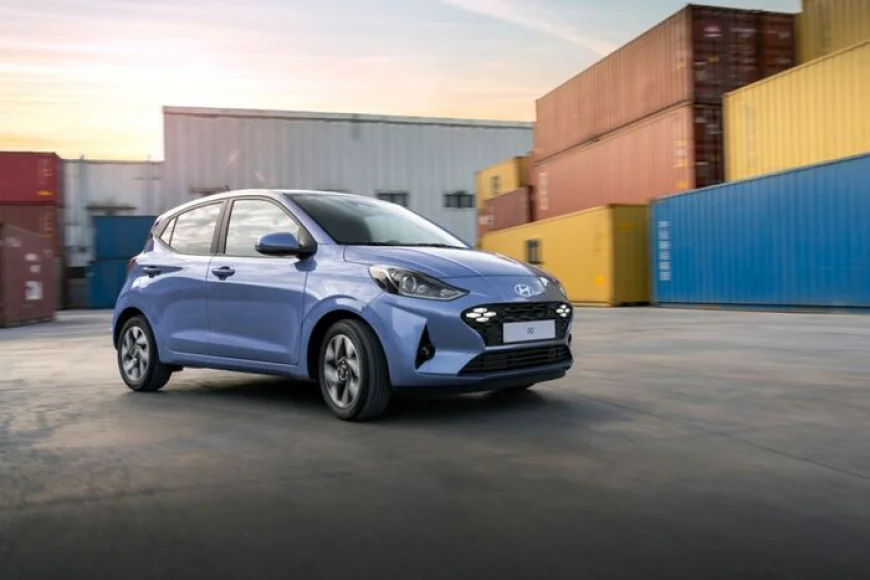
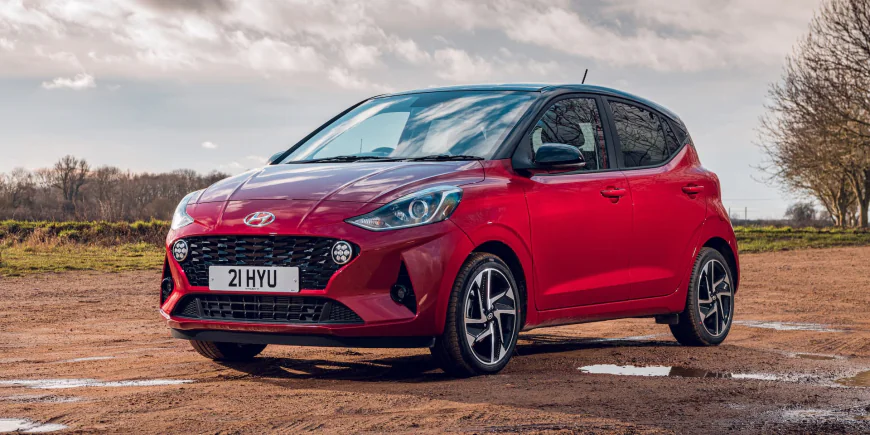
The Hyundai i10: The Cheapest Car to Insure in Britain
If keeping your insurance premium as low as humanly possible is the priority — and for most new drivers, it absolutely is — then the Hyundai i10 is the car that keeps coming up at the very top of the list. It consistently lands in insurance group 1, which is about as good as it gets. That alone makes it one of the smartest choices a first-time buyer can make in 2026.
But the i10 isn't just a cynical insurance-group hack. It's actually a really likeable little car to live with. For something so compact, the interior is surprisingly spacious — it can genuinely seat five adults in a reasonable amount of comfort, which is more than you can say for a lot of cars in this class. The 1.0-litre engine delivers 66hp, and while that doesn't sound like much on paper, in a car this light it's perfectly adequate for zipping around town and even handling the odd longer motorway trip without too much fuss.
The tech inside is decent too, with Apple CarPlay and Android Auto available depending on the trim, and the overall feel of the cabin is a step above what you might expect from something this affordable. Hyundai's five-year warranty is a nice bonus as well — it means you've got a solid safety net for the early years of ownership without having to worry too much about unexpected repair bills.
If you're someone who mostly drives in and around the city, does the occasional longer journey, and wants to keep costs as low as possible from day one, the i10 is genuinely one of the best options available. It's the kind of car that works incredibly hard behind the scenes to keep your wallet happy.
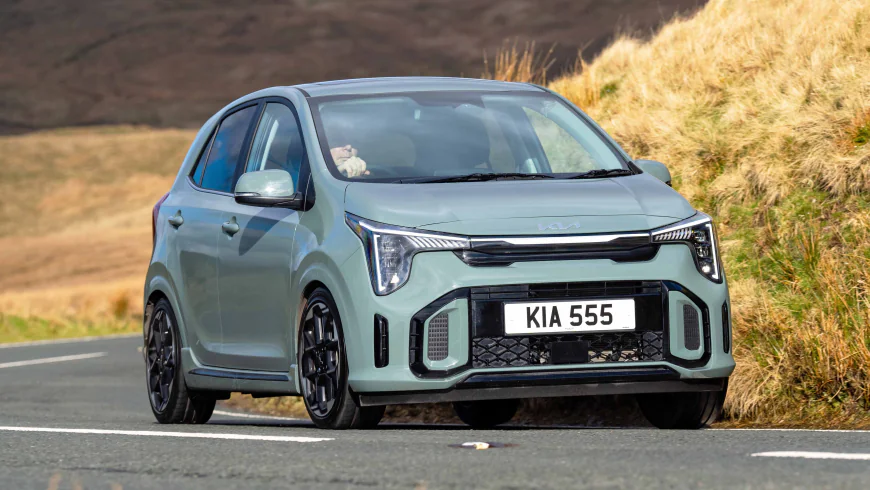
The Kia Picanto: The i10's Sportier, Sassier Cousin
Think of the Kia Picanto as the Hyundai i10's more aggressively styled sibling. They share a huge amount of the same underpinnings under the bonnet, but Kia has given the Picanto a much bolder, more eye-catching design that tends to appeal to younger drivers who want something with a bit more personality on the road. It's not a subtle car — it's got presence, and in a good way.
In terms of insurance, the Picanto sits in group 4 for the base trim, which is still incredibly competitive. Kia's legendary seven-year warranty is a massive selling point here — that's the longest standard warranty you'll find on any car at this price level in the UK, and it gives you genuine peace of mind when you're just starting out. The 1.0-litre engine is lively enough for town driving and won't leave you feeling underpowered when you venture onto dual carriageways.
The one thing to keep in mind is that the Picanto did receive a three-star Euro NCAP rating, which isn't as reassuring as some of the five-star alternatives on this list. If safety ratings are a big factor for you — and they probably should be as a new driver — it's worth weighing that up. But in terms of pure affordability and charm, the Picanto packs an awful lot into a very small, very affordable package.
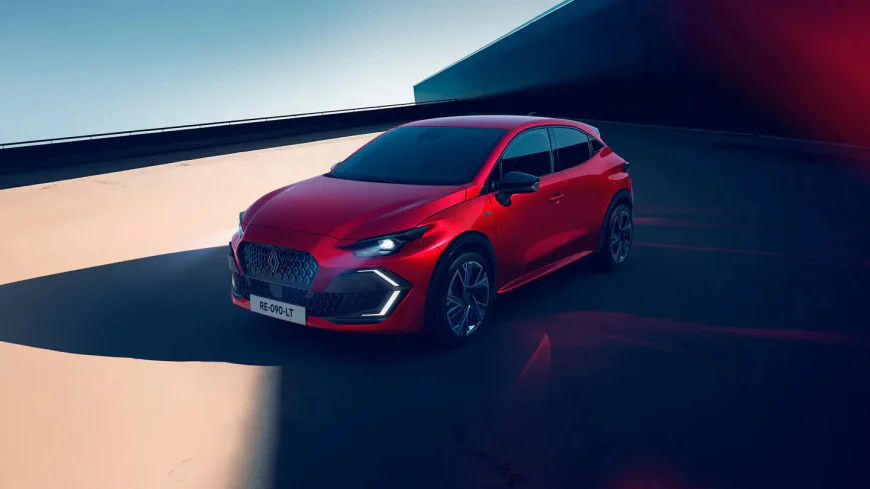
The Renault Clio: A Little Bit of French Sophistication on a Budget
Here's where things get interesting. The Renault Clio is one of those cars that genuinely punches above its weight class in almost every way. It's been a staple of the UK small car market for decades now, and the current generation is arguably the best it's ever been. The cabin feels genuinely premium — sweeping dashboard lines, neatly integrated air vents, metal-effect dials — and it's the sort of interior you could easily mistake for something costing significantly more. As we explored in our first car road test over at Stance Auto, the Clio consistently impressed with its combination of style, comfort, and real-world usability.
The 391-litre boot is excellent for a car this size, and the ride quality is genuinely smooth — you won't feel every pothole the way you might in some of the cheaper alternatives. The cheapest models come with a 90hp 1.0-litre petrol engine paired with a six-speed manual gearbox, which is perfectly fine for everyday driving. But if you can stretch your budget by an extra few thousand, the hybrid version is worth serious consideration. The electric motor makes town driving much more relaxed, the automatic gearbox takes the stress out of heavy traffic, and the fuel economy figures improve noticeably.
Insurance-wise, the Clio lands in group 10, which is the same as the Dacia Sandero — but for a car that feels and drives so much more refined, that's genuinely impressive. It holds a five-star Euro NCAP safety rating, which contributes to keeping that insurance group where it is. For a first-time buyer who wants something that feels like more than just a starter car, the Clio is a beautifully balanced choice.
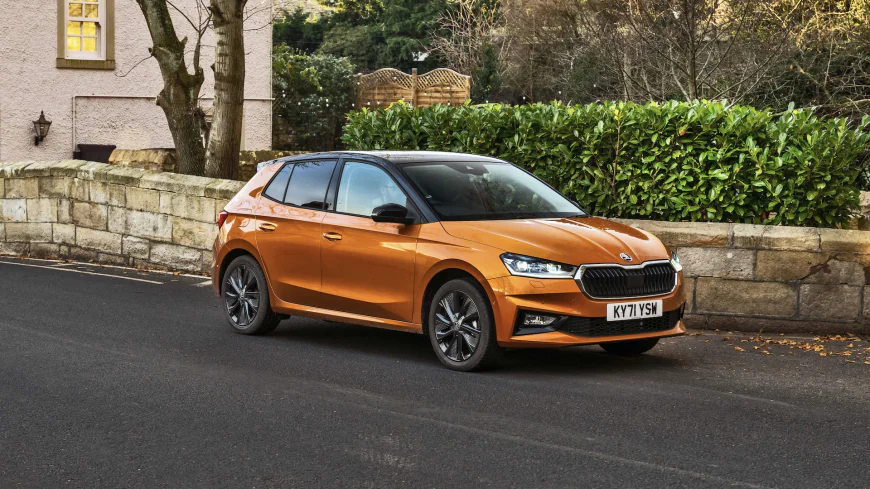
The Skoda Fabia: The Sensible All-Rounder Everyone Should Consider
If you want to think of the Skoda Fabia in simple terms, it's essentially a Volkswagen Polo for less money. That's not a knock — it's genuinely one of the best things about it. The two cars share a huge amount of their engineering underneath, which means you're getting that legendary Volkswagen reliability and build quality without having to pay for the badge on the front.
The Fabia is spacious for its size, with a surprisingly generous boot and enough headroom in the back that adults won't feel like they're being crushed. The non-turbo 1.0-litre engine is your best friend here for keeping both insurance and fuel costs in check — it drops the car into insurance group 4, which is very competitive. The interior isn't the flashiest thing in the world, but it's well-made, functional, and easy to navigate, which matters a lot more than looks when you're driving every day.
Skoda has long had a reputation for being the "sensible" choice, and there's absolutely nothing wrong with that. The Fabia is dependable, cheap to run, and easy to live with. It's the kind of car that quietly gets on with the job without ever making you feel like you're missing out on anything. If you're looking for a solid, trustworthy first car that's going to serve you well for years without drama, the Fabia deserves a very serious look.
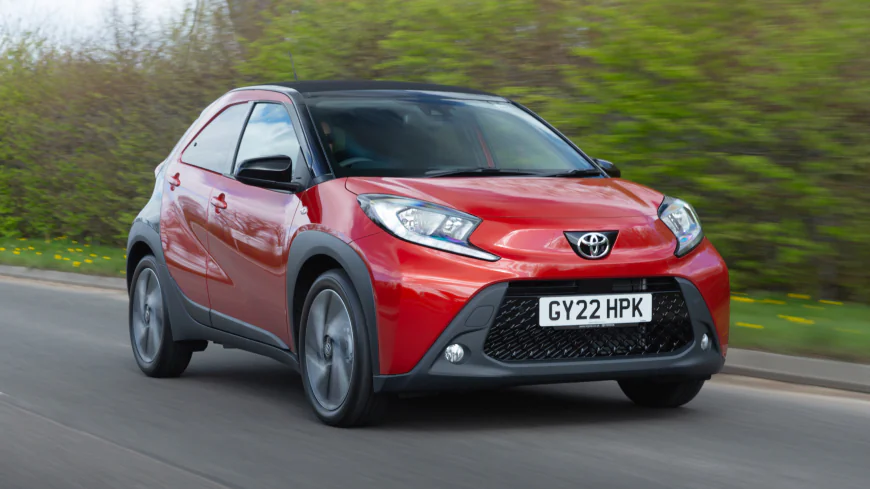
The Toyota Aygo X: Small, Funky, and Surprisingly Capable
Toyota gave the Aygo a bit of a makeover for its latest incarnation, slapping an "X" on the end of the name and giving it a bulked-up, mini-SUV sort of styling. Don't let that fool you though — underneath all that rugged posturing, it's still very much a city car at heart, with city car running costs to match. It sits in insurance group 5 for the entry-level Pure trim, which is remarkably low for a car that comes with features like adaptive cruise control and a reversing camera as standard.
The Aygo X is genuinely fun to drive around town. It's nippy, easy to park, and has enough personality to make your daily commute feel a bit less like a chore. The 1.0-litre three-cylinder engine is modest in outright power, but in a car this light, it never feels underpowered where it matters most — in and around the city. Toyota's legendary reliability is another huge plus here. These cars just don't break down, and when something does eventually need fixing, parts and labour are usually very reasonable.
One thing to be aware of: a new generation of the Aygo is on its way, which means the current model might become slightly harder to find brand new. But on the used market, there are loads of well-maintained examples out there, and they hold up brilliantly over time.
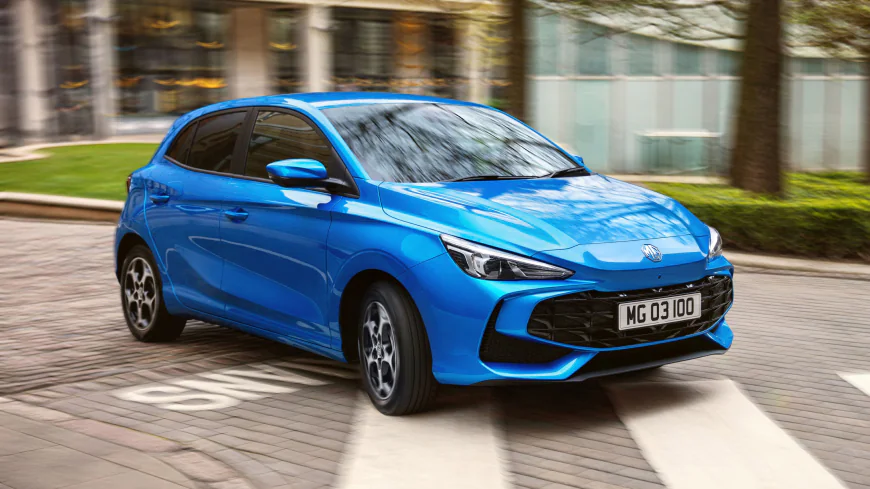
The MG3: A Wildcard With a Surprisingly Good Hybrid Option
The MG3 is one of those cars that divides opinion a bit, but it's absolutely worth considering if you're open to something a little different. It's got a distinctive, pointy-nosed design that's genuinely unlike anything else at this price point, and the interior — while not exactly luxurious — comes with a 10.3-inch infotainment screen and digital instruments as standard, which is more tech than you'd expect for the money.
For first-time drivers, the entry-level 1.5-litre petrol engine with a manual gearbox is the sensible starting point. It keeps insurance groups and running costs in check, and it's perfectly adequate for the kind of driving most new drivers do. However, if your budget allows, the MG3 Hybrid+ is a genuinely tempting proposition. It comes with an automatic gearbox as standard (great for new drivers still building confidence), and the hybrid system keeps fuel consumption impressively low. The trade-off is that the hybrid pushes both the price and the insurance group up, so it's one to think carefully about before committing.
The 293-litre boot is on the smaller side compared to rivals, but for a car that's primarily designed to be a daily driver in and around the city, it's perfectly workable. MG also offers a generous warranty, which is a nice addition to an already competitive package.
Should You Buy New or Used? The Honest Answer
This is the question that every first-time buyer asks, and the honest answer is: it depends on your budget, but used is almost always the smarter financial move. A brand-new car loses a huge chunk of its value the moment it leaves the forecourt — sometimes as much as 30% in the first year alone. If you buy a two or three-year-old example of any of the cars mentioned in this guide, you'll save thousands, and in most cases the car will have barely changed at all.
The used market in the UK is absolutely fantastic right now for first-time buyers. Cars like the Ford Fiesta, Vauxhall Corsa, and Volkswagen Polo are everywhere — and because they were manufactured in such massive numbers, parts are cheap, mechanics know them inside out, and you can find well-maintained examples at almost any price point. As we discussed in our guide to the most reliable cheap cars for everyday driving, reliability is everything when you're just starting out, and these cars deliver on that front time and time again.
That said, there are legitimate reasons to go new. A brand-new car comes with a manufacturer's warranty, no hidden history to worry about, and the peace of mind that nobody else has thrashed it before you. Some of the deals available right now — particularly on cars like the Dacia Sandero and the Dacia Spring — are genuinely eye-catching, and with finance options becoming more accessible, going new isn't quite the stretch it used to be.
The Electric Option: Is It Worth It for a First Car in 2026?
You might be wondering whether your first car should be electric. It's a fair question — EVs are getting cheaper, charging infrastructure is improving, and the running costs can be dramatically lower than petrol. But for most first-time buyers in 2026, a fully electric car is still a bit of a compromise.
The cheapest electric option on the market right now is the Dacia Spring, priced from around £14,995 — making it the most affordable EV you can buy outright in the UK. It's got a claimed range of around 137 miles, which sounds fine until you factor in real-world conditions, cold weather, and the fact that not every journey ends near a charger. It's also got a one-star Euro NCAP safety rating and performance figures that are, frankly, not impressive. For pure city driving on short commutes, it could work — but as an all-rounder for a first car, it's a stretch.
The better electric options — cars like the Renault 5 and the Fiat Grande Panda E — are genuinely lovely to drive and look stunning, but they push the price up into territory that might be a bit ambitious for a first-time buyer purely chasing affordability. They're worth keeping an eye on as prices come down, though.
If you're genuinely interested in the hybrid route as a middle ground, we've put together a dedicated piece on the best hybrid cars for first-time buyers over on Stance Auto that's well worth a read. Hybrids give you the fuel savings without the range anxiety, and some of the options available right now are genuinely brilliant for new drivers.
How to Keep Your Insurance Down: The Tricks That Actually Work
Choosing the right car is only half the battle. Once you've picked your wheels, there are a handful of things you can do to keep your new driver insurance as manageable as possible. First and foremost, consider a black box (telematics) policy. These are policies where your insurer installs a small device in your car that monitors how you drive — your speed, braking, and time of day. Drive sensibly, and your premium can drop significantly over time. For new drivers especially, these policies can be a game-changer.
Adding a more experienced driver as a named driver on your policy can also bring costs down, as long as they genuinely do use the car regularly. If they don't, and you claim otherwise, that's called fronting — and it's considered insurance fraud, so don't even think about it. Parking your car in a garage or driveway rather than on the street can also nudge your premium down a notch, and investing in a few extra security features — a steering wheel lock, a dashcam, or even a GPS tracker — can make insurers view your car as a lower risk.
Finally, don't just go with the first quote you find. Compare at least three or four different insurers, and make sure you're answering every question accurately. Getting caught out on a technicality when you need to make a claim is the absolute last thing you want.
So, Which One Should You Actually Buy?
If you want the cheapest possible option and don't mind keeping things no-frills, the Dacia Sandero is hard to beat. It's the most affordable new car on the market, it's practical, and it's surprisingly capable for the money. If insurance cost is your absolute number one priority, go with the Hyundai i10 — it consistently sits in the lowest insurance groups and is genuinely nice to live with. For something with a bit more style and refinement without a massive jump in price, the Renault Clio is an exceptional choice. And if you want reliability and long-term value above all else, the Skoda Fabia and Toyota Aygo X are both brilliant, dependable options that'll serve you well for years.
The truth is, any of the cars in this guide would make a fantastic first car. The best one for you is ultimately the one that fits your lifestyle, your budget, and your driving habits — and ideally, the one that makes you genuinely excited to get behind the wheel every morning. Take your time, test drive a few of them, and don't let anyone rush you into a decision. This is your first car, and it's supposed to be a good experience.
 Like
0
Like
0
 Dislike
0
Dislike
0
 Love
0
Love
0
 Funny
0
Funny
0
 Angry
0
Angry
0
 Sad
0
Sad
0
 Wow
0
Wow
0