































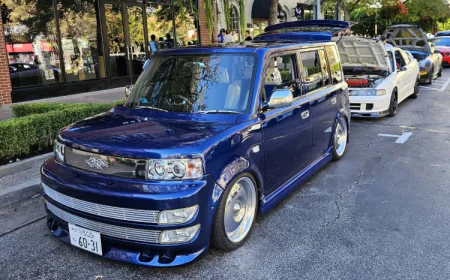
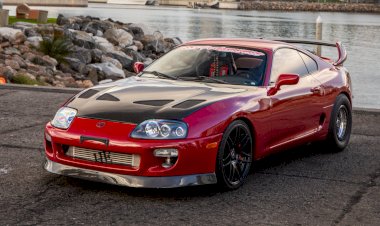
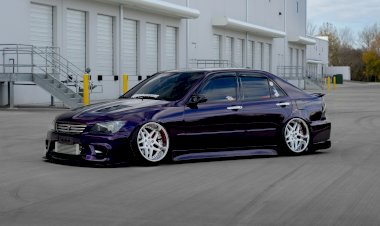
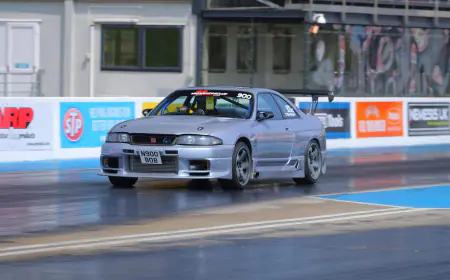















.png)








![[HOONIGAN] Ken Block's GYMKHANA NINE](https://img.youtube.com/vi/_bkX5VkZg8U/maxresdefault.jpg)






















































![[HOONIGAN] KEN BLOCK'S GYMKHANA SEVEN: WILD IN THE STREETS OF LOS ANGELES](https://cdn.motor1.com/images/mgl/2KlO4/s1/ken-block-london-tour-directors-cut.jpg)

































How to Start Drifting: Complete Beginner Guide 2026
Learn to drift from scratch. Car setup, techniques, practice locations, events, costs, and progressing your skills.
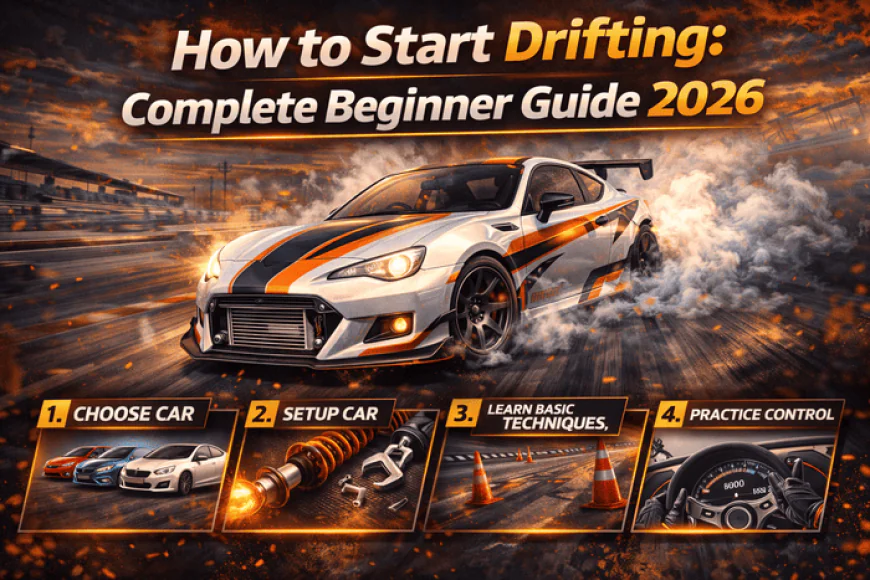
Starting Your Drifting Journey
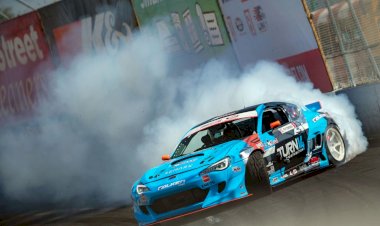
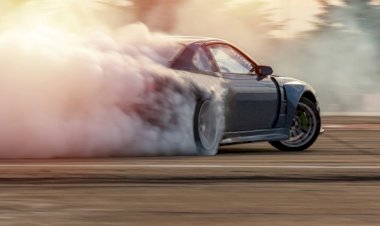
Drifting looks effortless in videos. Professional drivers make sideways four-wheel slides appear as natural as straight-line driving. But when you first attempt to drift, the reality hits: your car either spins out completely or refuses to break traction. The steering inputs feel all wrong. The throttle control is nothing like normal driving. And you're suddenly very aware that you're piloting 1,200kg of metal in directions it wasn't designed to go.
Learning to drift is challenging, occasionally terrifying, frequently humbling, and absolutely addictive once you start getting it right. The good news? Anyone can learn. You don't need a expensive car, natural talent, or years of racing experience. You need the right car, proper instruction, dedicated practice, and realistic expectations about the learning curve.
This complete beginner's guide walks through everything: choosing your first drift car, understanding the physics, learning techniques progressively, finding practice locations, attending events, and progressing from novice to competent. Whether you're inspired by Formula Drift, Initial D, or just love sideways driving, this is how you actually get started.
For detailed car comparisons suited to drifting, see our AE86 vs S13 drift car guide.
What You'll Learn:
- Choosing your first drift car
- Essential modifications
- Fundamental techniques
- Where to practice legally
- Progression path from beginner to intermediate
- Realistic costs and timeline
Choosing Your First Drift Car
Essential Requirements
Must have:
- Rear-wheel drive (non-negotiable)
- Manual transmission
- Working handbrake
- Reliable mechanicals
- Cheap enough you won't cry if damaged
Nice to have:
- Limited-slip differential (LSD)
- Reasonable power (150+ bhp helps)
- Spare parts availability
- Light weight
Best Beginner Drift Cars (£3,000-8,000)
BMW E36 (£2,000-6,000):
- Power: 170-190 bhp (316i/318i)
- Weight: 1,300kg
- Pros: Cheap, plentiful, balanced, durable
- Cons: Rust, some parts expensive
- Verdict: Best beginner choice
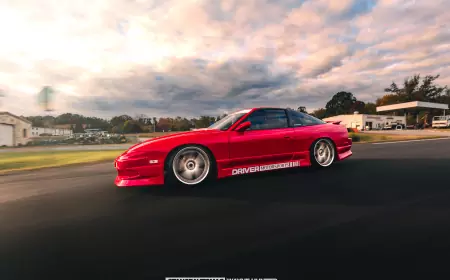
Nissan S13 200SX/240SX (£4,000-8,000):
- Power: 165-205 bhp
- Weight: 1,180kg
- Pros: Drift pedigree, light, parts available
- Cons: Getting expensive, rust
- Verdict: Excellent if budget allows
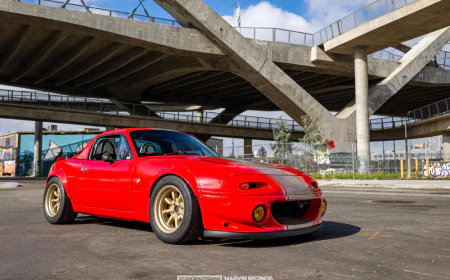
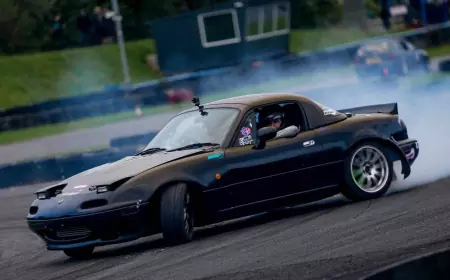
Mazda MX-5 (£2,000-5,000):
- Power: 115-146 bhp
- Weight: 970-1,100kg
- Pros: Cheap, reliable, balanced
- Cons: Low power (but still driftable)
- Verdict: Great for learning basics
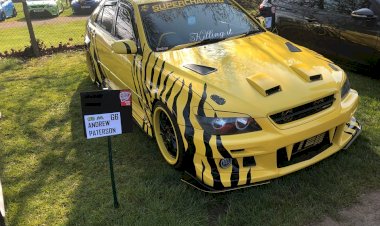
Toyota Altezza/IS200 (£1,500-4,000):
- Power: 155 bhp
- Weight: 1,380kg
- Pros: Very cheap, reliable
- Cons: Heavy, underpowered
- Verdict: Budget option
For broader car selection guidance, see our first cars for modifications guide.
Essential Modifications
Mandatory Before Drifting
Limited-Slip Differential (if not fitted):
- Cost: £400-1,200
- Why: Without LSD, only one wheel spins (pathetic)
- Options: Welded diff (£0-100, track only), mechanical LSD (£600-1,200), viscous LSD (£400-800)
Upgraded Clutch:
- Cost: £300-700
- Why: Stock clutches slip under aggressive use
- Options: Exedy, ACT, Competition Clutch
Hydraulic Handbrake:
- Cost: £150-400
- Why: Cable handbrakes don't hold under load
- Essential for: Initiating drifts at speed
Roll Cage (recommended):
- Cost: £600-2,000
- Why: Safety if you spin into barriers
- Required: Most competitive events
Helpful But Not Essential
Coilovers: £400-1,500 (better angle, control) Bucket seat + harness: £400-1,000 (security, confidence) Angle kit: £300-600 (more steering angle) Drift knuckles: £200-400 (clearance for angle)
Total basic prep: £1,000-3,000
Understanding Drift Physics
Weight Transfer
Drifting is controlled weight transfer. When you turn the wheel, weight shifts to the front-outside tire. The rear inside tire becomes light and loses grip — that's when it breaks traction and slides.
Key principle: You're deliberately unbalancing the car, then controlling the imbalance.
Traction Circle
Every tire has a traction budget. Use it for turning, braking, or accelerating — but not all three at once. Drifting uses traction for turning + accelerating simultaneously, which is why the rear slides.
Counter-Steering
When rear steps out right, you steer right (opposite to normal driving). This keeps car traveling in intended direction while rear is sliding. The faster the slide, the more counter-steering needed.
Fundamental Techniques (Learn in This Order)
Level 1: Donuts
Why first: Teaches throttle control, counter-steering, and what a controlled slide feels like.
How:
- Find empty space (car park, field)
- Turn wheel full lock
- Dump clutch in 1st gear
- Modulate throttle to sustain rotation
- Counter-steer as car spins
Practice: 20-30 minutes until consistent
Level 2: Handbrake Initiation (Low Speed)
Why next: Safest drift initiation method
How:
- Approach corner at 20-30 mph
- Turn in slightly
- Yank handbrake (hold 1-2 seconds)
- Rear breaks traction and slides
- Counter-steer
- Apply throttle to sustain slide
- Release handbrake
- Straighten as you exit
Practice: 50+ repetitions until consistent
Level 3: Clutch Kick Initiation
Why: More advanced, works at any speed
How:
- Enter corner in 2nd gear
- Turn in
- Tap clutch quickly (on-off in 0.5 sec)
- This breaks rear traction
- Counter-steer
- Throttle to sustain
Practice: 100+ reps to develop muscle memory
Level 4: Power Over
Why: Highest level initiation (requires power)
How:
- Enter corner at speed
- Turn in
- Bury throttle (overpower rear tires)
- Rear slides from power alone
- Counter-steer
- Modulate throttle through corner
Requires: 200+ bhp typically, or very low-grip surface
Level 5: Transitions (Figure-8)
Why: Hardest skill, links multiple drifts
How:
- Initiate drift left
- As car straightens, immediately flick right
- Transfer weight to initiate right drift
- Link continuously
Practice: Months to become smooth
Where to Practice (Legally)
Drift Days/Track Days
Best option: Organized events at circuits with safety measures, instruction, and insurance.
Costs:
- Beginner drift days: £80-150
- Standard drift days: £100-200
- Track days (with drift sessions): £150-300
Find events:
- Drift Limits
- Driftland
- Santa Pod Raceway (drift sessions)
- Local circuits
Private Land (With Permission)
Options:
- Farmer's fields (ask permission)
- Industrial estates (weekends, with permission)
- Closed car parks (business owner permission)
Legal: Yes, if you have landowner permission Insurance: Personal risk
Illegal (Don't Do This)
Public roads: Illegal, dangerous, expensive if caught Penalties: Points, ban, car seized, prosecution Verdict: Never worth it
Costs to Start Drifting
Minimum Budget (£5,000-8,000)
- Drift car (E36 316i): £2,500
- Welded diff: £100
- Hydraulic handbrake: £200
- Basic safety (bucket seat): £300
- Tires (2-3 sets): £300-500
- Drift days (5): £500-750
- Fuel/consumables: £400-600
- Total: £4,300-5,450
- Buffer for repairs: £1,000-2,000
Comfortable Budget (£10,000-15,000)
- Better drift car (S13): £6,000
- LSD: £800
- Coilovers: £1,000
- Hydraulic handbrake: £300
- Cage + seat + harness: £1,500
- Tires (4-5 sets): £600-800
- Drift days (10): £1,200-1,800
- Consumables: £800-1,200
- Total: £12,200-14,400
Serious Budget (£20,000+)
- Purpose-built car: £12,000-15,000
- All safety equipment: £3,000-5,000
- Competition license: £200-500
- Entry to competitions: £2,000-4,000/season
- Total: £17,000-25,000+
Progression Timeline
Month 1-3: Foundations
- Buy and prep car
- Attend 3-5 beginner drift days
- Master donuts and handbrake entries
- Get comfortable with counter-steering
Month 4-6: Consistency
- Attend 5-8 drift days
- Master clutch kick entries
- Link 2-3 corners consistently
- Develop throttle control
Month 6-12: Refinement
Attend 10-15 events
Master transitions
Increase speed progressively
Consider competing (grassroots level)
Year 2+: Advancement
- Regular competition
- Tandem practice
- Higher-power cars
- More technical circuits
Realistic timeline to competence: 12-18 months of dedicated practice.
Common Beginner Mistakes
1. Too Much Speed Too Soon
Result: Spinning out, hitting barriers, damaged car, damaged confidence. Fix: Slow is smooth, smooth is fast. Master technique at low speed first.
2. Looking at Hood/Barrier
Result: You go where you look. Look at barrier = hit barrier. Fix: Look where you want to go (corner exit) always.
3. Stabbing Throttle
Result: Jerky transitions, inconsistent slides, spins. Fix: Smooth progressive throttle inputs. Think "rolling on" not "stomping."
4. Death Grip on Wheel
Result: Can't counter-steer quickly enough, arms tire quickly. Fix: Light grip, let wheel slide through hands when needed.
5. Wrong Gear Choice
Result: Either not enough power to sustain slide, or too much (spin). Fix: Usually 2nd gear for most corners. 3rd for fast sweepers.
6. Forgetting Safety
Result: Injury in crashes. Fix: Helmet mandatory. Harness strongly recommended. Cage if competing.
Drifting Culture and Etiquette
Drift Day Rules
- Respect flags: Red = stop immediately
- Don't tandem without permission: Until skilled
- Clean up after yourself: Tire debris, fluids
- Help others: Drifting community is supportive
Competition Basics
Entry level:
- Grassroots events (local)
- British Drift Championship Clubman
- Regional series
Requirements:
- Competition license (£200-500)
- Caged car
- Fire extinguisher
- Safety equipment

Frequently Asked Questions
Can I learn to drift in a FWD/AWD car?
Not really. FWD can "drift" using the handbrake but it's not proper drifting. AWD drifts differently (requires power and skill). Start with RWD.
How long to learn the basics?
3-6 months of regular practice (8-12 drift days) to be consistent at the basic level.
Is drifting dangerous?
Yes, but a manageable risk with proper safety equipment, a controlled environment, and progressive learning.
Do I need lots of power?
No. 150-200 bhp is plenty for learning. More power helps later but isn't essential initially.
How many tyres will I destroy?
Learning phase: 4-6 sets (rear) in the first year. That's 8-12 tyres total.
Can I drift my daily driver?
Not recommended. Drifting is hard on cars. Buy a dedicated drift car.
Best way to learn?
Professional instruction at organised drift days. YouTube videos help, but nothing replaces real coaching.
Related Articles
 Like
0
Like
0
 Dislike
0
Dislike
0
 Love
0
Love
0
 Funny
0
Funny
0
 Angry
0
Angry
0
 Sad
0
Sad
0
 Wow
0
Wow
0