





























.png)







![[HOONIGAN] Ken Block's GYMKHANA NINE](https://img.youtube.com/vi/_bkX5VkZg8U/maxresdefault.jpg)


















































![[HOONIGAN] KEN BLOCK'S GYMKHANA SEVEN: WILD IN THE STREETS OF LOS ANGELES](https://cdn.motor1.com/images/mgl/2KlO4/s1/ken-block-london-tour-directors-cut.jpg)































RX-7 FC vs FD: Complete Rotary Buyer's Guide 2026
Compare Mazda RX-7 FC and FD generations. Rotary reliability, modification potential, prices, and ownership costs.
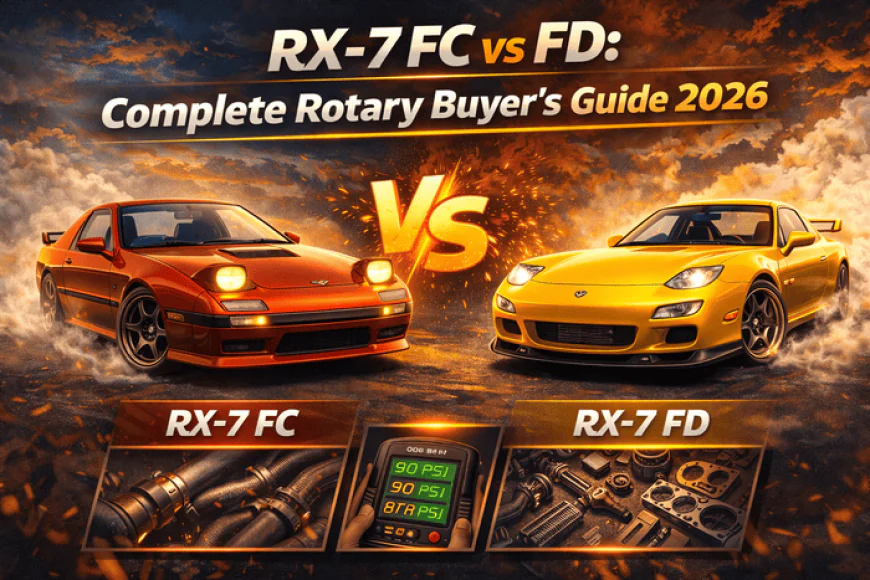
The Rotary Dilemma: FC or FD?
The Mazda RX-7 is one of the most iconic Japanese sports cars ever built, and the rotary engine that powers it is unlike anything else in the automotive world. But if you're looking to buy an RX-7 in 2026, you face an immediate choice: the FC (1986-1991) or the FD (1992-2002)?
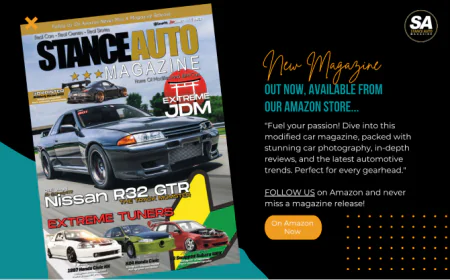
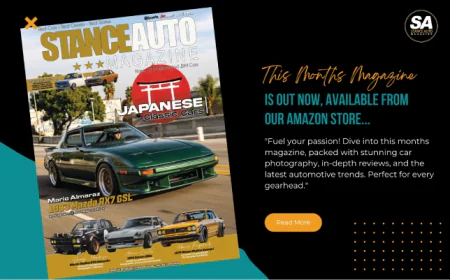
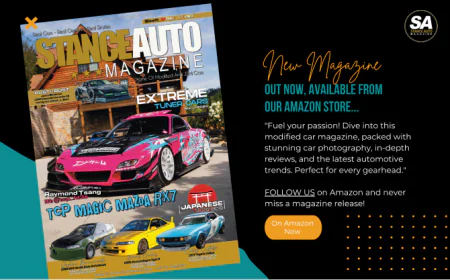
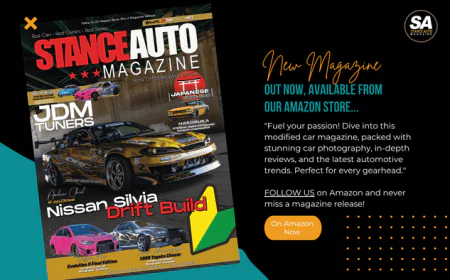
The Mazda RX7 did what no other car in the JDM Legends Series did — it built its whole legend on a rotary engine almost nobody else in the industry was willing to commit to. Our new book, Mazda RX7: The Complete History, Legend & Tuning Potential, is out now on Amazon in Kindle and print, and it's built around exactly why that gamble paid off.
The FC is the more affordable option — a turbocharged rotary sports car that can be had for £8,000-15,000 in decent condition. It's simpler, more mechanical, and has a certain 1980s charm that appeals to enthusiasts who remember when pop-up headlights were peak automotive design. The FD, on the other hand, is one of the most beautiful sports cars ever made. Timeless styling, sophisticated suspension, and sequential twin turbo technology — but prices reflect this, with clean examples now commanding £25,000-50,000+.
Both are rotary-powered. Both require specific knowledge to maintain properly. Both are astonishingly capable when set up correctly. But they're very different cars that suit different types of owners. In this comprehensive comparison, we break down everything you need to know about FC vs FD ownership: performance, handling, modification potential, running costs, reliability (or lack thereof), and which one suits your needs and budget.
Understanding rotary ownership is essential before committing. As we covered in our Best JDM Cars Under £15k, the RX-7 FD pushes the budget limits but offers a uniquely special experience if you're prepared for rotary maintenance requirements.
What You'll Learn:
- FC vs FD performance and handling differences
- Rotary engine reliability realities
- Modification potential and costs
- Current market prices and value analysis
- Running costs comparison
- Which RX-7 suits different types of buyers
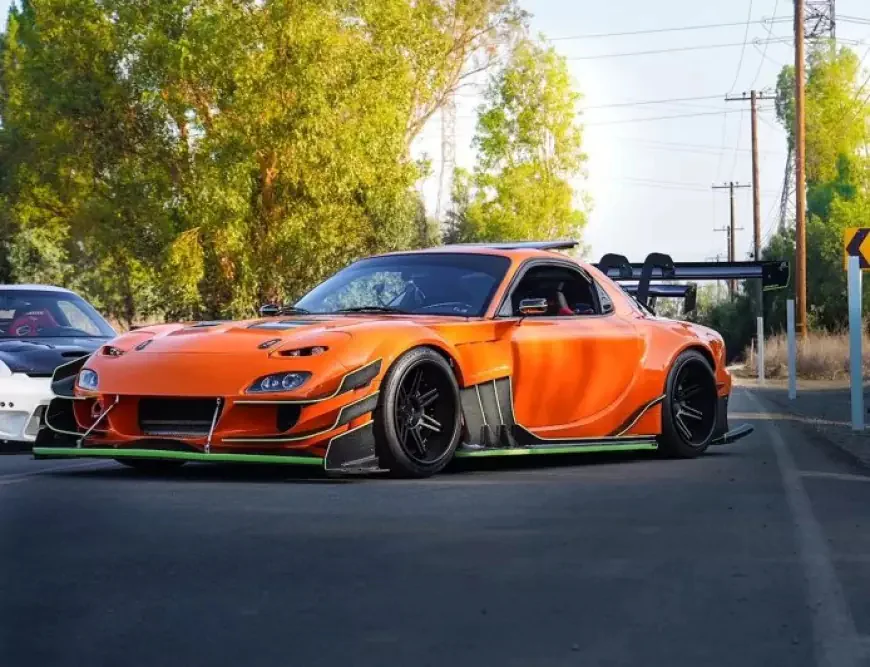
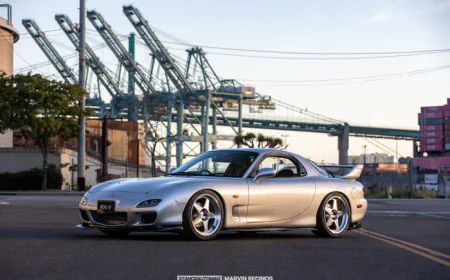
1994 TCPMagic x RocketBunny Mazda RX7 FD3S
Quick Specifications Comparison
|
Specification |
FC RX-7 (1986-1991) |
FD RX-7 (1992-2002) |
|
Engine |
13B-REW (turbo) or 13B (NA) |
13B-REW (sequential twin turbo) |
|
Power |
200bhp (turbo) / 146bhp (NA) |
255bhp (Series 6/7) to 280bhp (Series 8) |
|
Torque |
195 lb-ft / 133 lb-ft |
217-231 lb-ft |
|
Weight |
1,270kg |
1,310kg |
|
0-60 mph |
6.3 sec (turbo) |
5.0 sec |
|
Top Speed |
137 mph (turbo) |
155 mph (limited) |
|
Transmission |
5-speed manual |
5-speed manual |
|
Suspension |
MacPherson strut (F), trailing arm (R) |
Double wishbone (F), multi-link (R) |
|
Current Price |
£8,000-15,000 |
£25,000-50,000+ |
Mazda RX-7 FC (1986-1991): The Affordable Rotary
What Makes It Special
The FC (second-generation RX-7) represents peak 1980s Japanese sports car design. Pop-up headlights, wedge-shaped profile, and a turbocharged rotary that made 200bhp — genuinely impressive for 1986. It was lighter and more nimble than the contemporary Porsche 944 it competed against, and significantly cheaper.
The FC came in multiple variants:
- S4 (1986-1988): First-gen turbo, 185bhp
- S5 (1989-1991): Revised turbo, 200bhp, improved suspension
- GTX/GTUs (Japan): Higher-spec models with better equipment
- Convertible: Available but rare, compromises chassis rigidity
The turbocharged 13B-REW engine is a 1.3-liter twin-rotor unit making 200bhp from the factory. It's smooth, loves to rev, and sounds like nothing else. The naturally aspirated 13B (in base models) made 146bhp — adequate for cruising but underwhelming for performance driving.
Performance and Handling
The FC is quick enough to be entertaining but not overwhelming. 200bhp in a 1,270kg car provides brisk acceleration rather than brutal speed. The rotary engine's characteristics define the experience:
Power delivery: Linear and smooth. No torque surge, no lag (on NA), just progressive power building to redline. The turbo models have some lag below 3,000rpm but it's manageable.
Rev characteristics: The rotary loves to rev. Redline is 7,000rpm stock (safe to 8,000rpm), and the engine pulls cleanly to the limiter. The sound is unique — not the aggressive bark of a piston engine, more of a high-pitched buzz-saw wail.
Handling: Excellent for its era. The FC has near-perfect 50/50 weight distribution, MacPherson struts up front, and a well-sorted rear trailing arm setup. It's not as sophisticated as the FD's double wishbone suspension, but it's responsive, predictable, and genuinely fun on twisty roads.
Brakes: Adequate but dated. Four-wheel discs were standard, but the single-piston calipers feel wooden by modern standards. Upgraded brakes are essential for track use.
Modification Potential
The FC responds well to modifications, particularly boost increases and weight reduction.
Power upgrades (turbo):
Stage 1 (£2,000-3,500):
- Downpipe and exhaust
- Intake and boost controller
- Fuel pump and injectors
- Standalone ECU or Power FC
- Result: 250-280bhp
Stage 2 (£4,000-7,000):
- Single turbo conversion
- Larger injectors
- Upgraded fuel system
- Intercooler upgrade
- Result: 350-400bhp
Stage 3 (£8,000-15,000):
- Built 13B with stronger seals
- Large single turbo
- Full fueling system
- Water/methanol injection
- Result: 500bhp+
For understanding how turbo conversions work, see our How to Install a Front Mount Intercooler.
Weight reduction:
- Stock: 1,270kg
- With seat/interior strip: 1,150kg
- With glass/bumper work: 1,050kg
Light weight is the FC's superpower. A 280bhp FC at 1,150kg feels remarkably quick.
Common Problems
Rotary-specific issues:
- Apex seal wear (requires rebuild every 80,000-120,000 miles)
- Coolant seal failure (catastrophic if ignored)
- Oil consumption (1L per 1,000 miles is normal)
- Carbon buildup (requires Italian tune-ups)
FC-specific issues:
- Rust (everywhere — check thoroughly)
- Wiring harness degradation
- Turbo failure (stock turbos are weak)
- Cooling system failures
- Interior degradation
Current Market Pricing (2026)
UK prices:
|
Condition |
Price Range |
|
Project car |
£5,000 - £8,000 |
|
Driver quality |
£8,000 - £12,000 |
|
Clean example |
£12,000 - £18,000 |
|
Show quality/rare |
£18,000 - £25,000 |
Price trend: Slowly rising. Clean FCs are becoming collectible.
Who Should Buy the FC?
Buy if:
- Budget is limited (most affordable rotary experience)
- You want to learn about rotary engines
- 1980s aesthetics appeal to you
- You're comfortable with older car ownership
- You want a lightweight platform for track use
- Pop-up headlights are non-negotiable
Avoid if:
- You want modern refinement
- You're risk-averse about maintenance
- You can't budget for rotary rebuilds
- Rust concerns you (these rust badly)
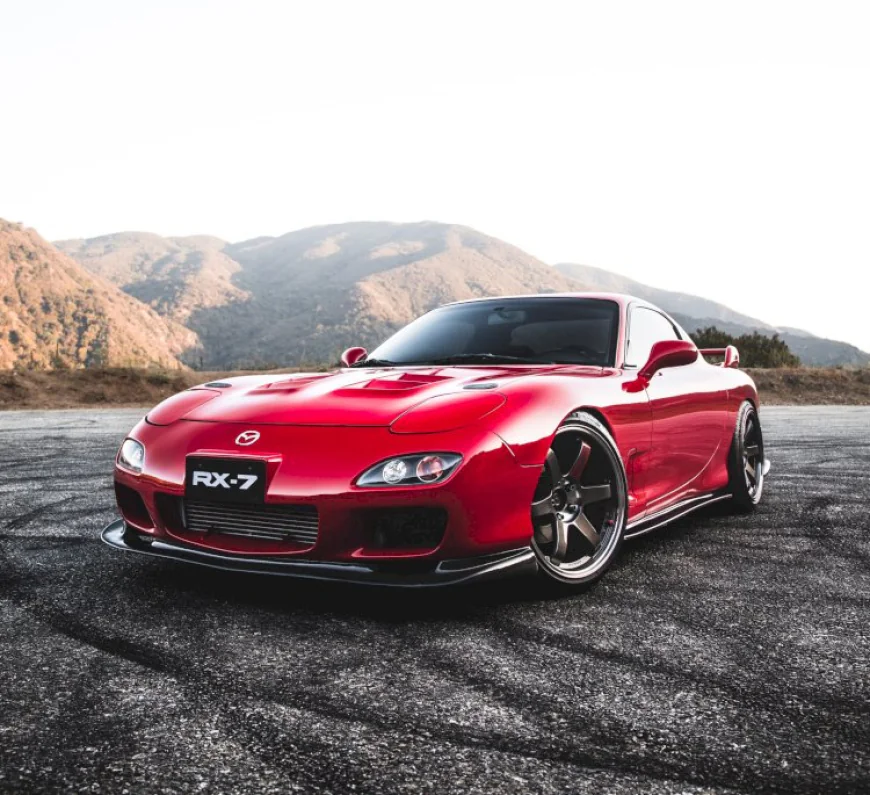
Andrew Ilbegi - 1993 Mazda RX7 R1
Mazda RX-7 FD (1992-2002): The Timeless Icon
What Makes It Special
The FD is automotive art. The styling is timeless — it looks as good today as it did in 1992. Smooth curves, perfectly proportioned, and that distinctive silhouette that's instantly recognizable. It's consistently rated as one of the most beautiful cars ever designed.
But the FD isn't just pretty. The sequential twin turbo system was cutting-edge technology for 1992 — a small primary turbo for low-end response, a larger secondary turbo kicking in at 4,500rpm for top-end power. The double wishbone front and multi-link rear suspension were sophisticated for the era and remain impressive today.
Series breakdown:
- Series 6 (1992-1995): 255bhp, original sequential twin setup
- Series 7 (1996-1998): 265bhp, refined turbos
- Series 8 (1999-2002): 280bhp, best iteration, highest values
Special editions:
- Type R/RZ: Performance-focused, lighter, better suspension
- Spirit R: Final edition, highly collectible
- Bathurst R: Australia-exclusive special
Performance and Handling
The FD is genuinely fast even by modern standards. 255-280bhp in a 1,310kg package delivers 0-60mph in 5.0 seconds and a 155mph top speed. More importantly, the power delivery is intoxicating:
Sequential twin turbo operation:
- Below 4,500rpm: Primary turbo only (responsive, minimal lag)
- 4,500rpm+: Secondary turbo engages (surge of power)
- Result: Best of both worlds — response and top-end
When the secondary turbo kicks in, there's a noticeable surge. Some love it, some find it unsettling. It's definitely characterful.
Handling: This is where the FD excels. The sophisticated suspension, near-perfect weight distribution, and low center of gravity combine to create handling that rivals Porsche 911s of the era. The car is neutral, predictable, and rewards precise inputs. It's not as raw as an FC but it's more refined and capable.
Modification Potential
The FD's 13B-REW is stronger than the FC's engine but modification costs are higher due to parts scarcity.
Power upgrades:
Stage 1 (£3,000-5,000):
- Downpipe and exhaust
- Intake
- Power FC or standalone ECU
- Boost controller
- Result: 320-350bhp
Stage 2 (£5,000-9,000):
- Single turbo conversion (common)
- Fuel system upgrade
- Intercooler upgrade
- Result: 400-450bhp
Stage 3 (£10,000-18,000):
- Built 13B (street port or bridge port)
- Large single turbo
- Full fueling system
- Result: 500-600bhp
Single turbo conversions are very popular on FDs — simplifies the system, increases power, improves reliability.
For understanding how to choose the right turbo, see our Best 2JZ Turbos — many principles apply to rotaries too.
Common Problems
Rotary-specific:
- Apex seal wear (80,000-120,000 mile rebuild interval)
- Coolant seal failure
- Oil consumption
- Carbon buildup
FD-specific:
- Sequential turbo system complexity (many delete it)
- Vacuum line issues (rats nest of lines)
- Cooling system inadequacy (upgrades essential)
- Rust (especially rear subframe)
- Interior aging (leather cracks, trim breaks)
Current Market Pricing (2026)
UK prices:
|
Condition |
Price Range |
|
Project car |
£18,000 - £25,000 |
|
Driver quality |
£25,000 - £35,000 |
|
Clean Series 8 |
£35,000 - £50,000 |
|
Type R/Spirit R |
£50,000 - £80,000+ |
|
Pristine rare spec |
£80,000 - £120,000+ |
Price trend: Strongly rising. The FD is investment-grade now.
Who Should Buy the FD?
Buy if:
- Budget allows £25-35k+ comfortably
- You want one of the most beautiful sports cars ever made
- You understand and accept rotary maintenance requirements
- You're buying as an enthusiast and/or investment
- You want sophisticated suspension and refinement
- Sequential turbo tech appeals to you
Avoid if:
- Budget is tight (purchase + maintenance is expensive)
- You're risk-averse about rotary rebuilds
- You want something to thrash without worry
- You can't afford proper cooling system upgrades
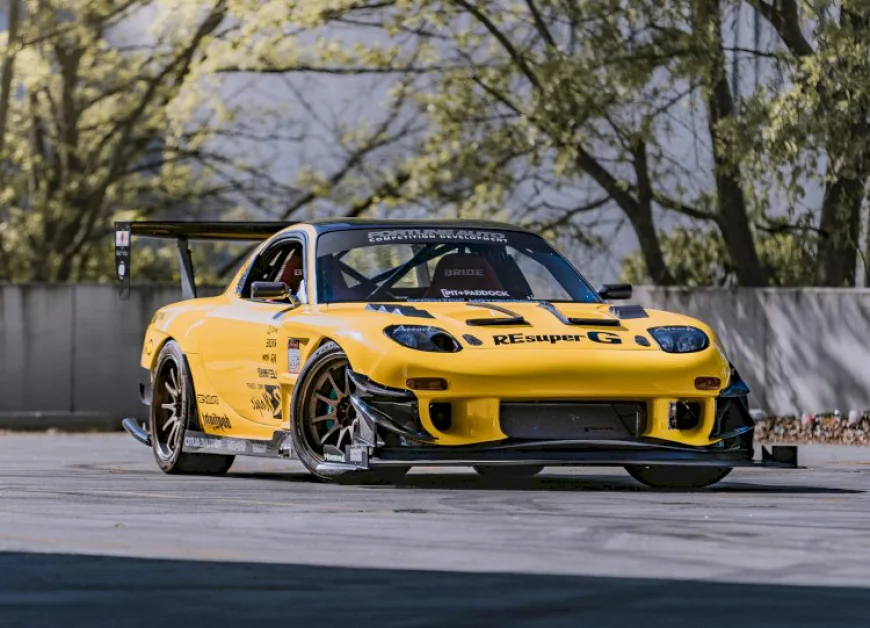
Unleash the Rotary Power: 1993 Mazda RX-7
Head-to-Head Comparison
Purchase Price
Winner: FC
£8-12k for FC vs £25-35k for FD. The price gap is enormous and continues widening.
Running Costs
Winner: FC (marginally)
Both have similar maintenance requirements, but FD parts are more expensive. Annual costs:
- FC: £2,500-4,000
- FD: £3,000-5,000
Modification Costs
Winner: FC
Parts availability and lower costs make FC modification cheaper. Similar power levels cost 20-30% more on FD.
Performance (Stock)
Winner: FD
FD is significantly faster: 5.0 sec 0-60 vs 6.3 sec, better power delivery, more sophisticated.
Handling
Winner: FD
The double wishbone suspension and multi-link rear are superior to FC's setup. FD is more capable and refined.
Styling
Winner: FD (subjective)
The FD is timelessly beautiful. The FC is cool in a retro way but objectively less stunning.
Investment Potential
Winner: FD
Clean FDs are appreciating rapidly. FCs are rising but slower. FD is the blue-chip rotary investment.
Daily Drivability
Winner: FD
More refined, better ergonomics, quieter, more comfortable. FC is rawer and more fatiguing.
Track Day Capability
Winner: FC (with modifications)
Lighter weight and cheaper consumables make FC ideal for track abuse. FD is more capable but expensive to damage.
Learning Platform
Winner: FC
Cheaper to buy and fix means FC is better for learning rotary ownership without catastrophic financial risk.
The Rotary Reality: What You Must Know
Rotary Engines Are Different
They will require rebuilds. No rotary lasts forever. Budget for a rebuild every 80,000-120,000 miles (£3,000-6,000).
They consume oil by design. 1L per 1,000 miles is normal. Check oil weekly. Running dry kills rotaries instantly.
They carbon up. Italian tune-ups (redline runs) are essential maintenance. Weekend cruising kills rotaries.
They need cooling. Rotaries run hot. Cooling system upgrades are mandatory for any performance driving. For cooling system considerations, see our 500bhp Supra Build Cost — principles apply across platforms.
They hate being gentle. Treat a rotary gently and it'll die from carbon buildup. Drive it hard and it thrives.
Compression Testing Is Essential
Before buying any rotary car: Get a compression test done. This is non-negotiable.
Healthy rotary:
- Front rotor: 110-120 psi
- Rear rotor: 110-120 psi
- Difference between faces: <10 psi
Weak rotary:
- Below 100 psi on any face
- 15 psi difference between faces
- Result: Budget for rebuild immediately
Insurance and Fuel Costs
Insurance: Both are classified as performance cars. Expect specialist insurer quotes:
- FC: £700-1,200/year (age 30+)
- FD: £1,000-1,800/year (age 30+)
For detailed insurance strategies, see our Modified Car Insurance Tips.
Fuel: Both need premium 98+ octane. Economy is poor:
- FC: 18-24 MPG
- FD: 16-22 MPG
Which Should You Choose?
For Budget-Conscious: FC
The FC is the only realistic option under £15k. You get genuine rotary experience, respectable performance, and a platform that's affordable to modify.
For Collectors: FD
If you're buying as an investment or want an appreciating asset, FD is the choice. Clean examples will continue rising in value.
For Track Days: FC
Lighter weight, cheaper consumables, and less worry about damage make the FC ideal for regular track use.
For Street Driving: FD
The FD's refinement makes it far more livable for regular street use. Better interior, quieter, more comfortable.
For Maximum Performance: FD (with mods)
The FD's stronger engine, better chassis, and more sophisticated systems make it the better platform for serious power.
For First Rotary: FC
Learn on the cheaper platform. If rotary ownership isn't for you, you haven't lost £30k+ on an FD.

Frequently Asked Questions
Are rotaries reliable?
Not by piston engine standards. They require regular maintenance, frequent rebuilds, and specific knowledge. But properly maintained and driven, they're reliable within their limitations.
Can I daily drive a rotary?
Yes, but be prepared for poor fuel economy, frequent oil top-ups, and knowing you're wearing the engine with every mile. Many enthusiasts successfully operate daily rotaries.
How long do rotaries last?
80,000-120,000 miles between rebuilds when properly maintained. Less if driven gently (carbon buildup), less if modified for big power, more with perfect maintenance and hard driving.
What does a rotary rebuild cost?
£3,000-6,000 depending on parts quality and labour. DIY can halve this. Expect to rebuild at least once during ownership.
Should I buy an FD with high mileage?
Only if recently rebuilt with documentation. An FD with 90,000 miles on the original engine needs an immediate rebuild budget.
Is rotary tuning expensive?
Yes. Parts are less common than piston engines, specialists are rarer, and mistakes are costly. Budget 20-30% more than equivalent piston engine builds.
Can rotaries be turbo-charged to high power?
Yes. 500-600bhp is achievable with proper builds. Beyond that requires extensive work and becomes unreliable for street use. For turbo conversion basics, see our Turbo Conversion Cost.
Related Articles
- Best JDM Cars Under £15k
- 500bhp Supra Build Cost
- How to Install a Front Mount Intercooler
- Best 2JZ Turbos
- Modified Car Insurance Tips
 Like
0
Like
0
 Dislike
0
Dislike
0
 Love
0
Love
0
 Funny
0
Funny
0
 Angry
0
Angry
0
 Sad
0
Sad
0
 Wow
0
Wow
0