






















































.png)









![[HOONIGAN] Ken Block's GYMKHANA NINE](https://img.youtube.com/vi/_bkX5VkZg8U/maxresdefault.jpg)































































![[HOONIGAN] KEN BLOCK'S GYMKHANA SEVEN: WILD IN THE STREETS OF LOS ANGELES](https://cdn.motor1.com/images/mgl/2KlO4/s1/ken-block-london-tour-directors-cut.jpg)

































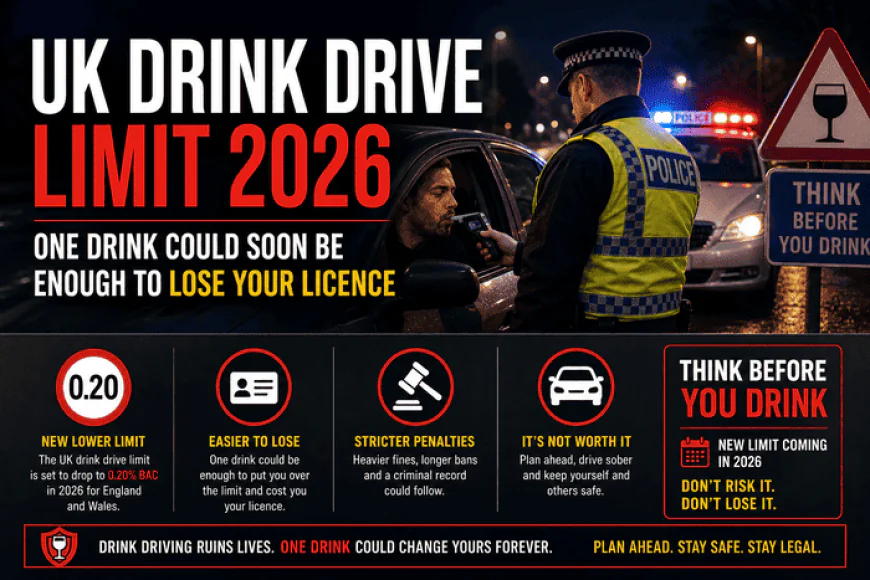
UK Drink Drive Limit 2026 — One Drink Could Soon Be Enough to Lose Your Licence
The UK drink drive limit is set to drop in 2026. Find out what the new limit means for drivers, how it compares to Scotland, and what else is changing under the new Road Safety Strategy.
UK drink drive limit 2026: One Drink Could Soon Be Enough
It has been sitting unchanged since 1967. Nearly sixty years without a single revision, leaving England and Wales with the highest drink drive limit in Europe — a fact that genuinely surprises people when they first hear it. While Scotland lowered its limit back in 2014 and countries across Europe have operated on stricter thresholds for decades, English and Welsh drivers have continued to operate under a limit that, by modern road safety standards, most experts consider dangerously outdated. That's finally about to change. The UK Government's new Road Safety Strategy, launched in January 2026, has committed to a formal consultation on lowering the drink drive limit in England and Wales, and the direction of travel is clear: things are getting significantly stricter, and every driver on British roads needs to understand what's coming.
For the car community specifically — and for anyone who likes a pint with their Sunday lunch before driving home — this matters enormously. The numbers being discussed represent a genuine shift in what's legally permissible, and the accompanying proposals around alcohol interlock devices, near-zero limits for new drivers, and new powers to suspend licences before a court date paint a picture of a government that is done being lenient. Understanding what's proposed, what it means in practical terms, and how it compares to what Scotland already does is essential reading for every driver on the road right now.
What Is the Current UK Drink Drive Limit and Why Is It Changing?
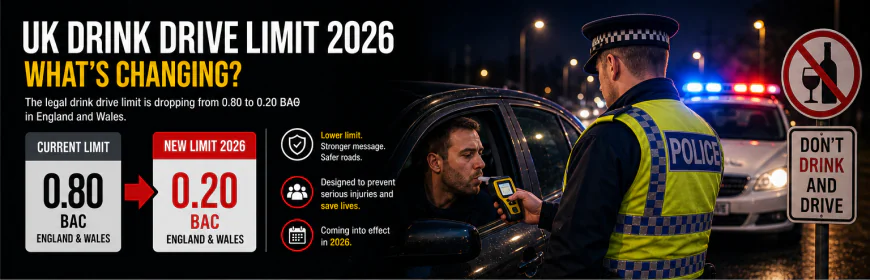
UK drink drive limit 2026: Right now in England and Wales, the legal drink drive limit sits at 80mg of alcohol per 100ml of blood, or 35 micrograms per 100ml of breath. In Scotland, that limit was reduced to 50mg per 100ml of blood — equivalent to 22 micrograms per breath — back in December 2014. The difference is significant in real-world terms. At the current English limit, many people can drink one, sometimes two units of alcohol and remain under the threshold depending on their size, weight, and metabolism. At the Scottish limit, for a significant proportion of the population, any meaningful alcohol consumption before driving becomes a serious risk.
The government's own data makes a compelling case for change. In 2023, one in six road fatalities in England and Wales involved a driver over the legal limit. That's not just catastrophically drunk drivers — that figure includes everyone above the threshold, including those who might have considered themselves perfectly fine to drive. The proposal to bring England and Wales in line with Scotland would, according to road safety organisations, prevent hundreds of deaths and thousands of serious injuries every year. The consultation launched alongside the Road Safety Strategy in January 2026 is expected to formalise this change, though the exact timeline for legislation remains subject to parliamentary process. What is clear is that the political will is firmly there — and that means drivers need to start adjusting their thinking now, not when the new law lands.
The New Proposed Limits — What Do They Actually Mean in Practice?
UK drink drive limit 2026: The headline proposal is to drop the limit in England and Wales from 35 micrograms per 100ml of breath down to 22 micrograms — matching Scotland's existing threshold. In blood terms, that's moving from 80mg to 50mg per 100ml. For the majority of drivers, this means the "I'll just have one" calculation becomes essentially unworkable. People process alcohol at vastly different rates depending on body weight, age, whether they've eaten, and hydration levels. At 22 micrograms, for many people, a single standard drink could put them dangerously close to — or over — the new legal limit.
For learner drivers and those who have recently passed their test, the proposed limit is even more stark — around 20 micrograms, which is effectively a near-zero tolerance policy. The government has been transparent about the intent: new drivers are statistically overrepresented in serious accidents, and the data strongly suggests that any alcohol in a new driver's system meaningfully increases risk. The 20-microgram threshold is close enough to zero that the practical advice becomes very simple — if you're a new driver and you're planning to get behind the wheel, don't drink at all. No calculation, no guesswork, no borderline decisions. The proposal essentially closes the door on the conversation entirely for that group.
Alcohol Interlock Devices — What Are They and Could You Be Forced to Fit One?
UK drink drive limit 2026: One of the more striking proposals in the UK Road Safety Strategy 2026 is the potential introduction of alcohol interlock devices — more commonly known as alcolocks — as a condition of driving for those convicted of drink driving offences. An alcolock is a breathalyser built into a vehicle's ignition system. The car simply will not start unless the driver provides a clean breath sample below a set threshold. They're already used in the United States, Australia, Canada, and several European countries as an alternative to — or condition of — reinstating a licence following a drink drive conviction.
The proposal here is that rather than simply banning someone from driving and then returning their full licence after a set period, convicted drink drivers in the UK could be required to have an alcolock fitted as a condition of being allowed back on the road. For those in the car community who have invested heavily in their vehicles, the idea of a mandatory breathalyser fitted as a legal requirement is an uncomfortable one. But the proposal is targeted exclusively at those with existing convictions — not the general driving population — and when you look at the reoffending rates for drink driving, it's hard to argue the current approach of ban-then-return is working well enough.
Licence Suspension Before Court — A Major New Power on the Table
UK drink drive limit 2026: Perhaps the most dramatic proposal in the drink and drug driving section of the Road Safety Strategy is giving authorities the power to suspend a driver's licence before they've been to court. Currently, someone caught drink driving can continue to drive legally until their case is heard — which, given the current court backlog, can be many months away. The new proposal would allow for pre-court suspension for anyone suspected of a drink or drug driving offence, as well as those under investigation for serious motoring offences that resulted in a fatality or serious injury.
This represents a significant departure from the traditional presumption of innocence that has governed British law, and it will almost certainly face legal challenge and substantial debate during the consultation process. But from a road safety perspective, the logic is hard to ignore: someone caught driving significantly over the limit is a known risk, and allowing them to continue driving while the wheels of justice turn slowly is, in the government's view, no longer justifiable. How this proposal ultimately lands in legislation — if it does at all in its current form — will be one of the more closely watched aspects of the Road Safety Strategy going forward.
Drug Driving — Faster and Harder Enforcement Coming Too
UK drink drive limit 2026: Alongside the drink drive limit changes, the Road Safety Strategy signals a significant tightening on drug driving enforcement as well. Currently, roadside saliva tests can indicate the presence of drugs, but a follow-up blood test is typically required before charges can formally be brought. Under the new proposals, police would be able to use saliva-based roadside tests as direct evidence in a greater range of cases, removing the need for a confirmatory blood test every time. The practical effect is faster enforcement, higher conviction rates, and a reduction in the administrative burden that has sometimes seen cases dropped due to procedural delays.
The government has also committed to a review of the penalties for drug driving offences, with stronger sentences on the table for the most serious cases. Alongside "Sharlotte's Law" — a provision aimed at ensuring timely blood testing in fatal collision investigations — the entire enforcement landscape around impaired driving is being tightened considerably. The message being sent is consistent: whether it's alcohol or drugs, the tolerance is narrowing, the tools are getting sharper, and the consequences are getting heavier.
What Should Drivers Do Right Now?
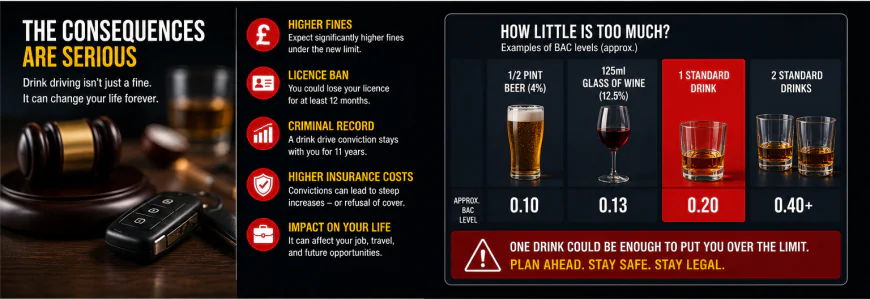
UK drink drive limit 2026: The honest, practical answer is to get ahead of these changes rather than wait until they're law. The consultation is underway, the political will is clear, and the new drink drive limit in England and Wales could realistically be in place within one to two years. When it comes, it will arrive with significant public awareness campaigns and enforcement drives. Being caught just over the new limit will not attract sympathy — "I didn't know it had changed" is not a legal defence, and a drink drive conviction carries consequences that extend far beyond the immediate fine or ban. Insurance premiums, employment implications, and the criminal record that follows are consequences that last years.
For car enthusiasts heading to shows, track days, or meets where alcohol might be present — the legitimate events, the ones with entry fees and a nice burger van — the sensible advice is simply to plan ahead. Designate a driver, book a hotel, or genuinely have nothing to drink. The new limit makes any borderline decision far more dangerous, and no pint is worth the fallout. For everything happening in the UK car and modified scene, keep it locked to Stance Auto Magazine — we'll be tracking how these laws develop and what they mean for the community. You can also read the full details of the proposed changes directly from the Department for Transport's Road Safety Strategy.
A Stricter Road — But One Long Overdue
The shift in UK drink drive law has been a long time coming. The arguments in favour of lowering the limit are backed by decades of evidence, international precedent, and basic common sense. The arguments against tend to centre on personal freedom and the practicalities of rural communities where driving is the only realistic transport option — and those concerns absolutely deserve to be heard in the consultation process. But the direction of travel is set. England and Wales are moving toward a stricter standard, and the car community — a group that arguably has more at stake in its relationship with road law than almost any other — needs to be ready for it.
 Like
0
Like
0
 Dislike
0
Dislike
0
 Love
0
Love
0
 Funny
0
Funny
0
 Angry
0
Angry
0
 Sad
1
Sad
1
 Wow
0
Wow
0