






























.png)








![[HOONIGAN] Ken Block's GYMKHANA NINE](https://img.youtube.com/vi/_bkX5VkZg8U/maxresdefault.jpg)




















































![[HOONIGAN] KEN BLOCK'S GYMKHANA SEVEN: WILD IN THE STREETS OF LOS ANGELES](https://cdn.motor1.com/images/mgl/2KlO4/s1/ken-block-london-tour-directors-cut.jpg)
































Is Your Clutch Slipping? How to Diagnose the Issue Before It Breaks
Complete guide to clutch slipping problems. Causes, diagnosis, repair costs, and solutions for slipping clutches in 2026 on Stance Auto Magazine.
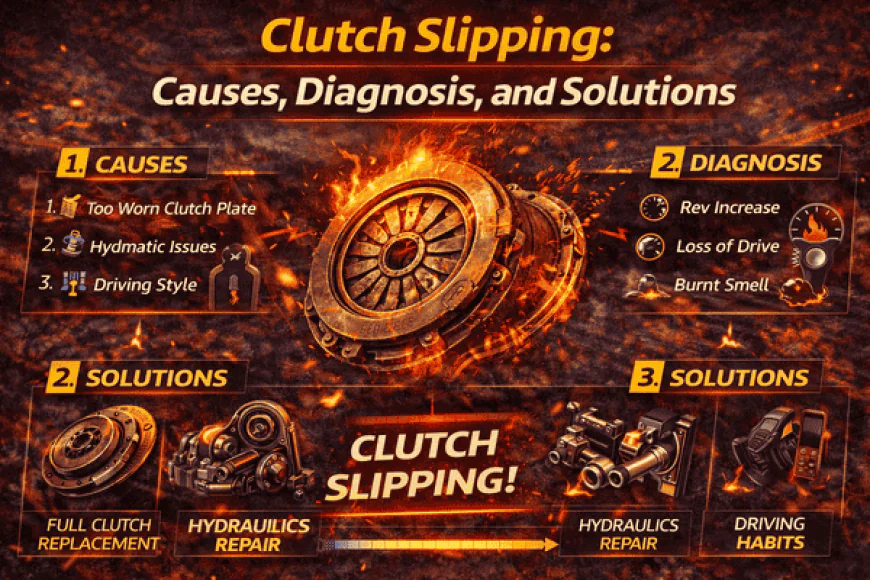
More Images On Our Facebook Page and Instagram Page. Join Our Car Community Today! Feel Free to share and backlink to our articles.
When Your Clutch Can't Handle the Power
Clutch slip is one of the most frustrating mechanical problems. You accelerate hard, the revs climb, but the car doesn't accelerate proportionally. The engine screams but forward momentum doesn't match. It's your clutch slipping — failing to transfer engine power to the transmission properly.
Clutch slip happens for many reasons: wear from high mileage, abuse from aggressive driving, increased power from modifications, or contamination from oil leaks. Understanding the cause determines whether you need a simple adjustment or a complete clutch replacement. This guide covers everything: recognising slip symptoms, diagnosing the cause, repair options, costs, and preventing future issues.
For related transmission problems, see our Silvia common problems guide and WRX vs STI comparison. For real-world clutch upgrade examples and build features, check out our JDM and modified car magazines on Amazon.
What You'll Learn:
- Clutch slip symptoms
- Common causes
- Diagnosis methods
- Repair costs
- Clutch upgrade options
- Prevention strategies
What Is Clutch Slip?
Normal Operation
Engine power → clutch fully engaged → transmission → wheels
Clutch Slip
Engine power → clutch partially engaged (slipping) → reduced transmission → less wheel power
Result: Engine revs rise faster than the vehicle accelerates. Power is "lost" as heat in the clutch.
Symptoms of Clutch Slip
Early Stage (Mild Slip)
Symptoms:
- Slip under heavy load only (uphill, overtaking, high gear acceleration)
- High RPM surge without matching acceleration
- Burning smell after hard acceleration
- Higher engagement point than before
Severity: Annoying but drivable
Advanced Stage (Severe Slip)
Symptoms:
- Slip under normal acceleration
- Can't accelerate properly in any gear
- Persistent burning smell
- Very high engagement point
- Difficulty maintaining speed uphill
Severity: Car barely drivable, urgent repair needed
Critical Stage
Symptoms:
- Constant slip, even at idle/light throttle
- No power transfer to wheels
- Smoking from clutch area
- Complete engagement failure
Severity: Car undrivable
Common Causes
1. Worn Clutch Friction Material
Most common cause.
Why it happens:
- Normal wear over mileage (60,000-100,000 miles typical)
- Aggressive driving accelerates wear
- Slipping clutch to avoid stalling wears faster
- Modified engines wear clutches faster
Symptoms:
- Gradual slip development
- Worsens over time
- High engagement point
Solution: Clutch replacement
Cost: £400-1,200
2. Oil Contamination
Common on older cars.
Why it happens:
- Rear main seal leak (engine oil onto clutch)
- Transmission input shaft seal leak (gearbox oil)
- Overfilled transmission
Symptoms:
- Sudden slip (not gradual)
- Grabbing/jerky engagement
- Smell of burning oil
- May worsen after parking on hill
Solution: Fix leak + clutch replacement (contaminated clutch can't be cleaned effectively)
Cost: £600-1,500 (includes seal replacement)
3. Insufficient Power from Modifications
Common on modified cars.
Why it happens:
- Stock clutch rated for stock power
- Modifications increase power beyond clutch capacity
- Sudden power increases overwhelm stock clutch
Example:
- Stock WRX: 265bhp, stock clutch adequate
- Modified WRX: 350bhp, stock clutch slips under boost
Solution: Performance clutch upgrade
Cost: £600-1,500
For modification guidance, see our EP3 300bhp build and turbo conversion costs.
4. Hydraulic System Failure
Less common but possible.
Why it happens:
- Low clutch fluid
- Air in hydraulic line
- Failed clutch master cylinder
- Failed clutch slave cylinder
Symptoms:
- Soft/spongy pedal
- Inconsistent engagement
- Pedal sinks to floor
- Difficulty shifting
Solution: Bleed system or replace hydraulic components
Cost: £150-600
5. Pressure Plate Failure
Uncommon but serious.
Why it happens:
- Spring fatigue (old age)
- Overheating from abuse
- Manufacturing defect
Symptoms:
- Sudden slip
- Inconsistent engagement
- May accompany other clutch issues
Solution: Clutch replacement (includes pressure plate)
Cost: £400-1,200
Diagnosing Clutch Slip
Test 1: High Gear Load Test
How:
- Drive in 4th or 5th gear at 40-50 mph
- Apply full throttle
- Watch RPM vs actual acceleration
Result:
- Normal: RPM rises smoothly with acceleration
- Slipping: RPM spikes while acceleration lags
Test 2: Hill Start Test
How:
- Park on steep hill
- Attempt normal hill start
- Observe engine response
Result:
- Normal: Car climbs hill smoothly
- Slipping: Engine revs high, car struggles to move
Test 3: High RPM Launch (Track/Safe Area Only)
How:
- Rev to 4,000-5,000 RPM
- Dump clutch (aggressive engagement)
- Feel for slip
Result:
- Normal: Instant strong acceleration (or wheelspin)
- Slipping: Revs hang high, weak acceleration, burning smell
Test 4: Engagement Point Check
How:
- Note where clutch engages during pedal release
- Compare to normal position
Result:
- Normal: Engages halfway or lower
- Worn: Engages very high (near top of pedal travel)
Repair Options
Option 1: OEM Replacement
What it is: Factory-spec clutch replacement
Cost: £300-800 (parts + labor)
Pros:
- Proven reliability
- Known characteristics
- Perfect for stock or mild mods
Cons:
- Not suitable for modified engines
- Not ideal for aggressive driving
Best for: Stock cars, daily drivers, mild power
Option 2: Performance Upgrade (Organic)
What it is: Upgraded clutch with higher clamping force, organic friction material
Examples: Exedy Stage 1, ACT Street, Competition Clutch Stage 2
Cost: £400-900
Power rating: Good to 350-400bhp typically
Pros:
- Smooth engagement
- Daily drivable
- Handles moderate power increase
- Long-lasting
Cons:
- Heavier pedal than stock
- More expensive than OEM
Best for: Modified street cars, 300-400bhp
Option 3: Performance Upgrade (Ceramic/Puck)
What it is: Aggressive clutch with ceramic friction material
Examples: Exedy Stage 2-3, ACT Xtreme, Competition Clutch Stage 3-4
Cost: £600-1,200
Power rating: 400-600bhp
Pros:
- Handles serious power
- High heat tolerance
- Long-lasting under abuse
Cons:
- Harsh engagement (grabby)
- Heavy pedal
- Noisy (chattering)
- Not pleasant for street
Best for: Track cars, drift cars, serious builds
Option 4: Twin-Disc
What it is: Two friction discs for massive capacity
Examples: OS Giken, Tilton, Quartermaster
Cost: £1,500-3,500
Power rating: 600-1,000+ bhp
Pros:
- Massive power capacity
- Relatively smooth (for capacity)
- Race-proven
Cons:
- Very expensive
- Heavy pedal
- Overkill for street
Best for: Race cars, 700+ bhp builds
Installation Costs
DIY Installation
Difficulty: Intermediate to advanced
Time: 6-12 hours
Requirements:
- Jack, stands
- Transmission jack (helpful)
- Tools
- Mechanical knowledge
Savings: £400-800
Professional Installation
Cost: £400-800 labour
Time: 4-8 hours
Includes: Clutch removal, flywheel inspection/replacement, reassembly
Additional recommendations:
- Flywheel resurfacing: £80-150
- Rear main seal: £50-100 (if leaking)
- Clutch fluid flush: £40-80
Prevention Strategies
1. Proper Driving Technique
Avoid:
- Riding the clutch (foot resting on pedal)
- Slipping clutch to avoid stalling
- Excessive clutch slip during launches
- Sitting on hill with clutch engaged
Do:
- Fully engage or fully disengage (no half measures)
- Use handbrake for hill starts
- Learn proper rev-matching
2. Match Clutch to Power
Stock power: OEM or Stage 1 300-400bhp: Stage 2 organic 400-600bhp: Stage 3 ceramic/puck 600+ bhp: Twin-disc
3. Regular Inspection
Every 20,000 miles:
- Check clutch fluid level
- Inspect for leaks
- Note engagement point changes
4. Address Leaks Immediately
If rear main seal or the input shaft seal is leaking:
- Fix immediately
- Don't wait for clutch failure
Clutch Lifespan Expectations
Normal Driving
Stock clutch: 80,000-120,000 miles Performance clutch: 60,000-100,000 miles
Aggressive Driving
Stock clutch: 40,000-60,000 miles Performance clutch: 40,000-80,000 miles
Modified/Track Use
Stock clutch: 20,000-40,000 miles, Performance clutch: 30,000-60,000 miles Race clutch: 10,000-30,000 miles

Frequently Asked Questions
Can I drive with a slipping clutch?
Short distances: yes, carefully. Long-term: no. Driving with slip causes damage and will eventually fail completely.
Will a slipping clutch fix itself?
No. Clutch slip only worsens. Immediate replacement needed.
How much does clutch replacement cost?
£400-1,200 typically (parts + labor). Performance clutches £600-1,500. Twin-disc £2,000-4,000.
Can I just replace the clutch disc?
Technically yes, but false economy. Replace disc, pressure plate, and release bearing together.
Should I replace the flywheel too?
Inspect the flywheel. If damaged/worn, replace (£200-600). At minimum, resurface it (£80-150).
How long does clutch replacement take?
Professional: 4-8 hours. DIY: 6-12 hours first time.
Will the upgraded clutch be harder to drive?
Stage 1-2: Slightly. Stage 3+: Significantly. Twin-disc: Very different but manageable.
Related Articles
 Like
0
Like
0
 Dislike
0
Dislike
0
 Love
0
Love
0
 Funny
0
Funny
0
 Angry
0
Angry
0
 Sad
0
Sad
0
 Wow
0
Wow
0