



































































.png)










![[HOONIGAN] Ken Block's GYMKHANA NINE](https://img.youtube.com/vi/_bkX5VkZg8U/maxresdefault.jpg)
































































![[HOONIGAN] KEN BLOCK'S GYMKHANA SEVEN: WILD IN THE STREETS OF LOS ANGELES](https://cdn.motor1.com/images/mgl/2KlO4/s1/ken-block-london-tour-directors-cut.jpg)



































Paintless Dent Repair (PDR) Guide: How to Remove Dents Without Repainting
Complete paintless dent removal (PDR) guide. DIY dent removal techniques, tools, costs, and when to use professional PDR in 2026.
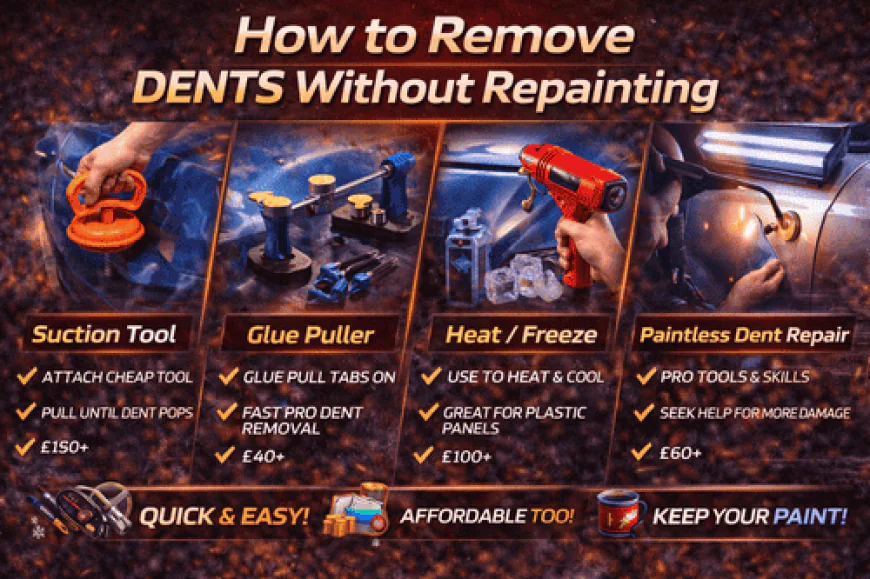
Paintless Dent Removal: Save Your Paint
Minor dents from car parks, hail damage, or careless door dings don't always require expensive bodywork and repainting. Paintless Dent Removal (PDR) removes dents while preserving original paint — saving time, money, and maintaining factory finish. Small dents that would cost £200-500 to repair traditionally can often be fixed for £50-150 with PDR, or even free if you DIY.
This complete guide covers PDR techniques, tools required, what dents are PDR-suitable, DIY methods, professional costs, and when traditional bodywork is necessary.
For show car preparation and bodywork guidance, see our show car budget guide. For PDR techniques on real builds, explore our magazines on Amazon.
What You'll Learn:
- PDR vs traditional repair
- DIY PDR techniques
- Tools and costs
- When PDR works (and doesn't)
- Professional PDR costs
What Is Paintless Dent Removal?
PDR technique:
- Access behind panel
- Use specialized tools to massage dent out
- No filler, no paint
- Preserves factory finish
Suitable for:
- Small to medium dents
- No paint damage
- Accessible from behind
- Shallow dents
Not suitable for:
- Paint cracked/chipped
- Very sharp creases
- Inaccessible areas
- Stretched metal
PDR vs Traditional Repair
Paintless Dent Removal
Process:
- Access panel from behind
- Massage dent out with tools
- 30 mins to 3 hours typically
Cost: £50-200 per dent (professional)
Pros:
- Preserves original paint
- Much cheaper
- Faster (hours not days)
- No color matching needed
- Maintains value
Cons:
- Limited to certain dents
- Requires skill
- Not for damaged paint
Traditional Bodywork
Process:
- Fill dent
- Sand smooth
- Prime
- Paint
- Blend
- 3-7 days typically
Cost: £200-800 per panel
Pros:
- Fixes any damage
- Can repair paint
- Results guaranteed
Cons:
- Expensive
- Time-consuming
- Paint matching issues
- Reduces value (repaint)
DIY PDR Tools
Basic Kit (£30-80)
What's included:
- Dent removal rods (various shapes)
- PDR lights (LED strips)
- Wedges/access tools
- Door panel removal tools
Suitable for: Small shallow dents, practice
Mid-Range Kit (£80-200)
Includes:
- Quality PDR tools
- Glue puller system
- Better lighting
- More rod varieties
Suitable for: Moderate DIY work
Professional Kit (£300-1,000+)
Includes:
- Full tool set
- Professional lighting
- Glue pulling system
- Access tools
- Training materials
Suitable for: Serious DIYers, side business
DIY PDR Techniques
Method 1: Rod/Tool Access (Best)
Requirements:
- Access behind panel
- PDR tools
- Good lighting
Process:
- Remove interior panels (door cards, headliner edge, boot trim)
- Position PDR light (creates shadow showing dent depth)
- Identify high spots (center of dent pushed inward)
- Choose tool (right angle and tip for location)
- Apply gentle pressure from behind
- Work edges first (gradually toward center)
- Check progress frequently (avoid over-pushing)
- Fine-tune (tap down any high spots)
Time: 1-3 hours per dent
Success rate: 70-90% for suitable dents
Method 2: Glue Pulling (Accessible)
Requirements:
- Glue puller kit (£40-100)
- Hot glue gun
- Access from outside only
Process:
- Clean dent area thoroughly
- Heat glue stick
- Apply to pulling tab
- Press tab onto dent center
- Wait for glue to cool (30-60 seconds)
- Pull gently (slide hammer or steady pull)
- Remove tab (heat or alcohol)
- Repeat if needed
Time: 30 mins - 2 hours
Success rate: 50-70% (less effective than rod method)
Method 3: Heat and Suction (Limited)
Requirements:
- Heat gun or hair dryer
- Suction cup puller
- Compressed air (optional)
Process:
- Heat dent area (warm, not hot)
- Apply suction cup
- Pull firmly
- Optional: compressed air (rapid cool causes pop-out)
Success rate: 30-50% (only shallow dents)
Dent Assessment Guide
PDR-Suitable Dents
Characteristics:
- Size: Up to 6 inches diameter
- Depth: Less than 1 inch
- Paint intact (no chips, cracks)
- Accessible from behind
- Round/smooth shapes
Examples:
- Door dings
- Shopping trolley dents
- Hail damage
- Boot lid dings
PDR-Unsuitable Dents
Characteristics:
- Sharp creases
- Paint damaged
- Stretched metal
- Inaccessible (double-skinned panels)
- Very deep
Examples:
- Accident damage
- Kicked panels
- Extreme creases
Solution: Traditional bodywork required
Professional PDR Costs
Pricing Structure
Small dents (< 1 inch):
- Cost: £50-80 each
- Time: 30-60 mins
- Examples: Door dings
Medium dents (1-3 inches):
- Cost: £80-150 each
- Time: 1-2 hours
- Examples: Shopping trolley dents
Large dents (3-6 inches):
- Cost: £150-250 each
- Time: 2-4 hours
- Examples: Panel dents
Multiple dents:
- Discounts typically given
- £200-600 for 5-10 dents
Hail damage (full car):
- £800-2,000
- Depends on severity
Step-by-Step DIY Process
Preparation
- Clean area thoroughly (clay bar if available)
- Assess dent (suitable for PDR?)
- Gather tools (rods, light, access tools)
- Remove interior panels (if needed)
- Position lighting (PDR light or bright LED)
Removal Process
- Identify dent depth (use light reflection)
- Start at edges (work toward center)
- Apply gentle pressure (from behind if possible)
- Check progress constantly
- Tap down high spots (if over-pushed)
- Fine-tune (patience critical)
Finishing
- Remove tools carefully
- Reinstall panels
- Clean and polish area
- Inspect from multiple angles
Total time: 2-5 hours first attempt
Common Mistakes
1. Too Much Force
Problem: Over-pushing creates high spot Result: Worse than before
Prevention: Gentle pressure, check frequently
2. Wrong Tool
Problem: Tool too large/small for access Result: Can't reach or control properly
Prevention: Multiple tool sizes, test fit
3. Damaged Paint
Problem: Attempting PDR on chipped paint Result: Makes worse, needs body shop
Prevention: Assess paint condition first
4. Inaccessible Area
Problem: No access behind panel Result: Wasted time
Prevention: Check access before starting
5. Impatience
Problem: Rushing, using excessive force Result: Poor results or damage
Prevention: Take time, work gradually
When to Go Professional
Use Professional PDR When:
- Expensive car (risk not worth it)
- Multiple dents (bulk discount)
- No access behind panel (professionals have techniques)
- First dent ever (learn by watching)
- Perfect result required (show car)
- No tools/time
Cost: £100-300 typically
Value: Excellent (vs £400-800 traditional repair)
DIY Success Tips
Lighting Is Critical
Invest in proper PDR light:
- LED strip lights: £30-80
- Creates shadow showing depth
- Essential for precision
Alternative: Bright LED panel + reflective surface
Start Small
Practice on:
- Scrap panels
- Old car in yard
- Non-visible areas first
Don't start with: Your show car's door
Watch Tutorials
YouTube channels:
- Paintless Dent Removal Training
- Dent Kraft
- Multiple professionals
Learn: Techniques, tool usage, common issues
Take Your Time
Rushing = failure
First dent: 3-5 hours typical With practice: 1-2 hours
Frequently Asked Questions
Can I PDR any dent?
No. Only dents with intact paint, accessible from behind, not too deep or sharp.
Will DIY PDR damage my car?
Possible if too aggressive. Start gently, be patient.
How much does professional PDR cost?
£50-150 per dent typically. Much cheaper than traditional repair (£200-500).
Can PDR fix hail damage?
Yes, excellent for hail. Professional typically needed (many small dents).
Do I need special tools?
Basic kit £30-80 is sufficient for small dents. Professional kit £200-500 for serious work.
How long does PDR take?
Professional: 30 mins - 3 hours. DIY: 2-5 hours for first attempts.
Related Articles
 Like
0
Like
0
 Dislike
0
Dislike
0
 Love
0
Love
0
 Funny
0
Funny
0
 Angry
0
Angry
0
 Sad
0
Sad
0
 Wow
0
Wow
0