





































.png)





![[HOONIGAN] Ken Block's GYMKHANA NINE](https://img.youtube.com/vi/_bkX5VkZg8U/maxresdefault.jpg)







































![[HOONIGAN] KEN BLOCK'S GYMKHANA SEVEN: WILD IN THE STREETS OF LOS ANGELES](https://cdn.motor1.com/images/mgl/2KlO4/s1/ken-block-london-tour-directors-cut.jpg)





























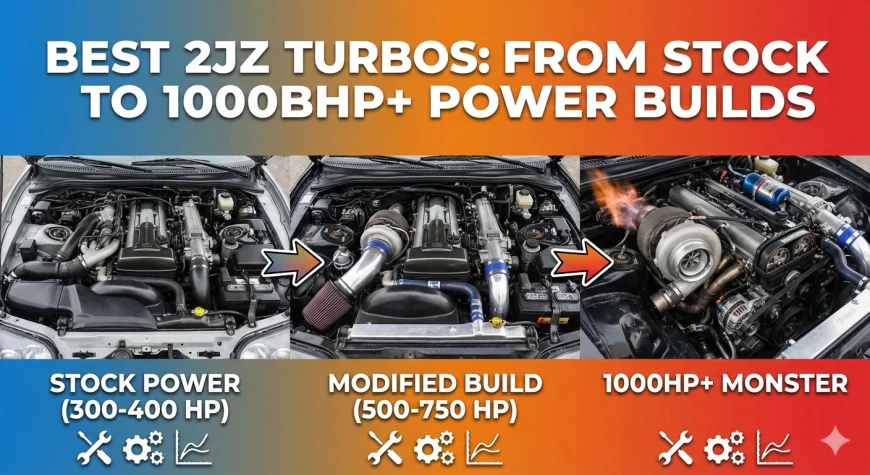
Best 2JZ Turbos: From Stock to 1000bhp+ Power Builds
Complete 2JZ turbo selection guide. Single turbo, twins, and compound setups for every power level and budget.
Choosing the Right Turbo for Your 2JZ Build
The Toyota 2JZ-GTE engine is legendary for its ability to make ridiculous power with relatively simple modifications. But ask any experienced 2JZ builder what the single most important decision in a build is, and they'll tell you: turbo selection. Get it right and you unlock reliable, responsive, streetable power. Get it wrong and you end up with laggy power delivery, maxed-out turbos that choke at high RPM, or worse — a blown engine from running the wrong combination.
The 2JZ turbo landscape in 2026 is vast. You can run stock twins for mild builds, upgrade to modern ball-bearing twins for responsive 500-600bhp setups, go single turbo for 700-1000bhp streetable monsters, or even explore compound/sequential setups for race applications. Each approach has advantages, trade-offs, and specific power ranges where it excels.
In this comprehensive guide, we're breaking down the best turbo options for every 2JZ power level — from the stock twins through to 1000+ bhp builds. We cover spool characteristics, power potential, cost, supporting modifications required, and real-world pros and cons from builders who've actually run these setups.
As we detailed in our 500bhp Supra Build Cost, the turbo system is typically the largest single expense in any serious 2JZ build. Understanding your options before spending £1,000-5,000+ on turbos is critical.
What You'll Learn:
- Stock twin turbo capabilities and limitations
- Best upgraded twin turbo options
- Single turbo selection by power level
- Ball-bearing vs journal bearing considerations
- Turbo sizing theory for 2JZ
- Supporting modifications required for each setup
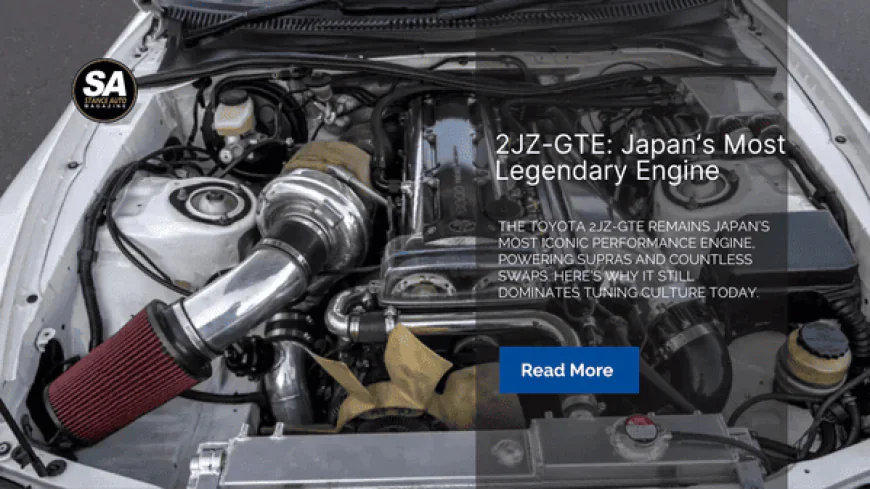
2JZ-GTE: Japan’s Most Legendary Engine
Understanding 2JZ Turbo Basics
Stock Twin Turbo System
The factory 2JZ-GTE came with a sequential twin turbo setup:
Primary turbo (CT12A): Spools first, provides low-end response Secondary turbo (CT12B): Engages around 4,000 rpm for high-end power
Factory power: 280ps (276hp) official / ~320hp actual Max safe power: 380-400hp before turbos are maxed out
Advantages:
- Excellent throttle response
- Minimal lag
- Factory engineered and reliable
- Cheap to maintain
Limitations:
- Ceramic turbine wheels (can fail catastrophically)
- Small compressor = maxed out by 400hp
- Complex plumbing and electronics
- Restrictive for serious power builds
For most builds beyond 400hp, upgraded turbos are essential.
Power Level 1: Stock to 400hp
Option A: Keep Stock Twins + Bolt-Ons
Target power: 350-400hp Cost: £0 (turbos are free — already on car) Spool: Excellent (factory-spec)
Required supporting mods:
- Exhaust (3" downpipe minimum)
- Intake
- Fuel pump upgrade
- ECU tune
Pros:
- Cheapest option
- Best throttle response
- OEM reliability
- No fabrication required
Cons:
- Power ceiling is hard limit (~400hp absolute maximum)
- Ceramic wheels can fail (upgrade to metal if building for power)
- Complex sequential system to maintain
Verdict: If 350-400hp is your target and you want OEM response, keep the twins. Beyond this, upgrade.
Power Level 2: 400-550hp
At this power level, you need more airflow than stock twins can provide.
Option A: Upgraded Twin Turbo Setup
BorgWarner EFR 6758 Twins
Power: 400-550hp Cost: £2,800-3,600 (pair) Spool: Excellent (ball-bearing design)
Ultra-modern ball-bearing turbos with excellent spool characteristics and efficiency. The EFR 6758 is perfectly sized for a 3.0L inline-six looking to make 500-ish horsepower with great response.
Pros:
- Excellent spool (minimal lag)
- High efficiency across entire range
- Ball-bearing = long lifespan
- Maintains sequential benefits
Cons:
- Expensive
- Still requires twin turbo plumbing complexity
- Overkill if going beyond 550hp later
Best for: Drivers prioritizing response and drivability over peak power.
Option B: Single Turbo Conversion (Small)
Garrett GTX3076R or Precision 5862
Power: 450-600hp Cost: £1,200-1,800 (turbo only) Additional cost: Manifold (£600-1,200), downpipe (£300-600), wastegate (£250-400) Spool: Good (3,500-4,000 rpm full boost)
Single turbo conversions simplify the engine bay, reduce weight, and eliminate the sequential system complexity.
Pros:
- Simpler plumbing
- Cheaper than upgraded twins
- Room to grow power
- Cleaner engine bay
- Easier to service
Cons:
- More lag than upgraded twins (though still very responsive)
- Requires manifold fabrication or purchase
- Wastegate needed (adds cost and complexity)
Best for: Builders wanting simplicity and potential to grow power beyond 550hp later.
Verdict: For 400-550hp, upgraded twins offer better response. Single turbo makes more sense if you'll eventually push to 600-700hp.
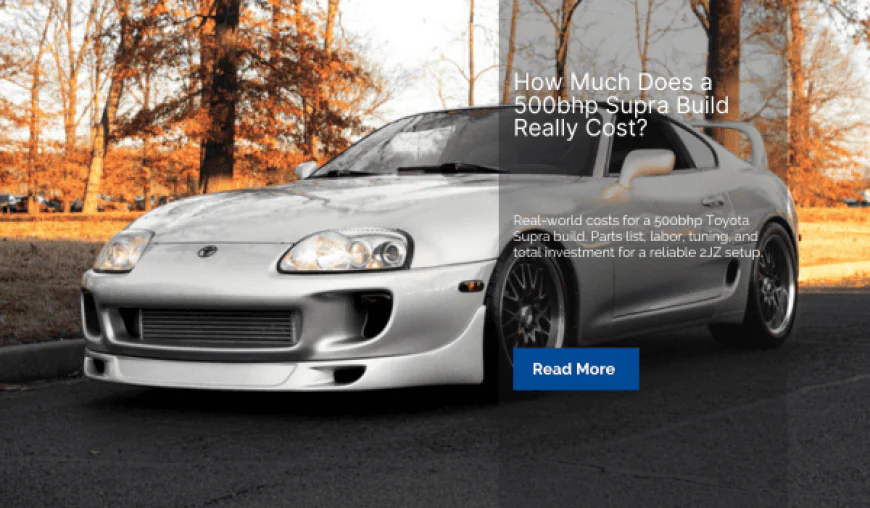
How Much Does a 500bhp Supra Build Really Cost?
Power Level 3: 550-750hp
This is the sweet spot for street-driven 2JZ builds. Enough power to be genuinely fast without requiring race-spec supporting mods.
Best Options: Single Turbo
Garrett GTX3582R
Power: 550-750hp Cost: £1,400-1,900 Spool: Very good (3,200-3,800 rpm)
The GTX3582R is arguably the most popular 2JZ single turbo. It's the perfect size for the 3.0L displacement, spools quickly, and is efficient to 750hp.
Pros:
- Perfect sizing for 2JZ
- Excellent mid-range response
- Proven reliable at this power level
- Won't overheat even on track
- 750hp ceiling leaves headroom
Cons:
- Requires quality supporting mods (fuel, ECU, intercooler)
- Needs proper wastegate
- Can feel laggy compared to twins (but still very responsive)
BorgWarner EFR 8374
Power: 600-800hp Cost: £2,200-2,800 Spool: Excellent for the power level (ball-bearing)
The EFR 8374 is the modern choice. Ball-bearing design spools significantly faster than journal-bearing turbos of similar size.
Pros:
- Ball-bearing = best-in-class spool
- Incredibly efficient
- Excellent transient response
- 800hp ceiling for future growth
- Cooler under sustained use
Cons:
- Most expensive option
- Overkill if staying under 650hp
- Requires excellent supporting mods
Verdict: The GTX3582R is the default choice for 600-700hp street builds. The EFR 8374 if budget allows and response is priority. As covered in our SR20DET 400bhp Build, modern ball-bearing turbos offer superior response across all platforms.
Power Level 4: 750-1000hp
Now we're into serious power. Stock 2JZ internals are at their limit. Forged internals, upgraded fuel system, and standalone ECU are mandatory.
Best Options
Garrett GTX4088R or GTX4294R
Power: 750-950hp (GTX4088R) / 850-1100hp (GTX4294R) Cost: £1,800-2,400 (4088R) / £2,000-2,600 (4294R) Spool: Moderate (4,000-4,500 rpm for 4088R, 4,500-5,000 rpm for 4294R)
The GTX40 series is where things get serious. These are large turbos capable of feeding 900-1000hp reliably.
GTX4088R:
- Best for 750-900hp street builds
- Still relatively responsive
- Won't choke at high RPM
- Proven on countless 2JZ builds
GTX4294R:
- For 850-1100hp builds
- More lag (but acceptable for street use)
- Doesn't run out of breath
- Ideal for standing mile/roll racing
Pros:
- Proven power capability
- Won't max out
- Still street-drivable (with proper gearing)
- Excellent top-end flow
Cons:
- Noticeable lag (especially 4294R)
- Requires perfect supporting mods
- Big power = big responsibility (tuning must be spot-on)
BorgWarner EFR 9180
Power: 800-1100hp Cost: £2,800-3,400 Spool: Best-in-class for this power level
The EFR 9180 is the king of large ball-bearing turbos. If you want 1000hp with the best possible response, this is it.
Pros:
- Ball-bearing = spools like a much smaller turbo
- Incredible efficiency
- Makes big power without excessive boost
- Top choice for drag racing 2JZs
Cons:
- Very expensive
- Requires absolutely perfect supporting mods
- Overkill if not pushing to 900hp+
Verdict: For 750-850hp, GTX4088R is the sweet spot. For 900-1000hp, GTX4294R or EFR 9180. For detailed supporting modifications needed at this power level, see our 500bhp Supra Build Cost and scale up from there.
Power Level 5: 1000-1500hp+
This is race territory. We're talking built motor, huge fuel system, standalone ECU, and turbos that cost as much as some entire builds.
Best Options
Garrett GTX5533R Gen II or Precision PT6870
Power: 1000-1500hp Cost: £2,500-4,000 Spool: Poor by street standards (5,000+ rpm)
These turbos are track/drag weapons. Street drivability is compromised but the power potential is extreme.
Pros:
- Can feed 1200-1500hp
- Won't run out of compressor
- Proven in professional drag racing
- Ultimate power potential
Cons:
- Massive lag
- Requires aggressive gearing
- Not street-friendly
- Supporting mods cost more than most cars
Verdict: Only for dedicated race cars or standing mile builds. Not for street use.
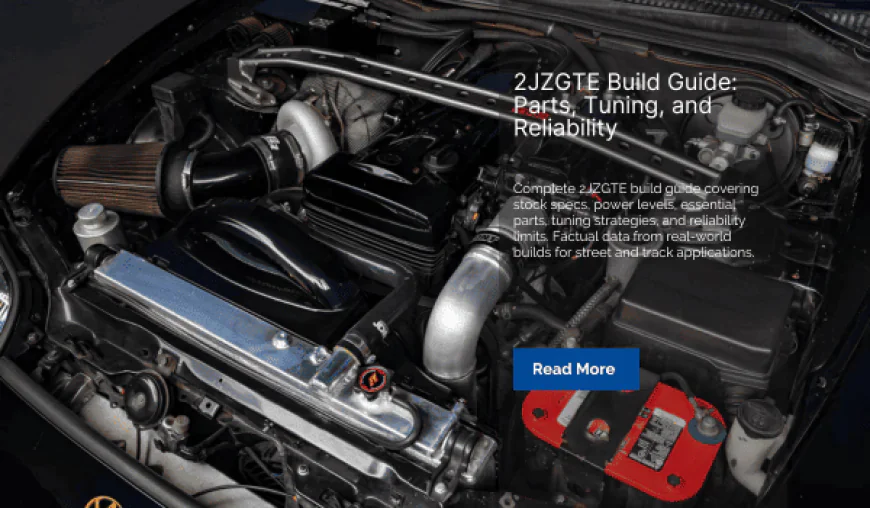
2JZGTE Build Guide: Parts, Tuning, and Reliability
Ball-Bearing vs Journal Bearing
Ball-Bearing Turbos (BorgWarner EFR, Some Garrett GTX)
Advantages:
- Spool 500-800 rpm earlier than journal bearing
- Better transient response
- Lower oil flow requirements
- Longer lifespan
- Run cooler
Disadvantages:
- More expensive (£500-1,000 premium)
- Require very clean oil (failures if oil contaminated)
Journal Bearing Turbos (Most Garrett, Precision)
Advantages:
- Cheaper
- More tolerant of oil contamination
- Proven reliability
- Easy to rebuild
Disadvantages:
- More lag
- Require high oil pressure
- Slightly less efficient
Recommendation: If budget allows, ball-bearing is superior. If budget-conscious, journal bearing is perfectly adequate.
Supporting Modifications Required
For 400-550hp
- Fuel pump (Walbro 450lph minimum)
- 850-1000cc injectors
- ECU (standalone or piggyback)
- 3" exhaust
- Upgraded intercooler (see our How to Install a Front Mount Intercooler)
- Clutch upgrade
Cost: £4,000-7,000 beyond turbo
For 550-750hp
All of the above, plus:
- Built bottom end (recommended, not mandatory)
- 1300-1600cc injectors
- Upgraded fuel pump (Aeromotive or dual pump)
- Larger intercooler
- Upgraded wastegate
- Methanol injection (optional but recommended)
Cost: £8,000-15,000 beyond turbo
For 750hp+
All of the above, plus:
- Built motor (forged pistons, rods, head studs)
- 2000cc+ injectors
- Race fuel or E85
- Transmission upgrades
- Upgraded driveshaft
- Differential upgrades
Cost: £15,000-30,000+ beyond turbo
For detailed ECU options and tuning considerations, see our ECU Remap vs Piggyback Tuner.
Turbo Manifold Considerations
Single turbo conversions require a manifold. Quality matters enormously.
Options:
Cast iron (OEM-style):
- Most durable
- Best heat retention (faster spool)
- Heaviest
- Cost: £800-1,500
Stainless steel (fabricated):
- Lighter
- Good durability
- Excellent heat dissipation
- Cost: £600-1,200
**Mild steel (budget):
- Cheapest
- Will rust and crack eventually
- Fine for budget builds
- Cost: £400-800
Brands to trust:
- Full-Race
- Hytech
- Turbosmart
- Precision Turbo
Brands to avoid:
- eBay no-name
- Ultra-thin wall copies
A cracked manifold is catastrophic — invest in quality here.
Real-World Recommendations by Use Case
Daily Driver (400-500hp)
Best choice: Garrett GTX3076R single or BorgWarner EFR 6758 twins
Why: Excellent response, reliable, not overwhelming in traffic, good fuel economy (relatively).
Weekend Weapon (600-700hp)
Best choice: Garrett GTX3582R single
Why: Perfect balance of response and power. Still street-friendly but properly fast.
Track Car (700-900hp)
Best choice: Garrett GTX4088R or BorgWarner EFR 8374
Why: Power to dominate, response good enough for corners, proven reliable under sustained use.
Drag Car (900-1200hp)
Best choice: Garrett GTX4294R or BorgWarner EFR 9180
Why: Maximum power, acceptable spool for drag use, won't run out of compressor.
Standing Mile (1000hp+)
Best choice: Garrett GTX5533R Gen II
Why: Needs to make power at 180+ mph. Only huge turbos flow enough for this application.

Frequently Asked Questions
Should I keep twin turbos or go single?
Keep twins if: targeting under 500hp, prioritize response, want OEM-like drivability Go single if: targeting 500hp+, want simplicity, plan to grow power later
Can I run E85 fuel with any turbo?
Yes, but E85 requires 30% more fuel flow. Size injectors accordingly. E85 allows more boost and timing = more power from same turbo.
What's the best turbo for 600whp?
Garrett GTX3582R. It's perfectly sized for this power level with great response.
Do I need a built motor for 600hp?
Not essential but recommended. Stock 2JZ internals can handle 600hp with proper tuning. Beyond 650hp, forged internals strongly advised.
How much boost will I need?
Power level dependent:
- 400hp: 12-15 psi
- 600hp: 18-22 psi
- 800hp: 25-30 psi
- 1000hp: 30-40 psi
Can I daily drive a 1000hp 2JZ?
Technically yes, practically no. The lag, fuel consumption, and constant temptation to use the power make it challenging. 600-700hp is the practical daily limit.
What's the turbo lifespan at high power?
Quality turbos with proper maintenance: 50,000-100,000+ miles even at 800hp. Cheap turbos or poor maintenance: 10,000-30,000 miles.
Related Articles
 Like
0
Like
0
 Dislike
0
Dislike
0
 Love
0
Love
0
 Funny
0
Funny
0
 Angry
0
Angry
0
 Sad
0
Sad
0
 Wow
0
Wow
0