






























































.png)











![[HOONIGAN] Ken Block's GYMKHANA NINE](https://img.youtube.com/vi/_bkX5VkZg8U/maxresdefault.jpg)






























































![[HOONIGAN] KEN BLOCK'S GYMKHANA SEVEN: WILD IN THE STREETS OF LOS ANGELES](https://cdn.motor1.com/images/mgl/2KlO4/s1/ken-block-london-tour-directors-cut.jpg)































JDM Wheel Fitment Guide: Offset, Width, and Stance
JDM Wheel Fitment Guide: Offset, Width, and Stance. Complete guide with costs, tips, and examples for 2026 from Stance Auto Magazine.
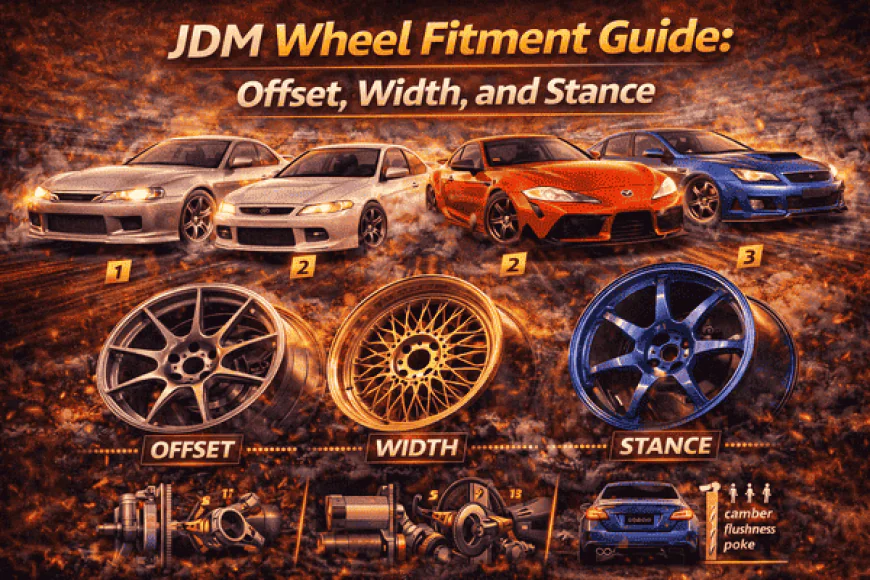
The Art and Science of Perfect Fitment
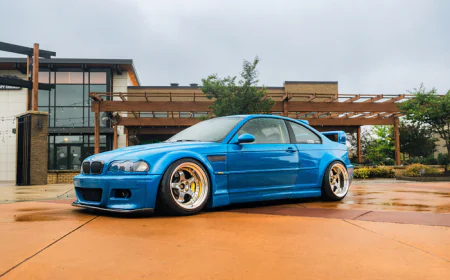
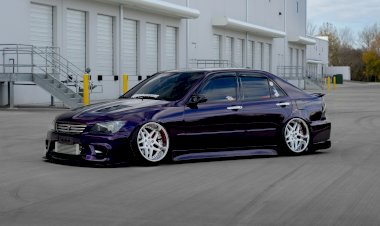
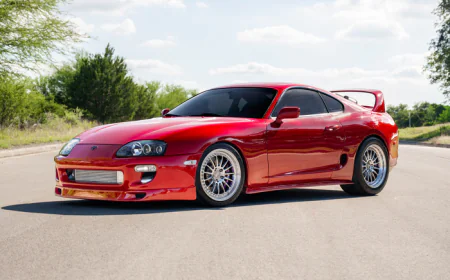
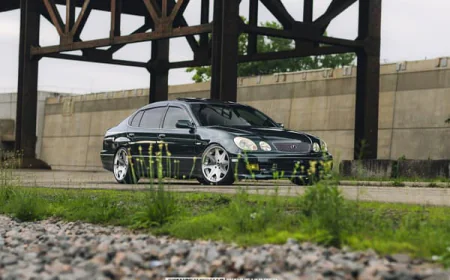
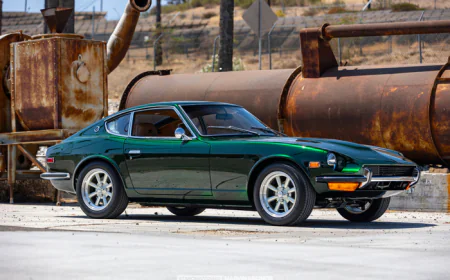
Wheel fitment is where engineering meets aesthetics in modified car culture. Get it right and your car looks aggressive, purposeful, and perfectly balanced. Get it wrong and you're dealing with rubbing tires, damaged fenders, or wheels that look lost in the arches. In JDM and stance culture, fitment isn't just functional — it's an art form.
Understanding offset, width, diameter, and how they interact with your suspension geometry is essential for achieving the perfect stance. Whether you're going for aggressive flush fitment, functional track setup, or full show car stance, the principles are the same. This complete guide walks through everything: offset calculations, width selection, tire sizing, clearance issues, and how to achieve your desired look safely and legally.
For suspension setup that works with aggressive fitment, see our drift car setup guide and MX-5 coilovers guide.
What You'll Learn:
- Offset explained (ET, positive/negative)
- Width and diameter selection
- Tire sizing and stretch
- Clearance calculations
- Aggressive fitment vs functional
- Legal considerations
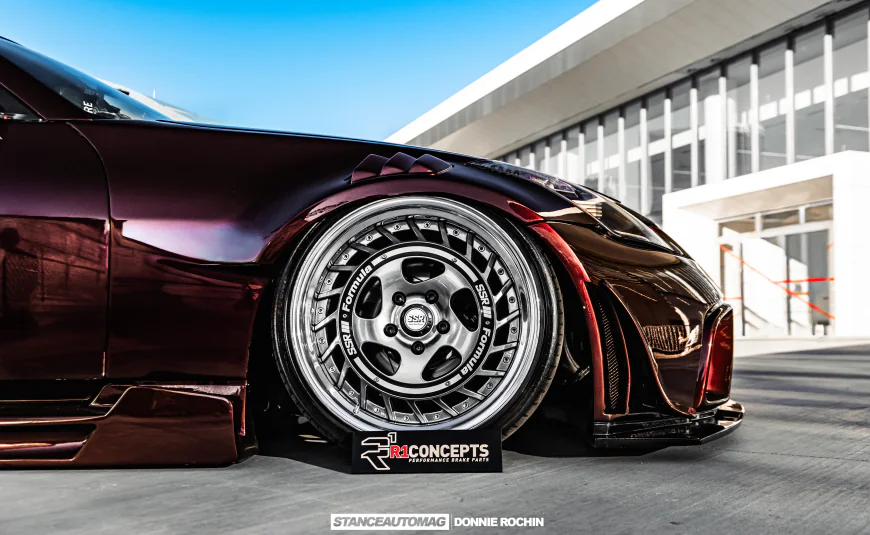
Understanding Wheel Offset
What Is Offset?
Offset (ET): Distance from wheel centerline to mounting face
Measured in millimeters (mm)
Offset Types
Positive Offset (+):
- Mounting face toward outside of wheel
- Wheel sits deeper in arch
- Example: ET+35, ET+45
- Common on: FWD cars, modern cars
Zero Offset (0):
- Mounting face at centerline
- Example: ET0
- Rare in production cars
Negative Offset (-):
- Mounting face toward inside of wheel
- Wheel sits further out
- Example: ET-5, ET-15
- Common on: Classic cars, deep dish wheels
How Offset Affects Fitment
Lower offset number = wheel sits further OUT
- ET+45 to ET+35 = 10mm further out
- ET+35 to ET+25 = 10mm further out
- ET+25 to ET0 = 25mm further out
Example:
- Stock: 17x7.5 ET+45
- Aftermarket: 17x8.5 ET+35
- Result: 10mm wider + 10mm further out = 20mm closer to fender
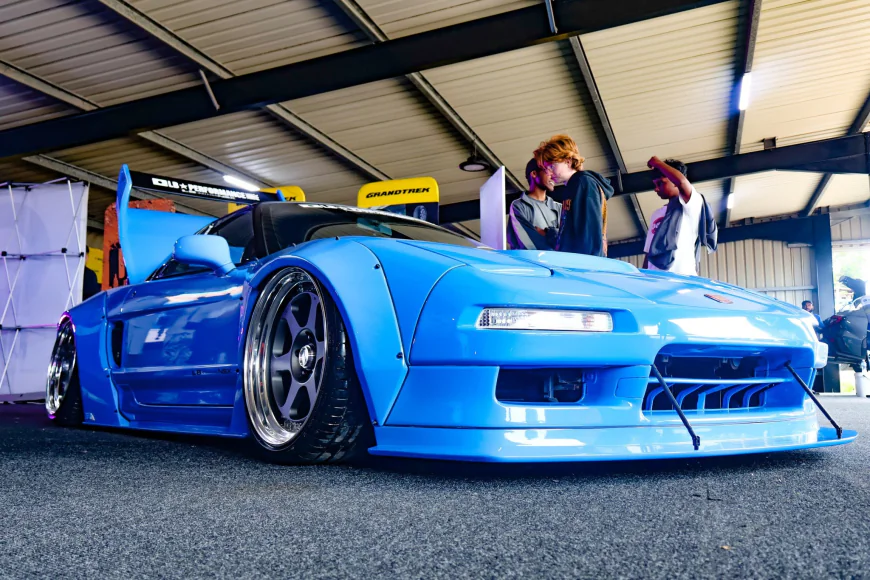
Wheel Width and Diameter
Width Selection
Measured in inches across wheel barrel
Common sizes:
- 7.0" - 7.5" (narrow, economy)
- 8.0" - 8.5" (sport, mild aggressive)
- 9.0" - 9.5" (aggressive, performance)
- 10.0" - 11.0" (very aggressive, show)
- 12.0"+ (extreme stance)
Width affects:
- Tire stretch
- Offset compatibility
- Clearance to suspension
- Aesthetic stance
Diameter Selection
Common JDM sizes:
- 15" (classic JDM, light weight)
- 16" (90s JDM standard)
- 17" (modern JDM, good balance)
- 18" (aggressive look, heavier)
- 19"+ (show cars, very heavy)
Smaller diameter pros:
- Lighter
- Better ride quality
- Cheaper tires
- More sidewall (forgiving)
Larger diameter pros:
- More aggressive look
- Better brake clearance
- More modern aesthetic
For more fitment inspiration and real-world examples, check out our JDM and modified car magazines on Amazon featuring hundreds of perfectly fitted builds.
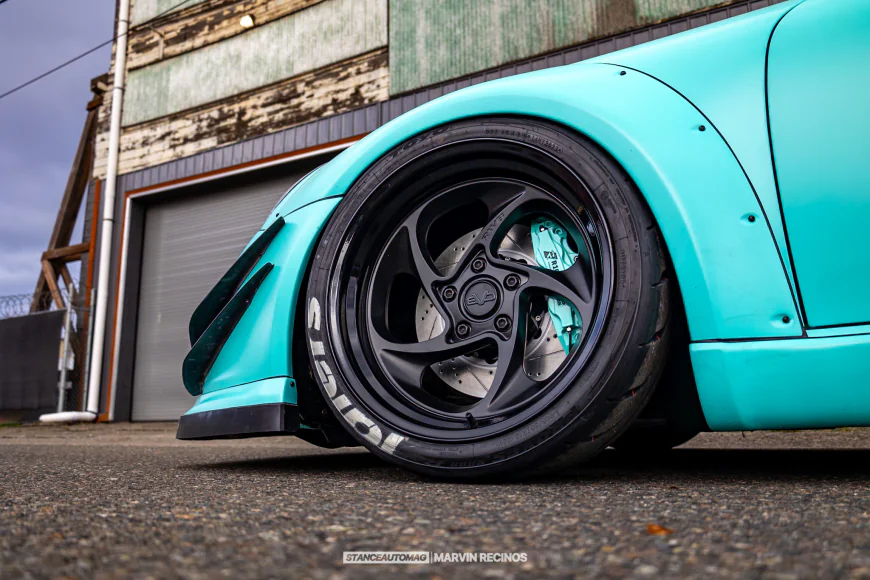
Tire Sizing
Reading Tire Sizes
Example: 225/40R17
- 225 = Width in millimeters
- 40 = Aspect ratio (sidewall height as % of width)
- R = Radial construction
- 17 = Diameter in inches
Tire Stretch
Normal fit: Tire width matches wheel width
-
225mm tyre on 8.0" wheel (perfect fit)
Mild stretch: Tire 10-20mm narrower than ideal
-
225mm tyre on 8.5" wheel (mild stretch)
Aggressive stretch: Tire 30-50mm narrower
-
225mm tyre on 9.5" wheel (stretched)
Extreme stretch: Dangerous
-
225mm tyre on 10.5"+ wheel (unsafe, illegal MOT failure)
Tire Stretch Guidelines
Safe stretch limits:
- 8.0" wheel: 215-235mm tyre
- 8.5" wheel: 225-245mm tyre
- 9.0" wheel: 235-255mm tyre
- 9.5" wheel: 245-265mm tyre
- 10.0" wheel: 255-275mm tyre
Beyond these: MOT issues, safety concerns
Calculating Fitment
The Formula
Total track width change = (New width - old width) ÷ 2 + (old offset - new offset)
Example:
- Stock: 17x7.5 ET+45
- New: 17x9.0 ET+35
- Width change: (9.0 - 7.5) ÷ 2 = 0.75" (19mm)
- Offset change: 45 - 35 = 10mm
- Total: 29mm further out toward fender
Clearance Checks
Inner clearance (suspension side):
- Check: Suspension components, coilover body, control arms
- Solution: Higher offset (ET number), narrower width
Outer clearance (fender side):
- Check: Fender lip, inner arch, rubbing on full lock
- Solution: Lower offset, rolling/pulling fenders, camber
Camber Effect
Negative camber pulls top of wheel inward
Example:
- -2° camber: ~8-10mm clearance gain at top
- -3° camber: ~12-15mm clearance gain at top
- But: Reduces contact patch (worse for traction)
For detailed suspension geometry and alignment, see our wheel alignment guide.
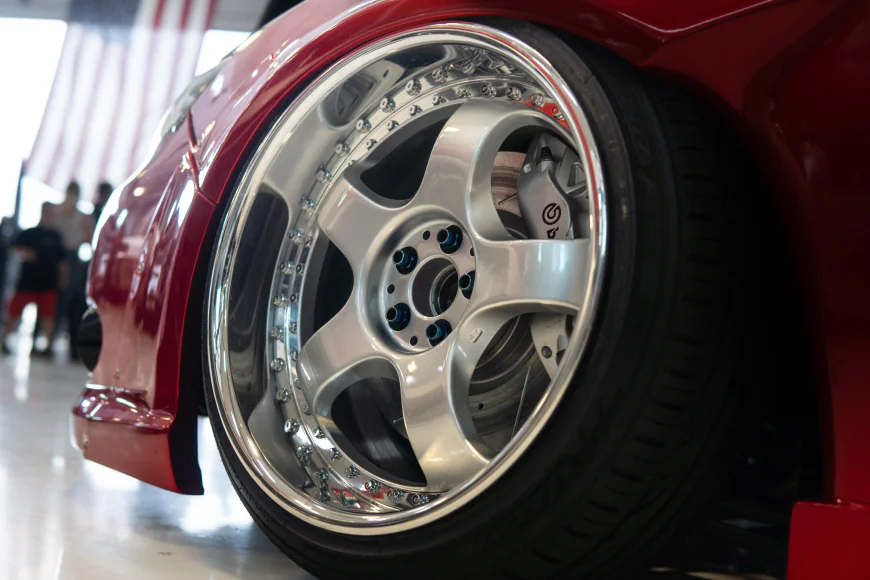
Popular JDM Fitment Specs
Honda Civic EP3/FN2
Stock:
- Front: 16x6.5 ET+50
- Rear: 16x6.5 ET+50
Aggressive street:
- Front: 17x8.5 ET+35
- Rear: 17x9.0 ET+35
Show stance:
- Front: 17x9.5 ET+25
- Rear: 17x10.0 ET+20
Nissan S13/S14
Stock:
- Front: 16x6.5 ET+40
- Rear: 16x7.0 ET+40
Aggressive street:
- Front: 17x9.0 ET+15
- Rear: 17x9.5 ET+15
Drift spec:
- Front: 17x9.0 ET+12
- Rear: 17x10.0 ET+12
BMW E36/E46
Stock:
- Front: 16x7.0 ET+42
- Rear: 16x7.0 ET+42
Aggressive street:
- Front: 17x8.5 ET+30
- Rear: 17x9.5 ET+35
Show stance:
- Front: 18x9.5 ET+20
- Rear: 18x10.5 ET+25
Mazda MX-5 NA/NB
Stock:
- 14x5.5 ET+45 (NA)
- 15x6.0 ET+40 (NB)
Aggressive street:
- Front: 15x8.0 ET+25
- Rear: 15x8.0 ET+25
Track spec:
- Front: 15x8.0 ET+35
- Rear: 15x9.0 ET+35
Achieving Aggressive Fitment
Step 1: Lower the Car
Essential for aggressive fitment.
Options:
- Lowering springs: £150-400 (moderate drop)
- Coilovers: £600-2,000 (adjustable height)
- Air suspension: £2,000-5,000 (ultimate adjustability)
Target drop: 40-80mm for aggressive street stance
Step 2: Choose Wheels
Aggressive fitment specs:
- Width: 1.5-2.5" wider than stock
- Offset: 15-25mm lower than stock
- Diameter: 17-18" typical
Step 3: Address Clearance
Fender work required:
- Rolling: £150-300 (bends inner lip up)
- Pulling: £300-600 (stretches fender out 5-10mm)
- Cutting: Free DIY (remove inner liner)
Camber adjustment:
- Camber plates: £200-500
- Adjustable arms: £300-800
- Target: -2.5° to -3.5° front, -2.0° to -3.0° rear
Step 4: Select Tires
Balance stretch with safety:
- Mild stretch: Safe, passes MOT
- Aggressive stretch: MOT risk, safety concern
- Extreme stretch: Illegal, dangerous
Legal Considerations
MOT Requirements
Will fail if:
- Tires protruding beyond arches
- Tires rubbing on anything
- Excessive stretch (tyre safety)
- Damaged from rubbing
Will pass if:
- Wheels fully within arches
- No rubbing under load
- Tires properly seated on wheels
- Safe tire stretch
For complete MOT guidance, see our modified suspension MOT guide.
Insurance
Must declare:
- Non-standard wheel sizes
- Offset changes
- Fender modifications
Affects: Premium and coverage
For insurance strategies, see our modified car insurance guide.
Common Fitment Mistakes
1. Too Aggressive Too Fast
Problem: Buying wheels without checking fitment Result: Massive rubbing, can't drive
Solution: Research, use fitment calculators, ask community
2. Extreme Tire Stretch
Problem: Unsafe stretch for looks Result: Tire blowout risk, MOT failure
Solution: Keep stretch reasonable (within guidelines)
3. Ignoring Inner Clearance
Problem: Focused only on fender clearance Result: Wheels hit coilovers, suspension components
Solution: Check BOTH inner and outer clearance
4. Wrong Offset Direction
Problem: Thinking higher offset = more aggressive Result: Wheels too far in, look terrible
Solution: Lower offset = more aggressive (out toward fender)
5. No Test Fitting
Problem: Buying wheels without test fit Result: Expensive wheels that don't fit
Solution: Test fit before purchasing if possible
Fitment Resources
Online Calculators
Wheel offset calculator: willtheyfit.com Tire size calculator: miata.net/garage/tirecalc.html Speedometer correction: calculator.net
Forums and Communities
Platform-specific forums:
- Honda: civic-type-r.co.uk
- Nissan: sxoc.com, driftworks.com
- BMW: e46fanatics.com
- General: stance-nation.com
Test Fitting
Before buying wheels:
- Find someone with similar setup
- Test fit their wheels on your car
- Check clearance at full lock
- Check suspension clearance
- Verify no rubbing

Frequently Asked Questions
What offset do I need to be flush?
Depends on: car model, fender shape, wheel width, lowering amount. Use the fitment calculator + research your specific car.
Can I run different front/rear widths?
Yes, common on RWD cars. Wider rear = aggressive stance, better traction.
Will aggressive fitment damage my car?
If done wrong: yes (rubbing damages fenders, arches). If done right: no long-term damage.
How much camber is too much?
Over -4° front = excessive tire wear, poor traction. Keep it -2.5° to -3.5° for aggressive street.
Can I daily drive aggressive fitment?
Yes, with proper setup. Expect: harsher ride, careful driving over bumps, potential scraping.
What's the best wheel size for my car?
Depends on goals: Track = lighter (15-17"), Street = balanced (17-18"), Show = aggressive (18-19"+).
Related Articles
 Like
0
Like
0
 Dislike
0
Dislike
0
 Love
0
Love
0
 Funny
0
Funny
0
 Angry
0
Angry
0
 Sad
0
Sad
0
 Wow
0
Wow
0