





























































.png)










![[HOONIGAN] Ken Block's GYMKHANA NINE](https://img.youtube.com/vi/_bkX5VkZg8U/maxresdefault.jpg)





































































![[HOONIGAN] KEN BLOCK'S GYMKHANA SEVEN: WILD IN THE STREETS OF LOS ANGELES](https://cdn.motor1.com/images/mgl/2KlO4/s1/ken-block-london-tour-directors-cut.jpg)





























The Hidden Risks of Sharing Your License Plate on Social Media
What are the hidden dangers of posting your license plate online. Learn how vehicle information security risks can lead to identity theft, location tracking, and fraud. Protect your digital footprint with essential Veepn privacy tips.
The Hidden Risks of Sharing Your License Plate on Social Media
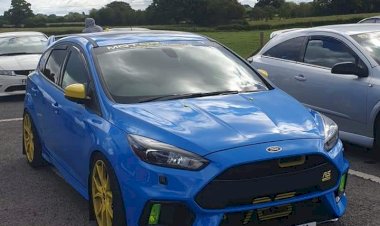
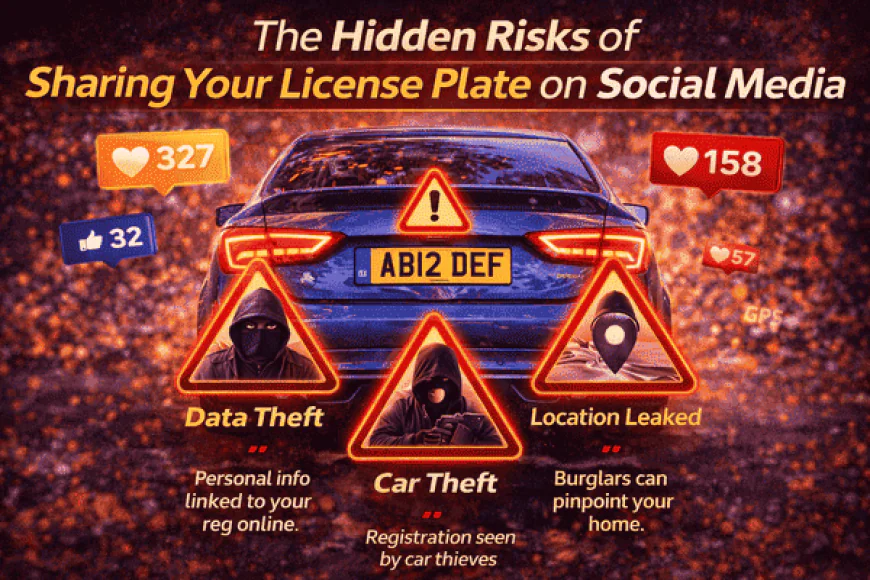
That proud photo of your new car? The one with the sunset in the background and your coffee cup on the roof. It seems harmless. But the license plate, clearly visible, is a key you just handed to strangers.
Most people don’t realise how much data connects to a simple plate number. Government databases, insurance records, and even parking apps tie that combination of letters and digits directly to you. In an era of social media data exposure, what feels like a casual share can become a permanent vulnerability.

Risks of Displaying Number Plates Online
How a Simple Photo Exposes More Than You Imagine
License plate privacy risks aren’t theoretical. They are real, documented, and growing. A single image can allow someone to link a vehicle to owner data within minutes using publicly available tools or paid data brokers.
Think about it: your plate is scanned everywhere—toll booths, mall parking lots, even your neighbour’s doorbell camera. When you post it online, you’re essentially adding your own face to that tracking loop. Exposing personal information online becomes inevitable once a motivated person connects your social media profile to your vehicle.
The Unseen Value of a License Plate in the Data Market
Your license plate is not just a metal rectangle. It is a piece of identity that data brokers quietly buy and sell. Some companies aggregate vehicle records, then package them with names, addresses, and even credit scores.
According to a 2023 report by the Identity Theft Resource Center, vehicle-related data exposure increased by over 40% in five years. Fraudsters pay premium prices for such dossiers. Why? Because a car links to your home, your workplace, and your daily routines. Once someone has that triad, they can plan anything from a burglary to a sophisticated phishing campaign.
The VPN Connection: A Layer of Cybersecurity
Now, consider how many people rely on free public Wi-Fi to upload those photos while traveling. Without protection, every click becomes a potential leak. Using a VPN like VeePN helps shield your activity from prying eyes, especially when you’re accessing foreign web resources for research or entertainment. Using VeePN iOS is one of those small habits that create a buffer between your personal data and the digital chaos. And this is an extremely simple procedure, where setup takes a couple of seconds.
When Your Vehicle Becomes a Tracking Device
Posting a picture with your plate visible can enable location tracking in unsettling ways. Someone might note the background—a unique tree, a storefront—and cross-reference it with your other posts.
A 2022 survey found that nearly 30% of online harassment cases involved perpetrators using location clues from shared images. Your car, parked in your driveway, becomes a beacon. Vehicle information security isn’t just about anti-theft systems anymore; it’s about controlling who knows where you are at any given moment.
But it gets more granular. Some stalkers use license plate lookup services that cost less than ten dollars. They enter your plate, and out comes your home address. Then they cross‑check that address with your Instagram check‑ins. Suddenly, a harmless car photo becomes a real‑world safety threat.
Identity Theft: The Domino Effect
Here’s where it gets darker. A license plate can be the starting point for risk identity theft scenarios. Scammers obtain vehicle records through illicit channels or social engineering, then use your address, full name, and even VIN (Vehicle Identification Number) to piece together a profile.
Once they have that, they can apply for credit in your name or create fake documents. It’s not a single catastrophic leak; it’s a slow drip. The plate is often the first drop. Understand data privacy risks before they compound into financial ruin.
Consider this: the Federal Trade Commission logged 1.1 million identity theft reports in 2022. Among those, nearly 15% had a link to compromised vehicle or driver’s license data. That’s over 165,000 people who probably never thought a license plate could hurt them.
Fraudsters Love Publicly Shared Images
Fraud rings actively scrape social media for misuse of publicly shared images containing plates, homes, and even pets. They use these to craft convincing phishing emails or to impersonate you in calls to your bank.
One alarming statistic: the Federal Trade Commission reported over 1.1 million identity theft complaints in 2022 alone, many originating from seemingly innocent online disclosures. The goal is to increase the risk of fraud for ordinary people who never imagined their vacation photo could become a tool for criminals.
And it’s not just individuals. Small business owners who post their work vans with visible plates have reported fraudulent vehicle registrations attempted in other states. The fraudster uses the real plate number on a similar vehicle, racks up toll violations, and the real owner gets the bills.
Real-Life Cases: When a Photo Turned Dangerous
There was a story from Texas in 2021. A woman posted a picture of her new SUV in front of her house. Her license plate was clear. Within a week, she started receiving strange parking tickets from a city she had never visited.
Someone had used her plate number to clone a vehicle of the same make and colour. The police eventually traced it back to a group that scoured Facebook Marketplace and Instagram for plate images. They had done this to dozens of people.
Another case: a fitness influencer frequently posted photos outside her gym. Her car’s plate was visible in at least three posts. A former acquaintance used a paid vehicle lookup service to find her new address after she moved. She only discovered it when she found a tracking device under her car. The device was placed after the stalker confirmed her address through the plate.
These are not isolated incidents. They are the logical outcome of leaving digital breadcrumbs that anyone can follow.
Protecting Your Digital Footprint: Simple Habits
You don’t need to become a cybersecurity expert. You just need to protect your digital footprint with a few consistent actions. Blur your license plate before posting—most phones have built-in editing tools that take ten seconds. Also, review your social media privacy settings. Limit who can see your photos. Ask yourself: does this post need to be public? Limit oversharing on social media by treating your vehicle like any other sensitive document. Would you leave your bank statement on a park bench? Then don’t leave your plate in a public feed.
How to Blur and What Tools to Use
If you use an iPhone, the Markup tool lets you draw a yellow box or add a pixelated blur over the plate. Android’s built-in photo editor offers similar options. There are also dedicated apps like “Blur Photo” that automate the process.
Make it a ritual. Every time you upload a car photo—whether it’s a road trip, a new purchase, or even a funny bumper sticker—pause and check the plate. That five‑second habit can save you months of untangling identity theft later.
Small Changes, Big Impact
Improve online safety habits gradually. Start by turning off geotagging on your camera app. That little piece of metadata often pins your exact location to every image.
Then, consider periodic audits: search your own name and see what images come up. If your car appears with a readable plate, take it down or edit it. These steps don’t require paranoia—just awareness. Every layer you make adds to your defence.
The Role of Two-Factor Authentication and Account Security
Let’s zoom out for a moment. Your social media accounts themselves need protection. If someone gains access to your Instagram or Facebook, they get access to every photo you’ve ever posted—including old ones with visible plates.
Enable two-factor authentication (2FA) everywhere. Use an authenticator app, not SMS. Strong passwords and 2FA make it much harder for scrapers or stalkers to hijack your entire archive. Because once they are inside, they can download years of vehicle information security weaknesses in one go.
Future Implications: AI and Data Scraping
Artificial intelligence is changing the game. Today, there are AI tools that can scan millions of public photos, detect license plates automatically, and cross‑reference them with faces, locations, and timestamps.
In the near future, this won’t require a human to manually spot your plate. A bot will do it at scale. That means every car photo you ever posted could be aggregated into a commercial database without your consent. Social media data exposure is about to become exponentially more systematic.
The time to act is now, before your past posts become fuel for AI‑powered surveillance or fraud rings.
Conclusion: Rethink Before You Click
The convenience of sharing life’s moments shouldn’t come at the cost of your security. License plate privacy risks are often overlooked, but they connect to a web of dangers—from location tracking to identity theft.
By choosing to expose personal information online less often, you reclaim a measure of control. Your digital footprint is yours to shape. Make it one that doesn’t leave a trail straight to your front door.
A photo is a memory. But a memory doesn’t need to include a key to your life. Blur the plate. Tighten your privacy settings. Use tools like VeePN when you browse on public networks to keep your sessions private. Small steps. Big difference.
 Like
0
Like
0
 Dislike
0
Dislike
0
 Love
0
Love
0
 Funny
0
Funny
0
 Angry
0
Angry
0
 Sad
0
Sad
0
 Wow
0
Wow
0