










































































.png)











![[HOONIGAN] Ken Block's GYMKHANA NINE](https://img.youtube.com/vi/_bkX5VkZg8U/maxresdefault.jpg)





































































![[HOONIGAN] KEN BLOCK'S GYMKHANA SEVEN: WILD IN THE STREETS OF LOS ANGELES](https://cdn.motor1.com/images/mgl/2KlO4/s1/ken-block-london-tour-directors-cut.jpg)
































The Complete UK Car Modification Legal Guide: What's Legal.
Everything you need to know about UK car modification laws in 2026. From exhausts to tints, suspension to lights—discover what's legal, what'll get you fined, and how to mod safely.
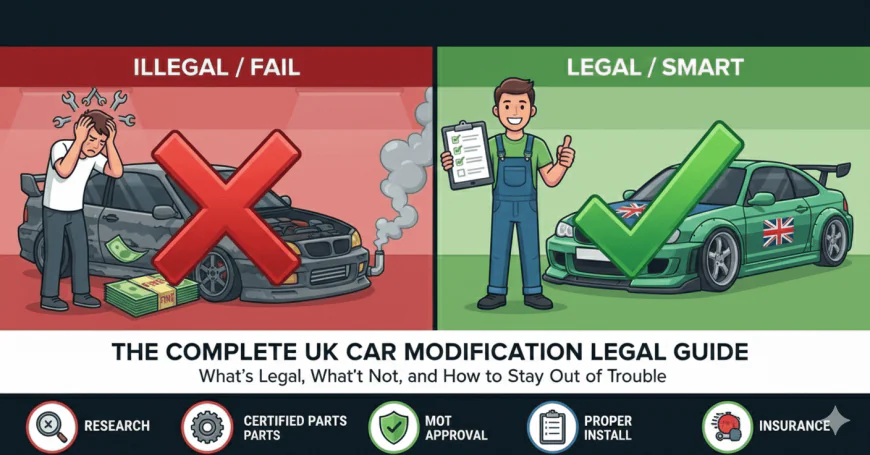
The Legal Minefield Nobody Tells You About
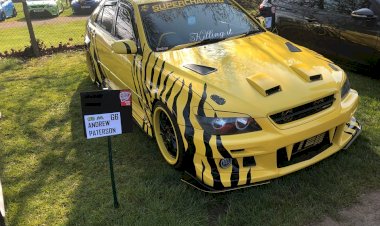
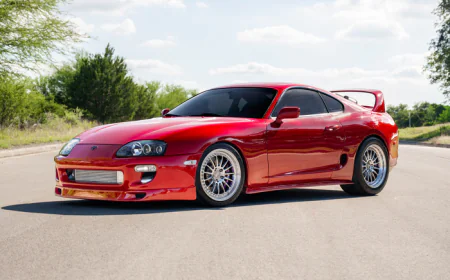
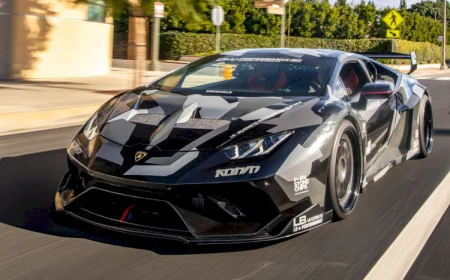
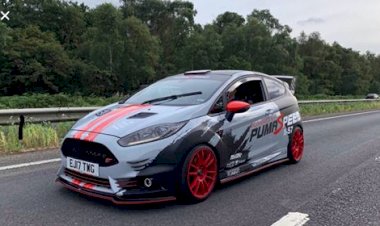
Here's the thing about modifying cars in the UK that nobody really talks about until it's too late: the line between "perfectly legal" and "you're getting a fine and possibly your car seized" is much, much thinner than most people realise. You can scroll through Instagram all day long looking at absolutely mental builds — slammed estates, turbocharged hot hatches, widebody exotics — and it's easy to assume that if other people are doing it, it must be fine. But the uncomfortable reality is that a huge proportion of modified cars on UK roads are technically illegal in one way or another, and the only reason their owners haven't been caught yet is that they haven't been pulled over at the wrong time by the wrong police officer.
This isn't meant to scare you off modifying your car. Far from it. The UK modification scene is vibrant, creative, and full of genuinely brilliant builds that push the boundaries of what's possible. But if you're going to invest time, money, and effort into making your car your own, you need to understand the legal framework you're working within. Because the consequences of getting it wrong aren't just hypothetical. We're talking £1,000 fines, points on your licence, MOT failures, insurance being voided, and in extreme cases, your car being seized under Section 59 of the Police Reform Act.
This is the complete, no-nonsense guide to UK car modification laws in 2026. We're going to cover every major category of modification — exhausts, suspension, lights, tints, wheels, body kits, number plates, and more — and tell you exactly what's legal, what's illegal, what's in the grey area, and how to navigate it all without ending up on the wrong side of the law. This isn't legal advice (we're not solicitors), but it is the most comprehensive breakdown of UK modification law you'll find in one place, written by people who've been deep in the scene for years and have seen what happens when it goes wrong. Over at Stance Auto Magazine, we've covered thousands of builds, and the one thing that separates the successful ones from the disasters is understanding the rules before you start spending money.
Exhaust Modifications: The Single Biggest Legal Trap
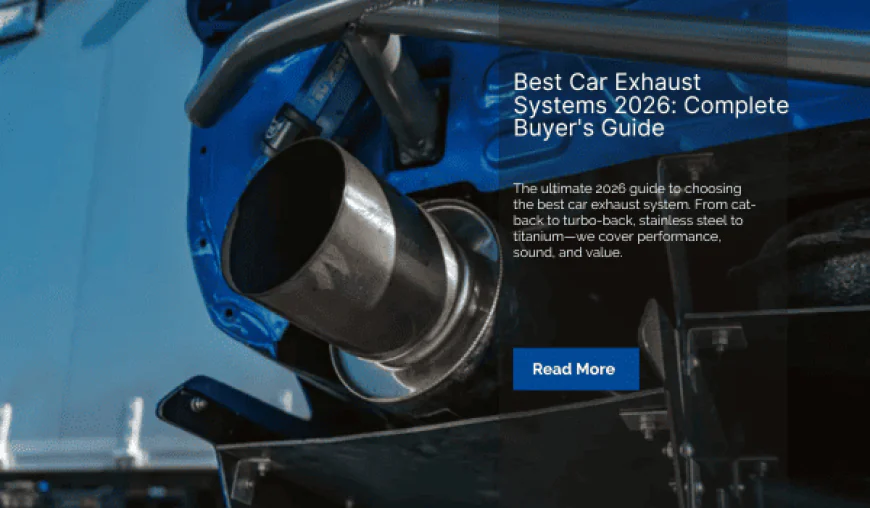
Let's start with the modification that gets more people into trouble than any other: exhaust systems. Exhausts are one of the most popular mods — they're relatively affordable, they transform how your car sounds, and in many cases they deliver genuine performance gains. But they're also the modification most likely to land you with an on-the-spot fine, an MOT failure, or even your car being taken off the road. Here's why.
The Noise Limit Law
UK law is very clear on this: your car's exhaust cannot exceed 74 decibels for cars registered before 2016 or 72 decibels for cars registered after 2016. And starting in 2026, that limit is dropping further to 68 decibels for new cars. These measurements are taken during an MOT test at a specific distance and RPM, and if your car exceeds the limit, it's an automatic fail. But here's where it gets tricky: the police don't need to wait for your MOT to pull you over. If they think your exhaust is excessively loud, they can issue you with an on-the-spot fine of £50 and hand you a prohibition notice, which legally prevents you from driving the car until the exhaust is removed or replaced.
The problem is that "excessively loud" is subjective. Two different police officers might have very different opinions on what counts as too loud, which means you could drive past one officer without issue and get pulled over by another five minutes later. The safest approach is to stick with cat-back or axle-back systems from reputable brands like Milltek, Borla, or Scorpion, all of which are designed to stay within the legal noise limits while still delivering a much better sound than the factory system.
The Emissions Equipment Law
This is the big one, and it's non-negotiable. Removing your catalytic converter (a decat) is illegal for road use in the UK. Full stop. Your catalytic converter is a core emissions control device, and deleting it will cause your car to pump out pollutants that massively exceed legal limits. If you turn up to an MOT with a decat pipe, you'll fail on emissions immediately. If you're caught driving on public roads with a decat, you're looking at a £1,000 fine, and in some cases, prosecution.
The same applies to removing your diesel particulate filter (DPF), disabling your EGR valve, or fitting any other modification that tampers with emissions control systems. These mods are popular in the tuning scene because they can unlock more power, but they're categorically illegal on UK roads. If you're building a track-only car that'll never see public roads, go wild. But if you're driving it to work, to the shops, or anywhere on public highways, you need to keep all your emissions equipment intact and functioning. For more on legal exhaust options, check out our complete guide to the best exhaust systems for 2026.
What's Actually Legal
So what can you do? Cat-back exhaust systems — which replace everything from the catalytic converter backwards to the rear bumper — are legal as long as they stay within the noise limits. Axle-back systems, which replace just the rear muffler and tips, are also fine for the same reason. High-flow sports catalytic converters are legal as long as they still meet emissions standards (look for ones marked as "200-cell" or "Euro 4/5/6 compliant"). And if you're running a turbocharged car, a turbo-back system with a high-flow cat is technically legal, but you're pushing the boundaries — make sure it's been properly engineered and tested to meet UK regs.
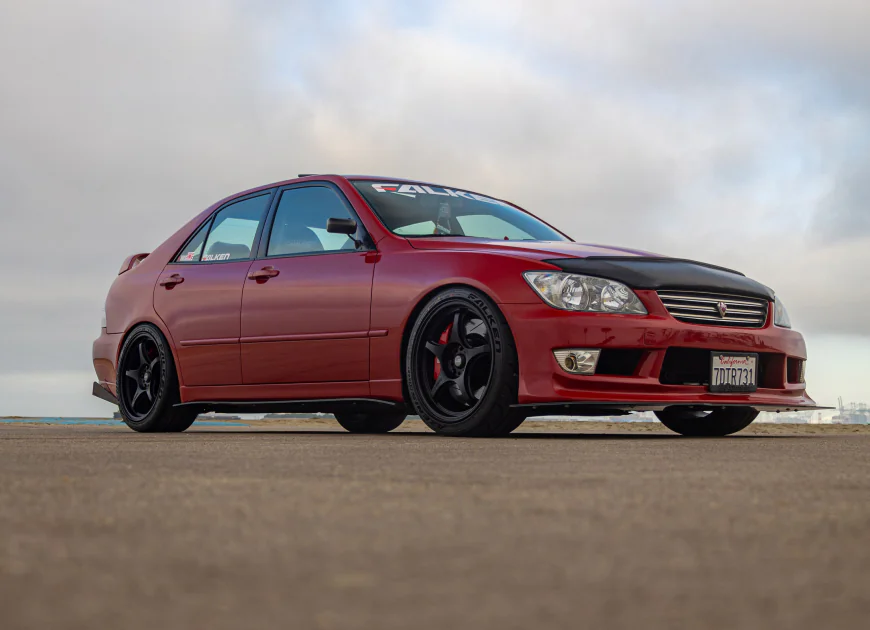
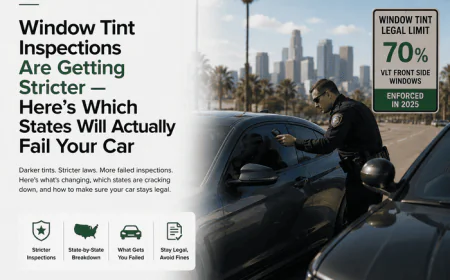
Window Tints: The 70/75 Rule You Can't Ignore
Window tints are one of the most misunderstood modifications in the UK, and that's because the law is both very specific and weirdly inconsistent depending on when your car was registered. Let's break it down properly.
The Legal Limits
If your car was first used on or after 1st April 1985, the law states that your front windscreen must allow at least 75% of light through, and your front side windows must allow at least 70% of light through. If your car was registered before that date, both the windscreen and front side windows must allow at least 70% through. There are no legal restrictions on tinting your rear side windows or rear windscreen — you can go as dark as you like on those.
The confusion comes from the fact that a lot of people assume "70% light transmission" means "70% tinted," but it's actually the opposite. It means that 70% of external light must be able to pass through the glass. So a 30% tint (which sounds light) is actually too dark and illegal, because it only allows 70% of light through once you factor in the glass itself, which already blocks some light. Most aftermarket tints are measured in "VLT" (Visible Light Transmission), and to stay legal, you want a tint rated at around 35-50% VLT on the front windows.
The Enforcement
Police and DVSA vehicle examiners carry light measurement devices specifically designed to test window tints. If they pull you over and your tints are too dark, you'll be issued with a prohibition notice, which means you cannot legally drive the car until the tints are removed. You'll also potentially face a fine, and in extreme cases, a court summons. If your car has illegal tints when it goes for its MOT, it'll fail immediately. The tester will record it as a defect, and you won't get your MOT certificate until it's sorted.
The bottom line? Don't tint your front windows unless you're absolutely certain the tint is within legal limits, and even then, be prepared for the hassle of potentially having to prove it to a police officer who thinks it looks too dark. If you're buying a car that already has tints, get them tested before you commit. It's not worth the risk.
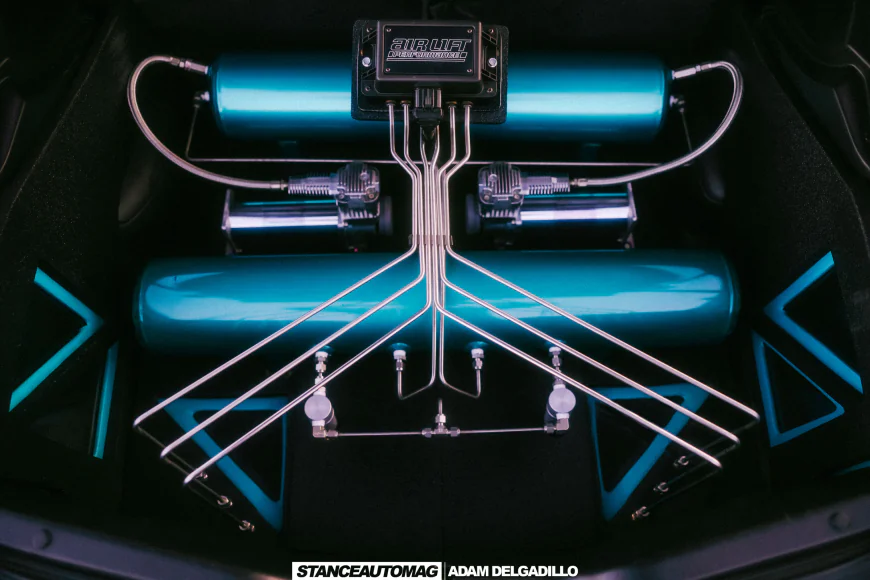
Suspension and Ride Height: How Low Is Too Low?
Lowering your car is one of the most transformative modifications you can make, and it's also one of the most popular. But there are legal limits to how low you can go, and exceeding them can cause serious problems at MOT time and potentially on the road if you're pulled over.
The MOT Test
Your car's suspension is tested as part of the MOT under several criteria: condition, security, and effectiveness. If your suspension is visibly damaged, leaking oil, or excessively corroded, it'll fail. But the more relevant question for modified cars is whether lowering the suspension affects the car's ability to pass the other MOT tests. Specifically: can you still get a jack under it safely? Are the wheels still properly aligned? Does lowering it cause the tyres to rub on the arches or suspension components? Is the ride height so low that you're scraping speed bumps and causing damage to the underside of the car?
There's no specific legal ride height limit in the UK, but your car must be safe, roadworthy, and capable of being driven without causing damage to itself or posing a risk to other road users. If your car is so low that it bottoms out on every bump, scrapes its undertray on flat roads, or can't make it over speed bumps without getting beached, that's a problem. MOT testers also check for excessive negative camber (where your wheels are angled inward), which can be caused by lowering a car too much without adjusting the suspension geometry. If the camber is extreme, it'll fail.
What's Legal
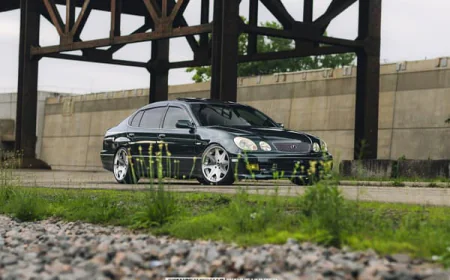
Lowering springs from reputable brands are legal as long as they're fitted properly and the car still passes its MOT. Coilovers are also legal and give you the ability to adjust your ride height to find the sweet spot between looking good and staying practical. Air suspension is legal and increasingly popular because it lets you drop your car to the floor when parked and raise it back up to a sensible height for driving. Just make sure any suspension modification is installed by someone who knows what they're doing, because bodged suspension work is dangerous and will absolutely fail an MOT.
As we discussed in our guide to popular car modifications, suspension is one area where cutting corners is never worth it.
Lights and Neons: White, Yellow, Red — And Nothing Else
Lighting modifications are another legal minefield, and the rules are stricter than a lot of people realise. The fundamental principle is simple: your lights must not confuse, distract, or blind other road users, and they must comply with the Road Vehicle Lighting Regulations 1989, which is the key piece of legislation governing what you can and can't do.
Headlights and Tail Lights
Your headlights must emit white or yellow light at the front, and your tail lights must emit red light at the back. Any other colour is illegal. That means red, blue, green, or purple headlight tints or bulbs are not allowed. You also can't fit excessively bright HID (High-Intensity Discharge) or LED bulbs unless they're properly aligned and don't dazzle oncoming traffic. A lot of cheap HID kits cause exactly this problem, and if you're caught with them, you can be fined and forced to remove them.
Neon Underglow and Interior Lights
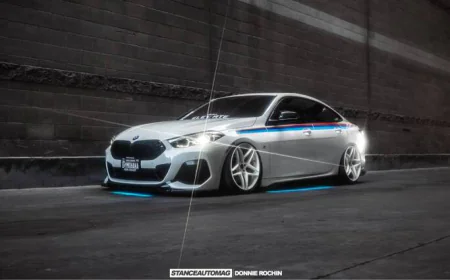
This is where it gets interesting. Neon lights fitted to the underside of your car are legal — but only if they meet very specific conditions. The lights cannot be visible from outside the car (the tubing itself must be hidden), they cannot flash, they cannot be fitted to the rear of the car, and they cannot be blue or green (because those colours are associated with emergency vehicles). If your underglow meets all of those criteria, you're technically in the clear. If it doesn't, you're breaking the law, and police can pull you over and issue a fine.
Interior neon lights (like footwell LEDs or dashboard strips) are also legal as long as they don't distract you or other drivers. That means no flashing, no excessively bright colours that reflect off your windscreen, and definitely no lights that can be seen from outside and mistaken for something else.
Number Plates: The Rules Are Stricter Than You Think
Number plates might seem like a trivial detail, but they're one of the most heavily regulated aspects of car modification in the UK, and getting them wrong can result in fines, MOT failures, and even penalty points. Let's cover the essentials.
The Legal Requirements
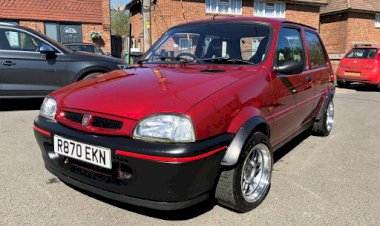
Your number plates must meet BS AU 145e standards, which govern everything from the font and spacing to the reflective material and background colour. The front plate must have black characters on a white reflective background, and the rear plate must have black characters on a yellow reflective background. The font must be the standard DVLA font (Charles Wright), and the spacing between characters must follow strict guidelines.
3D number plates and 4D gel plates are legal as long as they still meet all the other requirements — the characters must be the correct size, spacing, and font, and they can't have any additional borders, patterns, or backgrounds that obscure the registration. A lot of 3D/4D plates sold online don't meet these requirements, so buy from a registered supplier and double-check before fitting them.
What's Illegal
Anything that alters the spacing, size, or font of your number plate is illegal. That includes adding screws or bolts that obscure characters, fitting plates with coloured or reflective backgrounds (like carbon fiber patterns), or using incorrect fonts (the italic "show plate" style is not legal for road use). Plates with tinted covers that reduce visibility are also illegal and will fail an MOT. If you're caught with illegal plates, you can be fined £1,000 and given penalty points.
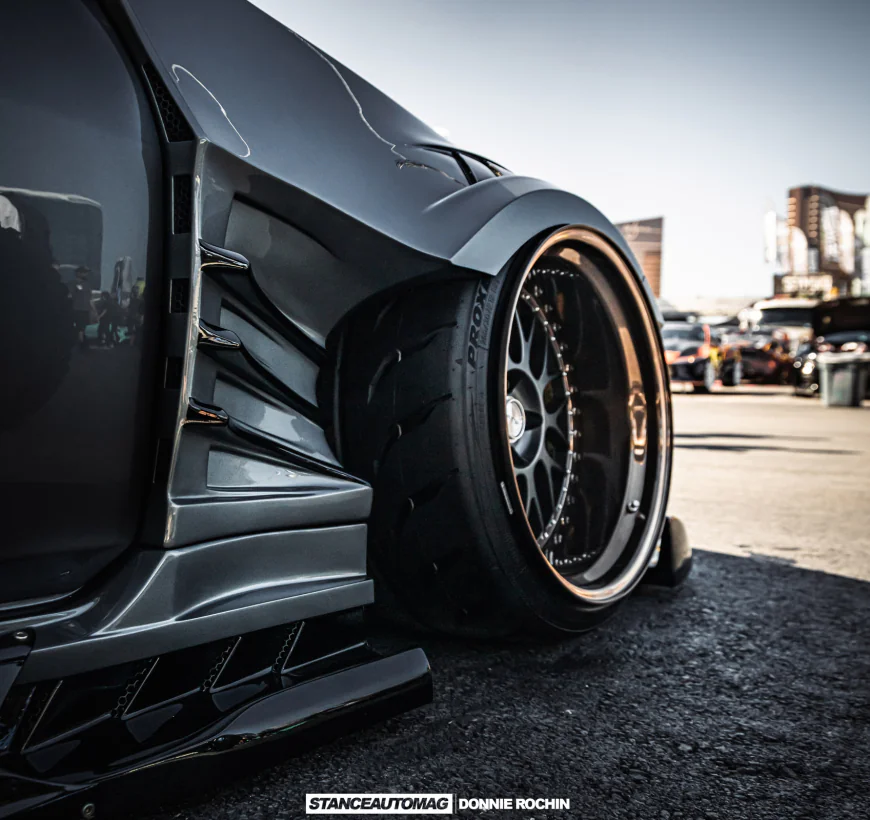
Body Kits, Spoilers, and Aerodynamic Modifications
Body kits and spoilers are generally legal as long as they don't compromise safety. The key rule is that any body modification must be securely fitted, free of sharp edges, and not obstructing the driver's view or the car's lights and indicators. If a spoiler is loose, poorly fitted, or has edges sharp enough to cause injury in a collision, it's illegal.
Widebody kits are legal as long as they don't extend the car's width beyond legal limits or cause the tyres to protrude beyond the arches (which creates a hazard for pedestrians and other vehicles). Most professionally fitted widebody kits are fine, but DIY efforts that leave sharp edges or poorly secured panels can fail an MOT and potentially get you pulled over.
Final Thoughts: Modify Smart, Stay Legal
The key takeaway from all of this is simple: ignorance of the law is not a defence. If you fit a modification without checking whether it's legal, and you get caught, you can't claim you didn't know. The police, DVSA, and MOT testers don't care whether you bought the part from a reputable brand or whether "everyone else is doing it" — if it doesn't meet UK regulations, you're breaking the law, and you'll face the consequences.
The good news is that staying legal really isn't that hard. Stick with parts from reputable manufacturers, avoid anything that deletes emissions equipment or makes your car excessively loud, keep your tints within limits, and make sure your lights, plates, and suspension are properly installed and meet UK standards. If you're ever unsure whether a modification is legal, ask. Talk to your MOT tester, consult the DVLA guidelines, or reach out to specialist modified car insurance brokers like Adrian Flux or Brentacre, who deal with this stuff every day.
And whatever you do, declare every modification to your insurance company. We'll cover this in much more detail in our guide to modified car insurance, but the short version is: if you don't declare it and you need to make a claim, your policy can be voided entirely. It's not worth the risk.
For more guidance on which mods are actually worth your money, check out our top 10 value-for-money mods and our complete guide to beginner modifications. Modify smart, stay legal, and enjoy your build.
 Like
1
Like
1
 Dislike
0
Dislike
0
 Love
0
Love
0
 Funny
0
Funny
0
 Angry
0
Angry
0
 Sad
0
Sad
0
 Wow
1
Wow
1