




















































.png)




![[HOONIGAN] Ken Block's GYMKHANA NINE](https://img.youtube.com/vi/_bkX5VkZg8U/maxresdefault.jpg)


















































![[HOONIGAN] KEN BLOCK'S GYMKHANA SEVEN: WILD IN THE STREETS OF LOS ANGELES](https://cdn.motor1.com/images/mgl/2KlO4/s1/ken-block-london-tour-directors-cut.jpg)



































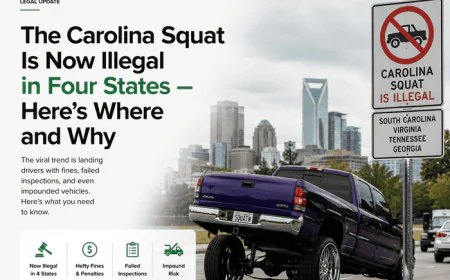
The Carolina Squat Is Now Illegal in Four States — Here's Where and Why
North Carolina, Virginia, South Carolina, and Georgia have all banned the Carolina Squat truck stance. Here's exactly what the laws require.
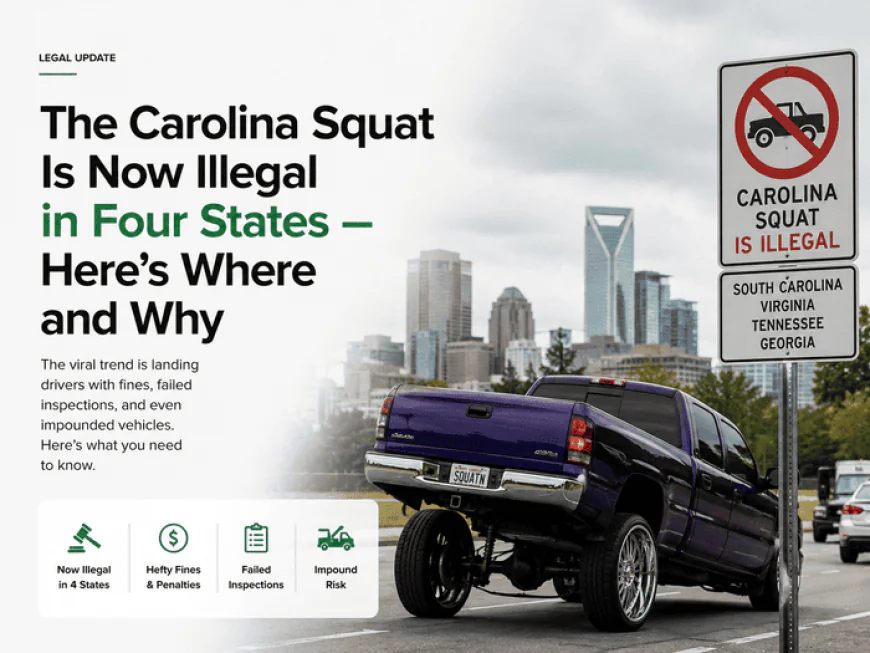
The Carolina Squat Is Now Illegal in Four States
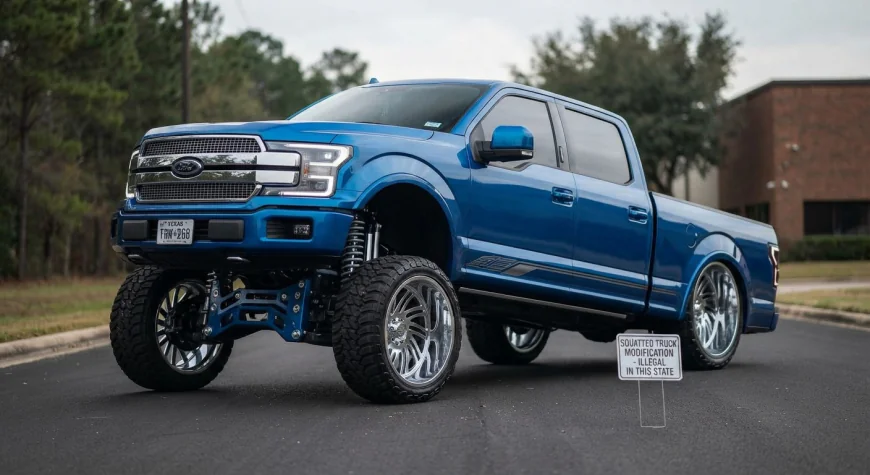
The Carolina Squat is a truck modification where the front end sits noticeably higher than the rear, typically achieved with a leveling or lift kit up front and stock or lowered suspension out back — and despite the regional name, it's now explicitly illegal to drive in at least four US states.
In plain English: if your front bumper sits more than a set number of inches above your rear bumper, several states will now pull you over for that alone, no other violation required.
Where It's Actually Banned
North Carolina got there first, signing its ban into law in 2021 and taking effect December 1 of that year. The penalty structure is unusually harsh for what is essentially an aesthetic modification: a mandatory license revocation of at least a year for the offence, alongside fines that state safety-advocacy analyses put as high as $300.
South Carolina followed with the state Senate voting almost unanimously to ban the mod, with the law setting a specific technical threshold — no front fender can sit more than four inches above the height of the rear fender — and a 180-day warning period before fines (running $100 to $300 depending on offence count) actually kicked in.
Virginia's version, Senate Bill 777, carries real weight behind it: Governor Glenn Youngkin signed it alongside the family of a driver killed in a crash involving a squatted truck, and it uses the same four-inch bumper-height differential standard as South Carolina. Virginia's law makes a squat violation a primary offence, meaning police can stop a driver for the modification alone, though the fine itself — up to $250 — is comparatively modest.
Georgia joined the list too, with a 2024 law that offers slightly more room than its neighbours, allowing up to a six-inch bumper height differential before a vehicle crosses into illegal territory.
Why Lawmakers Say It's a Safety Issue, Not a Style Issue
The argument for these bans isn't really about aesthetics, at least not officially. Raising the front end and dropping the rear shifts a truck's center of gravity and moves weight off the front tires and onto the rear, which changes how the vehicle handles and brakes. It also tilts headlights upward instead of down the road, which safety advocates say can blind oncoming drivers, and it changes bumper alignment in a way that undermines how bumpers are designed to interact with each other in a crash. Virginia's law exists specifically because of a fatal collision involving a squatted truck, which is part of why its penalty structure leans harder into stopping the behavior at the roadside rather than just fining it after the fact.
The Debate: Self-Expression vs. Public Safety Overreach
Owners of squatted trucks generally push back on two fronts. First, they argue the safety case is thinner than lawmakers present it — a well-built squat setup with correctly aimed headlights and properly functioning brakes isn't automatically the hazard the marketing around these bills suggests, and truck culture has plenty of builds that prioritize show use over daily driving in traffic anyway. Second, there's a broader concern about precedent: if state legislatures can ban one specific suspension stance outright, based on a bumper-height measurement rather than a demonstrated handling or visibility failure on that specific vehicle, what stops the next bill from targeting lowered stance builds, aggressive camber, or big brake kits under the same logic?
Supporters of the bans counter that this isn't a slippery slope argument so much as a response to actual crash data and constituent complaints — lawmakers in North Carolina, South Carolina, Virginia, and Georgia didn't reach for these bills in isolation, they responded to specific incidents and sustained public pressure, and the laws are narrowly written around a measurable bumper-height differential rather than a vague "unsafe modification" standard that would sweep in far more builds. It's worth browsing our trucks, vans and jeeps features for builds that get the aggressive look without crossing into squat territory.
If you're building a truck and want to stay on the right side of a four- or six-inch bumper rule while still getting the look you're after, it pays to measure before you commit to a lift or level kit — a decent tape measure and a torque wrench go a long way here, and you'll find both in the Mag store on Amazon.
Sources: North Carolina General Assembly (2021 legislation), Virginia SB 777 (2022), South Carolina squat ban legislation and WBTW/WCCB Charlotte reporting, Georgia 2024 legislation, NPR reporting on North Carolina's ban.
 Like
0
Like
0
 Dislike
0
Dislike
0
 Love
0
Love
0
 Funny
0
Funny
0
 Angry
0
Angry
0
 Sad
0
Sad
0
 Wow
0
Wow
0