
































































































































































































































PCV Valve: What It Does, How It Fails and What Modified Engines Need
A PCV valve is a one-way valve that vents crankcase blow-by gases into the intake. Here is how it works, how it fails and what boosted engines need to know.
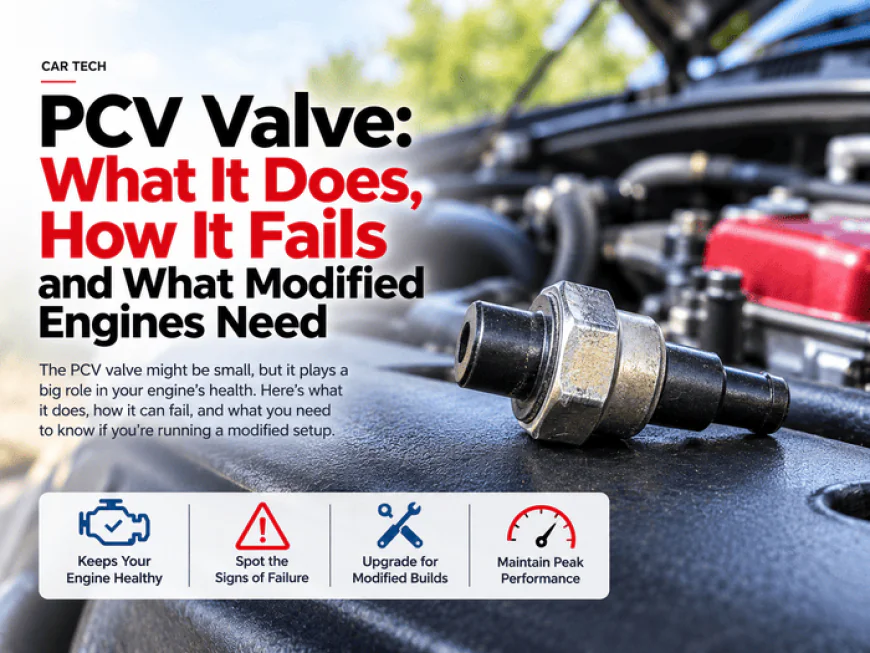
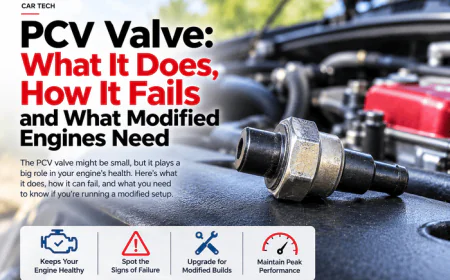
A PCV valve is a small one-way valve that pulls blow-by gases out of your engine's crankcase and feeds them back into the intake so they get burned instead of vented to the air. Positive crankcase ventilation sounds like a dull topic, but this little part quietly decides whether your engine sips oil, idles rough, leaks from every gasket or just carries on happily for another 100,000 miles. If you run a stock daily you can mostly ignore it until it complains. If you run a turbo build, a swap or anything with extra boost, the PCV valve is one of those things you really want to understand before it bites you.
Most people only meet the PCV valve when a mechanic mentions it on an invoice or when a forum thread tells them it's the reason their car smokes. So let's go through what it actually does, how to spot a bad one, what it costs to fix and where modified cars get into trouble.
What Is a PCV Valve and What Does It Actually Do?
A PCV valve is a spring-loaded or diaphragm-style one-way valve that controls how much crankcase gas flows into the intake manifold. Every engine leaks a little combustion pressure past the piston rings into the crankcase. That's called blow-by, and it's a mix of unburned fuel, water vapor, exhaust gas and oil mist. Left alone it builds pressure, pushes oil out past seals, turns your oil into sludge and eats the oil's additives.
The PCV valve gives that gas somewhere to go. Engine vacuum pulls it out of the crankcase, through the valve, and into the intake where it burns with the next charge of air and fuel. Fresh air is drawn in through a breather on the other side of the engine so the crankcase is always gently flushed. It's a closed loop, which is why it's called positive crankcase ventilation. It's also an emissions system, and every modern road car has some form of it because venting blow-by to the atmosphere stopped being acceptable decades ago.
How Does a PCV Valve Work?
A PCV valve opens and closes based on manifold vacuum, flowing more at idle and less under load. At idle the intake manifold has strong vacuum, so the valve is mostly restricted to avoid pulling in too much unmetered air. At cruise it opens up and moves plenty of gas. Under heavy throttle, vacuum drops, and on a turbocharged or supercharged engine it can actually go positive. That's when the valve should shut so boost pressure doesn't shove its way backwards into the crankcase.
That last bit is where things get interesting on forced induction cars, and we'll get there. First the basics. On many older Japanese engines the PCV valve is a small plug-in unit sitting in a rubber grommet in the valve cover, connected to the intake by a hose. On newer cars it's often built into the valve cover or an oil separator housing and you can't buy just the valve. The location varies a lot, so look for a small hose coming off the valve cover or the side of the block and follow it. If you're hunting for the part on a turbo car and the symptoms look more like a boost problem, our turbo car losing boost diagnosis walks through the other usual suspects before you start swapping parts.
What Are the Symptoms of a Bad PCV Valve?
The most common bad PCV valve symptoms are a rough or high idle, increased oil consumption, oil leaks and a lit check engine light. A valve that's stuck open lets in too much air at idle, so the mixture goes lean and the car hunts around or stalls. You'll often see lean codes like P0171 or P0174 along with it. A valve that's stuck closed or clogged lets crankcase pressure climb, and that pushes oil past seals and gaskets. That's the classic wet valve cover, the dribble from the crank seal or the oil on the dipstick tube.
Other signs are a whistling or hissing noise from a cracked hose, oil in the air intake pipe or intercooler piping, blue smoke on startup, and sludge under the oil filler cap. None of these prove the PCV valve is the problem on their own. Worn rings and a failing turbo can cause some of the same things. But because the PCV valve is cheap and easy to check, it's always worth ruling out first.
How Do You Test a PCV Valve at Home?
The simplest test is the shake test: pull the valve out, shake it, and a healthy one rattles freely. If it's silent or sounds clogged, it's gummed up with sludge and needs replacing. With the engine idling you can also pull the valve out of its grommet and put a finger over the end. You should feel strong vacuum, and when you put the valve back the idle should settle slightly. If nothing changes, the passage is blocked.
For spring-type valves you can blow gently through both ends. It should flow in one direction only. If air passes both ways, the check function has failed. For built-in or diaphragm designs, look at the membrane for tears and try a hand vacuum pump. A torn diaphragm leaks and you'll hear it. Never clean and reuse a gummed-up PCV valve if you can avoid it, because carbon buildup usually means the internals are worn anyway and a new part costs very little.
How Much Does PCV Valve Replacement Cost?
A PCV valve itself typically costs between about £10 and £40 or $10 and $50, with labor taking it to roughly £60 to £150 at a shop. On a plug-in valve the job takes ten minutes with basic tools and it's one of the easiest wins you'll ever get on a home garage car. If the valve is part of the cover or an oil separator, you're looking at a few hundred because you're replacing the whole assembly. European turbo engines are the worst for this, with some designs costing serious money and needing the intake stripped.
Always add the hoses into the price. A hard, cracked PCV hose will cause the same symptoms as a dead valve, and it's silly to fit a new valve and leave a perished hose in place. Grommets harden over time too. If you're in there, replace them.
How Often Should You Replace a PCV Valve?
Most mechanics suggest inspecting the PCV valve every 30,000 to 60,000 miles and replacing it when it fails the rattle test or when it's due on the service schedule. Some manufacturers list it as a replacement item and others never mention it. The honest answer is that it depends on the engine, the oil you use and how hard the car lives. Short trips are brutal because moisture and fuel never burn off, and that gums up the valve faster than a long motorway commute ever will.
Good oil and regular changes are the best protection. If you're not sure what to run, our guide on how to choose the right engine oil covers viscosity and specs without the marketing fluff, and a quality oil from a brand like Castrol will hold up far better in a hot, boosted engine than the cheapest bottle on the shelf.
Does a PCV Valve Matter on a Turbo or Modified Engine?
A PCV valve matters more on a boosted engine because positive manifold pressure can push gas backwards through the system and into the crankcase. On a naturally aspirated car the valve mostly lives in vacuum. Add a turbo and you spend a lot of time in boost, so the check valve has to actually hold. Many factory turbo engines handle this with a second path that vents the crankcase into the intake before the turbo when under boost, or with a separate check valve. If that check valve leaks, boost pressure ends up in the crankcase, oil gets pushed out of breathers and seals, and you may see lost power too.
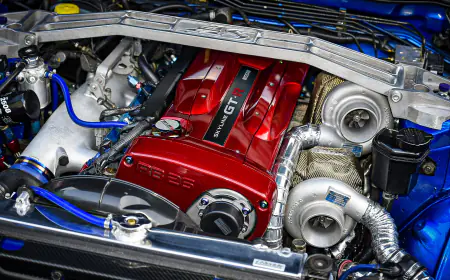
This is why certain engines have a reputation. The BMW N54, for example, is well known for PCV trouble and we cover the wider picture in our BMW N54 and N55 engine guide. On the Japanese side, big power builds on engines like the 2JZ and RB26 push far more blow-by than stock because of higher cylinder pressure, worn rings and looser tolerances. If you like this era of engine and want to see the cars that run them, the Stance Auto 90s JDM Classics issue is worth a look at our magazine page.
Should You Fit a Catch Can or Delete the PCV Valve?
A catch can is a reasonable upgrade on a hard-driven turbo car, but deleting the PCV system or venting it straight to atmosphere is a bad idea on a road car. A catch can sits in the PCV line and traps oil mist and fuel vapors before they reach your intake. That keeps the intake manifold, valves and intercooler cleaner and cuts down on carbon buildup, particularly on direct injection engines. Brands like Mishimoto make popular kits for lots of platforms, and they're worth considering if you track the car or run higher boost.
Still, a catch can should stay in a closed loop. Venting crankcase gas to the air through an open breather filter makes the engine smell, drips oil on the road and can fail an inspection or break emissions rules, depending on where you live. In the US that kind of delete can count as tampering, and in the UK an MOT tester can fail a car for excessive leaks or smoke. Put simply, a catch can helps, a delete hurts. If you're building a car properly, our piece on which mods actually help turbo cars will help you decide what's worth spending on before you reach for the catch can.
Final Word on the PCV Valve
The PCV valve is one of the cheapest parts on your engine and one of the most misunderstood. Check it when you do a service, replace the hoses with it, and don't be surprised when a mystery oil leak or rough idle turns out to be a ten pound fix. If your car is boosted, treat the PCV system as part of your tuning plan and not an afterthought, because a PCV valve that's quietly failing will make a good build feel off and a stock engine feel tired.
For more straight-talking guides, builds and car culture, you can pick up Stance Auto Magazine on Amazon.
Related Reads
- Turbo Car Losing Boost? How to Diagnose It
- BMW N54 vs N55 Engine Guide
- What Is the Best Oil for My Car?
- How to Choose the Right Engine Oil
Find more builds, guides and car culture at Stance Auto Magazine.
 Like
0
 Dislike
0
 Love
0
 Funny
0
 Angry
0
 Sad
0
 Wow
0