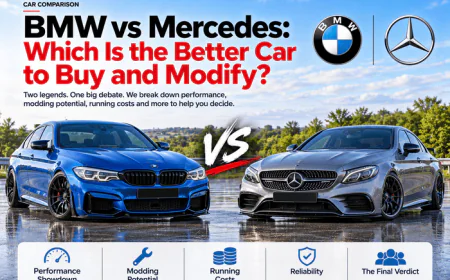


































































































































































BMW vs Mercedes: Which Is the Better Car to Buy and Modify?
BMW vs Mercedes: which is the better car to buy and modify? We compare handling, engines, reliability, aftermarket support and running costs for tuners and stance builders.
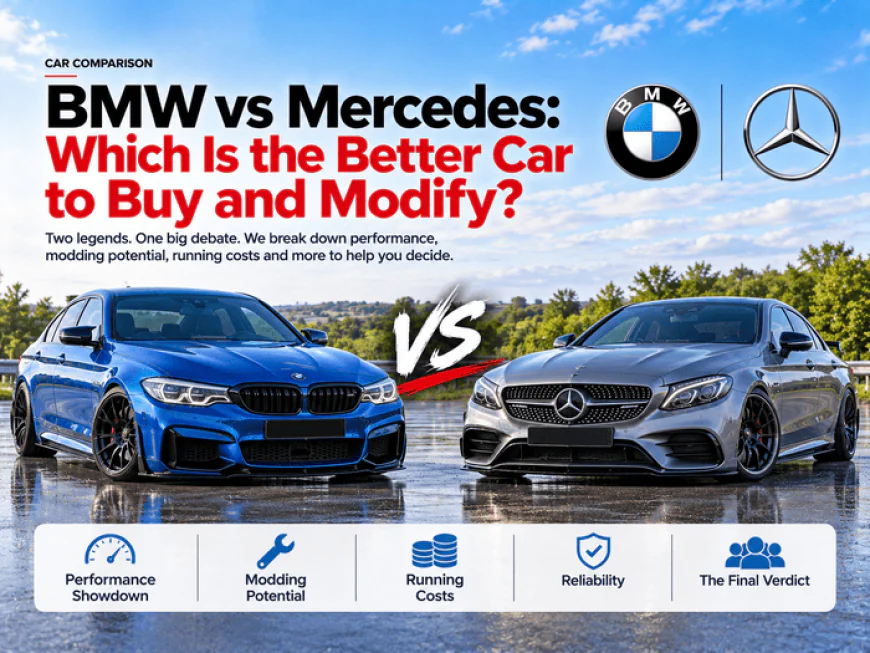
In the BMW vs Mercedes debate, BMW is generally the better choice if you want a driver's car with strong aftermarket support, while Mercedes is the better choice if you want a comfortable, torquey sleeper with air suspension and big V8 power. That's the short version. The long version is that both brands build brilliant cars, both can be a nightmare when neglected and the right choice depends on what you actually want to do with the car. A track day weapon, a bagged cruiser and a daily with a remap are three very different briefs.
We've seen plenty of both through the magazine, and this guide breaks down how BMW vs Mercedes stacks up for people who modify their cars, from handling and engines to reliability, costs and what the scene thinks of each.
How Do BMW and Mercedes Differ in Character?
BMW builds cars around driver feel and balance, while Mercedes builds cars around comfort, refinement and effortless torque. BMW's long-running focus on rear-wheel drive, near 50:50 weight distribution and direct steering gives its cars a playful, communicative feel. Even a basic 3 Series feels eager to be thrown into a corner. Mercedes tends to be softer and more isolated, with a quiet cabin, a smooth ride and an old-school sense of quality that makes long trips easy.
You can see that philosophy on the manufacturers' own sites, from BMW and its M division through to Mercedes-Benz and its AMG performance arm. That difference shapes everything. A BMW rewards you for driving it hard, and a Mercedes rewards you for driving it far. The AMG range changes that picture, because AMG models trade some of that calm for thunderous V8s and aggressive tuning, and a car like the C63 is a very different animal from a standard C-Class.
Which Is Better for Performance: BMW or Mercedes?
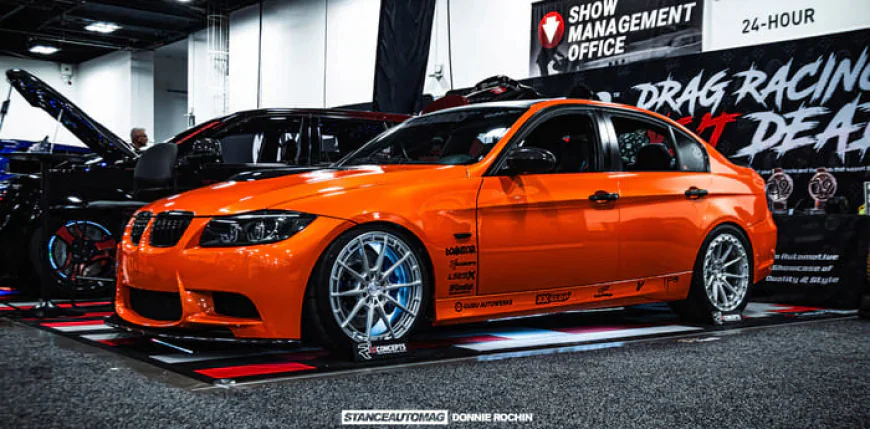
BMW is typically better balanced for handling and track use, while Mercedes AMG models often win on straight-line muscle and sound. The BMW M3 and M2 are known for sharp chassis and willing engines, and even non-M cars like the 335i or M340i have loads of tuning potential. Mercedes counters with the AMG V8, from the naturally aspirated 6.2 liter in older C63s to the twin turbo 4.0 in newer cars. They're huge on torque, and they sound fantastic.
If you want lap times, BMW's lighter, more neutral chassis gives you more to work with. If you want a car that makes a ridiculous noise and pulls hard from a roll, the AMG is hard to beat. Our comparison of the E36, E46 and E92 M3 shows how BMW's generations differ if you're leaning that way.
Which Has Better Aftermarket Support?
BMW has the larger and cheaper aftermarket, with a huge range of suspension, brakes, tunes, wheels and body parts for almost every model. From the E30 through to the G80 M3, you can find parts from dozens of brands, and a big community means plenty of how-to guides and tuners who know the platforms. That makes BMW a favorite for first-time builders and track day regulars. Our E30 modification guide and E46 M3 modification guide show how deep that support goes.
Mercedes has strong support too, especially for AMG models, with specialists offering tunes, exhausts, intakes and suspension upgrades. But parts are often pricier, and the choice for older or non-AMG models is narrower. It's improved a lot, and wheels and air suspension are well covered, but a BMW usually gives you more options for the money.
Which Is More Reliable: BMW or Mercedes?
Neither brand is bulletproof, and reliability depends far more on the specific engine, the age and the previous owner's maintenance than on the badge. BMW's N54 turbo six is a perfect example. It's a tuning hero, but it's known for high-pressure fuel pump failures, wastegate rattle and cooling issues, and our N54 and N55 engine guide covers what to watch for. Common BMW issues across the range include oil leaks, cooling system parts and worn bushes.
Mercedes has its own list. Some older V6 engines suffered from a balance shaft sprocket problem, certain AMG V8s need careful checking for specific known faults, and complex electronics and air suspension can become expensive when they age. A well-maintained example of either car can be dependable, and a neglected one of either can bankrupt you. Always buy on history and inspection, not badge loyalty.
Which Costs More to Run and Repair?
Mercedes often costs a little more in parts and specialist labor, but both brands are expensive compared with mainstream cars. Independent specialists exist for both, and that's where you'll save money over a main dealer. BMW parts are widely available and often cheaper because of the size of the aftermarket, and plenty of owners do their own servicing. Mercedes parts can cost more, and complex systems like air suspension or advanced electronics push up repair bills.
Running costs also depend on the engine. A big V8 AMG will drink fuel and tires faster than a 3 Series, and insurance will be higher. Budget for tires, brakes and servicing every year, and remember that a cheap purchase price can hide big maintenance bills. If you're building on a budget, our guide to how much it costs to modify a car will help you plan.
Which Is Better for Stance and Air Suspension Builds?
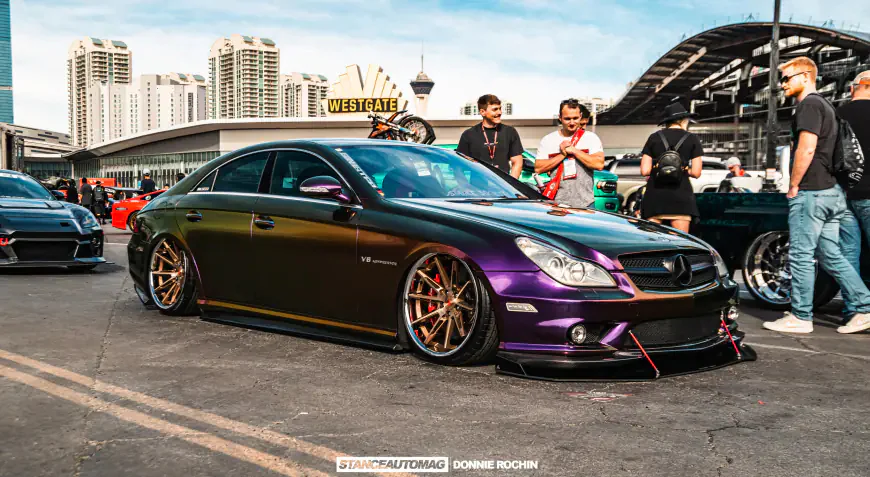
Mercedes is the more natural base for a bagged or air suspension build, while BMW is the more natural base for a coilover or track-focused setup. Many Mercedes models come with factory air suspension, so it's a quick job to convert that to adjustable bags and management, and the long, elegant body suits a slammed look. BMWs can be bagged too, and plenty are, but they're often chosen for static setups with coilovers and wide wheels.
The look is also different. A bagged Mercedes saloon or estate has a sleek, grown-up vibe, and a BMW often looks more aggressive and sporty with a widebody kit. For help with the wider debate, our comparison of bagged vs static lays out the trade-offs, and the air suspension vs coilovers guide explains the costs.
See It Done: BMW and Mercedes Builds
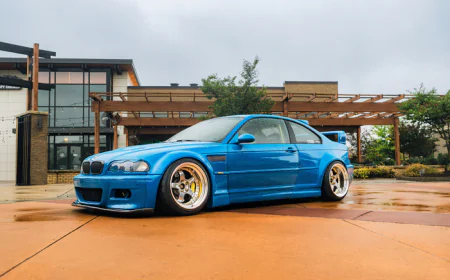
The best way to compare BMW vs Mercedes is to look at what owners have actually built. On the BMW side, the 2018 bagged widebody BMW M2 shows a modern BMW pushed hard with a big turbo, the 2015 bagged BMW M4 proves BMWs can sit properly low, and the BMW G80 M3 Competition SEMA build represents the new generation. For something more classic, check the BMW E46 330Ci.
On the Mercedes side, the Mercedes-Benz CLA 45 AMG review covers the performance end, the Matt Rogers Mercedes GLC 63 AMG shows a modern AMG build, and the Mercedes W123 300D with a 1JZ swap proves old Benzes can be wild. All of these show how far each brand can be taken.
BMW vs Mercedes: So Which Should You Choose?
Choose BMW if you want an engaging, easy-to-modify car with cheap parts and a huge community, and choose Mercedes if you want comfort, torque and an elegant air suspension build. In the BMW vs Mercedes decision, be honest about how you'll use it. For track days, spirited driving and first builds, BMW is hard to beat. For relaxed cruising, show cars and big V8 sounds, a Mercedes AMG is hard to ignore.
If you're still undecided, buy the best condition example you can afford and don't chase badges. A clean, well-serviced car of either brand will always beat a tired one with a better engine. And if you're leaning towards a BMW, our guide to the best BMW to modify will help you pick the right model.
What Should You Check When Buying a Used BMW or Mercedes?
When weighing BMW vs Mercedes on the used market, the history file matters more than the badge, so check service records, known engine faults and signs of neglect before anything else. On a BMW, look at the cooling system, oil leaks from the valve cover and sump, worn suspension bushes and, on turbo cars, the fuel pump and wastegate. On a Mercedes, check the air suspension for sagging or leaks, listen for gearbox hesitation, scan for electrical faults and look closely at the engine for the issues known on that specific generation.
A pre-purchase inspection from an independent specialist is cheap compared with a single big repair. In the BMW vs Mercedes comparison, the cars that cause the most regret are always the ones bought on price alone, with no history and a vague story. Ask how many owners the car has had, whether it's been modified and by whom, and whether it's been tracked. A modified car isn't automatically bad, but you want evidence that the work was done well. If the seller can't answer, walk away and find another one. Patience is the cheapest tool you have in the BMW vs Mercedes hunt.
Final Word on BMW vs Mercedes
The BMW vs Mercedes question doesn't have a single winner, because the right car depends on what you want it to do. BMW is the driver's choice with the stronger aftermarket, and Mercedes is the comfortable muscle option with natural air suspension appeal. Do your homework, inspect carefully, budget for maintenance and enjoy whichever you pick.
For more builds, comparisons and car culture, find Stance Auto Magazine on Amazon.
Related Reads
- What Is the Best BMW to Modify?
- BMW E36 vs E46 vs E92 M3 Compared
- BMW N54 vs N55 Engine Guide
- Air Suspension vs Coilovers: Pros, Cons and Costs
Find more builds, guides and car culture at Stance Auto Magazine.
 Like
0
 Dislike
0
 Love
0
 Funny
0
 Angry
0
 Sad
0
 Wow
0