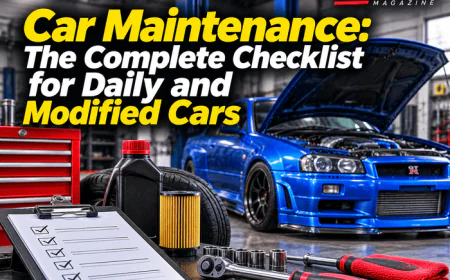











































































































































































































Car Maintenance: The Complete Checklist for Daily and Modified Cars
Car maintenance means servicing oil, brakes, tyres, coolant and filters on a schedule. Here is the full checklist, the intervals and what modified cars need on top.
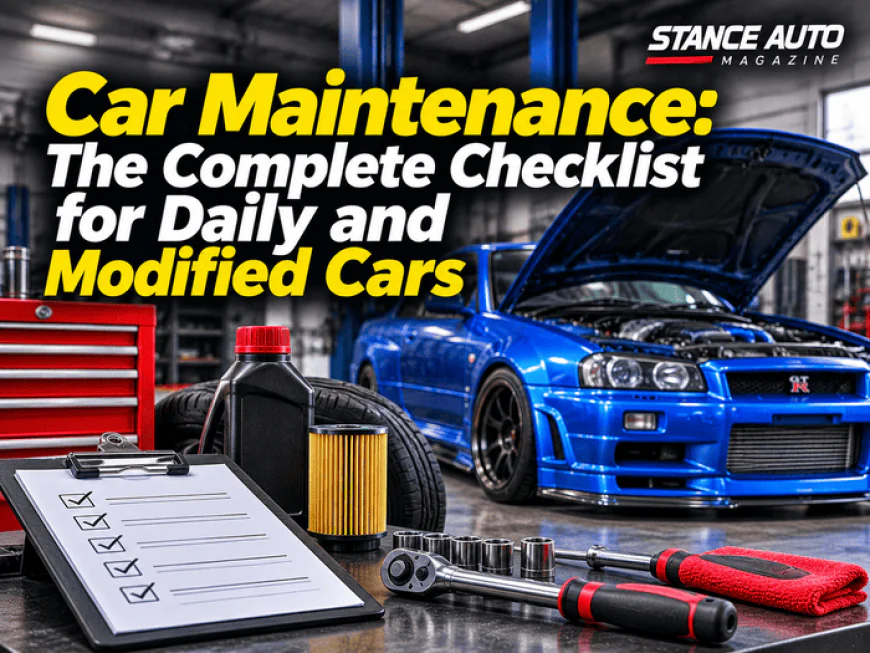
Car maintenance is the routine servicing and checking of your car's fluids, filters, tyres, brakes and wear parts at set intervals to keep it safe, reliable and cheap to run. It isn't glamorous and nobody posts their coolant change on Instagram, but it's the difference between a car that lasts 200,000 miles and one that dies at 90,000 with a repair bill nobody wanted. If you run anything modified, tuned or boosted, it matters even more, because you're asking the car to do things the factory never intended.
This guide covers the essentials, the intervals worth following, and the extra attention modified cars need. Use it as a checklist and check your handbook for the exact numbers on your car.
What Does Basic Car Maintenance Include?
Basic car maintenance includes changing the oil and filter, checking tyre pressure and tread, inspecting brakes, topping up fluids, and replacing the air filter and wipers. Those are the jobs that cover most of the problems that actually strand people. On top of that, you'll want to look at the battery, lights, belts and hoses, and listen for anything that sounds new. Many of these are ten-minute jobs you can do on the drive.
A proper full service goes further, with spark plugs, brake fluid, coolant, transmission and differential fluid, and checks on suspension, steering and exhaust. The exact schedule depends on the car, the engine and how you drive it. Short trips, stop and start traffic, towing and track days all count as severe use, and severe use needs shorter intervals.
How Often Should You Change the Oil?
Most cars need an oil and filter change every 5,000 to 10,000 miles or once a year, but turbocharged and modified engines should usually be on the shorter end. Modern synthetic oils last longer than the old stuff, and many manufacturers quote 10,000 miles or more. That's fine on a stock engine doing long runs. A boosted engine runs hotter, puts more stress on the oil and sees more fuel dilution, so changing it every 3,000 to 5,000 miles is cheap insurance.
Use the viscosity and spec the manufacturer calls for, or what your tuner recommends. If you're not sure, our guide to the best oil for your car goes through how to pick, and a trusted brand like Castrol is a safe bet for most cars. Always change the filter at the same time, because fitting new oil into a dirty filter makes no sense.
How Often Should You Check Tires and Brakes?
Check tyre pressure once a month and before long trips, inspect tread depth regularly, and have the brakes looked at at least once a year. Tires are the only thing connecting the car to the road, and underinflated tyres wear faster, use more fuel and handle badly. Legal minimum tread is 1.6mm in the UK, but performance drops well before that, so replace them earlier, around 3mm, if you care about wet grip. Rotating tyres every 6,000 to 8,000 miles helps them wear evenly, and a good tyre brand such as Michelin will make a noticeable difference in feel.
Brakes need pads and discs checked for thickness and wear, and brake fluid replaced roughly every two years. Brake fluid absorbs moisture over time and moisture lowers the boiling point, which is a real problem if you drive hard or track the car. If the pedal feels soft or the car pulls under braking, don't wait for the next service. For lowered cars, alignment also affects tyre wear and handling, and our wheel alignment after lowering guide explains the numbers.
When Should You Change Coolant, Spark Plugs and Filters?
Coolant typically needs changing every three to five years, spark plugs every 30,000 to 60,000 miles depending on type, and the air filter every 12,000 to 15,000 miles. Coolant loses its anti-corrosion additives with time, and old coolant can cause a corroded radiator, a failing water pump and overheating. It's boring, and it's one of the most common causes of an expensive failure.
Spark plugs vary a lot. Standard copper plugs may need changing at 30,000 miles, while long-life iridium plugs can last 60,000 or more. Tuned and turbo engines often need colder plugs changed more often, so follow your tuner's advice. The air filter is cheap, but a clogged one hurts performance and economy. Cabin filters should be done every year or so as well, mostly so you can breathe properly.
What About Timing Belts and Other Wear Items?
Timing belts should be replaced at the manufacturer's interval, typically every 60,000 to 100,000 miles or 5 to 10 years, whichever comes first, because a failed belt can destroy an interference engine. This is one job you really don't want to guess at. If you buy a used car with no proof the belt was done, assume it hasn't been and budget for it. Replace the water pump and tensioners at the same time, since you're already paying for the labour.
Other wear items are drive belts, hoses, suspension bushes, engine and gearbox mounts, and the clutch. Our guide to clutch slipping causes and solutions shows what to look for before a clutch lets you down, and anything that clunks, vibrates or squeals deserves checking before it becomes a bigger problem.
What Extra Car Maintenance Do Modified Cars Need?
Modified cars need shorter fluid intervals, more frequent inspections and a closer eye on anything the modification changes, such as boost leaks, suspension bushes and cooling. A tuned engine works harder, so the oil, plugs and coolant get tired faster. Turbo cars also need a warm-up and a short cool-down, a good habit that helps the bearings live longer. If you notice a loss of power or a drop in boost, work through the basics before blaming the turbo, and our turbo car losing boost diagnosis will guide you through it.
On lowered cars, check the suspension, bushes, ball joints and tyre wear more often, since they take extra punishment. Check bolts and clamps after the first few hundred miles of any new part, because things settle and loosen. If your car is a candidate for an MOT or inspection, our guide to passing the MOT on modified suspension covers what testers look for. Keep a logbook of every service and part you fit, because it protects the value of the car and proves to the next owner it's been looked after.
What Seasonal Car Maintenance Should You Do?
Seasonal car maintenance means checking the battery, coolant, tyres, wipers and lights before winter, and the air conditioning, cooling system and tyre pressures before summer. Cold weather is hardest on batteries, so have yours load tested if it's more than four years old, and make sure the coolant mix protects against freezing. Swap worn wipers before the first wet week and top up the screenwash with a proper winter fluid. If you live somewhere with salt on the roads, wash the underside of the car regularly, because rust is the one problem no amount of tuning will fix.
In summer, the focus shifts to heat. Check the radiator, hoses and fan operation, make sure the air con still blows cold and keep an eye on tyre pressures, which rise with temperature. If you track the car or go to events, add a check of the brakes and fluids before every outing. Good car maintenance is mostly about being a step ahead of the season, and a quick walk around the car once a month takes five minutes and catches most problems early.
How Much Does Car Maintenance Cost?
A basic service costs around £100 to £250 or $150 to $300 in a typical garage, and a full service can run double that, with major jobs like a timing belt costing several hundred more. Doing the simple stuff yourself saves a lot. Oil changes, filters, wipers and plugs are all within reach of most home mechanics, and a few good tools pay for themselves quickly. Leave brakes, suspension and anything safety-critical to someone qualified unless you really know what you're doing.
Budget a regular amount each month rather than waiting for the bill to hit. If you're planning a build, it's worth reading our guide to how much it costs to modify a car, because the running costs are part of the real price. Retailers like Halfords also sell most of the consumables and basic tools you'll need.
Final Word on Car Maintenance
Good car maintenance isn't about spending more, it's about spending a little regularly so you never spend a lot suddenly. Learn your service intervals, do the simple checks yourself, keep records and fix small noises before they become big bills. A well-maintained car is more reliable, safer, faster and worth more when you sell it, and that's true whether it's a stock hatchback or a full-blown build.
For more practical guides, builds and car culture, find Stance Auto Magazine on Amazon.
Related Reads
- What Is the Best Oil for My Car?
- Turbo Car Losing Boost? How to Diagnose It
- How to Pass the MOT with Modified Suspension
- How Much Does It Cost to Modify a Car?
Find more builds, guides and car culture at Stance Auto Magazine.
 Like
0
 Dislike
0
 Love
0
 Funny
0
 Angry
0
 Sad
0
 Wow
0