































































































































































































































Ram Cummins Paradox: Built for Heavy Towing, Used for Grocery Runs
The Ram Cummins paradox: a 6.7L diesel built for heavy towing but used for grocery runs. See how short trips affect the DPF and DEF doser, and how to keep it healthy.
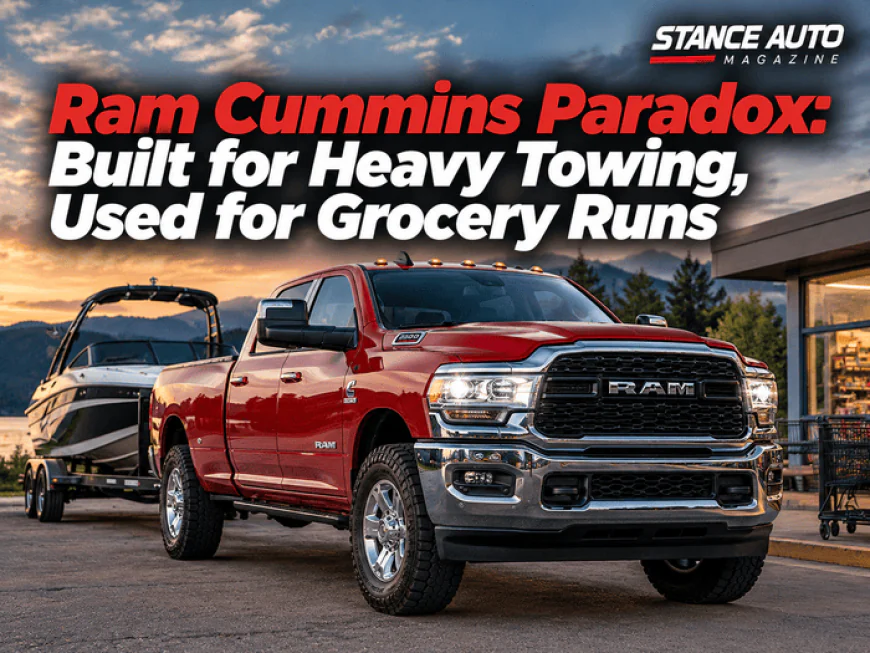
I've always found it interesting how many people buy a Ram 2500 with the 6.7L Cummins diesel engine for its incredible towing capability, only to spend most of their time driving it around town. There's nothing wrong with that, of course. Not everyone needs to tow a 15,000-pound trailer every weekend. But it does raise an interesting question: What happens when an engine designed for serious work rarely gets the chance to do it?
When a Heavy-Duty Diesel Becomes a Daily Driver
Think about a typical week for some Ram 2500 owners. A short drive to work, a stop at the grocery store, maybe a few minutes of idling while waiting to pick someone up. By the time the engine reaches its normal temperature, the trip is practically over.
The problem isn't necessarily the Cummins engine itself. It's everything that comes with running a modern diesel, particularly the emissions system.
One example is the DEF doser, which sprays diesel exhaust fluid into the exhaust system to help reduce emissions. Short trips and low exhaust temperatures can make proper aftertreatment operation more difficult.
Commercial trucks, on the other hand, often spend hours on the highway under load, giving their emissions systems more consistent operating conditions. While commercial 6.7L Cummins engines use a different setup, including aftertreatment parts like the 5578983 Cummins doser, they may actually operate under more favourable conditions than a Ram that spends most of its time making short trips around town.
The Problem With Short Trips
Modern Cummins-powered Rams have a diesel particulate filter (DPF) that captures soot from the exhaust. To keep that filter working properly, the truck periodically needs to burn off the accumulated soot through a process called regeneration.
Normally, the truck manages this automatically. But when most trips are short, there may not be enough time for the process to finish.
Imagine leaving home just as the truck begins a regeneration cycle. Ten minutes later, you've arrived at the store and shut off the engine. The next day, something similar happens.
An interrupted regeneration isn't automatically a problem. However, when this becomes a regular pattern, soot can build up faster than the system can remove it.
The manufacturer even addresses this in its owner's manuals, explaining that repeated short, low-speed driving can prevent the exhaust system from reaching the conditions necessary to clear the filter.
Eventually, the truck may display a warning telling the driver to continue driving at highway speeds.
That's a rather strange situation for a vehicle capable of pulling such heavy loads. It can handle a massive trailer, yet a routine of short grocery runs can create its own challenges.
Why Highway Driving Makes a Difference
This doesn't mean every Ram Cummins needs to tow something heavy to stay healthy. Regular highway driving can also make a difference.
Longer trips allow the engine to reach normal temperature and spend more time there. They also give the truck better opportunities to maintain the temperatures needed for regeneration.
That consistency matters.
On the highway, the truck isn't constantly starting, stopping, and cooling down. The engine operates under steadier conditions, which is generally more favourable for its emissions equipment.
Of course, highway driving isn't a magical solution to every diesel problem. But when we're talking about driving habits, there's a substantial difference between covering 100 miles on the interstate and completing twenty separate five-mile trips.
Both add the same mileage to the odometer, but they don't put the engine and emissions system through the same operating conditions.
Finding the Right Balance
So, does this mean you should start towing a trailer every weekend just to keep your Cummins happy? Of course not. The idea isn't to work the truck harder than necessary, but to give it the opportunity to operate properly.
For owners who mostly use their Ram around town, a few driving habits are worth keeping in mind:
- Take longer drives when possible. Occasional highway trips can help the engine and exhaust system maintain normal temperatures.
- Avoid unnecessary idling. Letting a diesel idle for extended periods isn't a substitute for actually driving it.
- Pay attention to regeneration warnings.
None of this means your truck can't serve as a daily driver. Plenty of owners use them that way. But there's a difference between occasionally taking a short trip and making short trips the truck's entire routine.
And that brings us back to the original paradox. The 6.7L Cummins is one of the biggest reasons people choose a heavy-duty Ram, yet its capabilities can be far beyond what everyday driving demands.
You don't have to push the engine to its limits to enjoy owning one. Sometimes, giving it a proper drive and allowing its emissions system to do its job is enough to make daily ownership a little easier.
Further Reading
If you're into heavy-duty trucks, have a look at Toby Walters' 2024 Ram 2500 Rebel build, the twin turbo GMT400 Duramax K2500 build and the rest of our trucks, vans and jeeps features. You can also pick up the latest issues from the Stance Auto Magazine store on Amazon.
 Like
0
 Dislike
0
 Love
0
 Funny
0
 Angry
0
 Sad
0
 Wow
0