




































































.png)










![[HOONIGAN] Ken Block's GYMKHANA NINE](https://img.youtube.com/vi/_bkX5VkZg8U/maxresdefault.jpg)


























































![[HOONIGAN] KEN BLOCK'S GYMKHANA SEVEN: WILD IN THE STREETS OF LOS ANGELES](https://cdn.motor1.com/images/mgl/2KlO4/s1/ken-block-london-tour-directors-cut.jpg)


































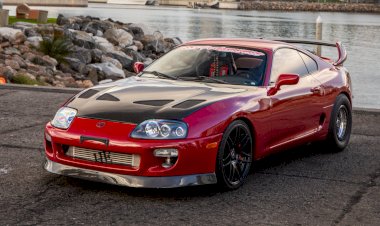
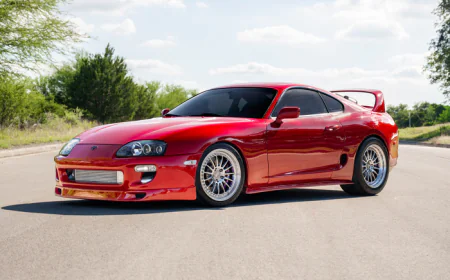
Street vs Track: Tuning a Supra for Daily Use
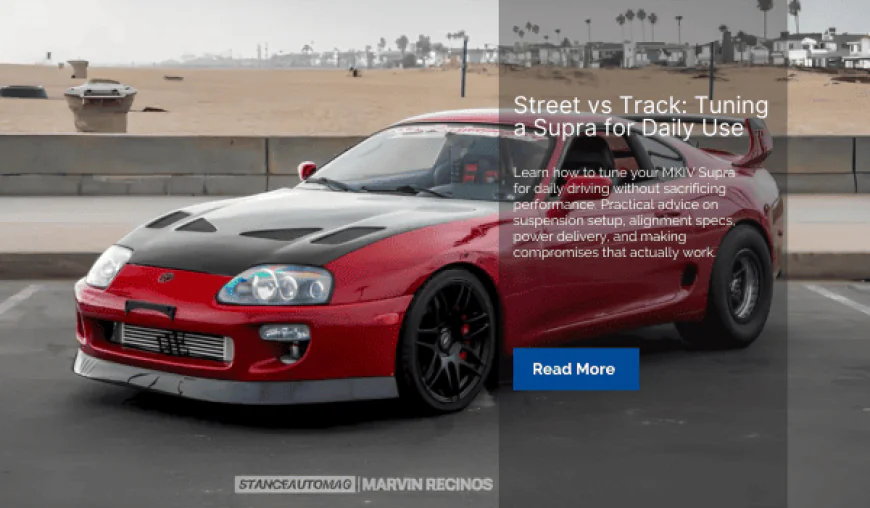
Learn how to tune your MKIV Supra for daily driving without sacrificing performance. Practical advice on suspension setup, alignment specs, power delivery, and making compromises that actually work.






Street vs Track: Tuning
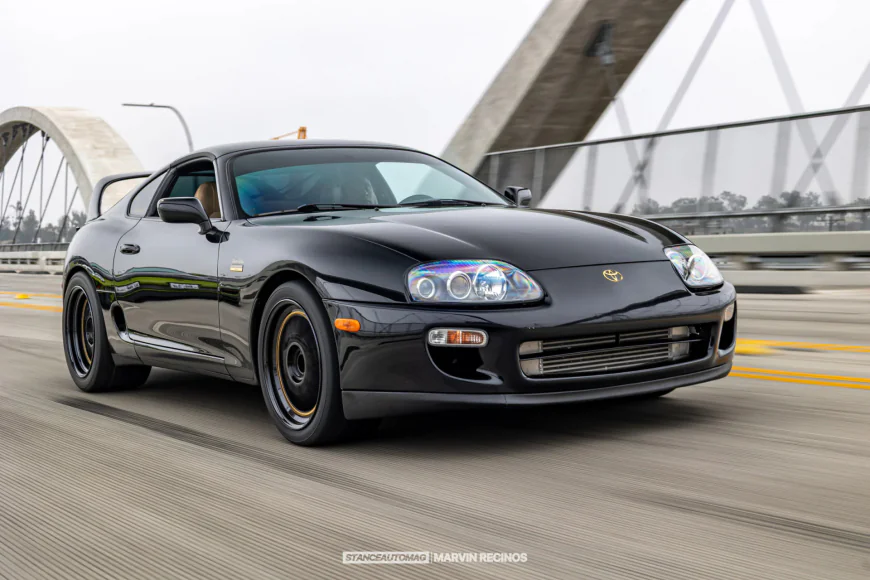
Building a Supra that you can actually drive every day while maintaining serious performance capability requires understanding compromises that work versus compromises that create frustration. The internet is full of advice from people who built track cars they pretend to daily drive, and it's equally full of advice from people who built comfortable street cars they claim handle like race cars. Neither extreme tells the truth about what daily-driven performance actually requires.
I've owned and driven Supras across the full spectrum—from bone-stock comfort to track-dedicated setups that made grocery runs miserable. The sweet spot exists, but finding it means being honest about how you actually use the car rather than how you imagine using it. Most Supra owners drive their cars far more on streets than they ever will on tracks, yet they tune them as if the opposite were true.
Understanding Real Daily Driving Demands
Daily driving a modified Supra means dealing with speed bumps, potholes, highway expansion joints, parking lot curbs, and stop-and-go traffic. It means getting in and out multiple times per day, sitting in traffic during commutes, and occasionally needing to carry passengers or cargo. These mundane realities shape what actually works for street use.
A track-focused setup fights you constantly in these situations. Coilovers set stiff enough for flat cornering at the limit crash over every imperfection. Aggressive alignment that maximizes tire contact patch during hard cornering causes tramlining on crowned roads and chews through tires during highway driving. Clutches designed to not slip under 800 horsepower launches make parking lot maneuvering an exhausting leg workout.
The goal isn't building the softest, most comfortable Supra possible—if that's what you wanted, you'd have bought a Lexus. The goal is building a car that drives like a well-sorted sports car on regular roads while maintaining capability for spirited driving when opportunities arise.
Suspension Setup for Street Performance
This is where most builders make their biggest mistakes. They install coilovers, crank them to maximum stiffness because stiffer means better handling, then wonder why the car rides terribly and doesn't feel any faster on backroads.
Real-world experience from thousands of street-driven Supras points toward spring rates around 14 kilograms per millimeter in the front and 8 kilograms per millimeter in the rear. These rates are substantially stiffer than stock but still compliant enough to absorb road imperfections without crashing. HKS Hipermax coilovers ship with these rates, and there's a reason—they work excellently for aggressive street driving while maintaining composure during track days.
Some builders claim you need 16-18 kg/mm front springs for proper handling. They're wrong for street use. Those spring rates might deliver faster lap times on perfectly smooth race tracks, but on public roads with expansion joints, patched pavement, and mid-corner bumps, they cause the tires to lose contact with the road surface. Stiff springs don't keep tires planted—they cause them to skip across imperfections instead of absorbing them.
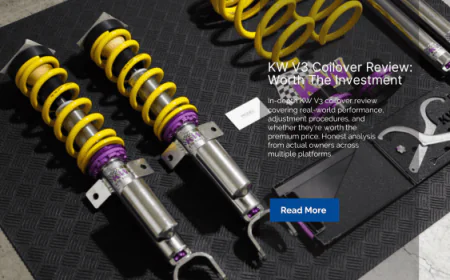
Damper adjustment matters enormously if your coilovers offer it. Systems like KW V3 with independent compression and rebound adjustment let you dial in comfortable settings for cruising while maintaining control during hard driving. Set compression relatively soft (around 8-10 clicks from full soft) for compliance over bumps, then use stiffer rebound settings (12-15 clicks from full soft) to control body motion without harshness.
The quality of the springs themselves makes surprising difference. Many builders report that upgrading to Swift springs at the same rates as their existing coilovers improves both ride quality and handling. Swift manufactures springs with tighter tolerances and more consistent characteristics than the generic springs many coilover manufacturers use. The investment runs a few hundred dollars but delivers noticeable improvement.
Alignment Specifications That Work
Track alignment prioritizes maximum cornering grip through aggressive camber and zero toe. Street alignment prioritizes stability, predictable handling, and tire longevity while maintaining good cornering capability. These goals conflict, and you can't optimize for both simultaneously.
For street-driven Supras that occasionally see spirited driving, start with negative camber around negative 1.5 to negative 2.0 degrees front and rear. This provides meaningful cornering benefit without causing excessive inner tire wear during straight-line driving. More aggressive camber settings like negative 2.5 or negative 3.0 degrees destroy tires quickly on the street and cause tramlining where the car follows grooves in the pavement.
Toe settings matter more than most people realize. Slight toe-in at the front—around 1-2 millimeters total—improves straight-line stability at highway speeds without noticeably affecting turn-in response. Zero toe or slight toe-out makes the car feel darty and nervous at speed, constantly requiring steering corrections.
The rear toe setting creates interesting trade-offs. Slight toe-in at the rear (around 2-3 millimeters total) improves high-speed stability and helps the car feel planted during highway driving. However, it adds a hint of understeer during hard cornering. Some drivers prefer slight toe-out at the rear for more aggressive turn-in and rotation, but this makes the car feel less stable and can cause oversteer snap during trail braking.
For dual-purpose street and occasional track use, the conservative alignment approach works better than aggressive settings. You can drive smoothly on the highway without fighting the steering wheel, tires last reasonable mileage, and you've still got plenty of grip for spirited backroad driving. If you're attending dedicated track days, consider installing adjustable camber plates or arms that let you dial in more aggressive settings for track use, then return to street settings afterward.
Power Delivery for Street Enjoyment
Peak horsepower numbers mean almost nothing for street driving satisfaction. What matters is how the power delivers, how wide the useful power band extends, and whether you can actually use the performance on public roads without constantly fighting traction or waiting for boost to build.
A Supra making 500 wheel horsepower with a turbo that spools by 4,000 rpm feels faster and more satisfying on the street than a Supra making 700 wheel horsepower with a turbo that doesn't wake up until 5,500 rpm. On public roads, you're rarely at full throttle in the upper rev range. Instead, you're accelerating from 3,000 rpm in third gear onto highway onramps, rolling into throttle from 3,500 rpm during backroad corners, and making passing maneuvers that start at 4,000 rpm.
The smaller, more responsive turbo delivers usable power in all those situations. The larger turbo makes you wait, downshift constantly, and keep the engine spinning high just to stay in the power band. For five seconds of absolute maximum acceleration, the big turbo is faster. For the other 99.5% of your driving, the smaller turbo makes the car feel quicker and more engaging.
Tuning approach also affects daily drivability. Conservative timing and fuel maps maintain smooth throttle response and good part-throttle behavior. Aggressive tuning chasing maximum dyno numbers often creates abrupt power delivery, poor fuel economy, and drivability quirks that become annoying quickly.
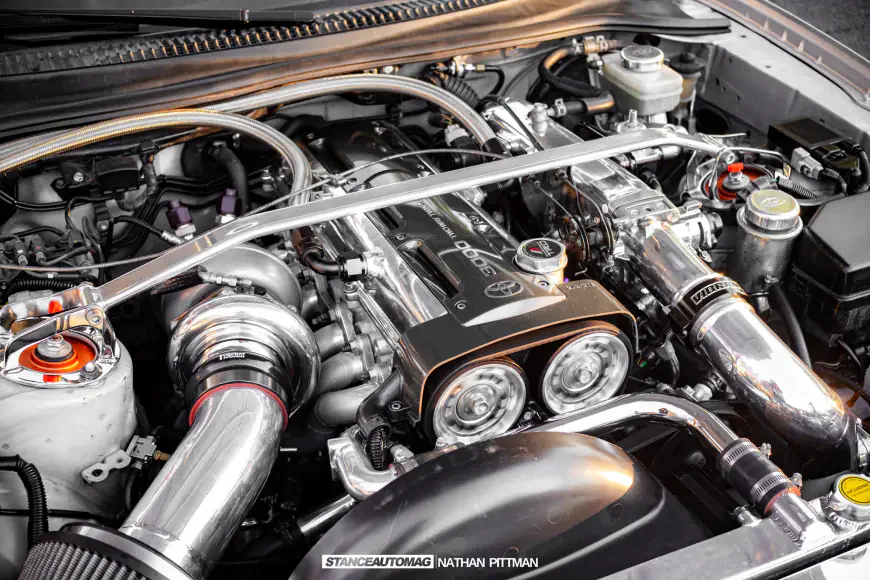
Choosing E85 over pump gas provides substantial benefits for street-driven performance cars. E85's superior knock resistance allows more aggressive timing for better power and smoother delivery. However, it requires access to reliable E85 stations and accepting reduced fuel economy and cold-start challenges during winter. For pure street cars, quality 91 or 93 octane pump gas with conservative tuning works excellently for power levels up to 600-650 wheel horsepower.
Transmission and Clutch Considerations
The V160 six-speed transmission provides excellent gearing for street use with reasonable ratios that don't require constant shifting. The factory clutch becomes overwhelmed beyond about 400 wheel horsepower, requiring upgrades that bring their own compromises.
Single-disc clutches from quality manufacturers like Exedy or Competition Clutch can handle 500-600 wheel horsepower while maintaining reasonable pedal effort and smooth engagement. These work well for daily driving if you accept that clutch engagement will be somewhat stiffer and more deliberate than stock.
Twin-disc clutches handle more power and provide smoother engagement with less pedal effort than single-disc units at equivalent power capacity. However, they cost substantially more and may introduce light chatter at idle. For street cars making 600-800 wheel horsepower, a quality twin-disc represents the best compromise between capability and livability.
Multi-disc clutches and aggressive single-disc racing clutches designed for 900+ horsepower make street driving miserable with heavy pedal effort, abrupt engagement, and constant chatter. Unless you're legitimately building a car for drag racing or time attack, these clutches create daily driving frustration that outweighs any performance benefit.
Exhaust Note and Cabin Noise
Loud exhausts sound great for thirty seconds, then become tiresome during thirty-minute commutes. The raspiness and drone that seems acceptable during a quick test drive becomes genuinely fatiguing over extended periods.
Quality exhaust systems manage sound without completely eliminating it. Designs that use proper mufflers and resonators keep noise civilized during cruise while still providing satisfying sound under acceleration. The HKS Carbon Titanium exhaust exemplifies this approach—reasonable volume during normal driving with aggressive tone when you're on the throttle.
Straight-piped exhausts or systems using only small resonators and no mufflers might save a few pounds and provide maximum flow, but they destroy the driving experience with constant drone and excessive volume. If your exhaust makes conversation impossible at highway speeds, it's wrong for a street car regardless of any performance benefit.
Interior noise insulation also affects comfort. Removing sound deadening material and interior panels saves weight for track cars but makes street driving less pleasant with increased road noise, exhaust resonance, and reduced climate control effectiveness. Unless you're building a dedicated track car, keep the interior reasonably intact.
Brake Setup for Street Performance
The factory turbo Supra brakes work excellently for street use even at elevated power levels. Upgrading pads to quality street-performance compounds and installing stainless steel brake lines provides all the stopping power most street-driven Supras need without the expense and complications of big brake kits.
Track-focused brake pads that require high operating temperatures perform poorly during normal street driving with inadequate bite when cold. Street-appropriate performance pads from Hawk HPS, EBC Yellowstuff, or similar options provide good cold bite for normal driving while offering significantly better fade resistance than worn factory pads.
Big brake kits make sense for dedicated track cars or Supras that regularly attend track days. For pure street use, even with substantial power, they're unnecessary and often create problems with increased unsprung weight and limited wheel fitment options.
Making It All Work Together
The best street-tuned Supras share common characteristics—they're moderately lowered but not slammed, they use quality adjustable suspension with spring rates appropriate for street use, they maintain reasonable alignment specifications that don't destroy tires, they prioritize responsive power delivery over peak numbers, and they make thoughtful compromises that preserve daily drivability.
These cars are genuinely quick and capable during spirited driving without fighting their owners during normal use. They can handle highway trips comfortably, navigate parking lots without scraping, and deal with typical road conditions without drama. Yet when the right road appears, they deliver the engaging, powerful driving experience that makes owning a modified Supra worthwhile.
The key is being honest about your priorities and usage patterns. If you actually attend track days monthly, optimize more toward that use case. If you drive to work daily and enjoy backroad drives on weekends, optimize for street performance with track capability as secondary. Most builders overestimate how often they'll use ultimate performance capability and underestimate how much time they'll spend in normal driving situations.
Build the car you'll actually enjoy driving, not the car that impresses forum users who will never ride in it. The daily-drivable 550-wheel Supra that spools by 4,000 rpm and rides on properly tuned suspension will get driven far more and provide vastly more satisfaction than the 750-wheel monster that sits in the garage because using it feels like punishment.
This tuning guide is brought to you by Stance Auto Magazine - your source for practical build advice and automotive culture.
Related Articles
- 2JZGTE Build Guide: Parts, Tuning, and Reliability - Building power that's usable daily
- How to Choose the Right Turbo for a Street Supra - Matching turbo size to actual driving
- V160 Manual Swap: Why and How for MKIV Owners - Transmission for street performance
- MKIV Supra Brake & Wheel Upgrades That Work - Chassis components that maintain comfort
- Supra Generations: From A40 to A90
- Toyota Supra Mk4 Buying & Tuning Guide
- Toyota Supra Mk4 Reviewed
- The 2JZ-GTE: Japan’s Most Legendary Engine
Call to Action
Do you have a build story like this one? Got a build on a budget? We want to see it. Submit your story to Stance Auto Magazine, and you could be the next featured owner showing the world how to do it right—without breaking the bank.
 Like
0
Like
0
 Dislike
0
Dislike
0
 Love
0
Love
0
 Funny
0
Funny
0
 Angry
0
Angry
0
 Sad
0
Sad
0
 Wow
0
Wow
0