








































































.png)











![[HOONIGAN] Ken Block's GYMKHANA NINE](https://img.youtube.com/vi/_bkX5VkZg8U/maxresdefault.jpg)

































































![[HOONIGAN] KEN BLOCK'S GYMKHANA SEVEN: WILD IN THE STREETS OF LOS ANGELES](https://cdn.motor1.com/images/mgl/2KlO4/s1/ken-block-london-tour-directors-cut.jpg)


































UK Number Plate Laws for Modified Cars Explained
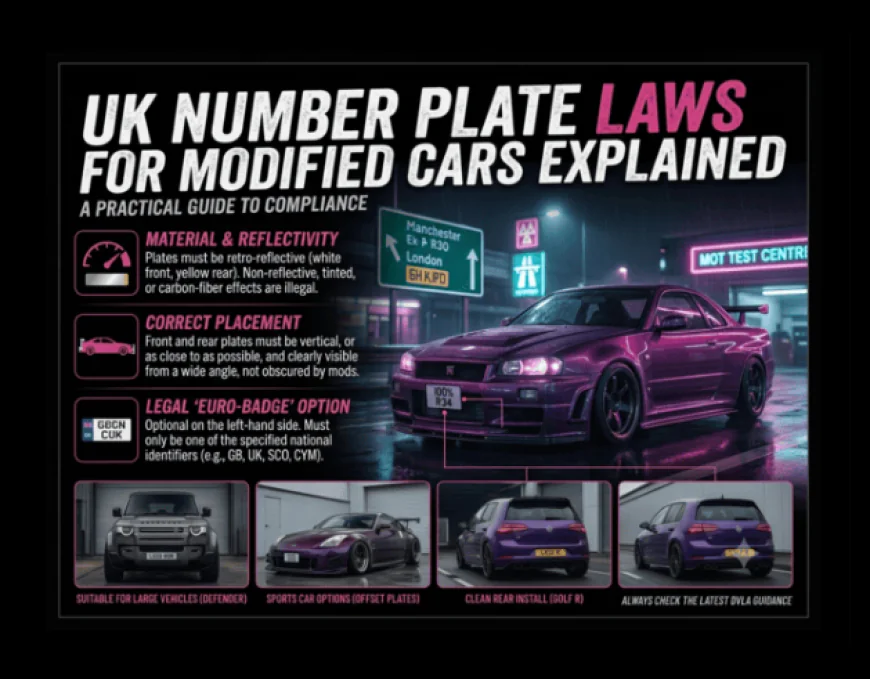
UK number plate laws cover font, spacing, colour and material — here's exactly what's legal on a modified car and what will fail your MOT.
UK Number Plate Laws for Modified.
Key Facts
- Number plates must use the mandatory font specified in law — stylised or "show" fonts are illegal on the road
- Standard spacing rules apply between characters and character groups
- Only white (front) and yellow (rear) reflective plates are legal for road use
- 3D/4D gel plates are legal only if they still meet font, spacing and reflectivity rules
- Illegal plates can result in an MOT fail, a fine, and ANPR camera misreads
If you've spent money on your build only to fail an MOT over a £20 number plate, you're not the first, and you won't be the last. UK number plate laws are more specific than most people realise, and the gap between "looks sharp" and "actually legal" catches out a lot of modified car owners who assumed a plate was fine simply because a supplier was willing to sell it to them.
What Font Is Actually Legal on a UK Number Plate?
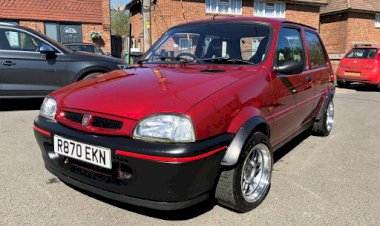
The UK mandates a specific typeface, commonly referred to as the Charles Wright font, and this isn't a suggestion, it's a legal requirement enforced at MOT and by police on the road. Stylised, italic, or novelty fonts, however popular they look on social media, are illegal for road use, and a plate using the wrong font is one of the most common instant MOT fails related to number plates. Suppliers selling "show plates" in non-standard fonts are legally required to mark them as for display or off-road use only, but plenty of buyers either miss that disclaimer or ignore it.
What Are the Spacing Rules?
Beyond the font itself, the spacing between characters and between the two character groups is legally defined, down to specific millimetre gaps. This exists partly for readability and partly because ANPR (automatic number plate recognition) cameras rely on consistent spacing to read plates accurately, meaning a badly spaced plate isn't just a legal risk, it can genuinely cause misreads that trigger incorrect fines or flags on a completely innocent vehicle.
Are Coloured or Tinted Plates Legal?
No. Front plates must be white with black characters, and rear plates must be yellow with black characters, both using reflective material as specified in law. Black plates with white or silver characters (a retro style popular on some builds) are only legal on vehicles registered before 1 January 1973, under specific rules allowing historic vehicles that style. Tinted or coloured overlays that alter how the plate reads, especially from an ANPR camera's perspective, are illegal regardless of how subtle they look to the naked eye.
Are 3D or 4D Gel Plates Legal?
Yes, but only if they still comply with every other rule, font, spacing, colour and reflectivity. 3D and 4D gel-effect plates are legal purely because of their raised lettering style, not because they get an exemption from the standard rules — the font underneath still has to be the mandatory typeface, and the spacing still has to be correct. A lot of confusion comes from assuming "gel plate" automatically means "legal alternative style," when it's really just a texture choice layered on top of the same strict underlying rules.
What About Private or Personalised Plates?
Personalised plates follow exactly the same font, spacing and colour rules as any standard registration, the only thing that changes is the character combination itself, not the formatting rules governing how it's displayed. A personalised plate rendered in an illegal font is exactly as illegal as a standard registration in that same font, personalisation doesn't grant any exemption from the display requirements.
What Happens If Your Plates Are Illegal?
An illegal plate is a straightforward MOT fail if caught during testing, and on the road it can result in a fixed penalty notice from police, with fines that can escalate depending on the specific breach and whether it's a repeat issue. Beyond the legal risk, illegal plates that cause ANPR misreads can also generate incorrect penalty notices for things like toll roads, congestion charges or speed cameras, tied to a vehicle that misread your registration as someone else's, creating a genuinely frustrating paperwork problem that's entirely avoidable.
Show Plates: When Are They Actually Legal?
Show plates in non-standard fonts or styles are legal to own and display, but only in contexts that don't involve road use, at a show, in your garage, or as a display item. The moment a vehicle wearing show plates is used on a public road, it needs to be wearing fully compliant plates instead, and reputable suppliers should make this distinction clear at the point of sale, though it's ultimately the owner's legal responsibility, not the supplier's, if the wrong plates end up on the road.
Do Number Plate Rules Differ for Imported Cars?
Imported vehicles registered in the UK, including popular JDM imports, must be fitted with UK-compliant plates once registered here, regardless of what the car wore in its country of origin. This catches out some importers who assume the original plates, or a stylised replacement matching the car's home-market look, can stay on once the car's UK-registered. The moment a vehicle is on UK roads under a UK registration, the same font, spacing and colour rules apply exactly as they would to a car built in Britain.
Do Electric Vehicles Have Different Plate Rules?
Electric and low-emission vehicles are permitted an optional green flash or green surround on the plate to indicate their status, but this is an addition to the standard rules, not an exemption from them. The core font, spacing, and colour requirements remain identical, the green element is purely an optional identifier layered on top of an otherwise fully compliant plate.
Can You Get Fined More Than Once for the Same Illegal Plate?
Yes, driving with an illegal plate isn't a one-time penalty, it's an ongoing offence for as long as the vehicle is used on the road in that condition. A vehicle stopped repeatedly with the same non-compliant plates can face repeated fines, on top of the MOT fail that will keep recurring at every retest until the plates are corrected, making it a genuinely expensive style choice to get wrong compared to the cost of simply buying compliant plates in the first place.
The Bottom Line
If you're modifying your car and want plates that match the build's aesthetic, the safest approach is sticking to the standard font and spacing rules while treating any show-style alternative purely as a garage or event display piece, never a road-legal swap. It's a small, cheap detail to get wrong for the amount of MOT and fine risk it carries.
For official guidance on number plate rules, the gov.uk page on number plate rules sets out the full legal requirements in detail. For more legal guides and everything else modified car culture, head back over to Stance Auto Mag. You can also grab the latest print issue through our Amazon magazine store.
 Like
0
Like
0
 Dislike
0
Dislike
0
 Love
0
Love
0
 Funny
0
Funny
0
 Angry
0
Angry
0
 Sad
0
Sad
0
 Wow
0
Wow
0