






































































.png)












![[HOONIGAN] Ken Block's GYMKHANA NINE](https://img.youtube.com/vi/_bkX5VkZg8U/maxresdefault.jpg)








































































![[HOONIGAN] KEN BLOCK'S GYMKHANA SEVEN: WILD IN THE STREETS OF LOS ANGELES](https://cdn.motor1.com/images/mgl/2KlO4/s1/ken-block-london-tour-directors-cut.jpg)


































How to Choose the Right Car Tyres for Your Vehicle
Looking for the right car tyres? Learn how to choose the best car tyres for your vehicle based on size, materials, fitment, style, performance, and budget.
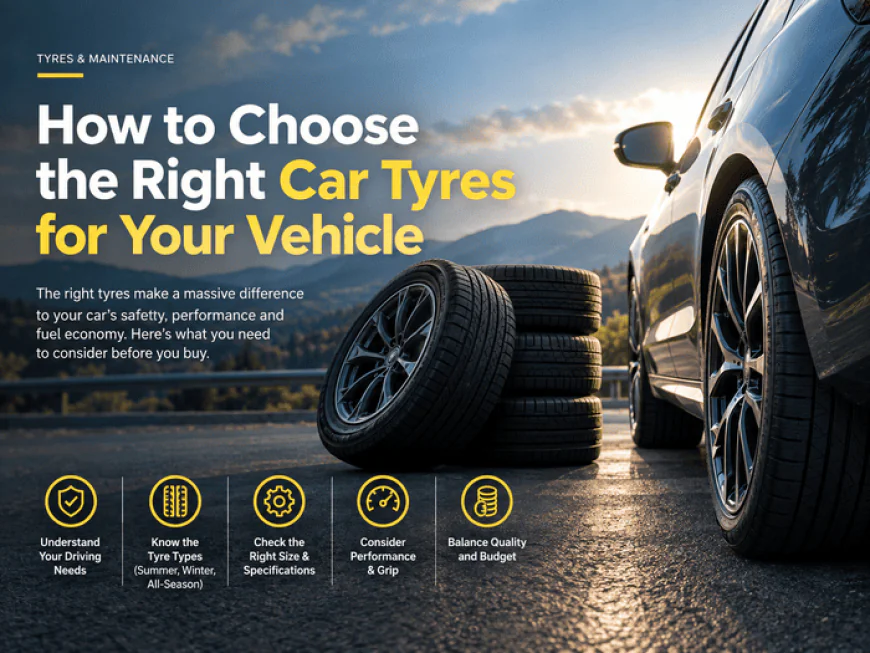
Your tyres are the only part of your car that actually touches the road, yet they're often the last thing drivers think about. Most of us remember to book an MOT, top up the oil, or sort out a brake repair when the pedal starts feeling spongy, but tyres tend to get overlooked until something goes visibly wrong. The trouble is, worn or mismatched tyres can undo the benefit of every other safety system in your car, including your brakes, steering, and stability control. Choosing the right tyres isn't just about ticking a box on your service checklist; it's about making sure your vehicle handles the way it's meant in every condition you drive in.
This guide walks through the practical things to consider when choosing tyres, from size and type to tread depth and seasonal performance, so you can make a decision that suits both your car and your driving habits.
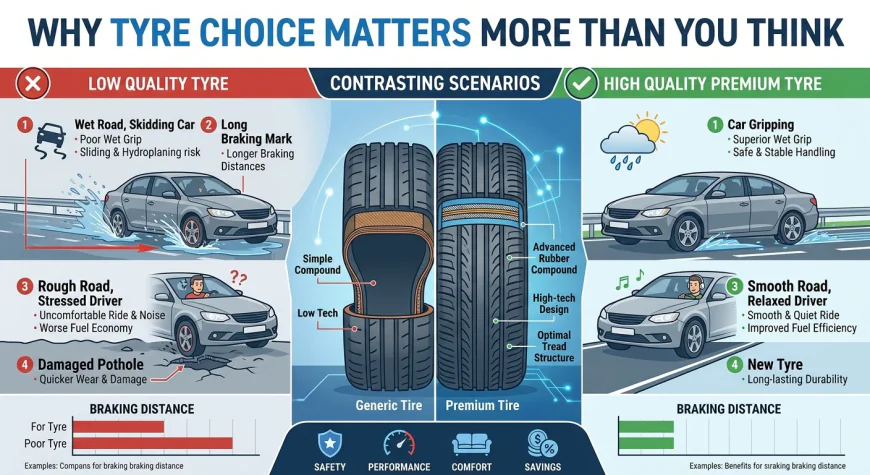
Why Tyre Choice Matters More Than You Think
It's easy to assume that a tyre is a tyre, as long as it holds air and fits the wheel. In reality, tyre compounds, tread patterns, and construction all affect how your car grips the road, how it responds to steering input, and crucially, how quickly it stops. A car with brand new brake pads but old, worn tyres will still take longer to stop in the wet than one with a fresh set of quality tyres and average brakes. If you're already booking in for routine maintenance like a brake repair, it's worth checking your tyres at the same time, because braking performance and tyre grip work hand in hand. If you're after a straightforward place to start, Shop at North West Tyres for car tyres and enjoy reliable grip, safety, and long-lasting performance. Browse your options and find the right tyres today, and you'll have a much clearer idea of what's available before you commit to anything.
Beyond safety, the right tyres also affect fuel economy, noise levels, and ride comfort. Cheap, poorly matched tyres might save you money upfront but can cost more in fuel and wear over the following few years.
Start with the Correct Tyre Size
Choose the brand and set your budget only after confirming the exact tyre size your car needs. When comparing car tyres, it's important to make sure the size matches the manufacturer's specifications. This information is normally on a sticker under the driver's door, on the fuel filler flap, or in the car manual. It usually looks like a string of digits and letters, such as 205/55 R16, that gives you the tyre width, aspect ratio, rim size, and load/speed indices.
Fitting the wrong size tyre isn't simply a matter of whether it fits correctly; it could affect your speedometer reading, your vehicle's handling and, in extreme cases, your insurance cover. Always choose tyres that match the sizes specified by your car manufacturer or have the vehicle fitted with only the type of tyres specified by the certified tyre fitters in case they recommend any other kinds of tyres.
Understand the Different Types of Tyres
So, what’s right for you? Once you’ve confirmed the correct size, the next step is to find out what kind of tyre suits you. There are several main types of tyre.
- First up there are summer tyres — designed for when temperatures are above about 7°C. These will provide superior grip (and therefore short braking distances) in both dry and wet conditions during summer months. Unfortunately, these tend to harden at lower temperatures, losing grip.
- Then there are winter tyres, which have a softer rubber compound with a deeper tread pattern to ensure good grip even in colder or icy/snowy weather. If you often drive in freezing temperatures, investing in winter tyres may significantly improve safety and grip in cold conditions.
- All-season tyres are the middle ground. They work well throughout the year, so you don't have to switch them out. These are good if you live somewhere with mild winters and don't want to deal with changing tyres twice a year.
- Performance tyres are made for sporty cars. They focus on how well the car grips the road and how quickly it responds, but this usually means they wear out faster and aren't as comfortable.
It's better to think about where you actually drive most of the time instead of just picking up what sounds cool. A regular family car used for trips to school and the grocery store needs something different than a sports sedan that gets driven fast on country roads.
Check the Tread Depth and Condition Regularly
Tread depth is one of the most important, and most neglected, aspects of tyre safety. The legal minimum tread depth in the UK is 1.6mm across the central three-quarters of the tyre, around the entire circumference. However, most safety experts and tyre manufacturers recommend replacing tyres once they reach around 3mm, because stopping distances in the wet increase significantly as tread wears down.
You can check tread depth easily using a 20p coin. Insert the coin into the main tread grooves; if the outer band of the coin is visible, your tread is likely below the legal limit and the tyre needs replacing. It's worth checking tread depth alongside your brake pads during routine checks, since both wear gradually and both directly affect how safely your car stops. A garage carrying out a brake repair will often flag worn tyres at the same time, as the two issues are closely linked in terms of overall stopping performance.
Uneven wear patterns, such as more wear on one edge of the tyre, can also indicate wheel alignment or suspension issues that are worth investigating before they affect handling further.
Match Tyres to Your Driving Style and Vehicle Use
Consider your driving habits and how you use your vehicle. If you're mainly on motorways for commuting, tyres that focus on fuel efficiency and durability might be the best choice. For those often carrying heavy loads, towing trailers, or navigating rural roads, it's wise to opt for tyres with a higher load capacity and reinforced sidewalls. High-mileage drivers should think about tyre lifespan because frequent replacements can get costly over time. On the other hand, if you have a second car that doesn't rack up many miles, prioritising grip and comfort could be more important than worrying about how long the tread lasts.
Get Tyres Fitted and Balanced Professionally
Selecting the right type of tyre is nothing compared to getting them fitted properly. Sloppy fitting and balancing will promote vibration, uneven wear, and undue stress on suspension parts. A reputable fitter will also check that your wheels are correctly aligned and make sure your tyre pressures are correct, both of which could affect handling and fuel economy.
That’s also a good time to get your brakes checked. You may find that several garages will check pad thickness and disc condition whilst your car is up on the ramp for tyre fitting, which saves you a trip if both require brake repair shortly after.
Don't Forget Tyre Pressure Maintenance
Even the best car tyres won't perform properly if they're not kept at the correct pressure. Under-inflated tyres increase rolling resistance, wear unevenly, and can overheat, while over-inflated tyres reduce the contact patch with the road, hurting grip. Check your tyre pressures at least once a month, and always before a long journey, using the figures listed in your vehicle handbook or on the door frame sticker.
Putting It All Together
When it comes to buying car tyres, there's no one-size-fits-all option. The right choice depends on your car, your budget, how you normally drive and how many kilometres you cover each year. The payoff for getting it right is shorter stopping distances, better fuel economy and a more confident and comfortable drive.
Just like any safety-critical component on your vehicle, treat it with the same degree of seriousness. Just as you shouldn't ignore warning signs that your brakes need attention, don't wait until the tread reaches a dangerously low level or until you notice visible damage to one of your car tyres. Keep your driving safe in all conditions with regular checks, sensible budgeting for replacement tyres and a quality set of tyres suited to the way you drive.
 Like
0
Like
0
 Dislike
0
Dislike
0
 Love
0
Love
0
 Funny
0
Funny
0
 Angry
0
Angry
0
 Sad
0
Sad
0
 Wow
0
Wow
0