































































.png)










![[HOONIGAN] Ken Block's GYMKHANA NINE](https://img.youtube.com/vi/_bkX5VkZg8U/maxresdefault.jpg)




































































![[HOONIGAN] KEN BLOCK'S GYMKHANA SEVEN: WILD IN THE STREETS OF LOS ANGELES](https://cdn.motor1.com/images/mgl/2KlO4/s1/ken-block-london-tour-directors-cut.jpg)































Is Copart Good? Buying Salvage Cars at UK Auction Explained
Copart is a genuine, publicly listed salvage car auction operator in the UK — here's how buying at auction actually works and what to watch for.
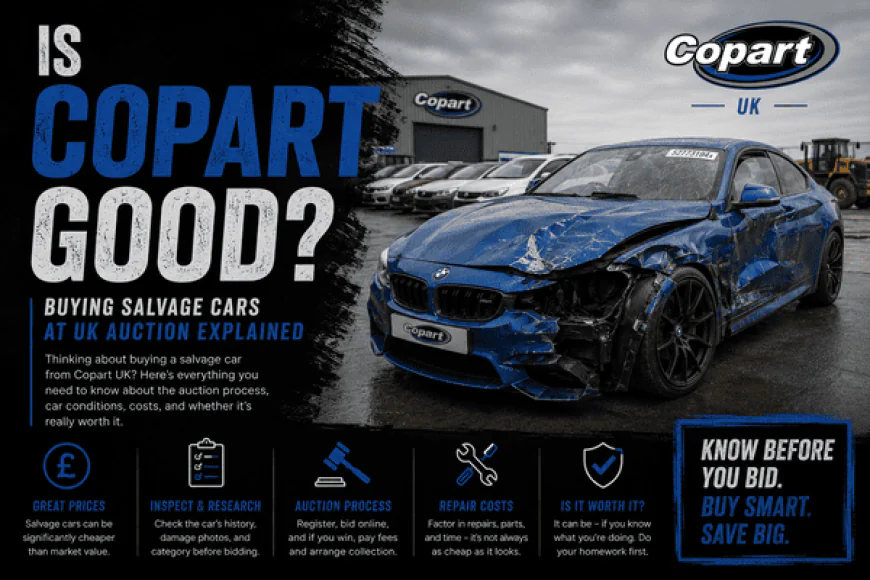
Is Copart Any Good?
Is Copart actually a legitimate way to buy a modified car project, or is bidding on a salvage car just an expensive way to get burned? Copart is a genuine, publicly listed company (trading on the NASDAQ) and one of the largest salvage vehicle auction operators in the world, with a substantial UK operation used daily by insurers, dealers and private buyers alike.
Copart at a Glance
- Publicly listed company, trading on the NASDAQ stock exchange
- One of the largest salvage and total-loss vehicle auction operators globally, with major UK operations
- Vehicles are typically sold as Cat N, Cat S, Cat C or Cat D salvage categories, or occasionally clean-title stock
- Buyers generally need to register and pay a membership fee before bidding
- Widely used by insurers to dispose of write-off vehicles, making it a mainstream, not fringe, part of the UK motor trade
Is Copart a Real, Legitimate Company?
Yes, unambiguously. Copart is a large, publicly traded company with decades of operating history, working directly with major UK insurers to auction off total-loss and salvage vehicles as a core, mainstream part of how the UK insurance and motor trade industries dispose of written-off cars. This isn't a fringe or unregulated operation, it's an established part of the vehicle salvage supply chain that most UK insurers rely on directly.

How Does Buying a Car on Copart Actually Work?
- Register as a member and pay the required membership fee, which typically grants bidding access for a set period
- Search live and upcoming lots, filtering by salvage category, location, and vehicle type
- Review the listed damage report and photos carefully, since condition assessment is entirely your responsibility as a buyer
- Place bids during the live or timed auction window, with the highest bid winning the lot once the auction closes
- Arrange collection or transport of the vehicle within the specified timeframe after a successful, paid bid
- What Do the Salvage Categories Actually Mean?
Understanding Cat N, Cat S, Cat C and Cat D ratings properly is essential before bidding on anything. Cat N (non-structural) and Cat S (structural) are the current UK categories, replacing the older Cat C and Cat D system, with Cat S indicating structural damage that requires professional repair and inspection before the car can be safely and legally returned to the road. Buying a salvage car without understanding exactly what category it falls under, and what repair and re-registration requirements come with that category, is where inexperienced buyers run into the most serious problems.
Is It Actually a Good Way to Source a Project Car?
For experienced builders comfortable assessing damage from photos and reports, or those willing to view in person where possible, Copart can be a genuinely cost-effective way to source a project car, particularly for builds where the car will be heavily modified anyway and factory-condition bodywork isn't the priority. For less experienced buyers, the risk of misjudging damage severity or repair cost from listing photos alone is real, and it's easy to end up paying more in repairs and re-registration than the car would have cost to buy already sorted.
The Good Stuff
- Genuinely legitimate, mainstream operation trusted by major UK insurers
- Wide selection of salvage vehicles, often at meaningfully lower prices than retail
- Detailed damage reports and photos provided for most lots
- Established, transparent bidding process with clear rules
The Risks
- Membership and buyer fees add to the effective purchase cost beyond the winning bid
- Damage assessment from photos alone can be misleading, especially on structural (Cat S) damage
- Re-registering a repaired salvage car involves its own DVLA process and inspection requirements
- Transport and collection logistics are the buyer's responsibility and can add real cost
What Should You Check Before Bidding on a Lot?
Read the full damage report line by line rather than skimming the headline photos, check whether the listing specifies Cat N or Cat S clearly, and factor in the membership fee, any buyer's premium, and realistic transport costs before comparing your maximum bid against a car's likely retail value once repaired. It's also worth researching typical repair costs for the specific damage type shown, a bent wing is a very different proposition to a car with genuine structural chassis damage, even if both are listed under a broadly similar salvage category.
How Does Copart Compare to Other Salvage Auction Options?
Copart operates alongside other established UK salvage platforms, and prices and available stock can vary meaningfully between them for similar vehicles. It's generally worth checking more than one platform if you're shopping for a specific type of project car, since auction dynamics and regional stock levels can make one platform noticeably better value than another on any given week, rather than assuming any single operator, Copart included, is automatically the best source every time.
Our Verdict
Copart is a legitimate, mainstream salvage auction platform, not a scam or grey-market operation, and it's a genuinely useful resource for the right kind of buyer. The risk isn't in Copart's legitimacy as a company, it's in buyers underestimating how much skill and caution genuine salvage buying actually requires, which is a buyer-education problem rather than anything specific to Copart itself.
For official guidance on salvage categories and re-registering a repaired vehicle, the gov.uk page on vehicle categories and DVLA guidance on registering a rebuilt vehicle are essential reading before bidding on anything. For more buyer's guides and everything else modified car culture, head back over to Stance Auto Mag. You can also grab the latest print issue through our Amazon magazine store.
 Like
0
Like
0
 Dislike
0
Dislike
0
 Love
0
Love
0
 Funny
0
Funny
0
 Angry
0
Angry
0
 Sad
0
Sad
0
 Wow
0
Wow
0