

























































.png)











![[HOONIGAN] Ken Block's GYMKHANA NINE](https://img.youtube.com/vi/_bkX5VkZg8U/maxresdefault.jpg)







































































![[HOONIGAN] KEN BLOCK'S GYMKHANA SEVEN: WILD IN THE STREETS OF LOS ANGELES](https://cdn.motor1.com/images/mgl/2KlO4/s1/ken-block-london-tour-directors-cut.jpg)
































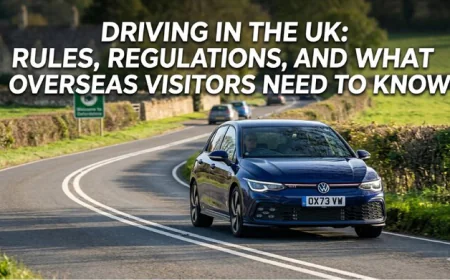
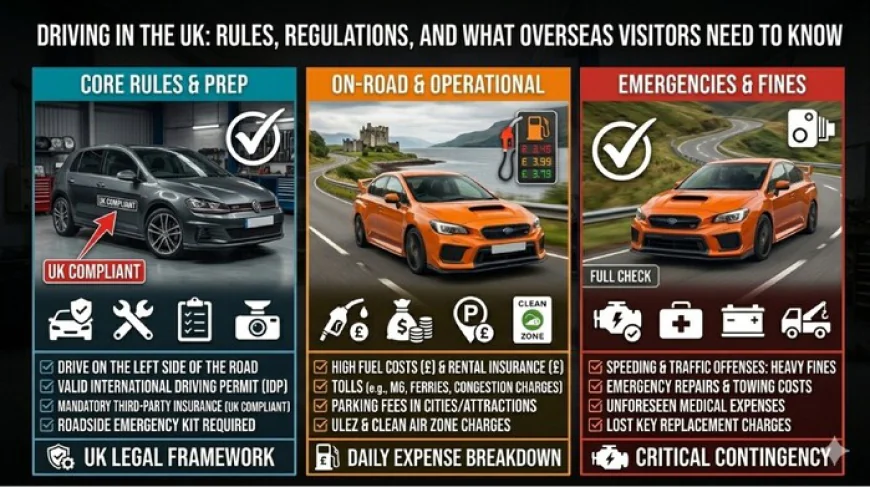
Driving in the UK: Rules, Regulations, and What Overseas Visitors Need to Know
Driving in the UK as an overseas visitor? Learn the rules that differ from your home country—speed limits, road signs, parking, drink-drive limits, and what to expect.
The Rules Are Different Than You're Used To
You're a competent, experienced driver in your home country. You know the rules, you respect speed limits, you drive safely. But then you arrive in the UK, rent a car, and suddenly you're confused. The road markings don't make sense. The road signs look completely different. Drivers are doing weird things at roundabouts. You're sitting on the wrong side of the car. And you're genuinely unsure whether you're breaking the law or just experiencing a different driving culture.
The UK's driving rules are different from most other countries, and even small differences can get you fined, cause an accident, or just stress you out unnecessarily. This is the complete guide to UK driving rules and regulations for overseas visitors in 2026—everything you need to know to drive safely and legally, and everything that's probably different from where you come from.
The Obvious Differences: Left-Hand Driving
The UK drives on the left side of the road, not the right. This is the biggest adjustment for most visitors. If you come from the US, Europe, Australia (other than the left side), or most of the world, this will feel completely wrong for the first few hours.
The practical reality: Your rental car's steering wheel is on the right side. You're sitting on the right side of the car. The driver sits closer to the centre line of the road. This feels terrifying the first time you navigate a narrow UK country lane, but you'll adjust within a couple of hours of driving.
Be extra careful with: Roundabouts (everyone goes clockwise, but your orientation feels backwards). Passing/overtaking on the left (in the UK you pass on the right). Judging the car's width relative to the road edge (you're now on the other side). Parking (you're approaching spaces from the opposite direction you're used to).
Speed Limits: They're Strictly Enforced
UK speed limits are:
Built-up areas (towns and residential): 30 mph (48 km/h) — This is the default for any area with street lights, houses, or shops. It's enforced heavily. Police set up cameras on 30 mph roads. Violate this by even 10 mph and you can get a fine.
Single carriageway roads (two-lane rural roads): 60 mph (97 km/h) — The default for anything that's not a motorway or dual carriageway. These are often narrow, winding country roads, and 60 mph feels very fast when you're on a tight curve.
Dual carriageways and divided highways: 70 mph (113 km/h) — These are faster, safer roads with a central barrier. The speed limit is higher and more aggressively enforced because most accidents happen at this speed.
Motorways (M-roads like the M25, M6, M1): 70 mph (113 km/h) — Same as dual carriageways. Motorways are patrolled by highway police. Speed cameras are common. There's no exemption for visitors.
Enforcement: Speed cameras are everywhere. They're visible (yellow poles on roadsides) and they're also hidden (gatsos in vans, mobile speed guns in unmarked cars). Get caught speeding and you'll receive a fine in the post, typically £100-£1,000 depending on how much over the limit you were. Overseas visitors are not exempt—you'll get a fine even if you're renting a car.
Pro tip: Adjust to UK speed gradually. Do your first few hours on motorways and dual carriageways where the roads are wide and 70 mph feels reasonable. Get used to the car and the left-hand driving. Then venture onto country roads where 60 mph on a winding road will feel appropriately cautious.
Road Signs: They Look Completely Different
UK road signs use different colours, shapes, and symbols than most countries:
Red circles with a cross: "No entry" Red circles with a line: "No passing/overtaking"
Blue rectangles: Mandatory instructions (this is mandatory) Red triangles: Warnings (give way, dangerous conditions, etc.) Green rectangles: Directions and location information White rectangles: General information
The key difference from US/European signs: UK uses a lot of black symbols on coloured backgrounds, not the reverse. Spend 5 minutes googling "UK road signs" before you start driving so you recognize them.
Roundabouts: The Confusing British Obsession
The UK has thousands of roundabouts (traffic circles). If you're from North America, you might not have seen many. If you're from Europe or Australia, they're familiar. Here's what you need to know:
The rule: All traffic enters the roundabout from the right and moves clockwise. Give way to traffic coming from your right (traffic already in the roundabout has priority). Indicate your exit intention.
What confuses visitors: Everything is backwards from what you expect. In left-hand traffic, the left side of the roundabout is actually the "outer" side. The "inner" side is where faster traffic moves. Small roundabouts have single lanes; large roundabouts have multiple lanes and complex lane markings.
The practical reality: Slow down as you approach the roundabout. Look right (not left like you're used to) to see if traffic is coming. Yield if there is. Once you're in, keep right and move clockwise. Watch for the sign indicating which exit you need (1st exit, 2nd exit, etc.). Indicate as you leave.
Roundabouts are safer than traffic lights (research shows fewer serious accidents), but they're confusing for first-timers. Take them slowly until you're comfortable.
Drink Driving: Zero Tolerance in Scotland, Low Tolerance Elsewhere
England, Wales, Northern Ireland:
- Drink drive limit: 35 microgrammes per 100ml of breath, or 80 milligrammes per 100ml of blood
- In practical terms: You can typically have one unit of alcohol (half a pint of beer, one small glass of wine, or one standard spirit) and still be legal
Scotland:
- Drink drive limit: 22 microgrammes per 100ml of breath, or 50 milligrammes per 100ml of blood
- More stringent than the rest of the UK
- In practical terms: You can have less than one unit and still be legal, but it's safer to assume zero alcohol
The reality: Drink driving is treated very seriously. If caught, you face fines, licence suspension (usually 12 months minimum), and a criminal record. Overseas visitors are not exempt from these penalties. Rental cars are frequently targeted by police at night.
Smart approach: Don't drive after drinking alcohol. Use taxis or designated drivers instead.
Parking: Confusing Lines and Strict Enforcement
UK parking is indicated by painted lines:
White lines (continuous): You can usually park here, but there may be time restrictions indicated by signs Yellow lines: Parking restrictions apply (check the signs for times) Red lines: Absolutely no parking at any time
Violations result in Parking Charge Notices (£50-£130 depending on severity and location). These are issued by traffic wardens or cameras, not police. If you're in a rental car, the fine might be sent to the rental company first, and they'll pass it on to you.
Overseas visitor note: Yes, you can be fined even though you're visiting. Parking fines follow you.
Motorway Etiquette: Keep Right, Move Left to Pass
The rules:
- Keep to the left lane unless overtaking
- Move to the right to pass slower traffic
- Once past, move back to the left
- Don't hog the right lane
- Don't drive between lanes (lane weaving)
- Use indicators when changing lanes
What you'll see: Motorways have "smart motorway" sections in England where variable speed limits are displayed. These adjust based on traffic and incidents. You must obey them.
Final Advice: Drive Carefully and Respectfully
UK drivers are generally courteous and patient with overseas visitors, but respect the rules and drive defensively. You're driving on the opposite side of the road in a country where the rules are different. Take your time, drive carefully, and don't rush. You'll adjust within a day or two, and then you can properly enjoy exploring the country.
For planning your actual trip, read our guides to hidden costs, best driving routes, and trustworthy rental companies.
Related Articles
 Like
0
Like
0
 Dislike
0
Dislike
0
 Love
0
Love
0
 Funny
0
Funny
0
 Angry
0
Angry
0
 Sad
0
Sad
0
 Wow
0
Wow
0