




































































.png)












![[HOONIGAN] Ken Block's GYMKHANA NINE](https://img.youtube.com/vi/_bkX5VkZg8U/maxresdefault.jpg)








































































![[HOONIGAN] KEN BLOCK'S GYMKHANA SEVEN: WILD IN THE STREETS OF LOS ANGELES](https://cdn.motor1.com/images/mgl/2KlO4/s1/ken-block-london-tour-directors-cut.jpg)






























Insurance Explained: Understanding Collision Damage Waiver and Excess Protection
Demystify car rental insurance. Learn exactly what CDW covers, what excess protection is, and why buying insurance independently saves you hundreds.
The Insurance Conversation That Terrifies Renters
You're at the rental car counter. The staff member is explaining insurance options. They're using technical terms you don't understand. They're saying you could be liable for £1,200 if anything goes wrong. They're quoting you £20 per day for something called "excess protection." You're panicked, confused, and you just want to get going. You agree to everything they suggest. By the time you leave the counter, you've added £140 to your week-long rental cost for insurance that you barely understand.
This is exactly what the rental industry counts on. Most people don't understand car rental insurance, which means they panic at the counter and buy expensive coverage they don't actually need. This is the complete breakdown of car rental insurance explained properly—what collision damage waiver actually means, what excess and excess protection are, what insurance covers and doesn't cover, and most importantly, why buying insurance independently can save you £70-£100 on a week-long rental.
Collision Damage Waiver (CDW): What It Actually Covers
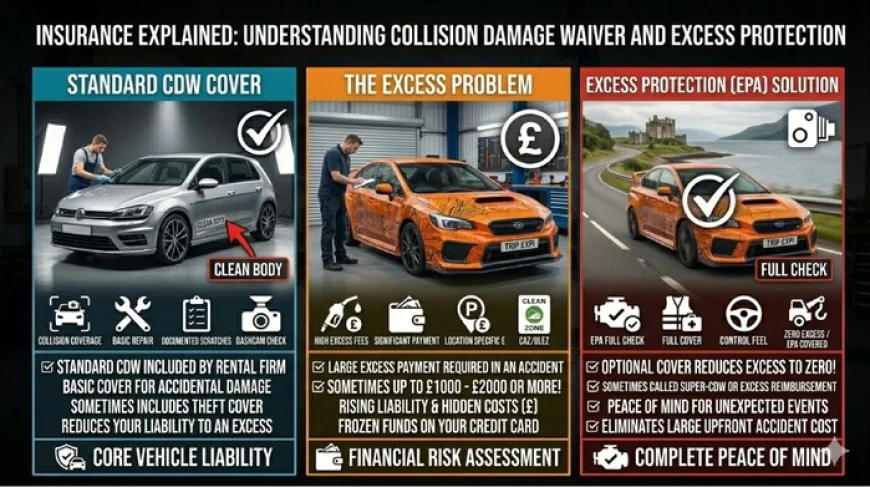
Every rental car comes with Collision Damage Waiver (CDW) insurance included in the rental price. This is mandatory and it's not optional—you get it whether you want it or not. CDW covers damage to the rental car if you're involved in an accident or collision. It specifically covers:
What CDW covers: Damage from collisions, impacts, rollovers, or accidents where you're driving the car. Damage from hitting other vehicles, obstacles, curbs, or barriers. Glass and windscreen damage. Roof damage. Undercarriage damage if you've hit something underneath.
What CDW does NOT cover: Mechanical breakdowns or engine damage (unless caused by an accident). Theft or break-ins. Damage from natural disasters (floods, storms). Damage from driving on unprepared roads or off-road. Damage caused by driver negligence or illegal activity. Damage from driving while under the influence.

The Excess: Your Out-of-Pocket Liability
Here's where the confusion starts. While CDW covers the damage, you're still liable for an excess—a set amount of money you have to pay out of your own pocket if damage occurs. This excess typically ranges from £500 to £1,500 depending on the rental company, the car type, and any upgrades you've purchased.
So here's the scenario: You hit a kerb and damage the wheel. The repair costs £800. You report it to the rental company. CDW covers the repair. But you still have to pay the excess—maybe £750—out of your own pocket. You've now had to pay £750 for an accident that wasn't entirely your fault, or even for normal wear and tear that sometimes happens.
This is genuinely scary for a lot of people, which is why the rental company offers a solution.
Excess Protection Insurance: The Upsell
The rental company offers you excess protection insurance (sometimes called "super CDW" or "loss damage waiver"). This insurance covers your excess liability, reducing it from £1,200 down to zero. If you've got excess protection and you damage the car, you don't have to pay a penny—the insurance covers your excess.
Sounds great, right? The problem is the price. The rental company charges £15-£30 per day for excess protection. On a week-long rental, that's £105-£210. They're counting on you being frightened enough at the counter to accept this price without questioning it.
The Independent Solution: Save £70-£100
Here's the secret that the rental companies don't want you to know: you can buy excess protection insurance independently for a fraction of the price. Companies like Zest Car Rental, Rentalcover, and various travel insurance providers sell excess protection for £3-£10 per day—not £20. For a week-long rental, that's £21-£70 instead of £105-£210.
The process is simple: Before you book your rental, visit one of these independent providers, enter your rental dates and car type, and buy excess protection for a few pounds. Print your confirmation or save it to your phone. When you arrive at the rental counter and they try to sell you excess protection for £20 per day, you politely decline because you already have cover.
You've just saved £80-£140 on a week-long rental.
What Excess Protection Actually Covers
Independent excess protection insurance covers your excess liability if you damage the rental car. Specifically:
Covered: Accidental damage from collisions, impacts, or operator error. Glass and windscreen damage. Roof damage. Undercarriage damage. Theft of the entire vehicle. Some policies also cover loss of keys, fuel spills, or tyre damage.
Not covered: Mechanical breakdowns or engine failure (unless caused by an accident). Damage from illegal activity or driving under the influence. Damage from driving on unsuitable roads or off-road. Damage that was pre-existing or not the result of accident.
Read the specific terms of your policy to know exactly what's covered.
The Step-by-Step Strategy
Week before rental: Visit Zest Car Rental, Rentalcover, or similar. Enter your rental dates. Buy excess protection for £3-£10 per day. Get your confirmation.
At rental counter: The staff member offers excess protection for £20 per day. You say "No thanks, I already have cover" and show them your confirmation. They'll note this in your file.
After an accident (if one happens): You report damage to the rental company. They handle the claim as normal. Your excess protection kicks in, covering your liability. You don't pay a penny out of pocket.
Final Thoughts: Don't Panic, Just Prepare
The rental company's strategy works because renters panic at the counter. They don't understand insurance, they're worried about liability, and they just want the problem to go away. By buying independent excess protection before you arrive at the counter, you remove that panic. You already have cover. You can confidently decline their expensive upsell. You've saved money and you're protected.
Related Articles
- Trustworthy Rental Companies
- Hidden Road Trip Costs
- Best UK Road Trips
- Pre-Rental Inspection
- Insurance & CDW Explained
For more on choosing a trustworthy rental company that doesn't pressure-sell unnecessary insurance, read our guide to reliable rental firms.
 Like
0
Like
0
 Dislike
0
Dislike
0
 Love
0
Love
0
 Funny
0
Funny
0
 Angry
0
Angry
0
 Sad
0
Sad
0
 Wow
0
Wow
0