






















































.png)









![[HOONIGAN] Ken Block's GYMKHANA NINE](https://img.youtube.com/vi/_bkX5VkZg8U/maxresdefault.jpg)













































![[HOONIGAN] KEN BLOCK'S GYMKHANA SEVEN: WILD IN THE STREETS OF LOS ANGELES](https://cdn.motor1.com/images/mgl/2KlO4/s1/ken-block-london-tour-directors-cut.jpg)



































How Did Liberty Walk Become Famous in America? The SEMA Story Behind LBWK
How did Liberty Walk become famous in America? Discover how Wataru Kato, SEMA and the LBWK Lamborghini Murciélago helped create a global widebody movement.
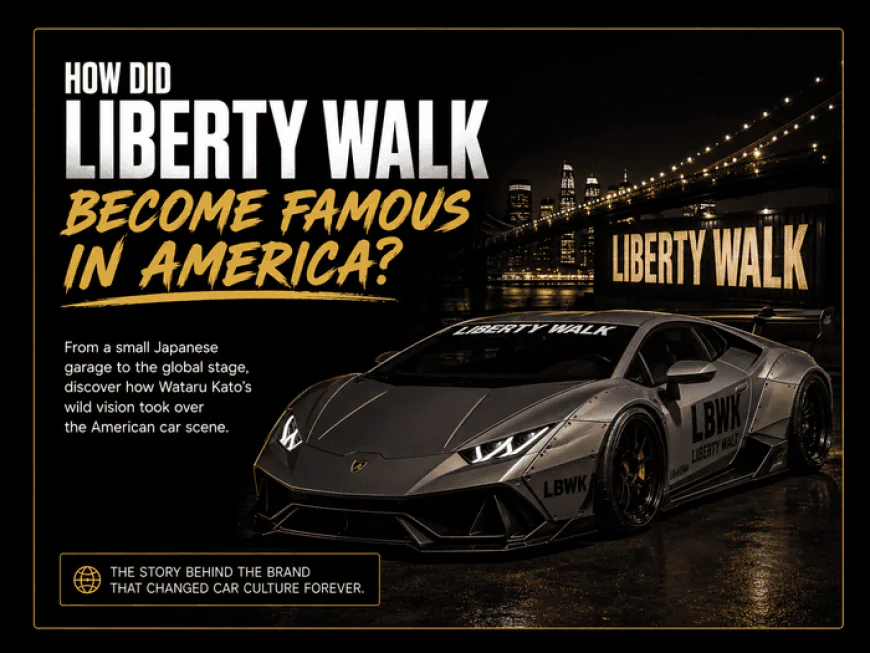
How Did Liberty Walk Become Famous in America?
Liberty Walk became famous in America largely through SEMA, where Wataru Kato and his team took a Japanese approach to widebody car culture and applied it to cars that American enthusiasts never expected to see cut up and rebuilt.
In plain English, Liberty Walk became famous in the United States by taking its bold Japanese widebody style to the SEMA Show in Las Vegas, putting it on exotic cars such as the Lamborghini Murciélago, and creating cars that were almost impossible to ignore.
Today, LBWK is a familiar name in American car culture. Its riveted arches, extreme stance and dramatic aero have become part of the visual language of modified Lamborghinis, Ferraris, Nissan GT-Rs and other high-end cars. But it wasn't always that way.
The road from Japan to America wasn't an overnight success. Liberty Walk had to put its ideas in front of an audience that didn't necessarily understand them, learn from an early SEMA appearance that didn't immediately produce the sales it wanted, and then come back with something much more extreme.
That second attempt changed everything.
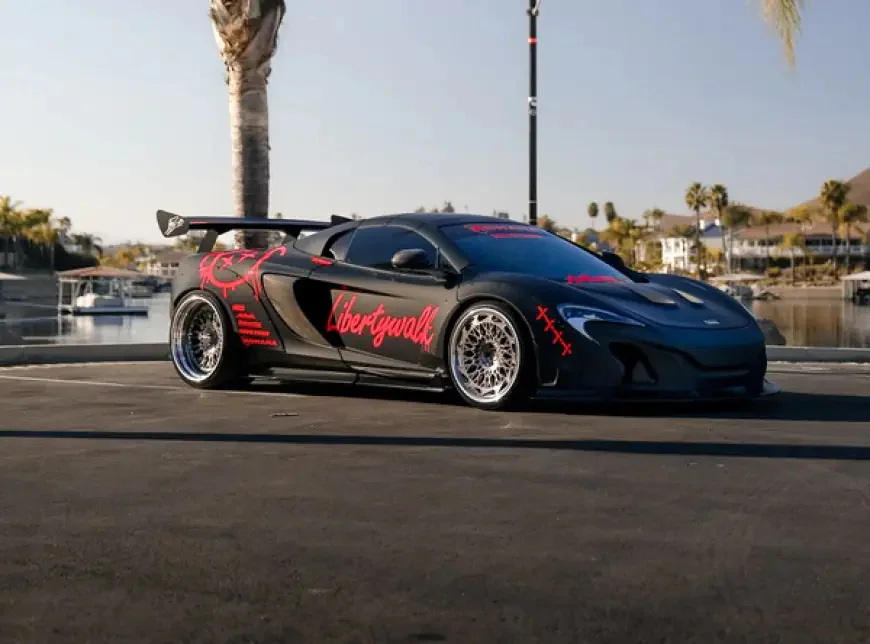
Why Did Liberty Walk Go to SEMA?
Liberty Walk went to SEMA because the Las Vegas show gave the Japanese company access to one of the biggest and most influential audiences in the American aftermarket.
The first major American chapter of the story involved a Lamborghini Murciélago. A customer and close friend of Wataru Kato wanted a Lamborghini and eventually ended up with a Murciélago. Rather than leave the car alone, Liberty Walk developed a more aggressive body kit, creating the beginnings of what would become the LB★Performance approach.
The Murciélago was taken to SEMA in 2009 for the debut of LB★Performance. The car attracted attention, but the response wasn't immediately the commercial breakthrough Liberty Walk needed.
That could easily have been the end of the American experiment.
Instead, Kato and Liberty Walk went back to work.
How Did the Lamborghini Murciélago Change Everything?
The Lamborghini Murciélago changed everything because it proved that Liberty Walk's Japanese custom-car philosophy could create an emotional reaction around an exotic car in America.
When Liberty Walk returned to SEMA in 2012, the Murciélago had become much more extreme. The LB★WORKS treatment introduced the exposed over-fenders and riveted appearance that would become one of the company's most recognisable signatures.
It was a provocative thing to do to a Lamborghini.
That was precisely why people noticed.
The car wasn't trying to look like a factory special edition. The modifications were deliberately obvious. The wider arches, lower stance and aggressive aero made it clear that somebody had taken an expensive Italian supercar and decided it should become something much more personal.
That attitude fitted the SEMA environment perfectly.
American car culture already had a long tradition of customisation, from hot rods and lowriders to muscle cars and extreme show builds. Liberty Walk wasn't asking American enthusiasts to understand the concept of modifying cars. It was simply showing them a Japanese interpretation of it.
And this time, people really paid attention.
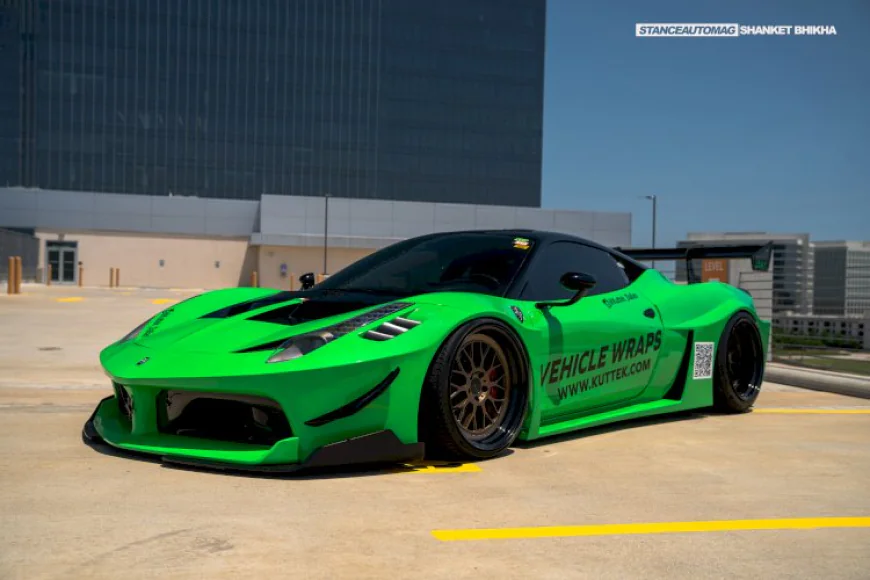
What Made the LB★WORKS Style So Different?
The LB★WORKS style stood out because Liberty Walk didn't try to hide the modifications; it made them part of the design.
The exposed fasteners became a visual signature. So did the huge over-fenders, aggressive splitters, low ride height and enormous wheels. Instead of making a modified car look as though it had been produced by a factory, Liberty Walk made the transformation obvious.
That was a clever distinction.
A Lamborghini already attracts attention, but a Lamborghini that appears dramatically wider and lower, with exposed hardware around its arches, creates an entirely different reaction.
People want to know what happened to it.
They want to know who built it.
And, inevitably, they want to know how much it cost.
That curiosity helped Liberty Walk enormously as photographs of its cars began travelling beyond the physical car shows where they were first displayed.
When Did Liberty Walk Really Start Taking Off in America?
Liberty Walk really started taking off in America after the successful 2012 SEMA appearance, when the company began proving that the LB★WORKS look could work across several different types of performance car.
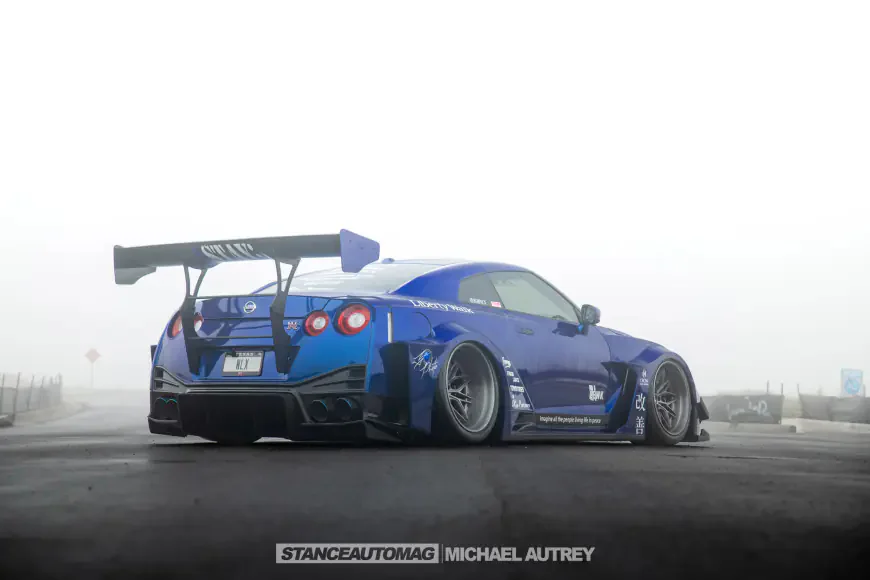
The Lamborghini Murciélago was the breakthrough, but Liberty Walk didn't stop there. In 2013 the company brought an LB★WORKS Ferrari 458 Italia and Nissan GT-R to SEMA.
That was an important moment because it showed that the Murciélago wasn't just a one-off stunt.
The Ferrari demonstrated that Liberty Walk could apply the same philosophy to another exotic, while the Nissan GT-R connected the brand directly with the Japanese performance-car community. Suddenly, LB★WORKS was becoming a recognisable design language rather than a single spectacular Lamborghini.
The following years brought even more cars, including the Lamborghini Aventador and other high-profile builds.
The message was becoming clear.
Liberty Walk had arrived in America.
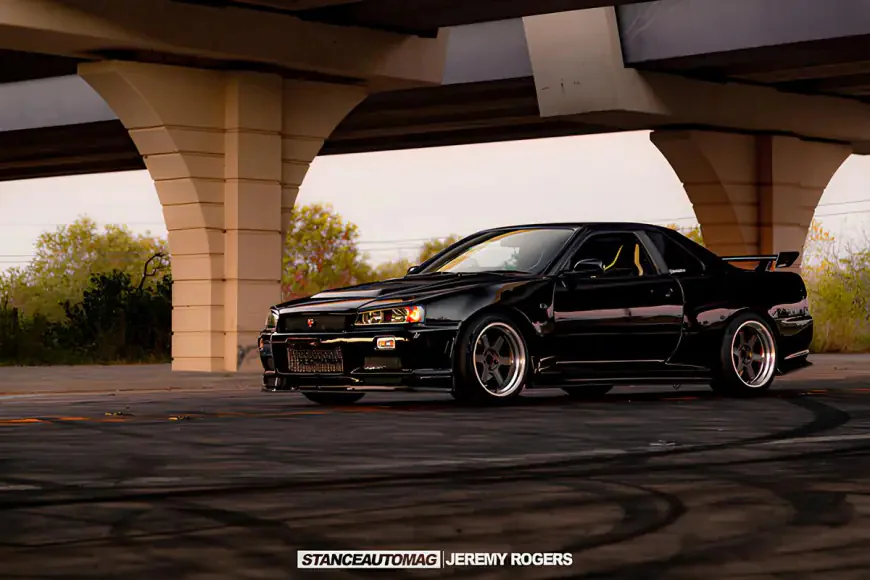
Why Was the Nissan GT-R Important to Liberty Walk's American Growth?
The Nissan GT-R was important because it connected Liberty Walk's Japanese origins with America's enormous appetite for high-performance tuning.
The R35 GT-R already had a huge reputation. It was a Japanese performance icon with the speed and technology to compete with far more expensive European machinery. Giving it the LB★WORKS treatment made the car even more visually aggressive.
For American enthusiasts who were already familiar with Japanese tuning, the GT-R made perfect sense.
For people who mainly knew Liberty Walk because of the Lamborghini, it showed that the company's style wasn't limited to exotic cars.
That combination helped broaden the audience.
Liberty Walk could appeal to somebody who loved Japanese performance cars, somebody who wanted a modified Ferrari and somebody who simply wanted the wildest car at the show.
How Did SEMA Help Turn Liberty Walk Into a Global Brand?
SEMA helped turn Liberty Walk into a global brand because the show attracts an international automotive audience, meaning cars displayed in Las Vegas quickly appear in magazines, websites, videos and social-media feeds around the world.
This was especially important as online car culture was exploding.
A car no longer had to stay inside the show hall. A photographer could capture it, a website could publish it and enthusiasts thousands of miles away could be looking at it within hours.
Liberty Walk's cars were almost perfectly designed for that environment.
They were dramatic from a distance, full of details when photographed up close and different enough from standard supercars to make people stop scrolling.
A standard Lamborghini is beautiful.
A Lamborghini with enormous riveted arches and a giant rear wing gives somebody a reason to ask questions.
That difference mattered.
Why Did Americans Embrace Liberty Walk?
Americans embraced Liberty Walk because the company's Japanese approach to customisation felt rebellious while still fitting naturally into a country with a huge tradition of modified cars.
The American aftermarket has never been afraid of big ideas. Lowriders, hot rods, muscle cars and show builds all share the basic idea that a car can become an expression of its owner.
Liberty Walk brought a different visual language into that world.
Its approach had roots in Japanese over-fender culture, works-style racing influences and the wider tradition of modifying cars to create a more aggressive silhouette.
The company wasn't trying to make every car look European.
It wasn't trying to make every car look factory.
It was trying to make the car unmistakably modified.
That honesty appealed to enthusiasts.
Did Liberty Walk Become Famous Because Everyone Loved the Cars?
No, Liberty Walk became famous partly because the cars were controversial, and controversy gave people something to talk about.
Some enthusiasts thought cutting into a Ferrari or Lamborghini was sacrilege.
Others thought it was exactly what the cars needed.
That argument became part of the brand.
In a modern automotive scene where thousands of cars compete for attention online, being instantly recognisable is a huge advantage. Liberty Walk understood that a car didn't have to please everyone to be successful.
It simply had to make people look.
And LBWK cars certainly did that.
How Important Was Wataru Kato?
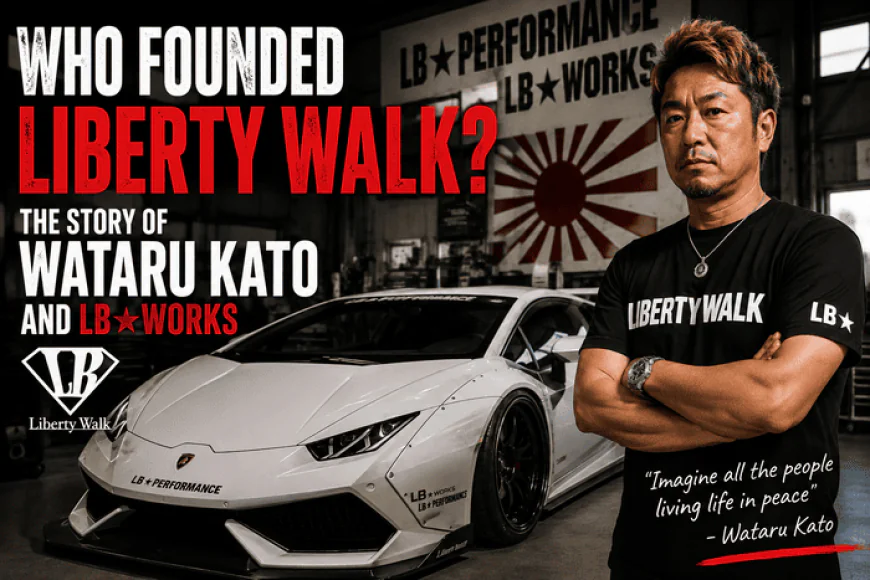
Wataru Kato was central to Liberty Walk's rise because he was willing to take a distinctly Japanese car-building philosophy into a completely different market and keep pushing after the first attempt didn't deliver the expected result.
Kato's approach has always felt more like that of an enthusiast than a conventional luxury-car executive. The company grew around the idea that cars could be modified dramatically and that owners should be able to give them their own personality.
That attitude became part of the Liberty Walk identity.
The cars were extreme, but there was also a clear sense of fun behind them.
The company wasn't telling owners that there was only one correct way to build a car. Liberty Walk created a recognisable foundation and then watched owners take it in their own directions.
That is a major reason the style became a movement rather than simply another body-kit brand.
How Did Social Media Help Liberty Walk?
Social media helped Liberty Walk because its cars were visually distinctive and therefore exceptionally easy to recognise, photograph and share.
This matters more than it might sound.
If a company creates a body kit that makes a car look only slightly different, its identity can disappear when the image is mixed into a feed full of modified cars.
Liberty Walk had the opposite problem.
You could often recognise an LBWK car immediately.
The arches were huge. The stance was aggressive. The exposed rivets became part of the signature. The aero was dramatic. Even without seeing the badge, the car often looked unmistakably Liberty Walk.
That gave the brand a powerful visual identity just as Instagram, YouTube and other platforms were becoming central to car culture.
SEMA created the initial exposure.
The internet multiplied it.
How Did Liberty Walk Move Beyond the Murciélago?
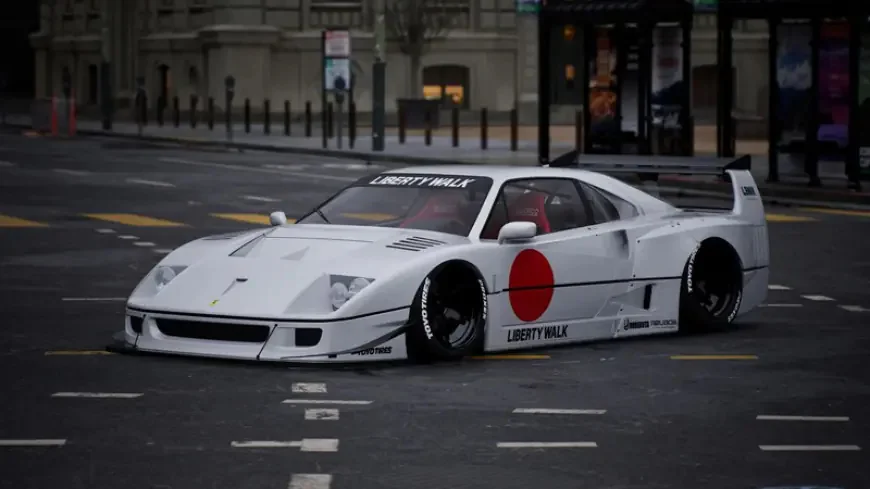
Liberty Walk moved beyond the Murciélago by repeatedly introducing new models and showing that its styling philosophy could be applied to everything from Japanese performance cars to European supercars.
The Ferrari 458 and Nissan GT-R were particularly important steps because they proved the concept wasn't dependent on one Lamborghini.
Then came cars such as the Aventador and a growing range of other high-profile projects.
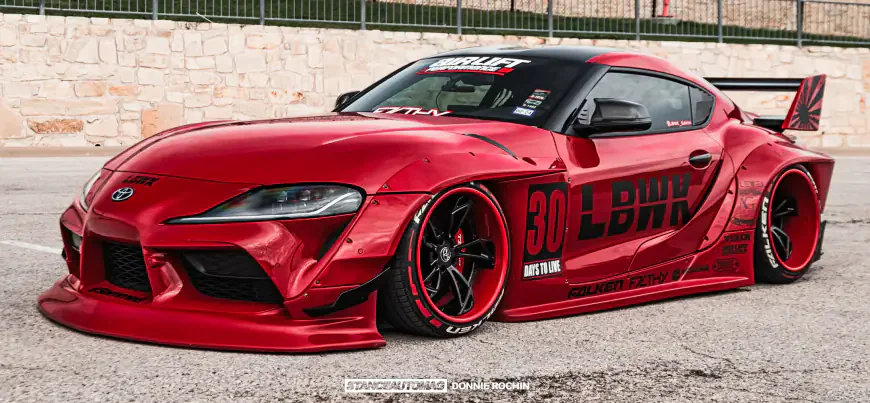
Over time Liberty Walk developed multiple design families, including LB★WORKS and the more extreme Silhouette WORKS direction.
Each new car gave the company another opportunity to appear at major events, attract media coverage and give enthusiasts something new to discuss.
That constant evolution helped prevent the brand from becoming a one-hit wonder.
Real Liberty Walk Builds Took the Style Further
The American story also became much more powerful once ordinary enthusiasts and professional builders began creating their own Liberty Walk cars.
That owner scene is important because it turns a body-kit company into something bigger. A factory promotional car can create attention, but customer builds create a community.
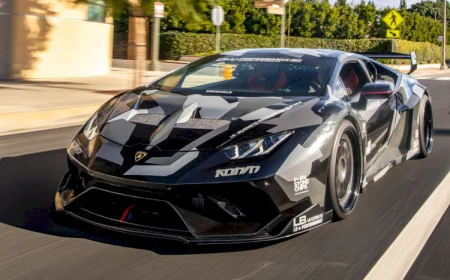
One example already featured on Stance Auto is Victor A Leong's 2015 Lamborghini Huracán. Victor's car was built with LTMW alongside Liberty Walk and became the first Liberty Walk Silhouette GT kit of its kind installed in the United States.
The build shows exactly how the Liberty Walk idea can become personal. The Huracán combines the bodywork with LD97 Forged wheels, AirLift management, a custom camo design and an IPE exhaust. Victor also explained the personal meaning behind the build and why turning the rendering on his phone into a real Lamborghini mattered to him.
That is the Liberty Walk formula at its best.
The company supplies the visual foundation, but the owner creates the story.
Why Is Liberty Walk So Recognisable in America Today?
Liberty Walk is so recognisable in America today because the company built a style that can be identified almost instantly and then consistently placed that style in front of the American and international car community.
The SEMA appearances were crucial, but they were only the beginning.
The Murciélago created the controversy. The Ferrari 458 and GT-R broadened the audience. More models kept the momentum going. Owners created their own interpretations. Social media spread the images far beyond the show floor.
- Eventually, LBWK became part of the language of modified supercars.
- You don't have to see the badge to recognise the arches.
- You don't have to know the owner to know the style.
That is what a successful aftermarket identity looks like.
So, How Did Liberty Walk Become Famous in America?
Liberty Walk became famous in America by taking a Japanese widebody philosophy to SEMA, putting it on cars such as the Lamborghini Murciélago and refusing to make the designs subtle.
The first American attempt in 2009 created attention but didn't immediately deliver the commercial success Liberty Walk wanted. Instead of backing away, Wataru Kato returned with a much more extreme LB★WORKS Murciélago in 2012.
That car changed the conversation.
The Ferrari 458 and Nissan GT-R followed in 2013, showing that Liberty Walk's approach could work across both Japanese performance cars and European exotics. From there, more models, more SEMA appearances, owner builds and the rise of social media helped turn LBWK into a global name.
The company didn't become famous because everyone agreed its cars were beautiful.
It became famous because nobody could ignore them.
And that might be the most accurate description of Liberty Walk's entire philosophy.
If you're following the wider LBWK story, continue with Liberty Walk Lamborghini: How LBWK Changed Supercar Styling, then explore Liberty Walk Nissan GT-R: The LBWK R35 Story and Liberty Walk Ferrari: Why Exotic Cars Became Widebody Icons.
For more real Liberty Walk owner builds and stories, explore the LBWK features on Stance Auto.
You can also find the magazine through our Amazon magazine store.
 Like
0
Like
0
 Dislike
0
Dislike
0
 Love
0
Love
0
 Funny
0
Funny
0
 Angry
0
Angry
0
 Sad
0
Sad
0
 Wow
0
Wow
0