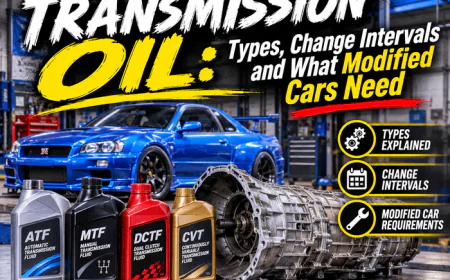




































































































































































































Transmission Oil: Types, Change Intervals and What Modified Cars Need
Transmission oil keeps your gearbox cool, lubricated and shifting smoothly. Learn the difference between gear oil and ATF, change intervals, costs and what tuned cars need.
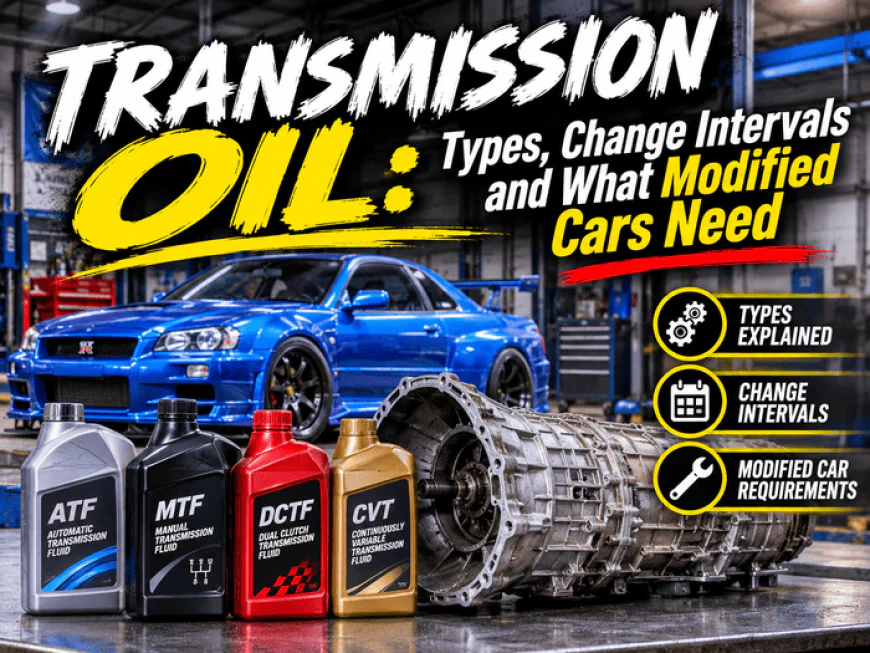
Transmission oil is the lubricant inside your gearbox that cools the gears, reduces wear and, in an automatic, helps transfer power and operate the shifts. It's the oil nobody thinks about, because it isn't on the dipstick and it doesn't show up on the dash. But a worn out gearbox is one of the most expensive repairs a car can have, and in most cases it comes down to old, wrong or low fluid. If you drive anything modified, tuned or tracked, transmission oil deserves a lot more attention than it normally gets.
This guide covers what transmission oil does, the different types, how often to change it, how to spot trouble and what's different for performance cars.
What Does Transmission Oil Do?
Transmission oil lubricates the gears and bearings, carries heat away and protects against wear and corrosion inside the gearbox. In a manual, the oil is a thick gear oil that coats the gears and synchros as they mesh. In an automatic, the fluid also acts as a hydraulic medium to engage clutches, operate the valve body and drive the torque converter, which makes it a more complicated job.
Heat is its biggest enemy. Gearboxes get hot, particularly when you drive hard, tow or sit in traffic, and the oil breaks down over time. Old oil loses its ability to protect, picks up tiny metal particles from normal wear and leaves your gears and clutches running on borrowed time.
What Is the Difference Between Gear Oil and ATF?
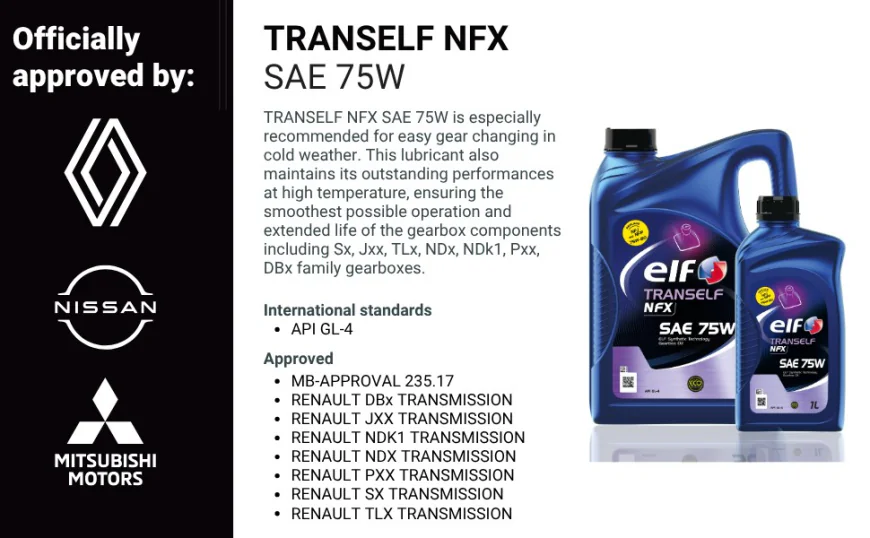
Manual gearboxes use gear oil or dedicated manual transmission fluid, while automatics use automatic transmission fluid, or ATF, and the two are not interchangeable. Gear oil is typically a heavier oil like 75W-90 designed to handle high pressure between meshing gears. Some manual gearboxes, however, use a thinner fluid, and a few even call for ATF, so you have to check the specification for your exact car.
ATF is thinner and contains friction modifiers and detergents tuned for clutch packs and valve bodies. It comes in many specifications, such as Dexron and Mercon, and many manufacturers have their own. Continuously variable transmissions use their own special fluid too. Using the wrong fluid is one of the quickest ways to wreck a gearbox, because synchros, clutches and belts are designed around very specific friction properties.
How Often Should You Change Transmission Oil?
Most mechanics recommend changing transmission oil every 30,000 to 60,000 miles, even when the manufacturer calls it a lifetime fill. For a manual gearbox, 30,000 to 50,000 miles is common on a regularly driven car, and sooner if it's tracked or abused. Automatics often have a longer official interval, but a lot of specialists change the fluid around 40,000 to 60,000 miles because "lifetime" really means the life of the warranty.
Severe use shortens everything. Towing, heavy traffic, hot climates, drifting, launches and track days all cook the oil faster. If you're not sure what your car needs, check the handbook and then be a bit more cautious. A fluid change is cheap compared with a rebuild.
What Are the Signs of Low or Bad Transmission Oil?
The main signs of low or bad transmission oil are grinding or notchy shifts, slipping, a delay in engagement, a burnt smell and visible leaks. In a manual, the gearbox might be hard to put into gear, especially when cold, or whine in certain gears. In an automatic, you might feel harsh shifts, slipping between gears or revs flaring without the car speeding up.
If you can check the fluid, look at the colour. Fresh ATF is usually bright red or pink. Dark brown or black fluid that smells burnt is a bad sign, and milky fluid suggests coolant is leaking into it. Many modern automatics are sealed and have no dipstick, so you need a shop to check the level. A puddle under the car that's reddish or oily and sits toward the middle of the car is worth chasing straight away, because a low level can destroy a gearbox in no time.
How Much Does a Transmission Oil Change Cost?
A transmission oil change typically costs about £80 to £250 or $100 to $300 at a shop, depending on the car and the fluid it needs. A manual gearbox drain and fill is among the cheapest jobs and many people do it at home with a couple of bottles of oil and the right plug socket. Automatics are more expensive, especially if the pan has to come off to replace the filter or if the car needs a special fluid.
Fluid exchange machines, often called flushes, cost more, and opinions on them are divided. On a well-maintained car they're fine. On a neglected, high-mileage gearbox, some specialists prefer a simple drain and fill, because a flush can disturb deposits and expose existing wear. Ask what they recommend and why.
Which Transmission Oil Should You Use?
Use the oil that matches the manufacturer's specification, or a quality equivalent from a trusted brand, and never guess based on viscosity alone. Brands like Castrol, Motul and Red Line make a wide range of gear oils and ATFs, and the best choice depends on the gearbox. Some performance oils improve synchro feel or stand up better to heat, but the base spec still has to be right.
For general engine oil advice, our guides on the best oil for your car and how to choose the right engine oil explain how to read specs, and the same mindset applies to gearbox oil. If a forum says "everyone runs this oil", check the actual specification before you pour it in.
What Does a Modified Car Need from Its Transmission Oil?
A modified car needs fresher, higher-quality transmission oil because more power, stickier tyres, and harder driving put extra heat and shock load through the gearbox. If you've added boost, a bigger clutch or a limited-slip differential, the gears and synchros are working harder than the factory planned. Changing the oil more often, around 15,000 to 30,000 miles on a hard-used car, is cheap protection.
It's tempting to fix a notchy gearbox with a different oil, and sometimes a change helps, but it won't repair worn parts. And while you're at it, remember the differential. It has its own oil, which often gets forgotten, and a limited-slip diff may need a special additive or specific fluid. A worn clutch can also feel like a gearbox problem, so before you blame the oil, read our guide on clutch slipping causes and diagnosis.
Does Transmission Oil Matter for Drift and Track Cars?
Transmission oil matters a lot on drift and track cars, because sustained high revs and heavy load raise gearbox and differential temperatures far beyond normal road use. Drift cars in particular put huge stress on the diff and gearbox, with clutch kicks, repeated shock loads and long periods at high rpm. Many drivers change the diff oil every few events and the gearbox oil every season.
Some also add a gearbox or diff cooler, which keeps oil temperatures under control and extends life. If you're setting up a car for the track, our drift car setup guide covers the wider build, and the AE86 vs S13 comparison is worth a read if you're deciding on a platform.
What About Swapped Gearboxes in JDM Builds?
A swapped gearbox like the Toyota V160 needs the correct fluid for that unit, and it's worth checking rather than copying what the donor car used. Swaps are popular in JDM builds because the stock gearbox often can't cope with the power, and fitting a stronger unit is a classic upgrade. Our V160 manual Supra swap guide goes through the thinking behind that upgrade, and the 2JZ-GTE build guide covers the engine side of the same projects.
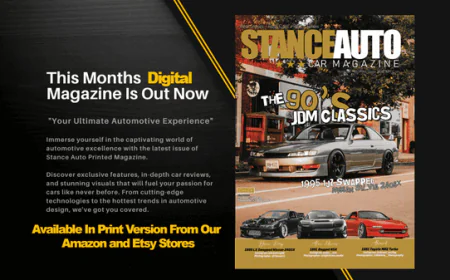
Whatever you fit, ask the gearbox supplier or builder what oil they recommend, and write the date and mileage down. If you enjoy this side of the scene, the Stance Auto 90s JDM Classics issue is worth a look at our magazine page.
How Do You Change Manual Transmission Oil Yourself?
To change manual transmission oil yourself, warm the car up, drain the old oil from the drain plug, refit the plug with a new washer and refill through the fill plug until it starts to seep out. Always loosen the fill plug first so you know you can actually refill the box before you drain it. Park the car level, ideally on ramps or a lift, use a pump or a squeeze bottle to push in the new oil and torque the plugs to spec.
Check for metal fragments on the magnetic drain plug. A fine paste of metal dust is normal, but chips or chunks are a warning. If anything looks wrong, stop and have it inspected before you drive on.
Final Word on Transmission Oil
Transmission oil is cheap insurance for one of the most expensive parts of your car. Use the right type, change it earlier than the book suggests if you drive hard and treat any change in how the gearbox shifts as a warning, not a quirk. A fresh fill of the right oil keeps shifts crisp, protects your investment and means the gearbox won't be the thing that ends your weekend.
For more practical guides and builds, find Stance Auto Magazine on Amazon.
Related Reads
- Clutch Slipping: Causes, Diagnosis and Solutions
- V160 Manual Supra Swap
- Drift Car Setup: The Complete Guide
- What Is the Best Oil for My Car?
Find more builds, guides and car culture at Stance Auto Magazine.
 Like
0
 Dislike
0
 Love
0
 Funny
0
 Angry
0
 Sad
0
 Wow
0