





































































.png)












![[HOONIGAN] Ken Block's GYMKHANA NINE](https://img.youtube.com/vi/_bkX5VkZg8U/maxresdefault.jpg)








































































![[HOONIGAN] KEN BLOCK'S GYMKHANA SEVEN: WILD IN THE STREETS OF LOS ANGELES](https://cdn.motor1.com/images/mgl/2KlO4/s1/ken-block-london-tour-directors-cut.jpg)
































What to Check Before Renting a Car: The Complete Pre-Rental Inspection Checklist
Protect yourself from rental company damage claims. Our complete pre-rental inspection checklist covers everything you need to check when picking up your rental car.
Why This Inspection Matters More Than You Think
You've arrived at the rental car desk. You're excited about your trip. The staff member is moving quickly, asking you to sign paperwork, and there's a queue of other customers behind you. In all the rush and excitement, it's easy to skip a thorough inspection of the car and just drive off. This is exactly when rental companies expect problems—when you're too rushed or embarrassed to ask proper questions. And this is when you expose yourself to false damage claims that can cost you hundreds of pounds.
A proper pre-rental inspection takes just 10-15 minutes and can save you from a £500+ false damage claim down the road. This is the complete checklist of everything you need to inspect, photograph, and document before you drive away from the rental location.

The Exterior Inspection: Document Everything
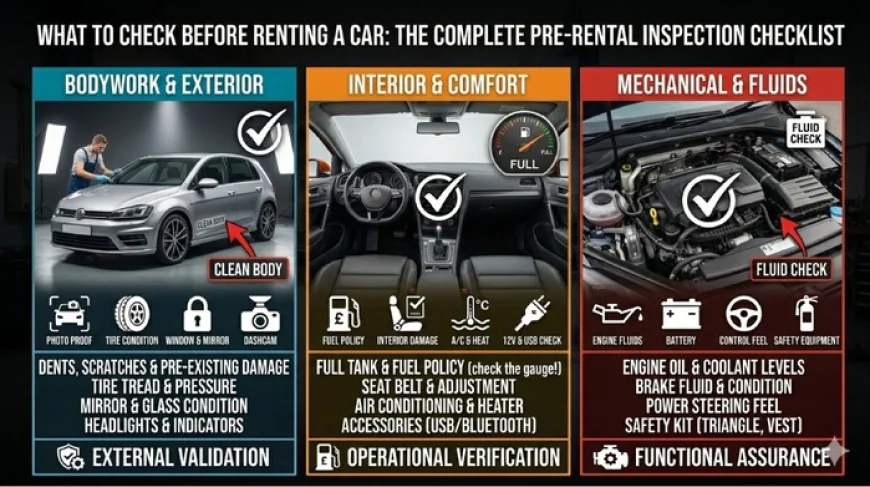
Tyre Condition: Check all four tyres for tread depth, cracks, bulges, or patches. Run your hand across the tread—there should be a visible pattern. Take photos of any damage or concerns.
Bodywork: Walk around the entire car, photographing any dents, scratches, scuffs, or paint damage. Get close-ups of any imperfections. Check door handles, mirror casings, and bumpers carefully.
Glass and Lights: Check all windows and mirrors for cracks. Check that all exterior lights (headlights, taillights, brake lights, indicators) actually work by turning them on.
Fuel Level: Check the fuel gauge. The rental agreement usually specifies that you're getting the car at a certain fuel level (usually half or a full tank). Document the exact level—take a photo of the fuel gauge.
Windscreen and Wipers: Inspect the windscreen carefully for chips or cracks. Check that the wipers work properly. Check the windscreen washer fluid level.
Underbody: Crouch down and look underneath the car for obvious damage, leaks, or hanging components.
The Interior Inspection: The Hidden Damage Zone
Upholstery and Seats: Check for stains, tears, rips, or burns in the fabric. Check that seat belts work properly and aren't damaged. Look at headrests for damage.
Dashboard and Console: Look for cracks, damage, or missing buttons. Check that air conditioning and heating work.
Mileage: Document the exact mileage on the odometer. Take a photo. Compare this to the mileage stated on the rental agreement.
Warning Lights: Start the engine and check that no warning lights appear on the dashboard. If any do, point them out immediately to the rental staff.
Brakes and Steering: Gently press the brake pedal—it should feel firm and responsive, not spongy. Turn the steering wheel—it should be smooth without excessive play.
Parking Brake: Check that the handbrake works properly.
Pedals and Controls: Make sure all pedals work smoothly and that there's no damage.
Carpets and Floor Mats: Check for stains, damage, or odours.
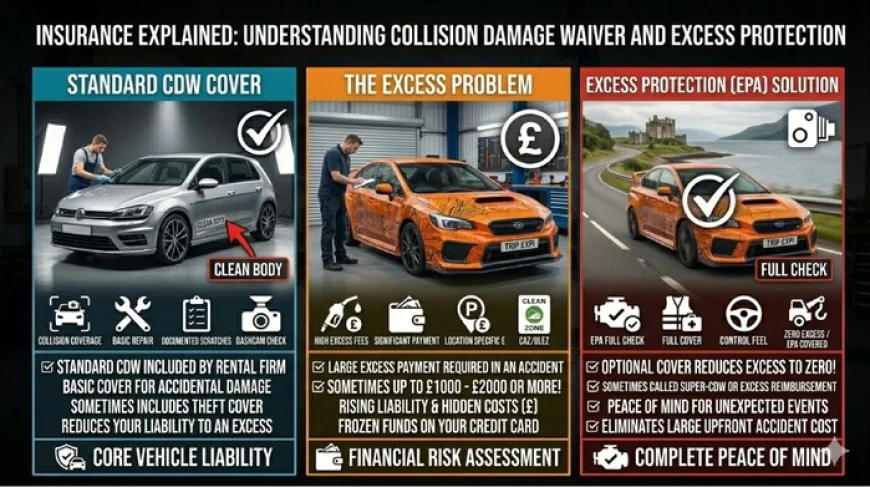
What to Mark on the Agreement
The rental agreement usually has a damage report section where you can mark existing damage. Mark everything you find. Don't skip anything thinking "it's too small to matter." Everything matters. Take photos of the marked agreement. Some rental companies provide a tablet where you can photograph damage directly into their system—use this if offered.
If you find significant damage, point it out to the staff member and ask them to note it. Don't drive away unhappy about it—get it documented properly. This is your protection.
The Key Questions to Ask
Are there any known mechanical issues with this car? Listen carefully to the answer. If they mention anything, get it documented in writing.
Where is the fuel door release? Sounds silly, but some cars have it in weird places. You need to know how to open it.
How do I operate the lights? Some cars have automatic lights that confuse renters. Know exactly how they work.
What's the process if I get a flat tyre or a breakdown? Know the emergency number to call.
Where's the spare tyre and jack? Check that they're actually in the car.
The Photography Strategy
Take at least 30-40 photos covering:
- All four corners of the car from different angles
- Both sides of the car
- The entire front and back
- The fuel gauge (clear photo showing fuel level)
- The odometer (clear photo showing mileage)
- Any existing damage you find, with close-ups
- The marked-up rental agreement
- The signed agreement
Transfer these photos to cloud storage immediately (not just on your phone). This gives you backup evidence if the rental company later claims you caused damage you didn't.
If You Find Significant Damage
If the car has obvious damage (crumpled bumpers, smashed lights, torn upholstery), do not rent it. Ask for a different car. The rental company will have another vehicle available—use this as an opportunity to get a car in better condition. Never accept a damaged car to save time.
For full advice on choosing a trustworthy company that won't unfairly claim damage, read our guide to trustworthy rental companies.
Related Articles
 Like
0
Like
0
 Dislike
0
Dislike
0
 Love
0
Love
0
 Funny
0
Funny
0
 Angry
0
Angry
0
 Sad
0
Sad
0
 Wow
0
Wow
0