





































































.png)







![[HOONIGAN] Ken Block's GYMKHANA NINE](https://img.youtube.com/vi/_bkX5VkZg8U/maxresdefault.jpg)






























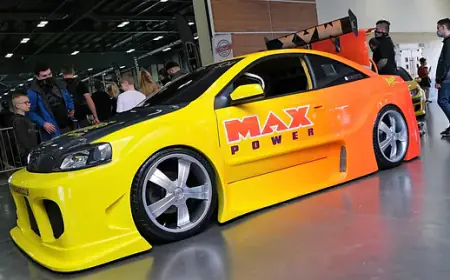
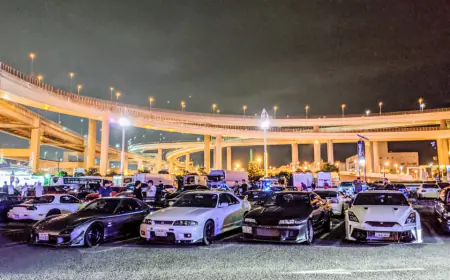
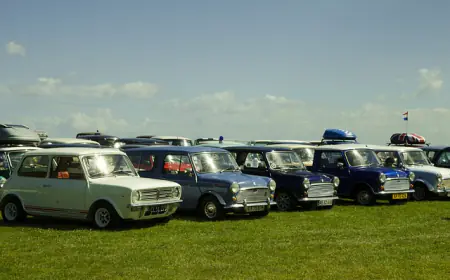

























![[HOONIGAN] KEN BLOCK'S GYMKHANA SEVEN: WILD IN THE STREETS OF LOS ANGELES](https://cdn.motor1.com/images/mgl/2KlO4/s1/ken-block-london-tour-directors-cut.jpg)




































UK Car Meet Laws Are Changing Fast, Here's What the Police Crackdown Actually Means
New UK car meet laws are handing police and councils stronger powers over illegal car meets, from PSPOs and ANPR to faster vehicle seizure. Here's what it actually means.
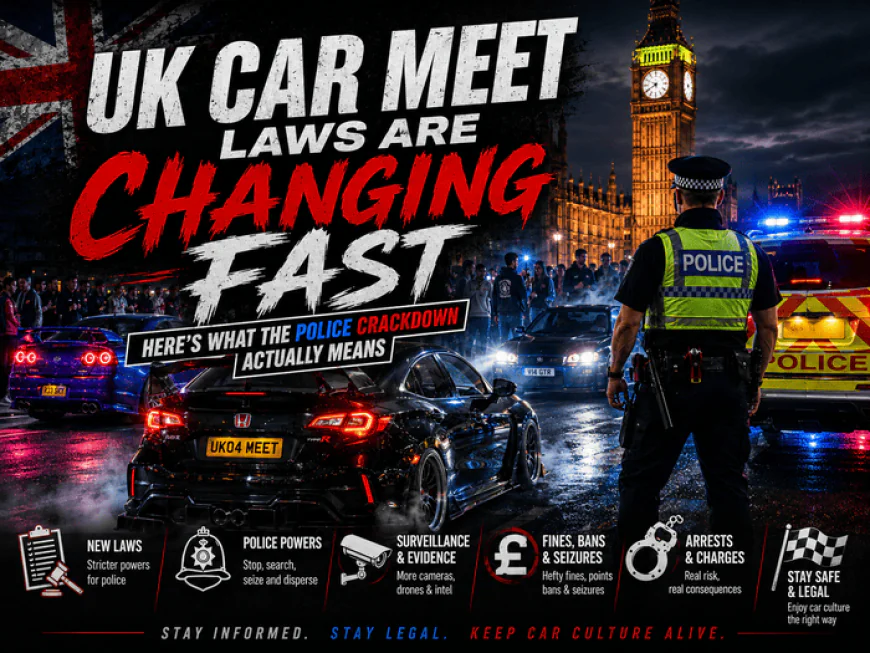
UK Car Meet Laws Are Changing Fast
If you've been to a car meet in the last year, chances are someone in the group chat has already sent round a screenshot of a news story about drivers getting banned, cars getting crushed, or a council slapping an order on a car park you've used a hundred times. It's not paranoia. The UK car meet laws landscape genuinely has shifted, and it's shifted quickly, off the back of a Road Safety Strategy, a brand new Crime and Policing Act, and a wave of local injunctions that are giving police and councils tools they simply didn't have a couple of years ago. This isn't a rumour doing the rounds on forums. It's real legislation, it's already being used, and if you're part of the scene, even the well-behaved, static-display, talk-about-your-coilovers-in-a-Tesco-car-park part of the scene, you need to actually understand what's changed rather than just panic about it.
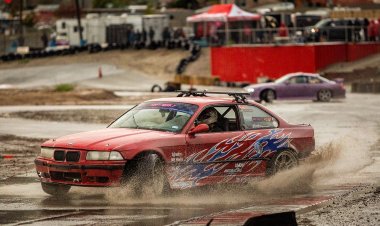
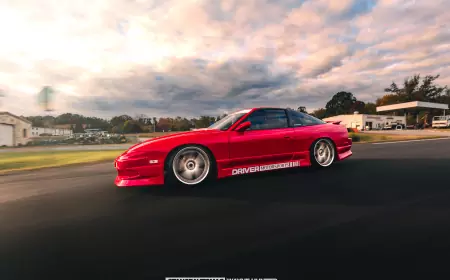
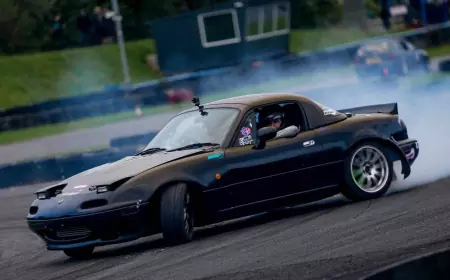
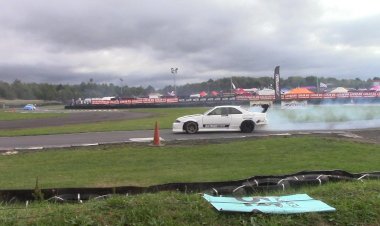
The short version is this: none of this is really aimed at you if you're the person who turns up to an organised show, parks up, chats to a few people about your build and heads home at a sensible hour. It's aimed squarely at the other end of the scene, the burnouts in retail parks at midnight, the drift sessions on public roads, the convoys of ghost-plated cars treating a dual carriageway like a track day. But because enforcement now leans so heavily on cameras and blanket orders rather than an officer physically catching someone in the act, the net has gotten a lot wider, and it can catch people who were never the problem in the first place. That's the bit worth understanding properly.
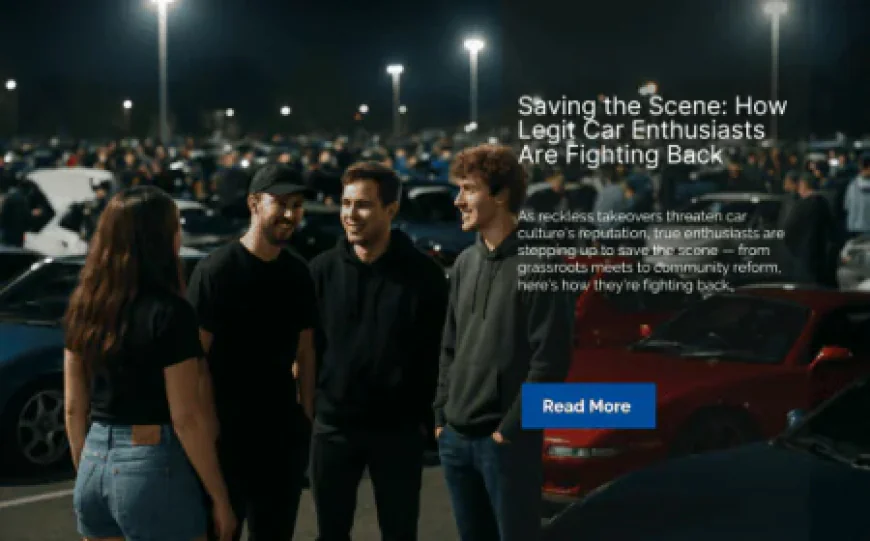
Saving the Scene: How Legit Car Enthusiasts Are Fighting Back
What's Actually Changed: The Crime and Policing Act 2026
The big one is the Crime and Policing Act 2026, which received Royal Assent at the end of April this year. It's a massive piece of legislation covering everything from knife crime to terrorism law, so car meets are genuinely a small slice of it, but a few of its provisions land directly on the modified car scene. Police now have far greater access to the DVLA database, which sounds dry until you realise what it means in practice: officers can identify a vehicle's history, registered keeper, and any flags against it almost instantly, rather than waiting on a request that used to take days. The Act also bans the possession of certain devices used to bypass vehicle security, closing a loophole that's been exploited for years by people stealing cars and, in some cases, the same crowd who turn up at illegal meets in vehicles that were never legitimately theirs to begin with.
None of that sounds like it's about car meets on the surface. But it feeds directly into enforcement, because a huge chunk of the antisocial driving problem at illegal meets involves cars that are untaxed, uninsured, unregistered, or running on plates that were never issued to that vehicle. Give police faster, deeper access to vehicle data, and suddenly a car that would've slipped through a routine check two years ago gets flagged the second an ANPR camera reads its plate.
Ghost Plates and the ANPR Expansion
Speaking of which, this is probably the single biggest practical change for anyone who attends meets regularly. The government's Road Safety Strategy, published back in January, deals directly with what's become known as ghost plates, fake or altered number plates designed specifically to dodge cameras and avoid identification. The strategy commits to consulting on new powers to crack down on drivers using them, alongside tougher checks to make sure legitimate plates are actually reliable enough for cameras to read properly.
At the same time, ANPR coverage is expanding hard across the UK, not just on motorways but around the retail parks, industrial estates and empty car parks that have become the default late-night meeting spots for the illegal side of the scene. Police and local enforcement teams are using the expanded network specifically to catch untaxed, uninsured and unregistered vehicles, which, let's be honest, is the exact profile of a lot of the cars that show up to the more chaotic meets. The message from government has been pretty blunt about it: hiding behind a ghost plate or an unregistered car isn't the workaround it used to be. The cameras are multiplying and they're getting better at reading what's actually in front of them.
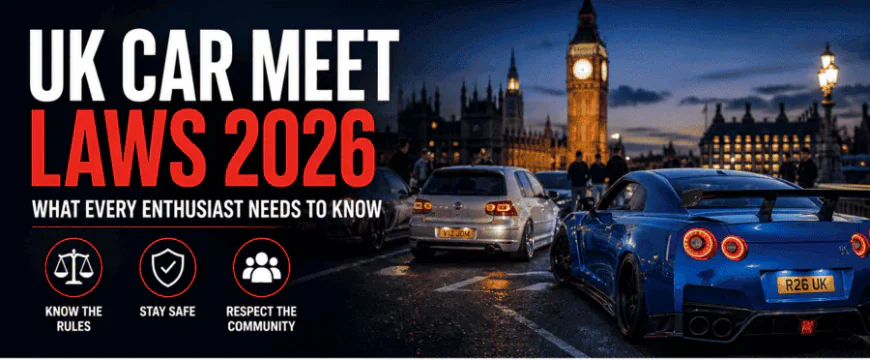
UK Car Meet Laws 2026 — What Every Enthusiast Needs to Know
Public Spaces Protection Orders: The Council-Level Weapon
If ANPR is the detection side, Public Spaces Protection Orders, or PSPOs, are the enforcement side, and they're arguably the tool that's changed the game the most at a local level. A PSPO is a statutory power that lets a council impose specific behavioural conditions across a defined geographic area, and crucially, it applies to literally everyone inside that zone, whether you're the ringleader of a street cruise or just someone who happened to park there.
Breach one and you're looking at an on-the-spot fixed penalty, or a fine of up to £1,000 if it ends up in court. What makes PSPOs particularly effective, and particularly unforgiving, is that they can be enforced entirely through ANPR and existing CCTV, so a council doesn't need an officer standing there with a notebook. Cambridge and South Cambridgeshire councils recently proposed exactly this kind of order at Babraham Road Park and Ride after 22 separate recorded incidents between April 2024 and January 2026 alone, which gives you a sense of how quickly these things get triggered once a location becomes a known hotspot.
Quick Breakdown: What a PSPO Breach Actually Costs You
- On-the-spot fixed penalty notice for a first breach
- Fines of up to £1,000 if the case goes to court
- Enforcement via ANPR and CCTV, no officer needs to be present
- Applies to everyone in the zone, organisers and bystanders alike
- Can be triggered by a relatively small number of recorded incidents
High Court Injunctions: The Kensington and Chelsea Example
Councils have also started reaching for a heavier legal tool entirely: the High Court injunction. Kensington and Chelsea Council, working alongside the Metropolitan Police and Westminster City Council, secured exactly this earlier in the year, targeting drivers who gather to race, rev engines, or take part in disruptive meets around Exhibition Road, an area that had become a genuine hotspot for late-night nuisance driving. The injunction runs between 6pm and 7am and bans dangerous or obstructive driving, attending illegal car meets, and organising or promoting them in the first place.
Breach it and you're not looking at a fine that just gets paid and forgotten. You're looking at contempt of court, which can mean unlimited fines, imprisonment, or even asset seizure. Local business groups have been vocal in backing the move too, arguing it protects an area that depends heavily on footfall and a sense of safety for residents and visitors alike. It's a stark example of how far the legal response has escalated in places where the problem has been persistent and loud enough to force councils into court.
Vehicle Seizure: The New 48-Hour Rule
There's also a proposal working its way through consultation that would drastically speed up how quickly police can dispose of a seized vehicle, cutting the current wait time from 14 days down to just 48 hours. It's part of a wider Home Office push under the Neighbourhood Policing Guarantee to give forces faster tools against antisocial vehicle use, including off-road bikes and e-scooters as well as cars. AA president Edmund King has been clear that illegal meets and street racing create needless injuries and fatalities, and that framing is exactly why the proposal has picked up support from road safety groups and neighbourhood watch organisations alike. If it goes through as drafted, a seized car could realistically be crushed within two days rather than sitting in an impound lot for a fortnight while paperwork catches up.
What This Means If You're Just There for the Cars
Here's the honest bit. None of this legislation was written with the intention of shutting down organised shows, charity meets in supermarket car parks, or the weekend gathering where people talk suspension geometry and swap parts contacts. The government has been reasonably explicit about that. But broad powers, by their nature, don't come with a built-in filter for who's actually causing a problem. A PSPO zone doesn't know the difference between a static display and a burnout session. An ANPR camera doesn't care that your car is fully taxed, insured, and running standard plates if it's parked in a location that's just had an order slapped on it. The scene is genuinely at a bit of a crossroads right now, where the actions of a loud, reckless minority are shaping rules that everyone else has to live inside.

The Ultimate Car Show Prep Guide: How to Stand Out at Meets
How Enthusiasts Can Protect the Scene
If there's one takeaway worth carrying forward, it's this: the show and cruise culture that's built the modified car scene into what it is has always been better at policing itself than it gets credit for, and that self-regulation matters more now than it ever has. Supporting venue-based, properly organised events, staying well clear of the antisocial fringe, and making it obvious to lawmakers and councils that enthusiasts and street racers are not the same crowd, that's genuinely the difference between a scene that thrives under scrutiny and one that gets legislated out of existence by association. The legal tools are only going to get sharper from here, so the burden really does fall on the community to draw that line clearly, before someone else draws it for you with a court order instead.
For more on how this legislation is playing out across the country and what it means for builds, shows, and the wider scene, check out the ongoing coverage over on stanceauto.co.uk.
 Like
0
Like
0
 Dislike
0
Dislike
0
 Love
0
Love
0
 Funny
0
Funny
0
 Angry
0
Angry
0
 Sad
0
Sad
0
 Wow
0
Wow
0