




































































.png)










![[HOONIGAN] Ken Block's GYMKHANA NINE](https://img.youtube.com/vi/_bkX5VkZg8U/maxresdefault.jpg)




























































![[HOONIGAN] KEN BLOCK'S GYMKHANA SEVEN: WILD IN THE STREETS OF LOS ANGELES](https://cdn.motor1.com/images/mgl/2KlO4/s1/ken-block-london-tour-directors-cut.jpg)






































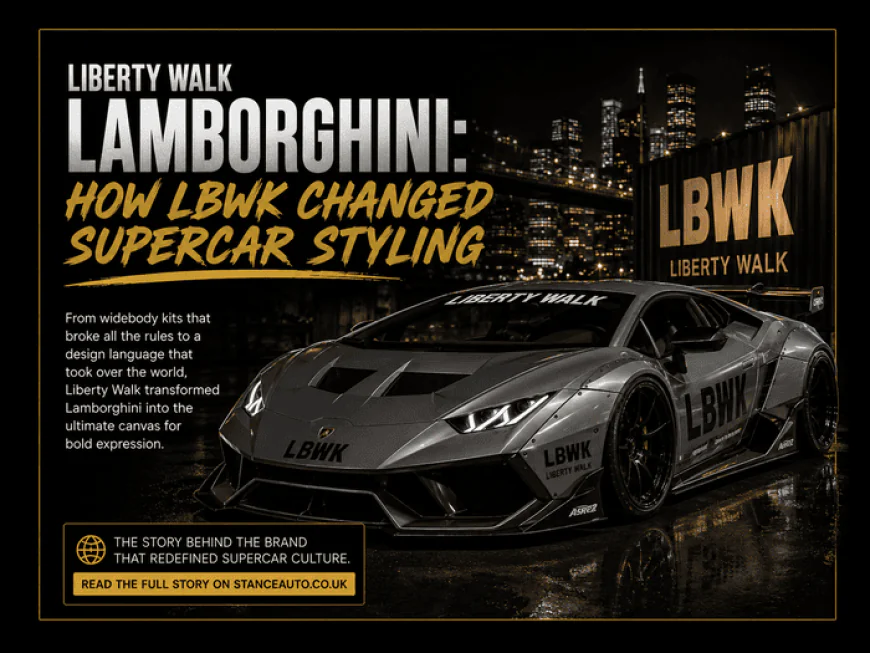
Liberty Walk Lamborghini: How LBWK Changed Supercar Styling
Liberty Walk Lamborghini builds changed supercar styling. Discover how LBWK transformed the Murciélago, Huracán and Aventador with its radical Japanese widebody style.
What Is a Liberty Walk Lamborghini?
A Liberty Walk Lamborghini is a Lamborghini transformed with Liberty Walk's unmistakable Japanese widebody styling, using dramatic over-fenders, aggressive aero, a low stance and, on many builds, exposed fasteners that make the transformation impossible to miss.
That definition only really tells half the story though. The interesting part isn't simply what parts are bolted onto the car, it's why Liberty Walk decided to treat some of the world's most expensive supercars in exactly the same rebellious way that Japanese enthusiasts had been treating their own cars for decades. Lamborghini already knew how to make a car look outrageous. Liberty Walk came along and decided that outrageous wasn't quite enough.
That is what makes the Liberty Walk Lamborghini story so interesting. The company didn't invent the Lamborghini, and it certainly didn't invent the idea of modifying one, but it helped change the way people thought about what could be done to an exotic car. Suddenly the supercar wasn't something that had to be carefully preserved in factory condition. It could be a canvas.
And when that canvas was a Lamborghini, the results were always going to be dramatic.
Why Did Liberty Walk Start Modifying Lamborghinis?
Liberty Walk's move into Lamborghini was driven by the same attitude that shaped much of Wataru Kato's work: a belief that cars should have personality, and that modifying them should be about creating something people remember.
The story goes back to a customer who was also a close friend of Kato. He wanted to drive a Lamborghini, and that simple desire became the starting point for something much bigger. Instead of treating the car as untouchable, Liberty Walk began imagining what would happen if its Japanese over-fender approach was applied to an exotic supercar.
The result was the Lamborghini Murciélago that became such an important part of Liberty Walk's history. The idea was bold because the Murciélago was already an intimidating machine. It had the V12, the low roofline, the huge rear haunches and the sort of presence that meant it never needed an introduction.
But Liberty Walk wasn't interested in leaving it alone.
The company wanted to make the car wider, lower and more aggressive, and it wanted those modifications to be visible. There was no attempt to make the bodywork look like something Lamborghini might have designed at the factory. The whole point was that somebody had taken a Lamborghini and made it their own.
That philosophy would become the foundation of the LB★WORKS supercar movement.
How Did the Murciélago Change the Liberty Walk Lamborghini Story?
The Murciélago changed the Liberty Walk Lamborghini story because it proved that the company's Japanese custom-car philosophy could work on an exotic without destroying the identity of the original car.
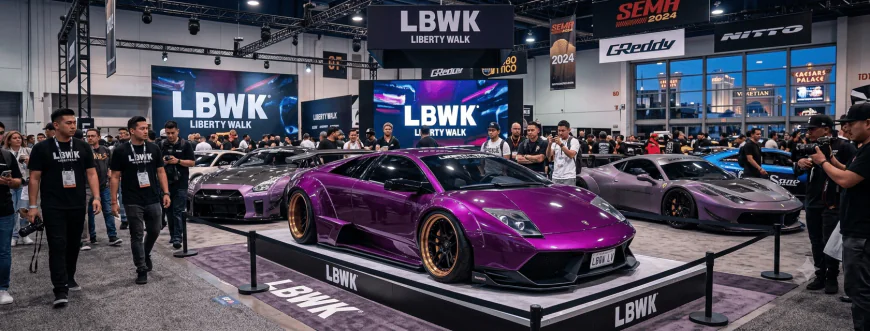
The first major American appearance came through SEMA, where Liberty Walk introduced the LB★Performance Lamborghini in 2009. The reaction created attention, but it didn't immediately produce the kind of commercial success the company wanted. Rather than quietly walking away from the idea, Liberty Walk went back to work and pushed the concept further.
When the LB★WORKS Murciélago appeared at SEMA in 2012, the message was much harder to ignore.
The widened arches completely changed the proportions of the Lamborghini. The car sat closer to the ground, the wheels filled those enormous new arches and the exposed hardware made the aftermarket nature of the conversion part of the visual identity. It wasn't subtle, and that was precisely why it worked.
People could argue about whether they liked it, but they couldn't look at it and forget it.
That distinction is important. Liberty Walk didn't become influential by making conservative modifications to cars that were already considered perfect. It became influential by creating builds that started conversations.
A Liberty Walk Lamborghini could walk into a room and cause an argument before anyone had even heard the engine.
Why Are Liberty Walk Lamborghinis So Wide?
Liberty Walk Lamborghinis are so wide because the exaggerated over-fenders are central to the company's Japanese works-style approach, but the extra width is about much more than simply making room for larger wheels.
It changes the entire visual balance of the car.
A factory Lamborghini already has a naturally low, wide stance, particularly in models such as the Murciélago and Aventador. Liberty Walk exaggerates those proportions until the body appears to stretch over the wheels. The arches become a major part of the design rather than something that simply surrounds the tyres.
Once the car is lowered, the effect becomes even stronger. The gap between the body and the road disappears, while the wider wheels fill the arches and give the car a much more planted appearance. From the front three-quarter view, the Lamborghini can look almost like a racing machine that has escaped from a paddock and found its way onto the street.
That visual aggression is intentional.
Liberty Walk isn't trying to make the Lamborghini look smaller or cleaner. It wants the car to occupy more space, attract more attention and look completely different from a standard example.
Why Did Liberty Walk Use Exposed Rivets?
The exposed rivets became one of Liberty Walk's most recognisable details because they make the widebody conversion deliberately obvious rather than trying to disguise it as factory bodywork.
That is part of what separates an LBWK build from a more conventional luxury-car modification. The arches aren't blended into the original body in an attempt to make them disappear. The hardware is there to be seen, and over time those rows of fasteners became almost as recognisable as the Liberty Walk name itself.
For some people, that is exactly what makes the cars special. For others, it is the detail that makes them too extreme.
But from a branding point of view, it is brilliant.
A modified Lamborghini can be photographed from fifty metres away and an enthusiast can often tell that it is a Liberty Walk car simply from the shape of the arches and the way the bodywork has been constructed. In an online car culture where thousands of modified cars are competing for attention every day, having a visual identity that strong is incredibly valuable.
How Did Liberty Walk Change the Lamborghini Tuning Scene?
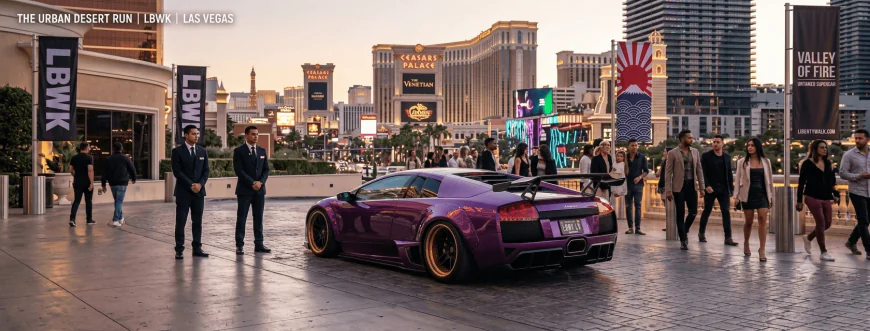
Liberty Walk changed the Lamborghini tuning scene by making extreme bodywork part of the conversation around supercars rather than treating modification as something that should remain subtle. There had always been people modifying Lamborghinis. Wheels, exhaust systems, suspension and aerodynamic parts were nothing new. What changed with LBWK was the scale of the transformation.
The body itself became the modification.
That sounds obvious now, but it was a powerful idea at the time. Instead of asking how to make a Lamborghini a little faster or a little more luxurious, Liberty Walk enthusiasts could ask how to make it wider, lower and completely personal.
That shift helped move the modified-supercar scene away from the idea that an exotic should simply be maintained and towards the idea that ownership could involve genuine creative expression. A Lamborghini could still be a Lamborghini while becoming something that nobody else had. That is a big part of the reason the Liberty Walk Lamborghini became such a recognisable sight at shows around the world.
Liberty Walk Murciélago: The Car That Started the Conversation
The Liberty Walk Murciélago remains one of the most important cars in the company's history because it gave the LB★WORKS philosophy a supercar shape that was almost impossible to ignore.
The original Murciélago was already one of Lamborghini's most dramatic designs. Its V12 character, sharp surfaces and enormous rear haunches gave it a presence that few other cars could match. Liberty Walk didn't need to reinvent those qualities. It simply pushed them further.
The wide rear arches made the car look substantially broader, while the low suspension and aggressive aerodynamic treatment pulled the entire silhouette closer to the road. Add the deep wheels and exposed fasteners and the result looked less like a conventional exotic and more like a Japanese show build built around an Italian V12. That contrast was the magic. It shouldn't have worked. Yet somehow it did.
The Murciélago became proof that the Liberty Walk philosophy could travel beyond Japan and into a completely different part of car culture. It also established something that would become increasingly important as the brand grew: the best LBWK builds were not necessarily the ones everyone agreed with. They were the ones everyone remembered.
How Did Liberty Walk Change the Lamborghini Huracán?
Liberty Walk changed the Lamborghini Huracán by giving its relatively clean modern shape a much more aggressive silhouette and turning the car into another convincing canvas for the LBWK formula.
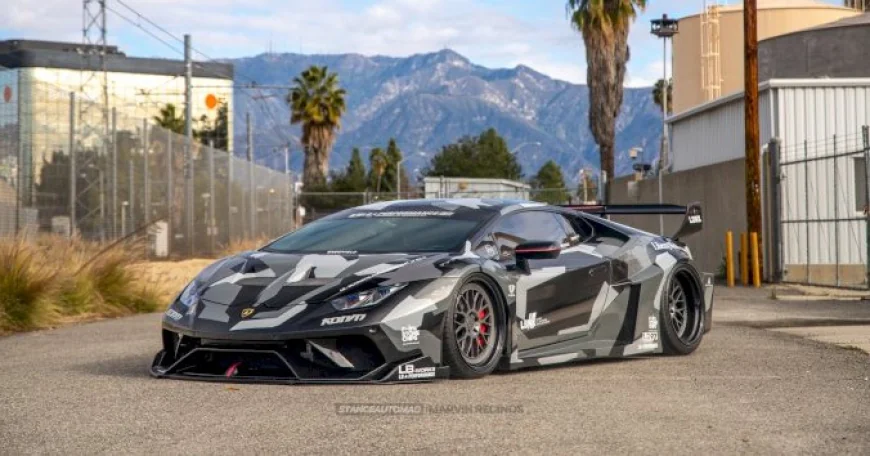
The Huracán was always going to suit the approach. Its angular bodywork, compact proportions and low roofline already gave Liberty Walk plenty to work with. Once the arches were widened and the suspension dropped, the car took on a much more aggressive personality without losing the basic identity of the Lamborghini underneath.
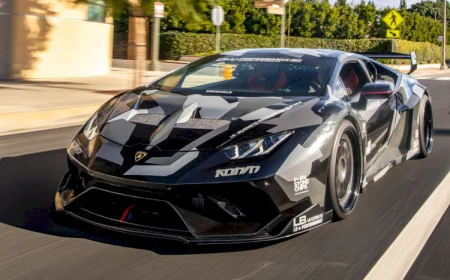
One of the most interesting real-world examples featured on Stance Auto is Victor A Leong's 2015 Lamborghini Huracán. The build was carried out with LTMW alongside Liberty Walk and was described as the first Liberty Walk Silhouette GT kit of its kind installed in the United States.
Victor's story also shows why the LBWK approach works so well with owner-built cars. The Lamborghini wasn't simply fitted with a kit and parked in a showroom. It became a personal project, with LD97 Forged wheels, AirLift management, D2 Racing struts, a custom camo design and an IPE exhaust all helping create something that reflected the owner's own taste.
That is the part of Liberty Walk that is sometimes missed when people focus only on the bodywork.
The kit is the beginning.
The owner creates the personality.
Why Does the Liberty Walk Aventador Work So Well?
The Liberty Walk Aventador works so well because the Lamborghini's factory design is already so angular and dramatic that the wider LBWK treatment feels like an escalation of the original idea rather than a complete change of direction.
The Aventador looks futuristic in standard form. Its sharp nose, huge side surfaces and aggressive rear design give it a presence that needs very little help. Liberty Walk simply turns those qualities up.
The wider arches make the car appear even more planted, while the low ride height pulls the whole body towards the road. Larger wheels and dramatic aero then extend the visual footprint, making the car look wider and longer even when its actual dimensions haven't changed dramatically.
The end result is theatrical, and an Aventador is one of the few cars that can genuinely carry that level of drama without it feeling completely out of place.
A Liberty Walk Aventador doesn't try to be elegant.
It tries to be unforgettable.
What Makes a Liberty Walk Lamborghini Different From a Normal Widebody?
A Liberty Walk Lamborghini is different from a conventional widebody because the LBWK approach treats the entire silhouette as one design rather than simply adding wider fenders to clear larger wheels.
A generic widebody can be primarily functional. It can create additional clearance, accommodate a wider track and change the stance without dramatically altering the character of the original car.
Liberty Walk takes a much more visual approach.
The arches work with the wheels. The wheels work with the suspension height. The suspension works with the side skirts, front splitter and rear aero. All of those parts then work together to change the way the Lamborghini sits on the road.
That is why a good Liberty Walk build feels complete.
You don't look at the car and think somebody has simply added some wide arches. You look at it and see a different version of the Lamborghini.
That distinction is one of the reasons the style became so influential.
Why Do People Either Love or Hate Liberty Walk Lamborghinis?
People tend to either love or hate Liberty Walk Lamborghinis because the styling deliberately challenges the traditional idea that an expensive exotic should be left close to factory specification.
If your idea of the perfect Lamborghini is one that has just left the showroom with every original panel untouched, an LBWK build can look like automotive vandalism. If you see a car as a starting point for personal expression, the same build can look like automotive art.
There isn't much middle ground. And that controversy has actually helped Liberty Walk. The company never needed every enthusiast to agree with it. It needed people to recognise the cars, talk about them and remember them. In that sense, the extreme styling became part of the marketing. A quiet body kit might look tasteful, but a Liberty Walk Lamborghini can become the car everyone is discussing after the show has finished.
Did Liberty Walk Ruin the Lamborghini's Original Design?
Liberty Walk didn't simply ruin Lamborghini design; it created a different interpretation of the original shape, which is why the cars remain so divisive.
The important distinction is that an LBWK Lamborghini isn't pretending to be a factory Lamborghini. It is a modified car, and the modifications are deliberately visible.
- The original car represents Lamborghini's design philosophy.
- The modified car represents the owner's.
That makes the two things very different without requiring one to replace the other. A standard Lamborghini can be appreciated for its engineering and design while an LBWK example can be appreciated for the creativity and attitude behind the build. In fact, the fact that people still argue about the two versions is probably a sign that Liberty Walk succeeded in doing what it set out to do. It made people look at the car differently.
How Did Liberty Walk Make Exotic Cars Part of Japanese Car Culture?
Liberty Walk helped connect exotic cars with Japanese car culture by taking ideas that had long existed in Japanese tuning and applying them to European supercars.
That crossover is one of the company's most important contributions.
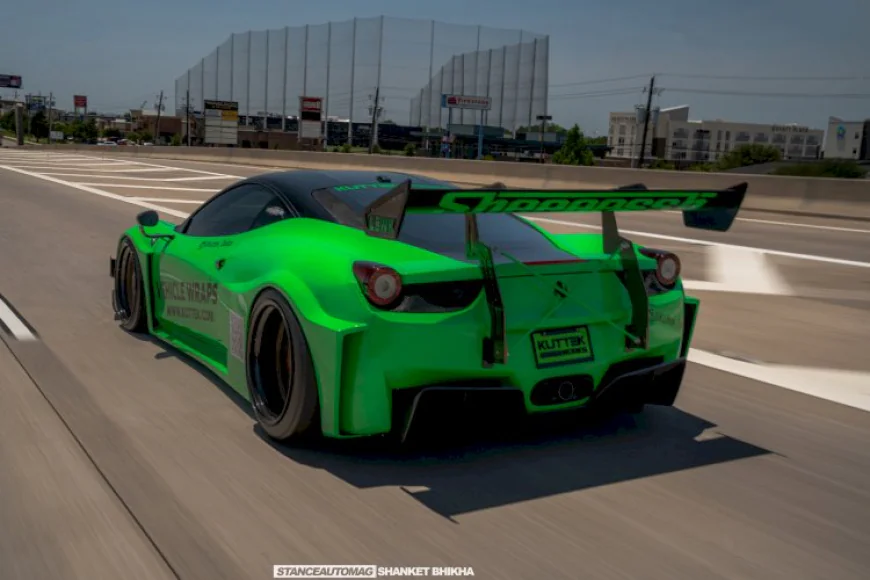
Japanese enthusiasts had already embraced over-fenders, aggressive stance, dramatic aero and the idea that a car could be rebuilt around the personality of its owner. Liberty Walk took those ideas and put them onto Lamborghinis, Ferraris and other cars that many people considered too valuable to modify.
The result was unexpected, but it also made sense.
The point was never really about nationality. It was about attitude.
Liberty Walk showed international enthusiasts that Japanese tuning culture wasn't simply a category of cars. It was a way of thinking about cars, and that way of thinking could be applied to almost anything.
A Lamborghini just happened to make the result spectacular.
Why Are Liberty Walk Lamborghinis So Popular at Car Shows?
Liberty Walk Lamborghinis are popular at car shows because they create an immediate visual impact and give photographers something distinctive to capture.
A standard Lamborghini is obviously still going to draw a crowd. But at a major show there can be several expensive supercars competing for attention, and the cars that get remembered are usually the ones that give people something unexpected.
LBWK Lamborghinis do exactly that.
The wider arches change the silhouette. The low stance changes the proportions. The wheels fill the bodywork in a way a standard car cannot. Then there are the rivets, the aero and all the individual details that make people walk around the car rather than simply glance at it.
That makes the car almost perfectly suited to modern car culture. It looks good in person, but it also looks dramatic in photographs, videos and social-media posts. That helped the style travel far beyond the shows where the cars first appeared.
How Did LBWK Turn Lamborghini Into a Statement?
LBWK turned Lamborghini into a statement by making the modification itself as important as the badge on the bonnet.
A Lamborghini already says something about its owner. It is an expensive, exotic and highly recognisable car. But a Liberty Walk conversion adds another layer to that message. The owner isn't simply buying the car. They're deciding what it should become.
That is why individual owner builds matter so much to the Liberty Walk story. One person might choose a particular set of forged wheels, another might go for an aggressive wrap, while someone else might focus on the suspension and stance. The same basic LBWK kit can therefore produce completely different cars.
The bodywork gives the build its identity, but the owner supplies the final personality.
That is also why the Liberty Walk Lamborghini has become more than a body kit. It is now part of a wider custom-car culture.
Are Liberty Walk Lamborghinis Still Influential?
Liberty Walk Lamborghinis are still influential because the visual language LBWK helped popularise has become a familiar part of modern modified-supercar culture.
Extreme widebody conversions, low stances, visible hardware and oversized aerodynamic parts are no longer unusual sights at major car shows. Other companies have developed their own approaches, while owners have become much more comfortable treating exotic cars as platforms for serious customisation.
Liberty Walk didn't invent every one of those ideas.
What it did was package them into an identity that people could recognise immediately and then put that identity on some of the world's most photographed cars.
That combination was incredibly powerful.
The Lamborghini gave Liberty Walk an exotic canvas. Liberty Walk gave the Lamborghini a completely different visual language.
So, How Did Liberty Walk Change Supercar Styling?
Liberty Walk changed supercar styling by proving that some of the world's most expensive and recognisable cars could be treated as genuine custom-car platforms rather than untouchable objects.
The Lamborghini was the perfect canvas. The original cars were already dramatic, so Liberty Walk could exaggerate what was there instead of trying to completely redesign the shape. The Murciélago established the formula, the Huracán showed how naturally the approach could work on a newer generation of Lamborghini, and the Aventador took the idea into even more theatrical territory.
But the biggest change wasn't the width of the arches or the number of rivets.
It was the attitude behind them.
Liberty Walk made it acceptable to look at a Lamborghini and ask what it could become rather than simply admire what it already was. That helped open the door to a new generation of modified supercars where owners could treat even the most exotic machinery as an expression of personal taste.
Whether you see that as automotive art or automotive vandalism is still completely subjective.
What isn't really debatable is the impact.
Liberty Walk changed the way modified Lamborghinis look, changed what people expected from an exotic-car build, and helped turn the Japanese widebody movement into a genuinely global part of car culture.
For the next part of the LBWK story, explore Liberty Walk Nissan GT-R: The LBWK R35 Story, then follow it with Liberty Walk Ferrari: Why Exotic Cars Became Widebody Icons.
You can also explore the real-world Victor A Leong 2015 Lamborghini Huracán feature for a closer look at how an owner turned the LBWK concept into his own car.
You can find the magazine through our Amazon magazine store.
 Like
0
Like
0
 Dislike
0
Dislike
0
 Love
0
Love
0
 Funny
0
Funny
0
 Angry
0
Angry
0
 Sad
0
Sad
0
 Wow
0
Wow
0