












































































.png)











![[HOONIGAN] Ken Block's GYMKHANA NINE](https://img.youtube.com/vi/_bkX5VkZg8U/maxresdefault.jpg)









































































![[HOONIGAN] KEN BLOCK'S GYMKHANA SEVEN: WILD IN THE STREETS OF LOS ANGELES](https://cdn.motor1.com/images/mgl/2KlO4/s1/ken-block-london-tour-directors-cut.jpg)
































Is Omaze Good? Myth or Reality
Is Omaze good, or is it too good to be true? We fact-check the biggest myths about Omaze's prizes, winners and charity claims.
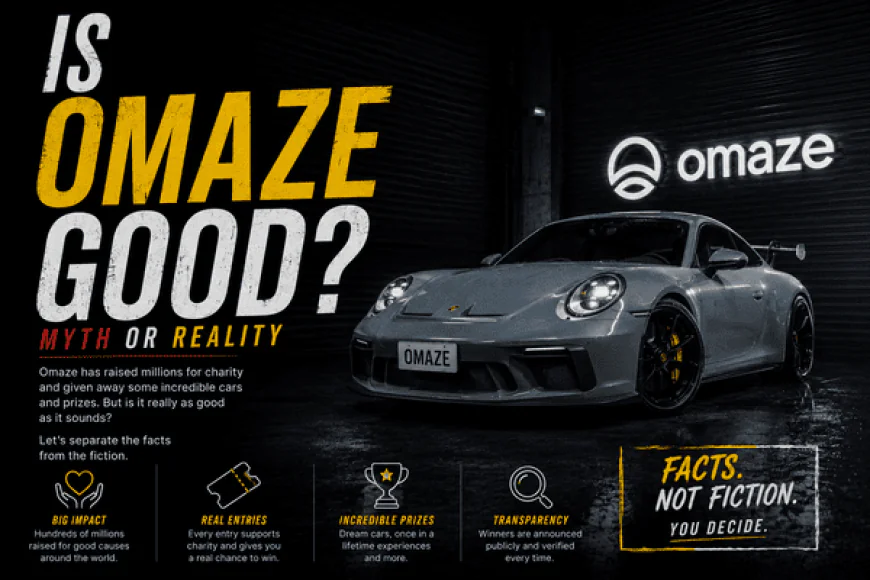
Is Omaze Good?
Is Omaze actually legit, or is it too good to be true — a slick ad campaign dressed up as a charity giveaway? Omaze is a real, legally operating company, but that doesn't mean every rumour swirling around it is wrong. Let's go through the actual claims one at a time.
Omaze Legitimacy at a Glance
- Omaze operates legally in the UK as a charity-partnered prize competition, not an unregulated lottery
- Winners are publicly documented and verifiable per campaign
- Charity donations are contractually fixed, not dependent on how well a campaign sells
- Omaze is not a UK-based company originally, which fuels some of the scepticism it gets
- No credible evidence exists of prizes not being awarded as advertised
Is Omaze a Scam?
No — Omaze is a genuinely operating company with a documented history of awarding real prizes to real winners, which is the single most important fact that separates "legit but not for everyone" from an actual scam. The confusion largely comes from Omaze's US origins and its charity-first marketing tone, which reads differently to a UK audience more used to straightforward prize competitions like BOTB.
Are the Prizes Actually Real?
Yes. Omaze's house-and-car bundles and other prizes are genuinely acquired and awarded, with winners announced and typically featured across Omaze's own channels as proof. If a prize were fabricated or never awarded, that would constitute straightforward fraud under UK consumer law, and there's no credible pattern of that happening — the skepticism online tends to be about value and odds, not about whether the prizes exist at all.
Does the Charity Actually Get the Money?
This is the myth worth taking most seriously, because it's the one detail that genuinely differs between Omaze and its UK competitors. The charity split is contractually fixed as part of each campaign's structure, meaning the named charity partner receives its agreed share of ticket revenue regardless of how the overall campaign performs. This isn't Omaze's word alone — the Fundraising Regulator sets standards that charity-linked fundraising campaigns operating in the UK are expected to meet, giving an independent body oversight of exactly this kind of claim.
Is Omaze Regulated in the UK?
Omaze operates under the same legal framework as other UK prize competitions, governed by the distinction between a prize competition (which requires an element of skill or a free-entry route, and is legal) and a lottery (which is pure chance and heavily restricted). The Gambling Commission's own guidance on prize competitions and free draws lays out exactly what's required for a company like Omaze to operate legally, and Omaze's structure — skill question or free postal entry — fits that framework the same way BOTB and Dream Car Giveaways do.
Why Does Omaze Get More Scepticism Than UK-Only Competitors?
Partly it's the US origin, and partly it's the sheer size of some of its prize bundles, which naturally invites more "that's too good to be true" reactions than a single-car giveaway does. There's also less UK cultural familiarity with Omaze compared to a name like BOTB that's been running domestically since 1999. None of that scepticism is unreasonable as a starting instinct — it's just not backed up by evidence of Omaze actually failing to deliver on its advertised prizes or charity commitments.
The Good Stuff
- Real company, real prizes, real documented winners
- Independent regulatory oversight via the Fundraising Regulator and Gambling Commission framework
- Charity payouts are contractual, not conditional on campaign performance
The Risks
- Higher ticket prices than most competitors, so a bigger loss if a specific campaign doesn't land for you
- Less brand familiarity in the UK than long-running domestic competitors
- Odds still vary campaign-to-campaign, so check the specific terms rather than trusting the brand alone
Myth: "Omaze Rigs the Winners"
There's no credible evidence supporting this claim, and it doesn't hold up against how the draw mechanic actually works — winners are selected from a fixed, published entry pool using a verifiable draw process, the same basic mechanic used across every legitimate UK prize competition. The scepticism usually comes from the emotional gap between "I didn't win" and "therefore it must be fixed," which is a common reaction to any low-probability draw rather than evidence specific to Omaze.
Myth: "You Need to Buy Loads of Tickets to Have Any Chance"
Buying more tickets does proportionally improve your odds within a fixed entry pool, but it's a myth that a single ticket has effectively zero chance while a large multi-ticket purchase somehow flips the odds meaningfully in your favour. The maths simply doesn't support that framing — going from one entry to ten entries in a pool of fifty thousand is still a small probability, just a slightly less small one, and treating it as a strategy rather than a modest odds nudge is where people overspend.
Myth: "The Free Postal Entry Route Doesn't Actually Work"
This is one of the more persistent myths, and it's simply false — the free postal-entry route is a genuine legal requirement for Omaze to operate as a prize competition rather than a lottery under UK law, and entries submitted that way are included in the same draw pool as paid entries. It's a slower, more manual process than clicking "buy," which is presumably why the myth persists, but it's a legitimate and equally valid route into the same draw.
Myth: "Omaze Only Operates in the US, Not Really the UK"
This one was true once, but hasn't been for some time — Omaze runs dedicated UK campaigns with UK-registered charity partners and UK-specific terms, distinct from its US operation. Confusing the two is an easy mistake given the shared branding, but the UK arm operates under UK consumer and charity law specifically, not as a simple pass-through of the American business.
Myth: "There's No Way to Verify a Win Actually Happened"
Winners are documented publicly as part of each campaign's conclusion, typically including footage or interviews with the winner's participation, which gives a traceable, verifiable record rather than an unverifiable internal claim. It's not dissimilar to how BOTB and Dream Car Giveaways handle winner announcements, and the pattern across all three legitimate operators is the same: public documentation as standard practice, not an occasional PR exercise.
Myth: "The Charity Percentage Is Too Small to Matter"
The specific percentage varies by campaign and isn't always headline news in the advertising, which fuels this myth. But "the exact figure isn't prominently advertised" is different from "the figure is negligible" — the amounts involved, especially on larger campaigns with tens of thousands of entrants, typically represent meaningful real-world sums for the charity partner, verifiable through the Fundraising Regulator's oversight rather than Omaze's own marketing claims alone.
Myth: "Omaze Is Basically the Same as Buying a Lottery Ticket"
Legally and structurally, this isn't accurate. A lottery ticket funds a licensed lottery operator under a completely different regulatory regime, with no charity allocation built into the core structure and vastly different odds. An Omaze ticket funds a prize competition with a mandatory charity split, a skill-question or free-entry legal basis, and materially different odds depending on the specific campaign. The two might feel similar as a purchasing decision, but they're not the same product under the law or in practice.
How Can You Independently Verify Any of This Yourself?
You don't have to take a review's word for any of this. The Fundraising Regulator's website lists registered organisations and standards, campaign terms and conditions are published directly on Omaze's own site for each draw, and UK company registration details are publicly searchable through Companies House. Checking these primary sources directly takes a few minutes and is the most reliable way to confirm any of the claims in this piece rather than relying on secondhand summaries, including this one.
What Would Actually Be a Red Flag?
It's worth knowing what a genuine red flag looks like, if only so you can spot it elsewhere. No published maximum entry number, no free postal-entry option, vague or unnamed charity partners, or an operator with no verifiable company registration would all be serious warning signs on any prize draw. Omaze discloses all of these clearly, which is exactly why it clears the bar that a genuinely dodgy operator wouldn't.
Verdict: Myth or Reality?
Reality. Omaze is a legitimately operating, regulated company with genuine prizes and a contractually enforced charity commitment. The scepticism is understandable given how the campaigns are marketed, but it doesn't hold up against the actual regulatory framework Omaze operates under or its track record of awarding prizes.
Related Reads
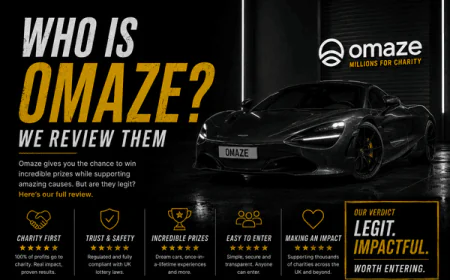
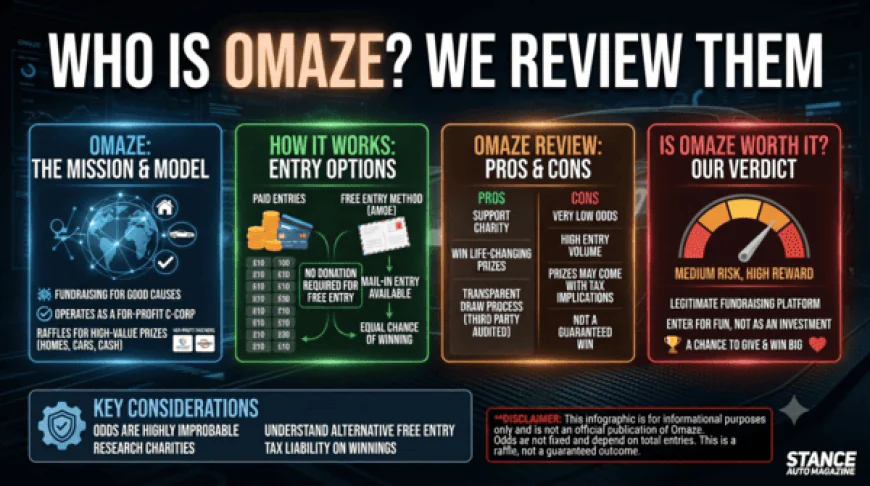
- Who Is Omaze? We Review Them
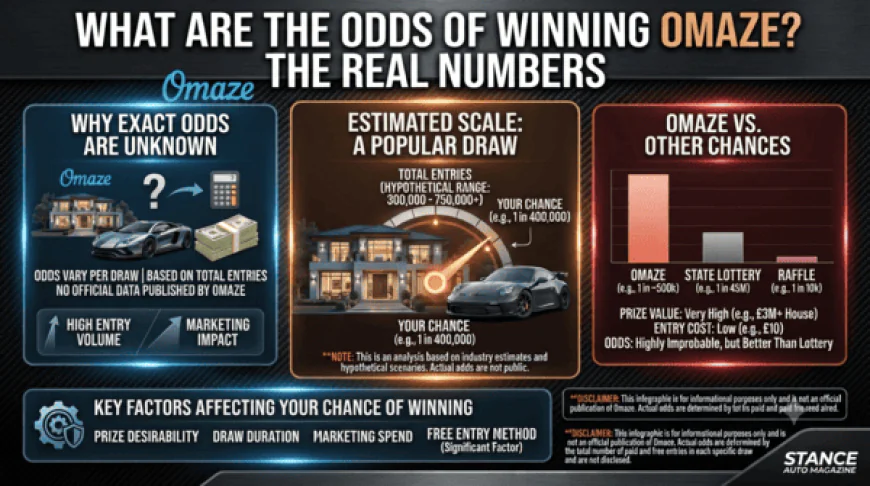
- What Are the Odds of Winning Omaze?
- How Do Omaze UK Draws Work? Charity Prize Draws Explained
- Are Car Raffles Legit or a Total Scam? The Truth
- BOTB vs Dream Car Giveaways vs Omaze: Which Is Worth It?
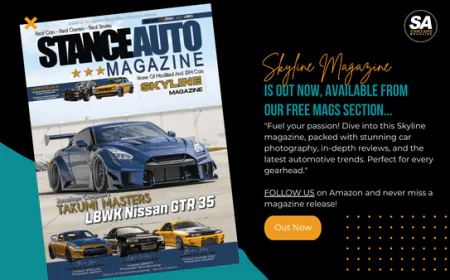
For more legitimacy checks, reviews and everything modified car culture, head back over to Stance Auto Mag. You can also grab the latest print issue through our Amazon magazine store.
 Like
0
Like
0
 Dislike
0
Dislike
0
 Love
0
Love
0
 Funny
0
Funny
0
 Angry
0
Angry
0
 Sad
0
Sad
0
 Wow
0
Wow
0