






























































































.png)












![[HOONIGAN] Ken Block's GYMKHANA NINE](https://img.youtube.com/vi/_bkX5VkZg8U/maxresdefault.jpg)







































































![[HOONIGAN] KEN BLOCK'S GYMKHANA SEVEN: WILD IN THE STREETS OF LOS ANGELES](https://cdn.motor1.com/images/mgl/2KlO4/s1/ken-block-london-tour-directors-cut.jpg)





































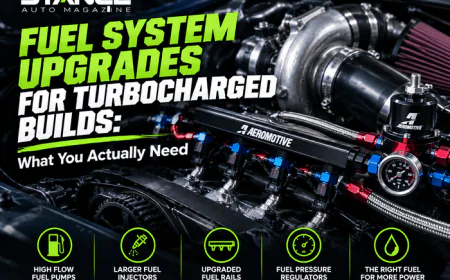
Fuel System Upgrades for Turbocharged Builds: What You Actually Need
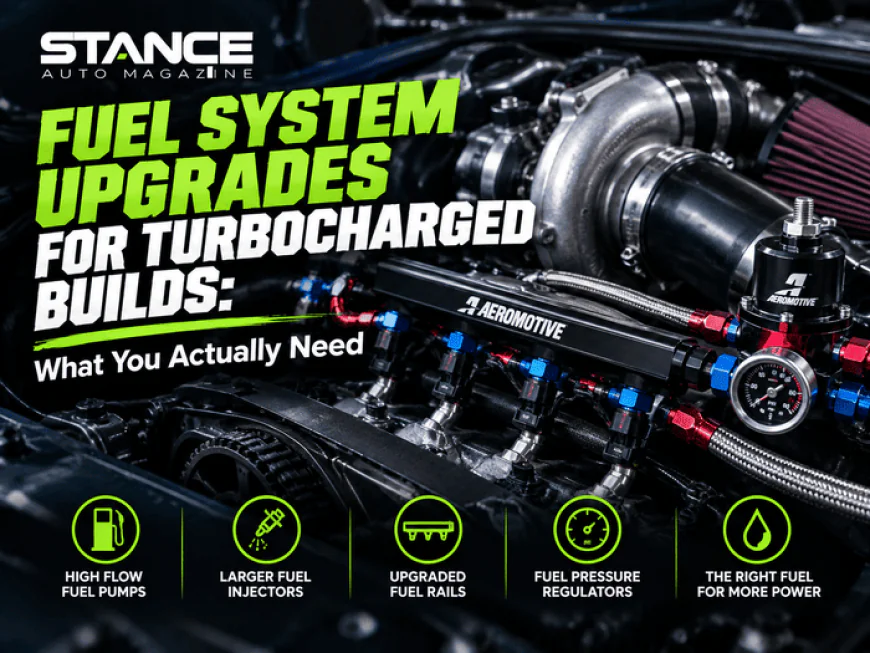
Fuel system upgrades are non-negotiable on any serious turbo build - here's what you actually need, in the right order, and when each part becomes necessary.
Why does a bigger turbo sometimes make a car run worse rather than better? Almost always, the answer is fuel. The fuel system is the part of a turbocharged build that gets skipped most often and causes the most damage when it fails — running lean under boost is the fastest route to melted pistons and destroyed engines, and it's entirely avoidable with the right parts in the right order.
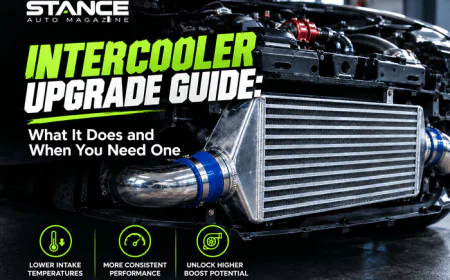
This guide sits alongside our wider mod order explainer and intercooler guide as part of the horsepower cluster — understanding how all three interact is more useful than treating any of them in isolation.
What Does the Fuel System Actually Do in a Turbo Build?
A turbocharged engine needs more fuel than a naturally aspirated one because more air is being forced into the combustion chamber, and air and fuel have to stay in ratio for combustion to work safely and efficiently. The factory fuel system is sized for the factory power output — when you add more boost, more air enters the engine, and if the fuel system can't keep up, the air-fuel mixture runs lean. Lean combustion generates excessive heat and detonation that destroys pistons and ring lands rapidly. The entire purpose of a fuel system upgrade is ensuring the engine always has enough fuel to match whatever air is being forced through it.
When Do You Actually Need a Fuel System Upgrade?
On a mild bolt-on build staying close to factory boost, the factory fuel system usually copes. The factory pump and injectors have a modest margin above the factory tune's demands, and a remap at close to stock boost often doesn't exceed that margin. The moment you start pushing significantly more boost, or fitting a larger turbo that flows more air at any given pressure, the stock fuel system becomes the limiting factor — and it's better to address this before the tune rather than discovering it during a dyno session when the car leans out under full load.
Fuel Pumps: The Foundation
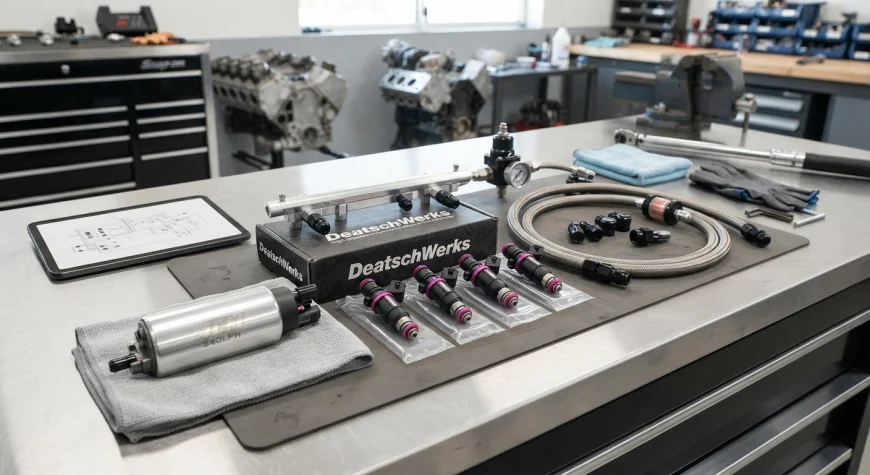
The fuel pump supplies everything downstream, so it comes first. A factory pump sized for 200bhp will struggle to supply enough fuel volume at the pressures a modified 350-400bhp build needs — the pump either can't maintain fuel pressure under sustained load or generates heat that shortens its lifespan dramatically. Walbro makes the most widely used upgrade pumps in the modified car scene, the 255lph and 450lph units covering the majority of common power targets, and they're proven across dozens of platforms with extensive community documentation on fitment and installation.
Injectors: Matching Flow to Demand
Injectors must be sized to deliver enough fuel at your target power level without spending so much time open that they can't pulse accurately at idle and part throttle. Under-sized injectors max out at full duty cycle under boost and the engine leans out. Over-sized injectors pulse inaccurately at low loads and make the car run roughly in daily driving. Getting the size right for your specific power target matters, and this is where using published injector flow data from a brand like Injector Dynamics and working with your tuner to select the correct specification pays off far better than guessing or buying whatever's cheapest.
Fuel Rails and Pressure Regulators
For builds pushing serious power on the stock fuel rail, upgraded rails and adjustable fuel pressure regulators give the tuner more control over fuel delivery and ensure consistent pressure across all injectors under high demand. These aren't always necessary on moderate power builds, but on engines running serious boost with large injectors, they become part of building a properly controllable, tuner-friendly fuel system rather than a collection of individually upgraded parts that don't work cohesively together.
Wideband O2 and Flex Fuel
A wideband oxygen sensor is how your tuner knows what the air-fuel ratio is actually doing under load, and it should be installed before any serious tuning work takes place. Most standalone and piggyback ECU setups include wideband capability, but if yours doesn't, adding one is genuinely non-negotiable for any serious boost tuning. Flex fuel kits, which allow an engine to run on varying blends of ethanol and pump fuel, have become increasingly popular on builds that want additional detonation resistance from ethanol without committing to a full E85-only setup — worth researching for your specific platform if chasing more power from an existing engine rather than going straight to forged internals.
What About the Best Mods for More Horsepower Overall?
The fuel system is one piece of the complete picture. Our best mods for more horsepower guide covers the full landscape — including which modifications give the best return on investment at each stage of a build and how to sequence them for maximum effect without wasting money repeating steps in the wrong order.
For more build guides and everything else modified car culture, head back over to Stance Auto Mag. And for 90s JDM builds where fuel system knowledge was being pushed to its limits on some of the most ambitious street and track cars ever built, our Stance Auto 90s JDM Classics magazine is our hottest-selling issue on Amazon right now.
 Like
0
Like
0
 Dislike
0
Dislike
0
 Love
0
Love
0
 Funny
0
Funny
0
 Angry
0
Angry
0
 Sad
0
Sad
0
 Wow
0
Wow
0