

















































.png)





![[HOONIGAN] Ken Block's GYMKHANA NINE](https://img.youtube.com/vi/_bkX5VkZg8U/maxresdefault.jpg)








































![[HOONIGAN] KEN BLOCK'S GYMKHANA SEVEN: WILD IN THE STREETS OF LOS ANGELES](https://cdn.motor1.com/images/mgl/2KlO4/s1/ken-block-london-tour-directors-cut.jpg)

































Hashiriya Explained: The Street Racing Culture of Japan
Hashiriya is Japan's street racing culture, the real-world scene that inspired touge and drift racing - here's what the term actually means.
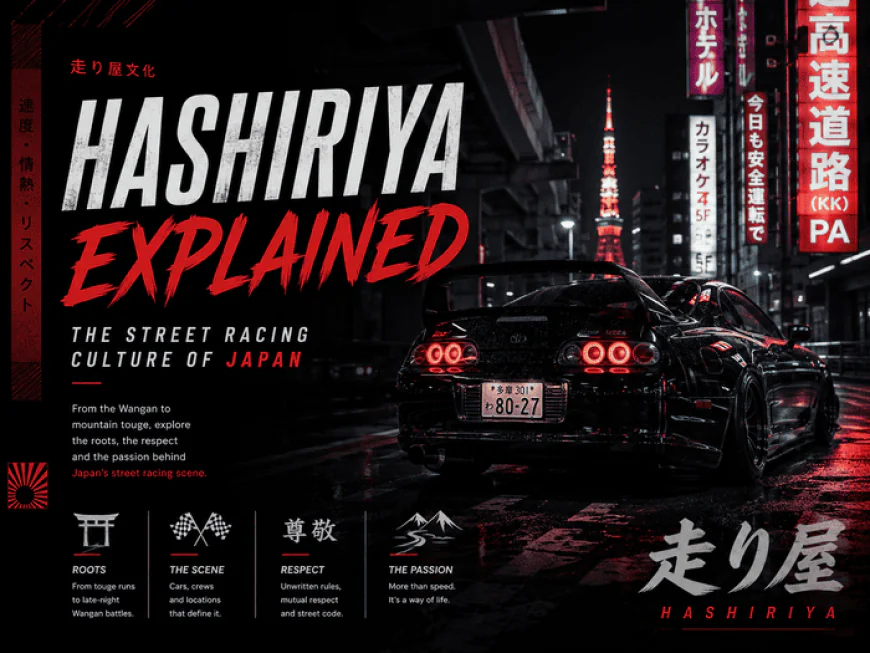
Hashiriya Explained: The Street Racing Culture of Japan
What does hashiriya actually mean, and how is it different from touge culture specifically? Hashiriya (走り屋), roughly translating to "one who runs" or "runner," is the broader Japanese term for street racing culture as a whole, the wider scene that touge mountain-pass racing sits within rather than a separate, unrelated term.
Hashiriya at a Glance
- Hashiriya translates roughly to "runner" or "one who races," referring to street racers themselves and the culture around them
- Broader in scope than touge, which specifically refers to mountain pass racing
- Includes highway racing, city street racing, and mountain pass racing under one umbrella term
- Genuinely illegal in Japan, same as unauthorised street racing anywhere, and subject to real police enforcement
- Heavily popularised internationally through manga, anime and racing games depicting the culture
How Is Hashiriya Different From Touge?
This is the most common point of confusion, and it's worth being precise about. Hashiriya is the umbrella term for Japanese street racing culture broadly, touge is one specific type of hashiriya activity, focused specifically on mountain pass roads. A hashiriya racer might specialise in touge, but the wider hashiriya scene has historically also included highway (kousoku) racing and city street racing, each with its own distinct culture, preferred cars, and informal rules that developed somewhat separately from the mountain pass scene.

What Is Kousoku Racing?
Kousoku refers specifically to expressway or highway racing, a distinct branch of hashiriya culture built around high-speed runs on Japan's motorway network rather than the technical, cornering-focused nature of touge. This branch of the culture prioritises outright top speed and car preparation for sustained high-velocity running, a genuinely different skill set and car setup philosophy from the tight, technical demands of a mountain pass run.
Where Did Hashiriya Culture Actually Come From?
Japan's dense urban environment and limited legal outlets for spirited driving pushed informal racing culture onto public roads decades before international audiences knew any of these terms, growing alongside Japan's booming car culture through the 1970s, 80s and 90s. Different regions and even different specific roads developed their own reputations and rivalries within the scene, much like touge's mountain-specific culture, but spread across a wider variety of road types and racing styles under the broader hashiriya banner.
Is Hashiriya Still Active in Japan Today?
Yes, though increased policing, better road monitoring technology, and stricter enforcement have pushed much of the genuinely dangerous street racing activity further underground compared to its peak visibility in past decades. The cultural legacy remains hugely influential even where the actual illegal racing has diminished, much of modern Japanese car culture, and by extension global car culture borrowing from it, still draws directly on hashiriya's aesthetic and philosophy even among enthusiasts who'd never actually street race.
Is Any of This Legal?
No, unauthorised street racing, whether on a mountain pass, a highway, or city streets, is illegal in Japan and treated seriously by police, the same as reckless or dangerous driving offences anywhere. The cultural fascination with hashiriya, through manga, anime, and racing games, shouldn't be mistaken for the activity itself being sanctioned or safe, it depicts a genuinely illegal, genuinely dangerous subculture, dramatised for entertainment rather than presented as a lifestyle to replicate.
Where Can You Experience This Legally?
As with touge, dedicated track days, time attack events and circuit-based hillclimb formats are the legal, controlled way to experience the technical driving skills hashiriya culture is built around, without the legal and safety risks of racing on live public roads with real traffic.
Famous Depictions of Hashiriya Culture
Manga and anime franchises, most famously Initial D, brought hashiriya and touge culture to a global audience, though these depictions dramatise and simplify a genuinely varied, decades-old real-world subculture into a more digestible narrative format. Racing games have played a similarly large role internationally, letting fans experience a stylised version of hashiriya-inspired driving without any of the real legal or safety consequences, which has arguably done more than any other single medium to spread awareness of these Japanese car culture terms worldwide.
Why Understanding the Terminology Matters
Getting hashiriya, touge and kousoku right, rather than using them interchangeably, matters for the same reason precision matters across any specialist subculture vocabulary, it signals genuine understanding rather than surface-level familiarity picked up from a single anime series. For anyone genuinely interested in JDM culture's history, understanding hashiriya as the broad umbrella term, with touge and kousoku as its two most prominent specific branches, gives a much clearer picture of how the wider culture actually developed.
Related Reads
- What Is Touge? The Mountain Pass Culture Explained
- What Is Shakotan? Japan's Original Lowered Car Style
- What Is a Kaido Racer? Japan's Retro Racer Style Explained
- Poke vs Stance vs Fitment: What's the Actual Difference?
- USDM, JDM, EDM, ADM, CHDM, MEDM: What Does It Mean?
For more JDM culture and driving history explainers, and everything else modified car culture, head back over to Stance Auto Mag. You can also grab the latest print issue through our Amazon magazine store.
 Like
0
Like
0
 Dislike
0
Dislike
0
 Love
0
Love
0
 Funny
0
Funny
0
 Angry
0
Angry
0
 Sad
0
Sad
0
 Wow
0
Wow
0