



















.png)





![[HOONIGAN] Ken Block's GYMKHANA NINE](https://img.youtube.com/vi/_bkX5VkZg8U/maxresdefault.jpg)


































![[HOONIGAN] KEN BLOCK'S GYMKHANA SEVEN: WILD IN THE STREETS OF LOS ANGELES](https://cdn.motor1.com/images/mgl/2KlO4/s1/ken-block-london-tour-directors-cut.jpg)





















S13 vs S14 vs S15: Which Is Best for Drift?
S13 vs S14 vs S15: we compare Nissan's three drift-legendary Silvia chassis on weight, chassis balance, cost and parts to find the best drift platform.
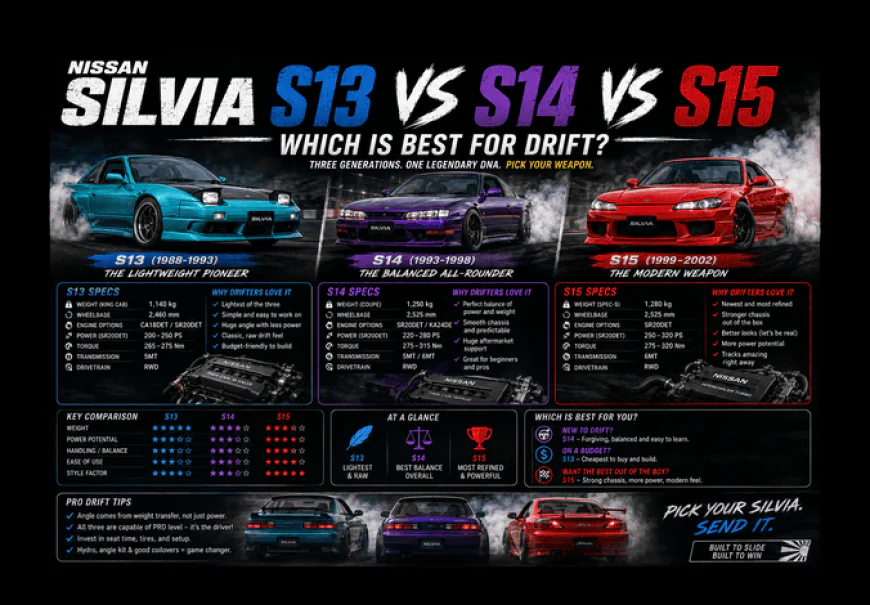
S13 vs S14 vs S15: Which Is Best for Drift?
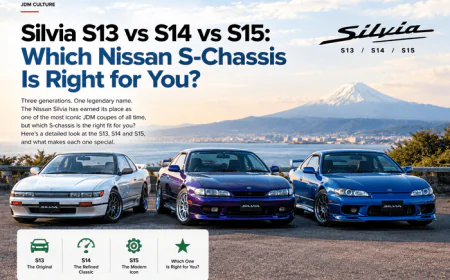
Three chassis codes, one continuous bloodline, and an argument that's been running in drift circles for as long as drift circles have existed. The S13, S14 and S15 Silvia (badged 240SX in North America for the S13 and S14) each represent a different evolution of the same basic recipe, and picking between them is less about which is "best" in a vacuum and more about matching the chassis to your budget, skill level and build goals.
| S13 | S14 | S15 | |
|---|---|---|---|
| Production years | 1988-1994 | 1993-1998 | 1999-2002 |
| Weight | Lightest of the three | Heavier than S13 | Lighter than S14, close to S13 |
| Common engines | CA18DET, SR20DET | SR20DET | SR20DET |
| Availability | Widely available | Widely available | Rarest and most expensive |
| Beginner friendliness | Forgiving, cheap parts | More stable at speed | Best factory geometry, hardest to find |
Weight and Chassis Balance Compared
The S13 is the lightest of the three chassis, which makes it a genuinely forgiving platform for newer drivers learning car control, since less mass means more predictable, easier-to-catch slides. The S14 grew noticeably in both size and weight over the S13, trading some of that raw agility for more stability at higher speed, which suits drivers who've outgrown the twitchier S13 feel. The S15 brought weight back down closer to S13 territory while refining the chassis geometry further, widely regarded by experienced drifters as having the best factory-balanced setup of the three, which is a big part of why it commands the premium it does.
Engine Options and Swap Culture
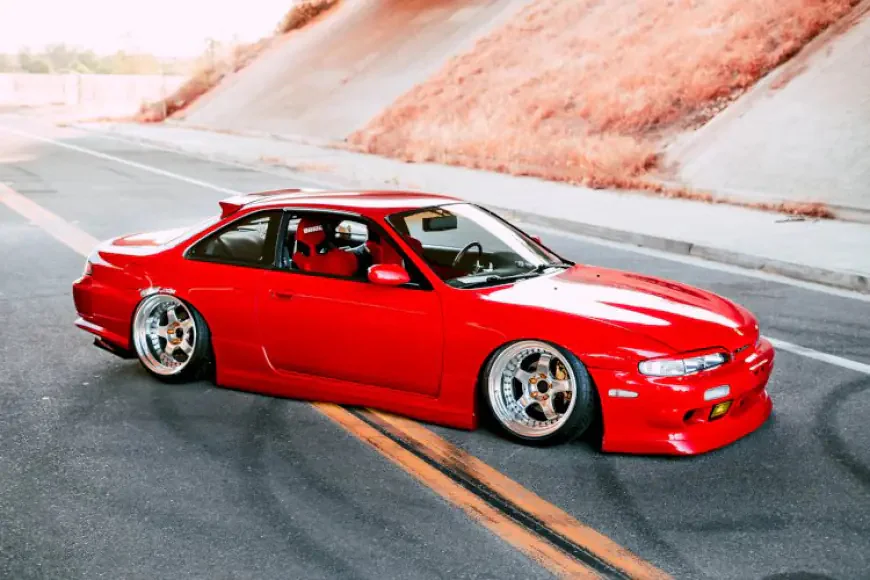
All three chassis share a strong relationship with the SR20DET, Nissan's own turbocharged four-cylinder, which came factory-fitted to later S13s and as standard across S14 and S15 generations. Earlier S13s originally fitted with the naturally aspirated CA18DET or lower-output engines are extremely common SR20 swap candidates, to the point that an SR-swapped S13 is almost the default expectation in the drift scene rather than the exception. Because all three share broadly compatible engine bay dimensions, engine swaps, including 1JZ, 2JZ and RB-family options for builders chasing more power, are well documented across the whole S-chassis family.
Availability and Cost
This is where the comparison gets genuinely stark. S13s remain the most widely available and generally the cheapest entry point into the S-chassis world, making them the default recommendation for anyone building their first drift car on a real budget. S14s sit in the middle, plentiful enough to find without excessive searching, and typically cheaper than an equivalent-condition S15. The S15 was never officially sold in several major markets including the US, which has driven grey-import demand and pushed prices up significantly wherever it is available, making it by far the most expensive and hardest to source of the three.
Parts Support and Community Knowledge
Decades of dedicated drift culture around all three chassis means aftermarket support is excellent across the board, coilovers from brands like BC Racing, angle kits, LSDs and body components are well catered for on any of the three. The S13 benefits from the longest history and the largest built-up community knowledge base simply by virtue of being the oldest and most widely modified of the three, while S15-specific parts can occasionally be harder to source outside dedicated drift-focused suppliers given its lower overall production numbers.
S13 Pros and Cons
- Pros: Cheapest entry point, lightest chassis, huge parts and knowledge base, forgiving for beginners
- Cons: Oldest chassis, more rust and wear concerns on surviving examples
S14 Pros and Cons
- Pros: More stable at speed, widely available, strong SR20DET factory fitment
- Cons: Heaviest of the three, less forgiving for absolute beginners
S15 Pros and Cons
- Pros: Best factory chassis geometry, lighter than S14, huge cultural prestige
- Cons: Most expensive, hardest to source, limited official availability in some markets
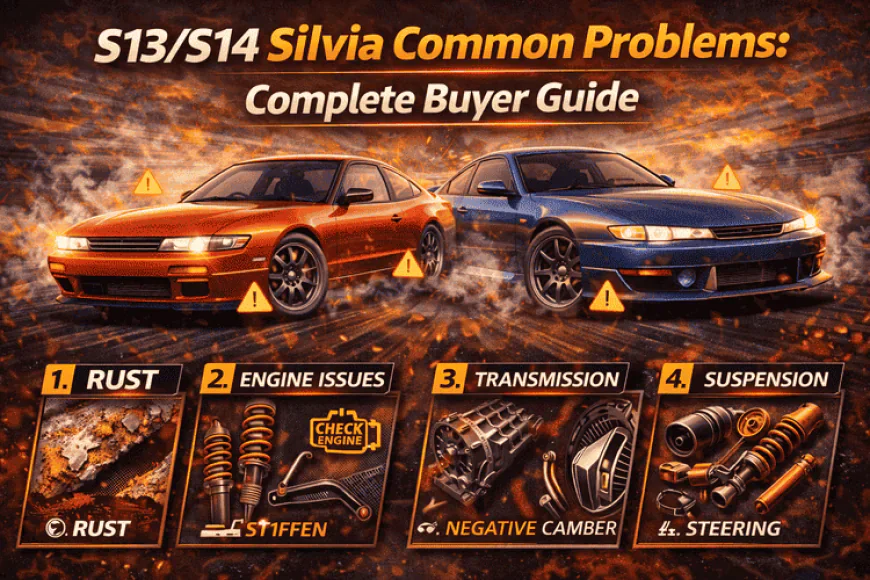
Rust and Condition Concerns by Chassis
Age matters as much as chassis code when you're actually shopping. S13s are now well over three decades old in most cases, and surviving examples in genuinely clean, rust-free condition are becoming harder to find, particularly if they've lived a hard life as a dedicated drift car already. S14s, being a few years younger on average, tend to have a slightly better survival rate in solid condition, though plenty have also been through hard drift use. S15s, despite being the youngest of the three, aren't automatically in better condition purely by age, since grey-import examples have often covered serious mileage and seen plenty of track or drift use before being exported.
Which Chassis Suits Which Driving Style?
Beyond outright chassis stats, the three genuinely feel different to drive, which matters as much as any spec sheet number. The S13's lighter, twitchier nature rewards a driver who enjoys quick, reactive corrections and wants maximum feedback. The S14's added stability suits a driver who wants to carry more speed into a slide with a bit more margin for error. The S15 threads the needle between the two, light enough to feel alive but refined enough to be more forgiving at the limit than the raw S13, which is exactly why experienced drivers who've driven all three tend to gravitate towards it once budget allows.
Insurance and Running Costs to Expect
Running costs vary less by chassis code than you might think, since all three share broadly similar four-cylinder turbo engines and comparable maintenance demands. Where costs diverge more is in insurance, particularly for younger or newer drivers, where an imported S15 can sometimes attract higher premiums purely due to its rarity and higher typical valuation compared to a more common, lower-value S13. It's worth getting a genuine insurance quote against your specific circumstances before committing to a chassis choice based on purchase price alone, since the ongoing cost picture can shift the real value comparison meaningfully.
So, Which S-Chassis Should You Actually Build?
If you're building your first drift car on a genuine budget, the S13 remains the obvious, sensible starting point. If you want more stability and don't mind the extra weight, an S14 is a solid middle ground with excellent parts availability. If money isn't the primary constraint and you specifically want the sharpest factory-balanced chassis with the strongest cultural cachet, the S15 is worth chasing down, but go in accepting you'll pay a real premium for the privilege.
See It Done: Real S-Chassis Builds on Stance Auto
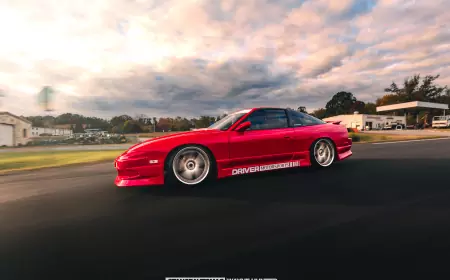
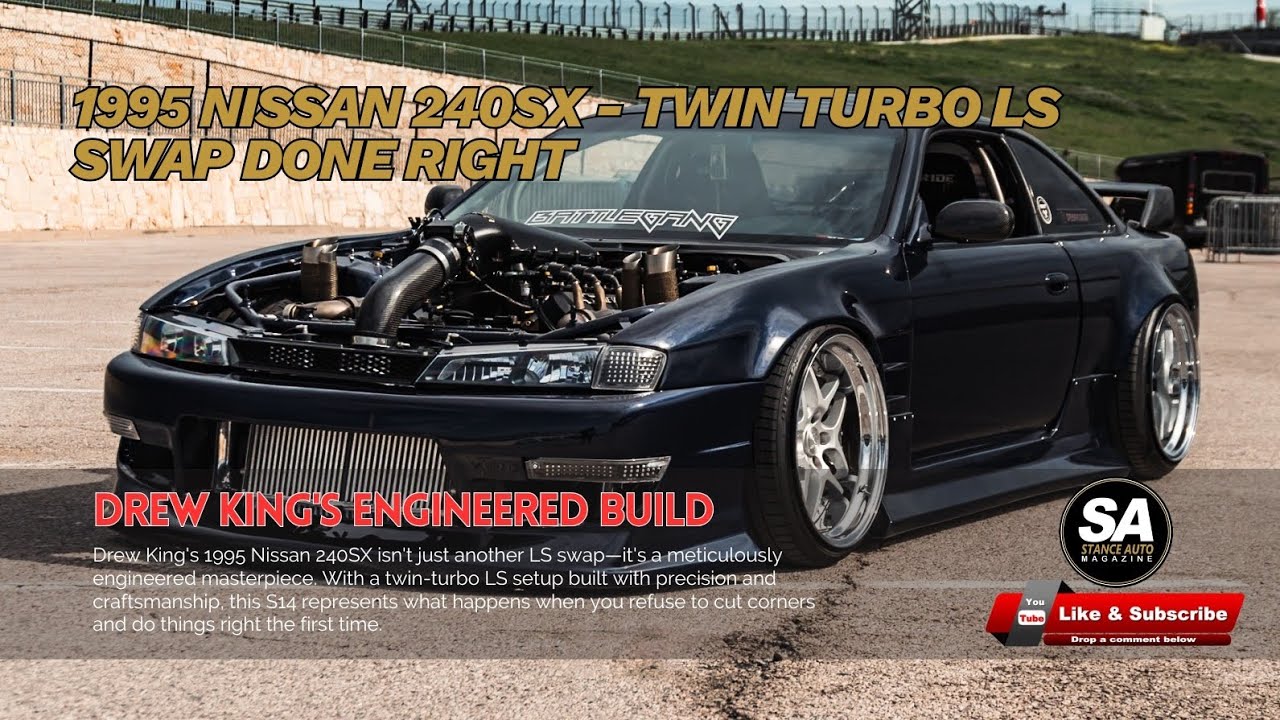
Each generation's got a genuine build worth seeing. Andrew Chval's 370whp S15 drift build shows a proper SR20DET drift car done right, custom livery included. For the S13 specifically, "The Unique Charm of the Iconic Nissan S13 Silvia" captures exactly the low, wide, aggressive character that's kept the S13 the community favourite it is. And if you want proof this chassis takes engine swaps just as well as the theory suggests, this 1JZ-swapped 700HP 240SX build is a genuinely serious example of what's possible.
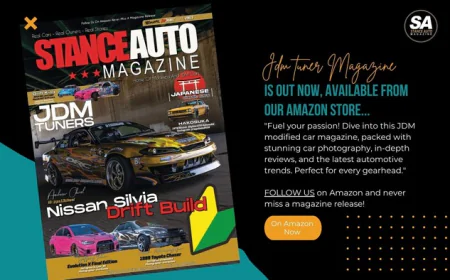
For more on drift chassis and engine swap planning, and everything else modified car culture, head back over to Stance Auto Mag. You can also grab the latest print issue through our Amazon magazine store.
 Like
0
Like
0
 Dislike
0
Dislike
0
 Love
0
Love
0
 Funny
0
Funny
0
 Angry
0
Angry
0
 Sad
0
Sad
0
 Wow
0
Wow
0