



































.png)








![[HOONIGAN] Ken Block's GYMKHANA NINE](https://img.youtube.com/vi/_bkX5VkZg8U/maxresdefault.jpg)




































![[HOONIGAN] KEN BLOCK'S GYMKHANA SEVEN: WILD IN THE STREETS OF LOS ANGELES](https://cdn.motor1.com/images/mgl/2KlO4/s1/ken-block-london-tour-directors-cut.jpg)




























Can Police Seize a Modified Car in the UK? Section 59 Explained
Section 59 lets UK police seize vehicles used to cause alarm or distress - here's what it actually means for modified car owners and meets.
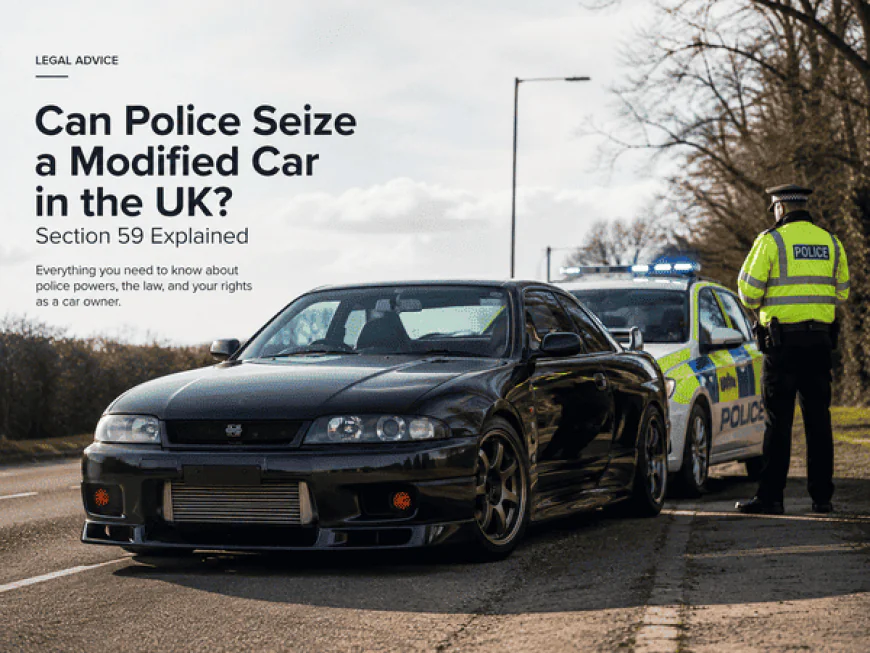
Can Police Seize a Modified Car in the UK?
Section 59 Explained
Key Facts
- Section 59 of the Police Reform Act 2002 lets police seize vehicles used to cause alarm, distress or annoyance
- A warning is normally required first, except in certain circumstances where an immediate seizure is justified
- Seizure applies to how a vehicle is being driven, not to modifications themselves
- Getting a seized vehicle back typically involves a fee and proof of ownership, insurance and licence
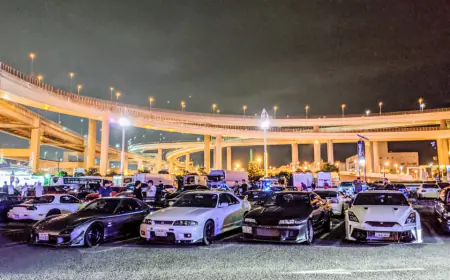
- Car meets themselves are legal, it's specific driving behaviour at or around them that triggers Section 59
Every UK car meet conversation eventually turns to this specific law, and understanding what Section 59 actually covers, and what it doesn't, matters for anyone attending or organising a meet.
What Does Section 59 Actually Say?
Section 59 of the Police Reform Act 2002 gives police the power to seize a vehicle being driven in a way that causes, or is likely to cause, alarm, distress or annoyance to the public, covering things like careless or inconsiderate driving, and off-road use causing nuisance. It's a behaviour-based power, targeting how a vehicle is being driven at a specific moment, not a general power to seize cars based on appearance or modification level.
Does This Apply to How the Car Looks, or How It's Driven?
Specifically how it's driven. A heavily modified car parked quietly at a meet is not, on its own, grounds for Section 59 seizure, the power exists specifically for antisocial driving behaviour, excessive revving, dangerous manoeuvres, driving in a way causing genuine public nuisance, not for the car's specification or styling. This distinction matters enormously and gets lost in a lot of anxious car meet discussion online.
Do Police Have to Warn You First?
Generally yes. Section 59 normally requires a prior warning to the driver (or the vehicle's registered keeper) before a seizure can take place, giving the driver a genuine opportunity to stop the behaviour before losing the vehicle. There are circumstances where an immediate seizure without prior warning is permitted, generally where the behaviour is severe or where a warning has effectively already been given through wider circumstances, but a warning-first approach is the standard, expected process.
What Happens If Your Car Is Seized?
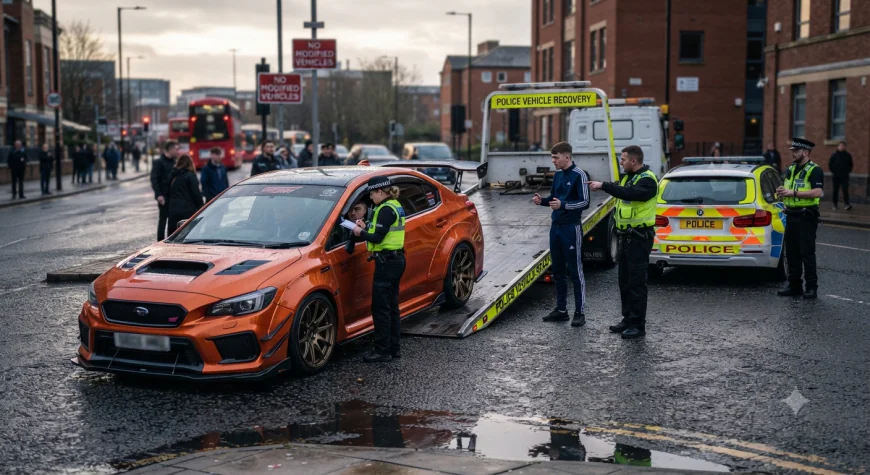
The vehicle is typically taken to a police-approved recovery facility, and retrieving it generally requires proof of ownership, valid insurance, and a valid licence, alongside payment of a recovery and storage fee that increases the longer the vehicle remains uncollected. This process can be genuinely disruptive and costly even for a fairly short seizure period, which is exactly the point, it's designed as a real deterrent against repeated antisocial driving.
Can You Challenge a Section 59 Seizure?
Yes, there are formal routes to challenge a seizure you believe was applied incorrectly or unfairly, generally involving a request for review through the police force that carried out the seizure. Keeping your own record of events, including any dashcam footage where available, is genuinely valuable if you believe a seizure was applied without proper grounds or without the required warning.
Does Attending a Car Meet Put You at Risk of Section 59?
Attending a legally organised, well-behaved car meet does not itself trigger Section 59, the power targets specific antisocial driving behaviour, not simply being present at a gathering of modified cars. The real risk comes from specific driving conduct, excessive revving through residential areas, dangerous convoy driving to and from a meet, deliberately causing a public nuisance, which is exactly the kind of behaviour that damages the wider car meet scene's reputation and invites exactly this kind of enforcement attention.
What Should Meet Organisers and Attendees Actually Do?
Choosing appropriate venues, respecting local residents, and actively discouraging antisocial driving behaviour among attendees protects the meet itself from the kind of police attention that leads to Section 59 seizures and, ultimately, to venues becoming unavailable for future meets. Responsible organisation is genuinely the best protection the wider car meet scene has against increased restriction, self-policing driving standards protects everyone's ability to keep attending.
Does This Relate to Exhaust Noise Specifically?
Yes, genuinely loud exhausts used in a way that causes public nuisance, deliberately excessive revving through residential streets being the classic example, can factor into a Section 59 assessment alongside the underlying UK exhaust noise laws covered separately. It's worth understanding these as related but distinct issues, an exhaust can be technically road-legal on noise output and still contribute to a Section 59 situation if it's being used deliberately antisocially in a specific location and moment.
How Common Is Section 59 Use Against Modified Car Owners Specifically?
Enforcement varies significantly by region and specific police force priorities, with some areas seeing more active use of the power around known car meet locations than others. This regional variation is worth knowing if you're planning to attend meets in an area with a known history of antisocial driving concerns, local reputation and police relationships built up over time genuinely affect how proactively the power gets used in any specific location.
The Bottom Line
Section 59 targets antisocial driving behaviour specifically, not modified cars or car meets as a category. A well-organised meet with considerate driving carries no meaningful Section 59 risk, the power exists specifically for the small minority whose driving behaviour genuinely causes public nuisance, and understanding that distinction should reassure most attendees while making clear exactly what conduct to avoid.
For official guidance on this legislation, the gov.uk guidance on Section 59 police powers and the legislation.gov.uk text of the Police Reform Act 2002 set out the full legal framework. For more legal guides and everything else modified car culture, head back over to Stance Auto Mag. You can also grab the latest print issue through our Amazon magazine store.
 Like
0
Like
0
 Dislike
0
Dislike
0
 Love
0
Love
0
 Funny
0
Funny
0
 Angry
0
Angry
0
 Sad
0
Sad
0
 Wow
0
Wow
0