






















































































.png)












![[HOONIGAN] Ken Block's GYMKHANA NINE](https://img.youtube.com/vi/_bkX5VkZg8U/maxresdefault.jpg)







































































![[HOONIGAN] KEN BLOCK'S GYMKHANA SEVEN: WILD IN THE STREETS OF LOS ANGELES](https://cdn.motor1.com/images/mgl/2KlO4/s1/ken-block-london-tour-directors-cut.jpg)






































What Order Should You Mod Your Car? The Right Sequence Explained
Modifying a car in the wrong order wastes money and can damage your engine here's the right sequence for building real power safely.
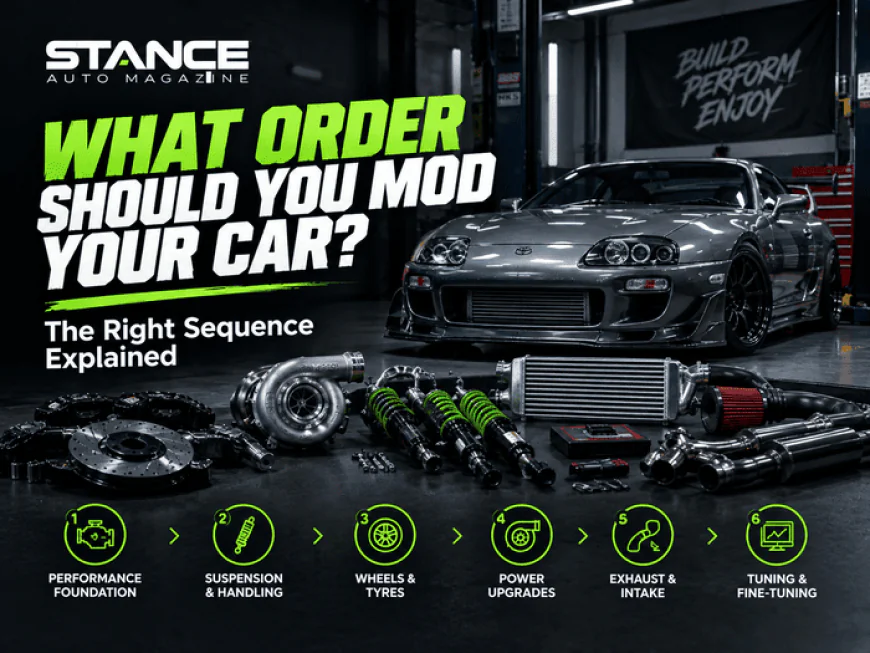
Why do some builds make big, reliable power while other builders spend more money on parts and end up with a car that runs worse than stock? Almost always, the answer is sequence. Modifying a car in the wrong order is one of the most common and most expensive mistakes in the whole scene, and it's entirely avoidable once you understand why the order actually matters.
Why Does the Order of Modifications Actually Matter?
An engine is a system of interconnected components, and those components are balanced at the factory to work together within specific tolerances. When you change one part of that system, others become the new limiting factor — add more boost without upgrading fuel delivery and the engine runs lean, add a bigger turbo without a supporting tune and the factory ECU can't manage it safely, upgrade exhaust flow without a remap and you lose bottom-end power even if peak power goes up. Getting the sequence right means each modification actually works properly instead of being limited by whatever you haven't done yet.
Start With Supporting Modifications First
Before chasing power, get the fundamentals right. Intake, exhaust, and intercooler upgrades covered in our dedicated guides all improve how efficiently the engine breathes and manages charge air, and they form the foundation that every subsequent power modification builds on. A healthy, properly breathing engine responds to a tune and a bigger turbo completely differently to one that's still struggling through a restrictive factory exhaust and heat-soaking through an undersized intercooler.
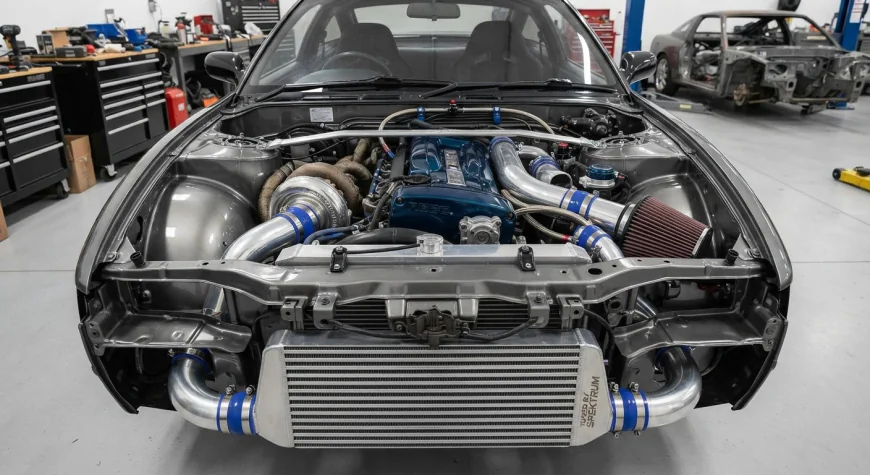
The Correct Build Sequence for a Turbocharged Car
Step 1 — Intake and exhaust. High-flow intake and a properly sized exhaust (at minimum a performance downpipe) free up breathing restriction that's limiting everything else. These are relatively affordable and make everything that follows more effective.
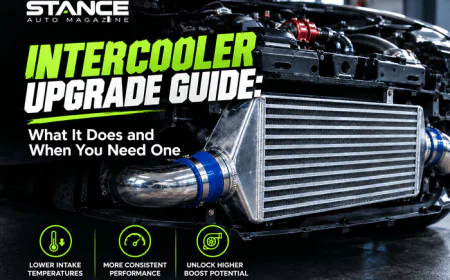
Step 2 — Intercooler upgrade. As covered in our intercooler upgrade guide, sorting charge air temperature before adding more boost is essential. A heat-soaking intercooler wastes every other modification you make above it in the chain.
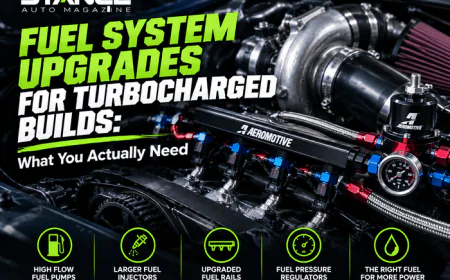
Step 3 — Fuelling. Upgraded fuel pump and injectors sized for your target power level. Running the engine lean under boost is the fastest way to destroy pistons, and it's entirely avoidable. Size your fuel system for where you're going, not where you are right now.
Step 4 — Tune. A proper ECU remap, or standalone management on engines that warrant it, that's calibrated for your specific parts combination. This is what actually unlocks the power the hardware is capable of, without it you're leaving significant gains on the table and potentially running dangerously lean or with incorrect ignition timing.
Step 5 — Bigger turbo (if chasing more power). Only once everything that feeds it, the intake, exhaust, intercooler, and fuelling, and everything that controls it, the tune, is sorted. A bigger turbo on an otherwise stock or poorly prepared car is an expensive way to make a car slower below peak power and unreliable above it.
What About the Remap — Before or After Parts?
A tune should generally come after parts, not before, because a tune calibrated for your current parts combination will need redoing once those parts change anyway. The exception is where a factory overboost safety calibration is actively limiting what your hardware can do, in which case a tune first makes sense to unlock what's already there before spending money on physical parts.
Don't Forget the Safety Margins
Every serious builder leaves a margin between their power target and the absolute limit of their hardware, because engines don't fail in ideal conditions — they fail under heat, under sustained load, on a hot track day, when the fuel pump is working hardest. Build to 80-85% of your hardware's theoretical maximum and the engine will live. Push to the absolute ceiling and you're living on borrowed time.
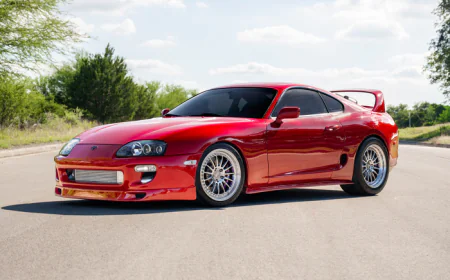
For the full breakdown of which specific mods give the most power per pound spent, our best mods for more horsepower guide covers the specific gains by modification type. For real-world examples of a properly sequenced build, the 2JZ-GTE build guide walks through exactly this sequence on one of the most well-documented platforms in the scene.
For more build guides and everything else modified car culture, head back over to Stance Auto Mag. And for the 90s JDM builds that defined this whole approach to power, our Stance Auto 90s JDM Classics magazine is our hottest selling issue on Amazon right now.
 Like
0
Like
0
 Dislike
0
Dislike
0
 Love
0
Love
0
 Funny
0
Funny
0
 Angry
0
Angry
0
 Sad
0
Sad
0
 Wow
0
Wow
0