







































































.png)










![[HOONIGAN] Ken Block's GYMKHANA NINE](https://img.youtube.com/vi/_bkX5VkZg8U/maxresdefault.jpg)





































































![[HOONIGAN] KEN BLOCK'S GYMKHANA SEVEN: WILD IN THE STREETS OF LOS ANGELES](https://cdn.motor1.com/images/mgl/2KlO4/s1/ken-block-london-tour-directors-cut.jpg)


































How to Save Fuel and Cut Your Fuel Bills in 2026
Fuel prices are still high in 2026 - here are the most effective, proven ways to save fuel, cut your fuel bill and get more miles for your money.
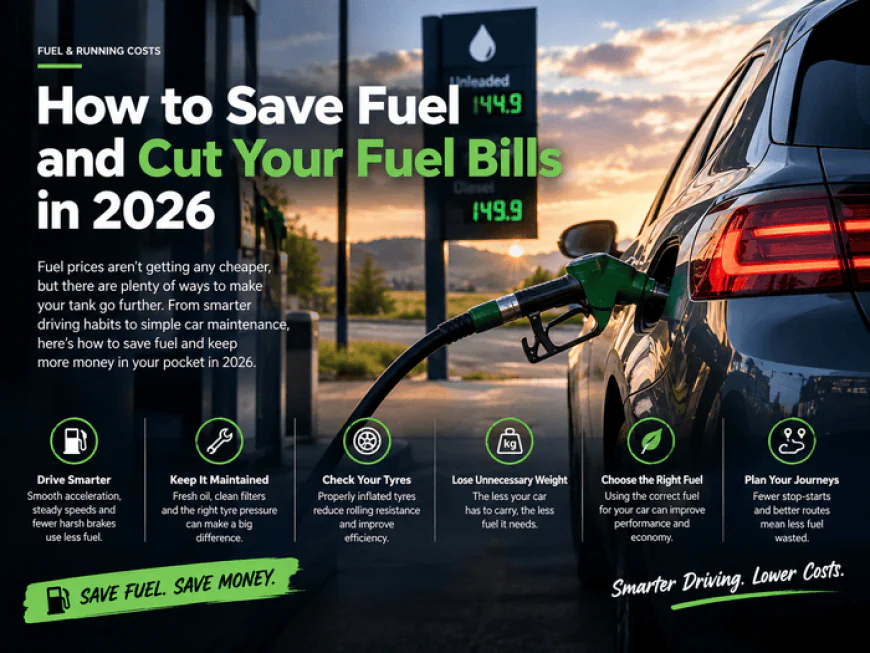
With fuel prices still eating a serious chunk of household budgets in 2026, what are the changes that actually make a measurable difference and which popular advice is largely a waste of time? The honest answer is that how you drive matters more than almost any product you could buy, but there are also genuine, low-effort maintenance habits that consistently deliver real MPG improvements most drivers aren't bothering with.
This isn't a list of obvious advice dressed up as insight. These are the specific techniques and habits that fuel economy research, real-world testing, and driving instructors trained in economical driving consistently return to as the ones that genuinely move the numbers.
The Single Biggest Factor Most People Ignore
Before any driving technique, tyre pressure deserves its own mention at the top because the evidence for it is unambiguous and the fix costs nothing. Under-inflated tyres increase rolling resistance, which means your engine works harder to maintain the same speed, burning more fuel with every mile. Research consistently shows that running 10psi below the recommended pressure can reduce fuel economy by 1-2% — not dramatic on a single journey, but compounding across a year's driving into a genuinely meaningful figure. Check your pressures monthly, use the manufacturer's recommended figure (usually found on a sticker in the driver's door frame), and inflate to the upper end of the range for motorway driving.
Speed Is the Most Expensive Habit You Have
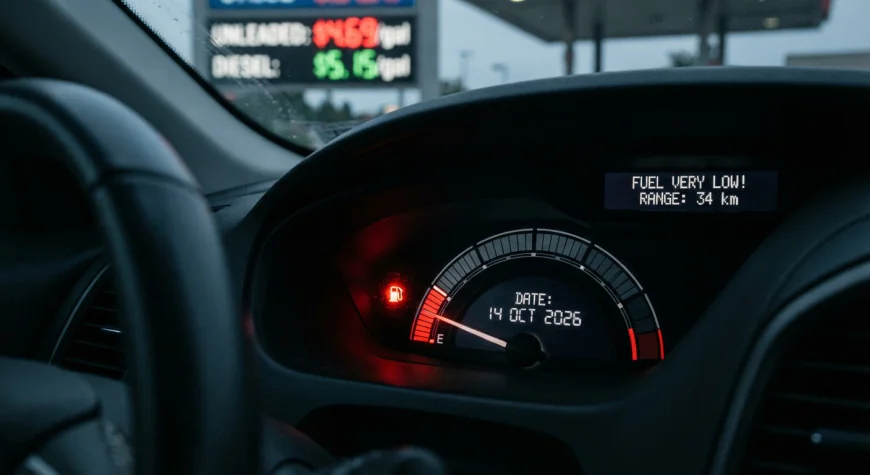
Aerodynamic drag increases with the square of speed, which in practical terms means driving at 80mph uses roughly 25% more fuel than driving at 70mph — not 14% more, as the proportional speed difference might suggest. The relationship between speed and fuel consumption is disproportionate, and this is why the single most impactful habit change available to most drivers is simply driving at or just below the speed limit rather than habitually exceeding it by 10-15mph. The time saving on most journeys is minimal. The fuel saving over a year of driving is not.
How You Use the Throttle Matters More Than You Think
Smooth, gradual acceleration and anticipating stops far enough ahead to coast rather than brake are the two driving techniques that experienced economical drivers return to consistently. Every time you brake, you're converting kinetic energy into heat and throwing away fuel you already burned to build that speed. Lifting off early when you can see a traffic light or junction ahead, and rolling to it rather than braking hard at the last moment, recovers meaningful fuel economy in urban driving where stop-start conditions dominate.
In urban driving, the most efficient gear is always the highest gear the engine will pull smoothly — most modern petrols are happy at 30mph in fifth or sixth, and running in a lower gear than necessary just means the engine is working harder and burning more fuel for no benefit.
Cruise Control: Does It Actually Save Fuel?
Yes, on motorways and dual carriageways specifically — no, in mixed or urban conditions. Cruise control eliminates the subtle, unconscious speed fluctuations most drivers make on motorways — the slight acceleration after a gentle downhill, the slight braking before a rise — and these constant small corrections add up to meaningful fuel consumption over a long journey. On a sustained motorway run, cruise control typically saves 5-10% compared to manual throttle control. In urban driving, where conditions change too rapidly for cruise control to respond efficiently, it's less useful and shouldn't be forced.
Air Conditioning: The Real Fuel Cost
Air conditioning draws power from the engine and increases fuel consumption, but the cost is lower than most people assume and the popular "windows down vs AC" comparison is more nuanced than the simple advice normally acknowledges. At urban speeds below 45mph, opening windows is more fuel-efficient than running AC. At motorway speeds, the aerodynamic drag created by open windows becomes significant enough that running AC at a modest setting is more efficient than the drag penalty of open windows at 70mph. The most fuel-efficient approach for a motorway journey in summer is AC on, windows closed, set to a comfortable but not cold temperature.
What About Fuel Additives and Economy Products?
Most fuel economy products, tablets, magnets, miracle additives, don't survive independent testing with any meaningful result. The products with the strongest evidence base are fuel system cleaners used periodically to maintain injector performance, which can help a high-mileage engine recover lost efficiency, and fully synthetic engine oil, which reduces internal friction compared to semi-synthetic or mineral oil and delivers a small but measurable economy improvement, particularly in cold conditions. Neither is dramatic, but both are grounded in genuine engineering rather than marketing claims.
Roof Boxes, Bike Racks and Extra Weight
Remove them when they're not in use. A roof box adds significant aerodynamic drag at motorway speeds and can reduce fuel economy by 15-20% on a sustained motorway run — a meaningful cost if it's living on the roof permanently rather than only when it's needed. A rear bike rack is less aerodynamically damaging but still carries a penalty worth removing for longer journeys. Extra weight in the boot that isn't serving any purpose costs fuel proportionally — the engine has to do more work to accelerate and maintain speed with every additional kilogram on board.
Does Driving a Modified Car Change Any of This?
Honestly, less than you might think for most of the above. The driving technique principles apply identically to a modified car — smooth throttle, correct gear, anticipating stops, sensible speeds. Where modifications do genuinely affect fuel economy, we've covered that specifically in our remap and fuel economy guide and the cold air intake honest review, since these are the mods most commonly marketed with economy claims that deserve proper scrutiny rather than assumption.
The Honest Bottom Line
No single tip here transforms your fuel bill overnight. The consistent theme in serious fuel economy research is that a cluster of small, sustainable habits — correct tyre pressure, sensible speed, smooth throttle, appropriate gears, removing unnecessary drag — compounds into a meaningful annual saving that dwarfs anything a product in a bottle is going to deliver. For most drivers, 10-15% better real-world fuel economy is achievable purely through habit and maintenance, with no additional purchases required.
For more practical car guides and everything else modified car culture, head back over to Stance Auto Mag. You can also grab the latest print issue through our Amazon magazine store.
 Like
0
Like
0
 Dislike
0
Dislike
0
 Love
0
Love
0
 Funny
0
Funny
0
 Angry
0
Angry
0
 Sad
0
Sad
0
 Wow
0
Wow
0