




















































































.png)












![[HOONIGAN] Ken Block's GYMKHANA NINE](https://img.youtube.com/vi/_bkX5VkZg8U/maxresdefault.jpg)










































































![[HOONIGAN] KEN BLOCK'S GYMKHANA SEVEN: WILD IN THE STREETS OF LOS ANGELES](https://cdn.motor1.com/images/mgl/2KlO4/s1/ken-block-london-tour-directors-cut.jpg)



































Renault Mégane Project Car Guide: Buying, Modifying and Daily Use
Thinking of a Renault Mégane project car? What to check before buying, common weak points, real running costs, parts sourcing and sensible mods for UK owners.

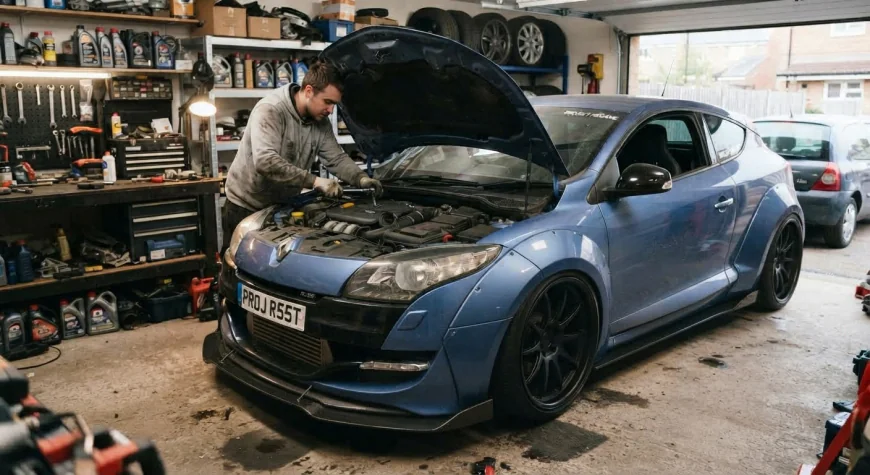
The Renault Mégane, particularly the Renault Sport versions, is one of the sharpest-handling hot hatches you can buy for sensible money in the UK, with a deep aftermarket and a chassis that rewards modification. The trade-off is age: most examples are now 10–15 years old, and while the mechanicals are generally robust, electrical niggles, worn suspension components and neglected servicing can turn a cheap purchase into an expensive relationship. Buy on condition and history rather than price, budget for a first-year sort-out, and it makes a very rewarding project car that can still be dailied.
That summary hides a lot of nuance, so let’s go through it properly. The Mégane doesn't punish owners the way some older performance cars do, but it has a reputation for odd gremlins, and knowing where to source model-specific bits before you need them saves headaches. A quick example is the steering-wheel airbag ring (clockspring), a known wear item on ageing Méganes. Model-specific catalogues can help owners verify compatibility and compare equivalent parts before ordering; for example, this Mégane parts listing shows the relevant Mégane component alongside available equivalents—the kind of reference worth bookmarking before the airbag warning light appears.
Why the Mégane earned its place in the modified scene
The Mégane RS (225, R26, 250, 265 and 275 in the Mk2 and Mk3 generations) built its name on chassis tuning rather than headline power. The Cup chassis versions, with limited-slip differentials and stiffer set-ups, were regularly praised as among the best front-wheel-drive cars of their era, and that reputation still holds on a B-road.
For enthusiasts, the appeal is practical too. The 2.0 turbocharged F4Rt engine responds well to a remap, exhaust and intake, with strong gains for modest outlay. Wheels, coilovers, brakes and bushes are all readily available. And because the shell is a normal hatchback, it is usable every day in a way a stripped-out track special is not. Even the standard Mégane, with its diesel or petrol engines, is a cheap base for a stance or show build where handling isn’t the priority.
The buying reality: what to check before you commit
A good Mégane and a bad one can look identical in an advert. Focus on the following:
- Service history. Cambelt and water pump intervals matter on the F4Rt; typically around five to six years or in the region of 70,000 miles, with a bill often around £500–£800 at an independent. If there’s no proof, assume it needs doing.
- Cold start and idle. Listen for rattles that could point to timing or auxiliary belt tensioner wear.
- Warning lights. An airbag light frequently traces back to the clockspring or seatbelt pretensioner connectors, but it is an MOT failure either way.
- Clutch and gearbox. Remapped cars often carry tired clutches; test for slip under load in a high gear.
- Suspension noises. Knocks over bumps usually mean drop links, bushes or top mounts.
- Rust and previous damage. Check the rear beam mounts, sills and boot floor, and be wary of poorly repaired accident damage on cars that have clearly been driven hard.
Ask about modifications openly. A car with quality, documented parts fitted by a known specialist is arguably a safer buy than a standard car with no history.
Common weak points and wear items on an ageing Mégane
Most Mégane problems are age-related rather than design flaws, but a few crop up often enough to be expected.
Electrical gremlins
The Mk2 in particular is known for the electronic key card reader, window regulators and the occasional dashboard warning that vanishes on the next start. Corroded earths and tired battery terminals cause a surprising share of “random” faults, so clean those first before chasing modules.
Airbag light and clockspring
The clockspring (the rotary connector in the steering column) wears with steering use, breaking the airbag and horn circuits. Symptoms include an intermittent airbag light and a dead horn or steering-wheel buttons. It is a straightforward fix for a competent DIYer or garage, but the part must match the exact steering wheel and column variant.
Suspension and bushes
Front lower arm bushes, drop links, rear beam bushes and top mounts are typical wear items by 80,000–100,000 miles. On RS models, worn components dull the handling noticeably, so they are usually the first job on a fresh purchase.
Cooling and turbo hoses
Perished coolant hoses, a weeping thermostat housing and split boost pipes are common. Boost leaks often show as a flat spot or limp mode rather than a warning light.
Brakes
Brembo-equipped RS models can suffer sticking calipers if left standing, and discs are not the cheapest to replace.
Parts sourcing: OEM vs aftermarket vs equivalent
Owners tend to mix three routes, and each has a place.
OEM (Renault dealer or Renault-branded part) gives exact fit and known quality, and is the sensible choice for safety-critical items such as airbag components, sensors and anything that talks to the ECU. The downside is price, and some older parts are becoming harder to obtain.
Equivalent (OE-supplier or reputable pattern parts) covers most service items: filters, bushes, hoses, wheel bearings and brake components from established brands. Quality is typically very close to OEM at a lower cost, but cheap unbranded copies of the same parts exist, so buy from suppliers who show brand and part numbers.
Aftermarket performance parts are where the modding budget goes: coilovers, uprated bushes, intercoolers, exhausts. The pros are choice and performance; the cons are variable quality, potential insurance implications and the fact that some parts change the car’s character in ways not everyone wants for daily use.
Breakers and owners’ club marketplaces are also worth a look for trim, interior and body parts that are otherwise expensive new.
Rough running costs and how to keep them down
Purchase prices vary widely, but expect a usable RS 225 or 250 to sit somewhere around £4,000–£9,000 depending on condition and modifications, with later 265 and 275 cars higher. Non-RS petrol and diesel Méganes can be had for a fraction of that.
Realistic annual ownership, beyond fuel, tends to run to a few hundred pounds in routine servicing plus a contingency of perhaps £500–£1,000 for the inevitable “while you’re in there” jobs on an older car. Fuel economy on an RS driven enthusiastically will typically be in the high 20s to low 30s mpg. Insurance groups for the RS models are high, so young or modified-car drivers should get quotes before buying.
Keeping costs down mostly means doing preventive work early, learning basic DIY (brakes, bushes, filters and hoses are all manageable at home), and buying parts by part number rather than trusting the first result online.
Modding sensibly: suspension, wheels and keeping it reliable
The Mégane’s chassis is already good, so the first “mod” should be refreshing worn parts. After that, a common and sensible order is:
- Tyres and geometry. Quality tyres and a proper alignment transform the car more than most bolt-ons.
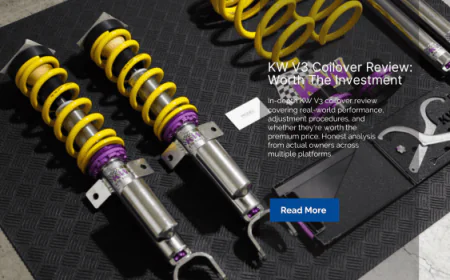
- Suspension. Quality coilovers or uprated springs with matching dampers; avoid the cheapest kits, which tend to crash over UK roads and wear quickly.
- Wheels. Keep an eye on overall weight and offset; excessively stretched set-ups look the part but hurt daily usability and can cause rubbing on a car that already has wide arches.
- Engine. A Stage 1 remap on a healthy car is well proven. Go further and you should budget for clutch, intercooler and cooling upgrades.
Whatever you do, declare modifications to your insurer and keep the car MOT-legal: emissions, noise and light modifications are all common failure points.
FAQ
Is a Renault Mégane RS reliable enough to daily? Generally yes, provided it has been maintained and the known wear items are sorted. Expect the occasional electrical niggle rather than mechanical failure.
Which Mégane RS is best as a first project? The Mk3 250/265 is usually seen as the easier ownership proposition, with fewer electrical issues than the Mk2, though good Mk2 R26 cars are increasingly collectable.
How much should I budget for a first-year sort-out? Somewhere around £1,000–£2,000 is a realistic figure for a typical 10–15-year-old example, covering belts, bushes, fluids and a few unexpected items.
Will modifications affect my MOT? They can. Exhaust noise, lighting, ride height affecting headlamp aim, and tyre-to-arch clearance are all things testers check.
Conclusion
The Renault Mégane, and especially the RS versions, remains one of the most rewarding hot hatches to own and modify on a realistic budget. Go in with your eyes open: buy on history and condition, expect to spend on wear items in the first year, learn where to source correct parts, and modify in a sensible order. Do that and you get a car that is still capable of embarrassing far newer machinery, while being perfectly usable on the school run or the commute.
 Like
0
Like
0
 Dislike
0
Dislike
0
 Love
0
Love
0
 Funny
0
Funny
0
 Angry
0
Angry
0
 Sad
0
Sad
0
 Wow
0
Wow
0