




































































.png)










![[HOONIGAN] Ken Block's GYMKHANA NINE](https://img.youtube.com/vi/_bkX5VkZg8U/maxresdefault.jpg)








































































![[HOONIGAN] KEN BLOCK'S GYMKHANA SEVEN: WILD IN THE STREETS OF LOS ANGELES](https://cdn.motor1.com/images/mgl/2KlO4/s1/ken-block-london-tour-directors-cut.jpg)




































What's the Most Modified Car in the World? There's No Single Answer, But These Cars Come Closest
Is there a single "most modified car in the world"? Not officially — but a 3,000hp GT-R, a diamond-encrusted Rolls-Royce, and a few Guinness records get close.

There's no official title for "most modified car in the world" — no governing body hands out a certificate for it, and Guinness World Records doesn't run a single all-encompassing category for it either. What exists instead is a scattered collection of genuinely wild record-holders across different disciplines: most power, highest speed, most money spent, most absurd. Here's a search through all of them.
In plain English: "most modified" isn't one competition; it's several — and depending on which one you're asking about, the answer is a different car every time.
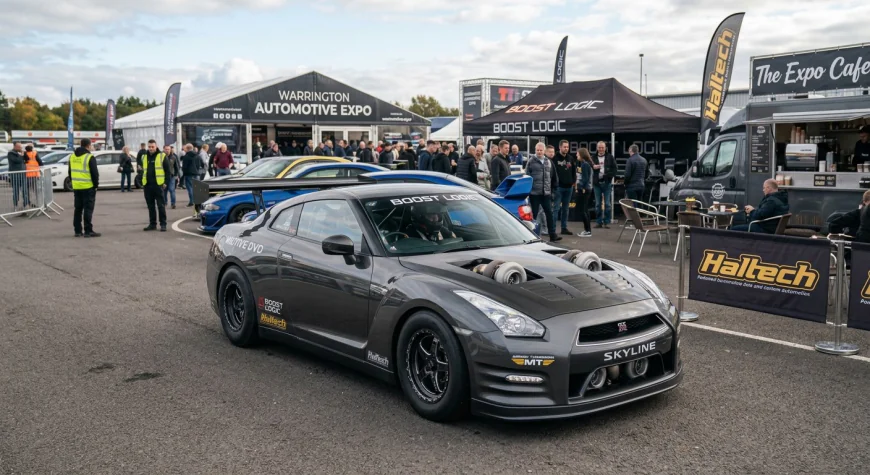
The Most Powerful Street-Legal Car: A 3,000+ HP Nissan GT-R
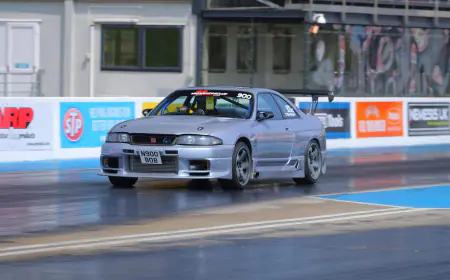
If raw horsepower is the metric, this one isn't close. American tuning outfit AMS Performance built a customer Nissan R35 GT-R nicknamed "Alpha G" for a client named Gidi Chamdo, based on their Alpha Omega twin-turbo development platform. It didn't just push big numbers — it rewrote what a GT-R could do on a drag strip, becoming the first R35 in the world to run a six-second quarter mile, clocking 6.937 seconds at 196 mph at the TX2K17 event in Texas. That's a factory car that left the showroom in 2007 running an 11.6-second quarter mile, turned into something running nearly half that time a decade later.
Separately, a rival GT-R — built by Extreme Turbo Systems and driven by Lucas English of English Racing — took the half-mile top speed world record to 255 mph at the Pike's Peak Airstrip Attack in Colorado, using a similarly massive twin-turbo setup pushing north of 3,000 horsepower at the wheels. Between the two builds, a factory GT-R platform has been pushed to genuinely absurd numbers by two competing American tuning shops, each chasing a different flavor of "fastest."
The Fastest Production Car (With an Asterisk)
Top speed records get complicated fast once modification enters the picture, and the Bugatti Veyron Super Sport is the perfect example of why. In 2010, Guinness awarded it the "fastest production car" record. In 2013, the title was formally appealed on the grounds that the record-setting car had its speed limiter disabled — a modification, technically. Guinness reviewed its own rules, concluded that removing a limiter wasn't a "fundamental" change to the car, and reinstated the record. It's a genuinely interesting case study in how blurry the line between "stock" and "modified" gets once you're talking about record-chasing at the very top of the performance world.
The Most Expensive Individual Modifications
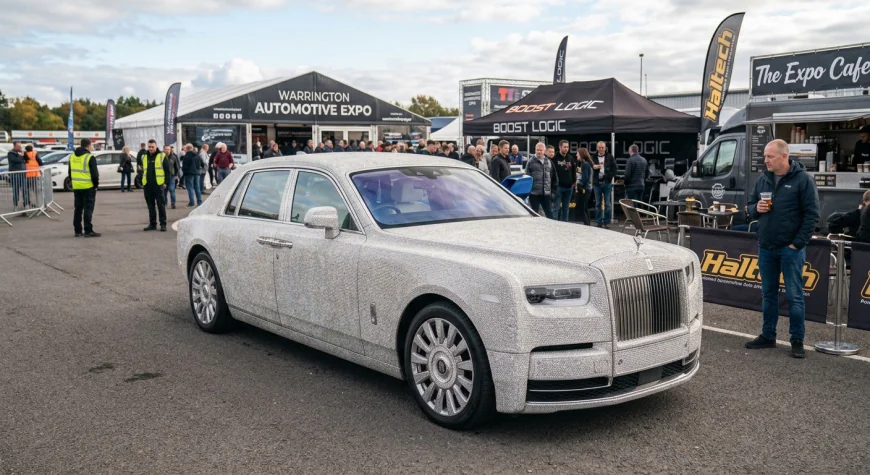
Horsepower isn't the only currency here — some builds are about spending as much money as physically possible on a single car. Bespoke design houses have built entire businesses around this: full diamond-set exteriors, real gold-plated trim, and interiors trimmed in materials more associated with jewellery than automotive upholstery, on cars that were already worth six or seven figures before a single stone was added. These builds rarely chase a lap time or a trap speed — the modification itself is the flex, and the price tag is the record.
The Genuinely Weird Guinness Records
This is where it gets fun, because Guinness does track dozens of individual, wonderfully specific car modification records, just not one overarching "most modified" title. The world's smallest roadworthy car — built from an old Postman Pat coin-operated kids' ride — still passed UK construction and use regulations, complete with working indicators and headlights. There's a record for the longest distance driven on two wheels (230.57 miles, set in a modified BMW 316 with an axle blockage and an extra fuel tank), one for the world's longest car (a 30.5-metre, 26-wheeled limousine complete with a swimming pool), and even one for fastest mile driven in reverse. None of these are "the most modified car" individually — but collectively, they make the point better than any single record could: modification culture doesn't converge on one goal, it splinters into a hundred different obsessions.
So What's the Actual Answer?
If you want a single car to point to, the honest answer depends entirely on what you're impressed by. For raw engineering insanity on a platform anyone can technically buy, it's hard to beat AMS Performance's Alpha G GT-R — a factory car turned into a six-second drag machine. For sheer spectacle and cost, it's one of the diamond- or gold-plated hypercar builds that exist purely to be the most expensive thing on four wheels. For pure "why would anyone do this," it's genuinely a coin flip between a two-wheel-driving BMW and a swimming-pool limousine.
What ties all of them together is the same instinct that drives modified car culture at every level, from a first exhaust swap to a six-second GT-R: someone looked at what the factory gave them and decided it wasn't finished yet.
If you're curious how a factory GT-R platform evolved into a car capable of six-second quarter miles, our R32 vs R33 vs R34 Skyline comparison traces the lineage that led to the R35.
Sources: AMS Performance and GTspirit coverage of the Alpha G GT-R (2016–2017), autoevolution TX2K17 quarter-mile record reporting, ETS/English Racing half-mile world record coverage (DragTimes, Maxim, Turbo and Stance), Wikipedia entries on production vehicle records and Guinness World Records car category coverage.
 Like
0
Like
0
 Dislike
0
Dislike
0
 Love
0
Love
0
 Funny
0
Funny
0
 Angry
0
Angry
0
 Sad
0
Sad
0
 Wow
0
Wow
0