




















































































.png)











![[HOONIGAN] Ken Block's GYMKHANA NINE](https://img.youtube.com/vi/_bkX5VkZg8U/maxresdefault.jpg)



































































![[HOONIGAN] KEN BLOCK'S GYMKHANA SEVEN: WILD IN THE STREETS OF LOS ANGELES](https://cdn.motor1.com/images/mgl/2KlO4/s1/ken-block-london-tour-directors-cut.jpg)






































UK Speeding Points and Modified Cars: What Actually Changes
Speeding penalties in the UK don't change based on modifications, but insurance and risk perception do - here's what modified car owners should know.
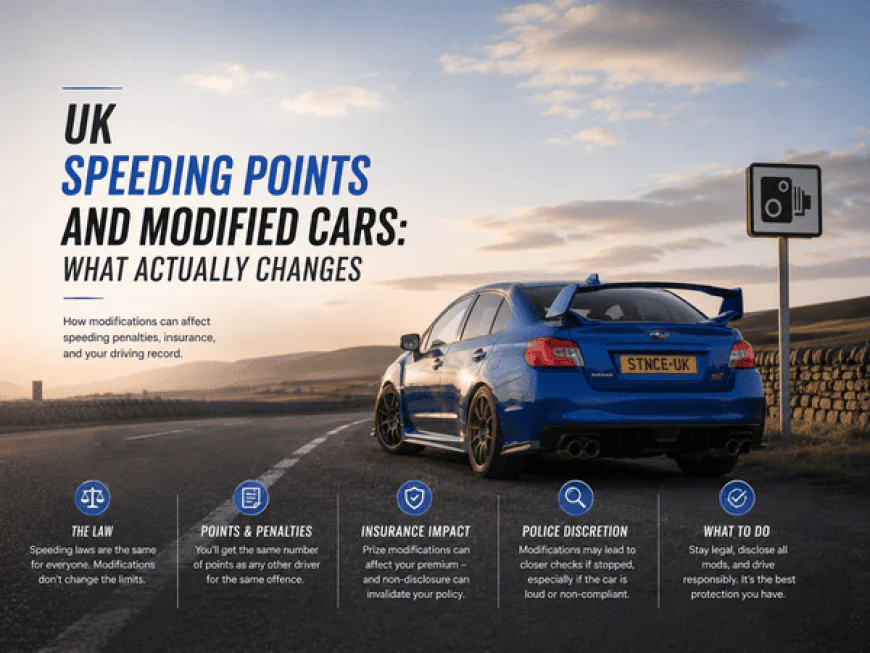
UK Speeding Points and Modified Cars:
What Actually Changes
Key Facts
- Speeding penalties are based on speed recorded and road type, not on whether a car is modified
- Standard penalties range from a fixed penalty (3 points and a fine) to court-imposed points or disqualification for serious cases
- 12 points within 3 years triggers the totting-up procedure, typically resulting in disqualification
- New drivers face licence revocation if they reach 6 points within 2 years of passing their test
- Insurance premiums, including specialist modified car cover, are affected by speeding convictions regardless of vehicle modification status
There's a persistent myth that modified cars somehow face different, harsher speeding penalties than standard vehicles. They don't, the law treats the offence the same regardless of what's under the bonnet, but the practical consequences for a modified car owner specifically are still worth understanding properly.
Do Modified Cars Face Different Speeding Penalties?
No. UK speeding penalties are determined by the speed recorded relative to the applicable limit and road type, not by the vehicle's modification status. A modified car speeding at a given rate over the limit faces exactly the same points and fine structure as a completely standard car doing the same speed, there's no separate, harsher legal category for modified vehicles specifically.
How Does the Points System Actually Work?
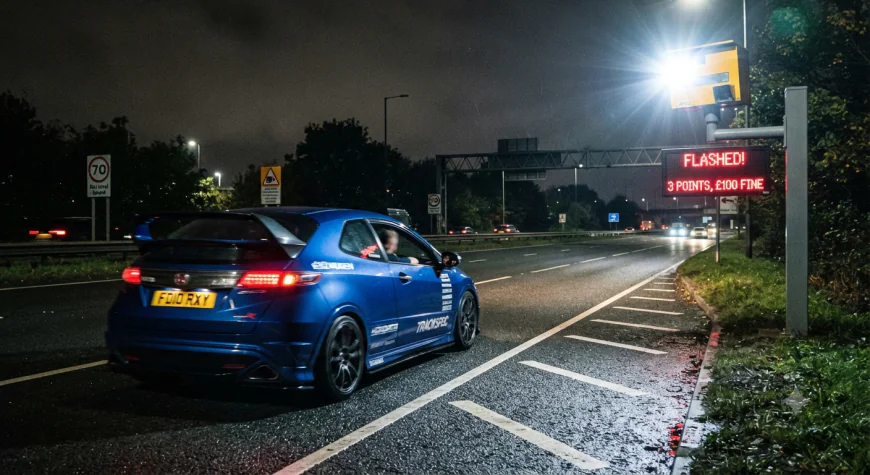
Minor speeding offences typically result in a fixed penalty notice, generally 3 points and a fine, often with the option of a speed awareness course instead for first-time, lower-level offences in many areas. More serious speeding, significantly over the limit, results in a court appearance rather than a fixed penalty, with potentially more points or even disqualification depending on severity.
What Is Totting Up, and Why Does It Matter More for Modified Car Owners?
Accumulating 12 or more points within a 3-year period triggers the totting-up procedure, typically resulting in a driving ban regardless of how those points were individually accrued. This matters practically for modified car owners in one specific way, if driving a genuinely capable, quick modified car makes you more likely to pick up repeated speeding points over time, the totting-up consequence is identical to anyone else reaching the same threshold, the car itself doesn't create a different legal outcome, but the temptation and capability might make reaching that threshold more likely.
Does a Speeding Conviction Affect Specialist Modified Car Insurance?
Yes, genuinely more than some owners expect. Speeding convictions affect premiums across mainstream and specialist insurance alike, and given that specialist modified car insurers, covered in our modified car insurance groups guide, are already pricing genuine risk carefully, a speeding conviction on top of a modified vehicle can compound the premium impact more noticeably than the same conviction might on a standard car with a mainstream insurer.
Are New Drivers at Particular Risk?
Yes, significantly. New drivers face licence revocation, not just points, if they accumulate 6 or more points within 2 years of passing their test, a far lower threshold than the standard 12-point totting-up rule. This is worth genuine awareness for younger, newly qualified drivers specifically drawn to modified and performance cars, the consequences of accumulating points escalate much faster in those first two years than many new drivers realise.
Does a Speed Awareness Course Avoid Points Entirely?
For eligible, lower-level offences, yes, completing a speed awareness course instead of accepting points and a fine avoids points appearing on your licence, though it's typically only offered for a first qualifying offence within a certain period and isn't available for more serious speeding. It's genuinely worth taking the course where offered rather than defaulting to points, since it avoids both the points themselves and the associated insurance impact of a formal conviction.
Does This Affect Track Day Driving Too?
No, and it's worth understanding the distinction clearly. Speeding penalties apply specifically to public road driving, a properly organised, legal track day operates under entirely separate rules, covered in our track day insurance guide, where speed limits in the ordinary road sense simply don't apply within the circuit itself. Public road speeding law and track driving are genuinely separate contexts, don't let confusion between the two lead to either unnecessary road risk or unnecessary caution on a properly organised track day.
What Should You Do If You're Approaching the Points Threshold?
If you're genuinely close to totting-up territory, or within the new-driver 6-point window, it's worth being deliberately more cautious than usual, since the consequence of one more offence is disproportionately severe compared to the offence itself once you're near that threshold. Considering a driving standards refresher, being more conscious of variable speed limits and known camera locations on regular routes, and generally building in a bigger margin of caution are all sensible, practical responses once you know you're close to a threshold with serious consequences attached.
The Bottom Line
Modified cars face identical speeding penalties to standard vehicles under UK law, there's no separate harsher legal treatment based on modification status. What genuinely differs is the practical risk picture, a more capable car can make it easier to end up in speeding situations, and the insurance consequences of a conviction can compound more noticeably when layered onto specialist modified car cover.
For official guidance on speeding penalties, the gov.uk guidance on speeding penalties sets out the full points and fine structure. For more legal guides and everything else modified car culture, head back over to Stance Auto Mag. You can also grab the latest print issue through our Amazon magazine store.
 Like
0
Like
0
 Dislike
0
Dislike
0
 Love
0
Love
0
 Funny
0
Funny
0
 Angry
0
Angry
0
 Sad
0
Sad
0
 Wow
0
Wow
0