





















































.png)







![[HOONIGAN] Ken Block's GYMKHANA NINE](https://img.youtube.com/vi/_bkX5VkZg8U/maxresdefault.jpg)














































![[HOONIGAN] KEN BLOCK'S GYMKHANA SEVEN: WILD IN THE STREETS OF LOS ANGELES](https://cdn.motor1.com/images/mgl/2KlO4/s1/ken-block-london-tour-directors-cut.jpg)



































The Volkswagen Models That Changed Car Tuning in Britain
How the Golf GTI, Mk5, Golf R and the EA888 engine shaped modern VW tuning culture in the UK — and why the Golf still dominates the scene.

Volkswagen probably isn't the first manufacturer that comes to mind when you think about modified cars. Yet look around almost any British car meet, track day or enthusiast show and there's a good chance you'll find a modified Golf somewhere in the car park. The Golf GTI has been part of Britain's performance car scene for decades, but its influence goes much further than one model. From the early GTIs of the 1970s and 80s to today's Golf R, Volkswagen has produced cars that owners seem almost compelled to make their own.
So why has VW had such a lasting influence on British tuning culture?
The Golf GTI made performance accessible
When the original Golf GTI arrived in the UK in the late 1970s, its formula was relatively simple.
Take a practical hatchback, give it more power, improve the chassis and keep enough everyday usability that somebody could realistically drive it to work every day.
That formula helped establish what we'd eventually come to know as the hot hatch.
More importantly for enthusiasts, the Golf provided an accessible starting point. Owners didn't need an exotic sports car to have something quick, enjoyable and worth modifying.
Later generations continued the same basic idea.
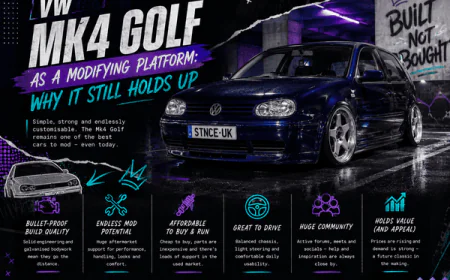
The Mk2 became hugely popular within the modified VW scene, while the Mk4 developed a following of its own as styling, stance and wheel choice became increasingly important parts of tuning culture.
Then came the Mk5.
For many enthusiasts, this was the generation that brought the Golf GTI properly back into the performance conversation.
The Mk5 GTI changed what owners expected
Launched in the UK in 2005, the Mk5 GTI combined a turbocharged 2.0-litre engine with a chassis that gave owners plenty to work with.
It also arrived at exactly the right time.
Remapping was becoming increasingly accessible and the aftermarket surrounding turbocharged European cars was growing quickly. Instead of needing substantial mechanical changes to extract more performance, owners could make meaningful gains through software and relatively straightforward supporting modifications.
That changed the tuning process.
Engine software, exhaust systems, induction kits, suspension and brake upgrades could gradually transform the car without taking away the qualities that made the GTI useful in the first place.
It created a blueprint that Volkswagen would continue developing over the following generations.
Then the Golf R changed the ceiling
The Golf R took the idea considerably further.
Four-wheel drive gave owners the ability to put significantly more power onto the road, while turbocharged engines offered considerable tuning potential. Suddenly, a fairly understated Volkswagen hatchback could produce performance that would have required something considerably more exotic a generation earlier.
That understated appearance became part of the appeal.
A modified Golf R doesn't necessarily advertise what it's capable of. To somebody outside the VW world, it can still look like a relatively ordinary Golf.
Those who know what they're looking at tend to see something very different.
The EA888 became one of the defining tuning engines
Volkswagen Group's EA888 engine has played a major part in the modern VW tuning scene.
Used across several generations and numerous models, the turbocharged four-cylinder engine has accumulated an enormous amount of aftermarket development.
For owners, that matters.
Popular platforms attract manufacturers, tuners and specialists. More development means more choice, better understood combinations and considerably more information about what works.
It's one of the reasons Stage 1 tuning became such a common first modification on later GTIs.
The specialists at Awesome GTI,, who have worked with Volkswagen Group performance cars for decades, regularly see owners looking for more power without wanting to fundamentally change how their car behaves on the road. A software upgrade can make a noticeable difference to throttle response and mid-range performance without requiring owners to immediately start replacing major engine components.
It's an approach that suits the Golf particularly well.
VW tuning isn't only about horsepower
The stereotype of tuning is that everybody is chasing the biggest possible power figure.
Spend enough time around Volkswagen enthusiasts and you'll quickly discover that's only one corner of the scene.
Some owners are obsessed with OEM+ builds, where modifications are deliberately subtle enough that they could almost have left the factory that way.
Others concentrate on suspension and handling.
Then there's the stance scene, where wheel fitment, ride height and visual details take priority over outright performance.
At the opposite end are serious track builds and heavily tuned road cars producing considerably more power than Volkswagen originally intended.
Very few manufacturers have enthusiast communities covering such a broad spectrum.
The aftermarket helped keep older Volkswagens relevant
Another reason VW tuning has endured is the availability of parts.
The most popular Golf generations have extensive aftermarket support, which means owners aren't restricted to whatever Volkswagen originally fitted.
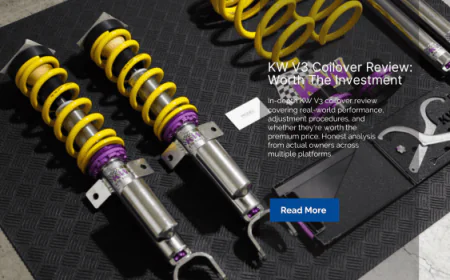
Suspension manufacturers including KW, H&R and Eibach have developed applications for numerous VW platforms. Companies such as Milltek have produced exhaust systems across multiple generations, while performance specialists including RacingLine and APR have spent years developing hardware and software specifically for Volkswagen Group cars.
That ecosystem means an older GTI doesn't necessarily stop evolving when Volkswagen launches the next generation.
In some cases, that's when enthusiasts become even more interested in them.
The modifications have become more sophisticated
The way people modify Volkswagens has changed considerably too.
Twenty years ago, the conversation might have started with lowering the car, fitting larger wheels and adding an exhaust.
Owners now have far more data available to them.
Tyre choice, geometry, brake temperatures, intake temperatures, ECU calibration and suspension setup can all become part of the discussion.
Even something seemingly straightforward like lowering a Golf can involve questions around adaptive dampers, alignment, wheel clearance and how the car is actually used.
According to Awesome GTI, one of the most important things owners can do is think about the car as a complete package rather than buying modifications individually.
Adding power to a car with tired brakes and tyres rarely makes sense. Equally, fitting extremely firm suspension to a car that spends almost all of its life commuting can make it objectively worse to live with.
The best builds tend to have a purpose.
Why the Golf still dominates the VW scene
Volkswagen has produced plenty of enthusiast favourites outside the Golf.
The Polo GTI offers a smaller route into VW performance ownership. The Scirocco developed a strong following thanks to its distinctive styling, while models including the Corrado have become increasingly desirable among enthusiasts.
There's also a substantial scene surrounding performance versions of the Transporter, proving that VW enthusiasm isn't limited to hatchbacks.
But the Golf remains at the centre of it.
Part of that comes down to history. Few performance badges have survived for as long as GTI while remaining recognisable to people who aren't necessarily car enthusiasts.
The other part is opportunity.
A Golf GTI can remain completely standard and work perfectly well as an everyday car. It can also become lower, louder, faster and considerably more focused without losing the fundamental qualities that made somebody buy it.
That gives every owner somewhere different to take it.
Nearly 50 years later, the formula still works
The cars have changed enormously since the first Golf GTI appeared.
Modern versions are heavier, faster and considerably more technologically complex. Tuning has moved from relatively simple mechanical changes to sophisticated software and carefully developed hardware.
The basic appeal, however, hasn't changed much. Start with a practical Volkswagen. Make it a little faster, sharper or more individual. Learn what works from the people who've already experimented with the platform.
Then decide how far you want to go. That's helped Volkswagen build something manufacturers can't easily engineer themselves: a tuning culture that continues long after each car leaves the factory.
Further Reading:
- Awesome GTI: Inside Manchester's VW Audi Group Performance Specialists
- 2014 VW Golf GTI MK7 — 401bhp, Driveway-Built, and Built on Principle
- The Best VW Golf GTI Tuning Mods & Performance Parts: Unlocking the True Potential
- Best Hot Hatches Under £10k for Modifications
- 1988 Volkswagen Mk2 Golf GTI - Jordan Silvester
 Like
0
Like
0
 Dislike
0
Dislike
0
 Love
0
Love
0
 Funny
0
Funny
0
 Angry
0
Angry
0
 Sad
0
Sad
0
 Wow
0
Wow
0