



































































.png)









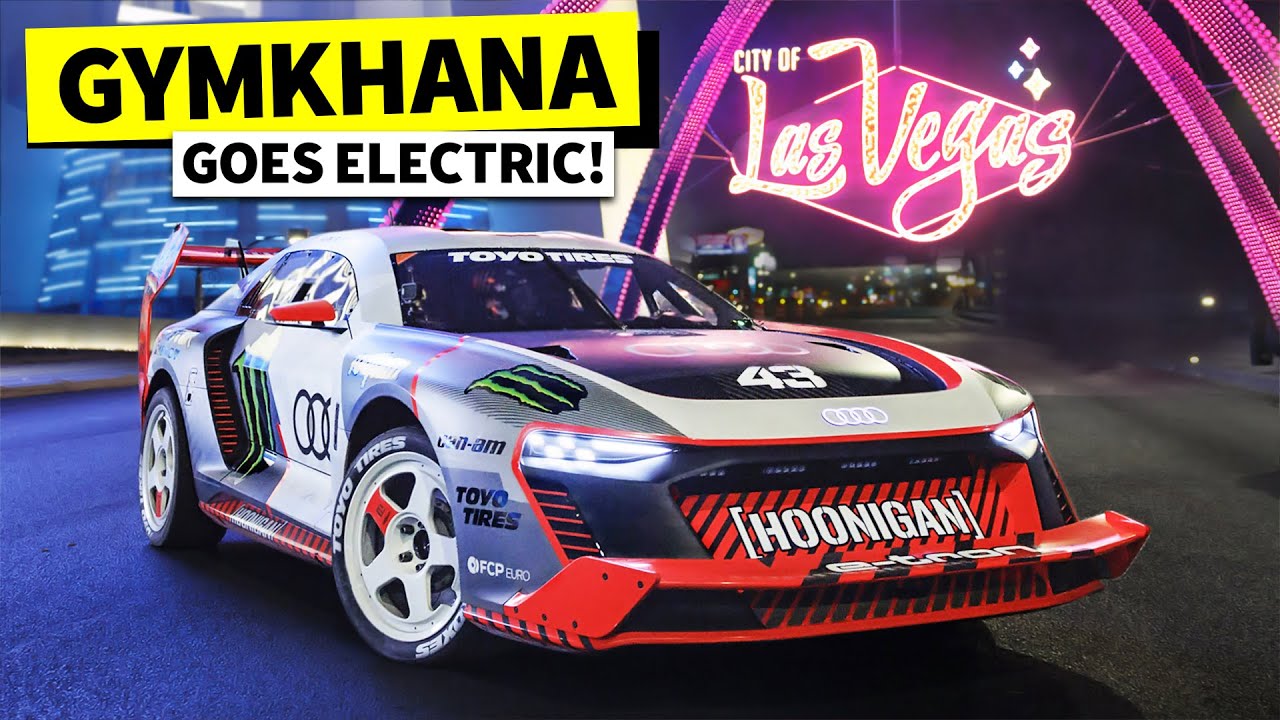
![[HOONIGAN] Ken Block's GYMKHANA NINE](https://img.youtube.com/vi/_bkX5VkZg8U/maxresdefault.jpg)

























































![[HOONIGAN] KEN BLOCK'S GYMKHANA SEVEN: WILD IN THE STREETS OF LOS ANGELES](https://cdn.motor1.com/images/mgl/2KlO4/s1/ken-block-london-tour-directors-cut.jpg)



































Who Founded Liberty Walk? The Story of Wataru Kato and LB WORKS
Who founded Liberty Walk? Discover how Wataru Kato built Liberty Walk from a Japanese car business into the global LB★Performance and LB★WORKS phenomenon.
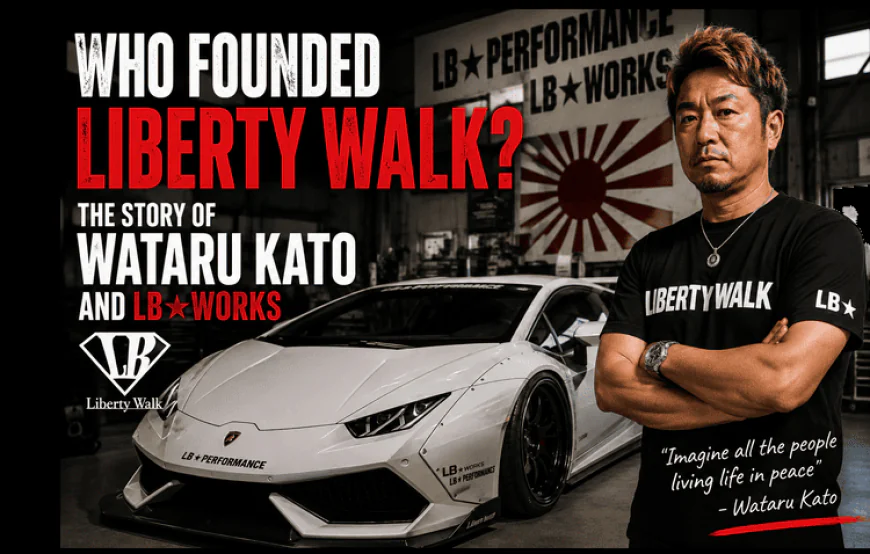
Who Founded Liberty Walk?
Liberty Walk was founded by Japanese car enthusiast and businessman Wataru Kato, who established Liberty Walk in 1993. What started as a Japanese automotive business eventually grew into one of the most recognisable names in modern custom car culture, with LB★Performance and LB★WORKS becoming particularly famous for taking exotic and performance cars and giving them an unmistakable Japanese widebody attitude.
In plain English, Liberty Walk is a Japanese custom-car company founded by Wataru Kato that became famous for its aggressive widebody body kits, lowered cars, exposed riveted over-fenders and bold interpretation of Japanese modification culture. The company itself dates back to 1993, but the part of the Liberty Walk story most people know today really began when Kato and his team turned their attention to a Lamborghini Murciélago.
That distinction matters because Liberty Walk didn't suddenly appear as a supercar body-kit company. The business had years of automotive experience behind it before the famous LB★Performance and LB★WORKS cars started appearing at major shows. Kato's story is less about one lucky body kit and more about gradually building the confidence to do something that most people would have considered completely mad.
Who Is Wataru Kato?
Wataru Kato is the founder of Liberty Walk and the person most closely associated with the company's uncompromising approach to custom cars.
Kato's relationship with cars started long before Liberty Walk became an international name. Liberty Walk's own history describes how, before he even had a driving licence, older enthusiasts would take him out in their cars. Those experiences stayed with him and helped shape the direction he would eventually take. He wasn't simply looking at cars as transport. He saw the culture surrounding them, the friendships, the personalities and the freedom to make something your own.
That idea of personal expression became a big part of Liberty Walk's identity.
The company was established in 1993, and in its earlier years the business was involved with imported European and American cars. This background is important because it helps explain why Liberty Walk eventually felt comfortable moving between Japanese cars, American muscle and expensive European machinery.
Kato wasn't approaching a Lamborghini as someone who had only ever worked on Japanese tuning projects. He already understood the world of imported performance cars. What changed everything was a request from a customer and close friend who wanted something a little more outrageous.
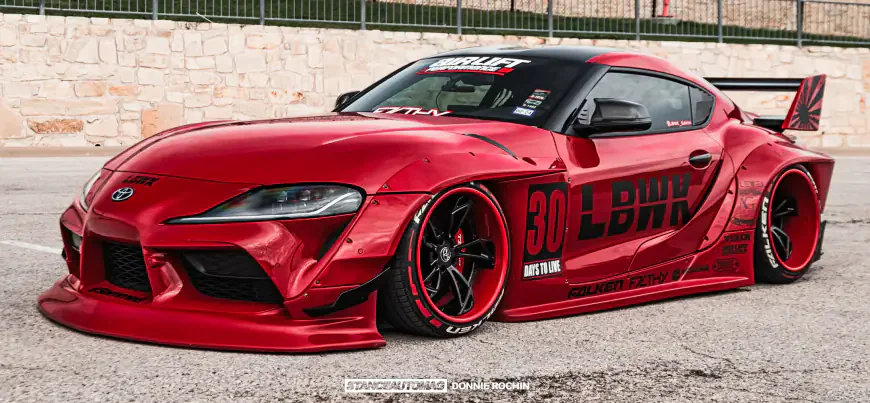
LibertyWalk Toyota Supra Build Story
How Did Liberty Walk Start?
Liberty Walk began in 1993, but its modern global identity was shaped by a customer's request for a more dramatic Lamborghini.
According to Liberty Walk's own history, one of Kato's customers and close friends eventually said something very simple: “I want to drive a Lamborghini.” Liberty Walk found him a Lamborghini Diablo, and later he moved on to a Murciélago.
The Murciélago was obviously an extraordinary car in standard form, but the owner wanted something more. He didn't just want another Lamborghini sitting in the garage looking like every other Lamborghini. He wanted it to feel meaner, more individual and, in his words, cooler.
That request gave Kato and his team a problem — and problems like that are often where interesting car culture starts.
Instead of simply fitting a few aftermarket parts, Liberty Walk decided to create an original body kit for the Murciélago. The result, developed in 2008, became the beginning of the LB★Performance brand. It was a huge step because the company was no longer simply modifying cars for individual customers. It was beginning to create a recognisable design language of its own.
And once that happens, a company stops being just a workshop. It starts becoming a brand.
What Was the First Liberty Walk Lamborghini?
The first major Liberty Walk Lamborghini was a Murciélago developed into the original LB★Performance style in 2008.
The choice of car was significant. Lamborghini already had a reputation for producing some of the most dramatic cars on the planet, so modifying one wasn't exactly the safe route. There was always going to be a reaction.
The first LB★Performance Murciélago pushed the car much further visually. It wasn't about making the Lamborghini look factory-fresh with a slightly sportier stance. The idea was to take the aggression of Japanese custom-car culture and apply it to an Italian supercar.
That approach became one of Liberty Walk's defining characteristics.
The company describes its philosophy as kaizō, meaning modification, rather than simply tuning or dress-up. The inspiration came partly from older Japanese custom-car culture, including the exaggerated proportions, cut bodywork, wide wheels and over-fenders associated with rebellious Japanese styles.
The interesting bit is that Kato didn't try to hide those influences. He pushed them right to the front.
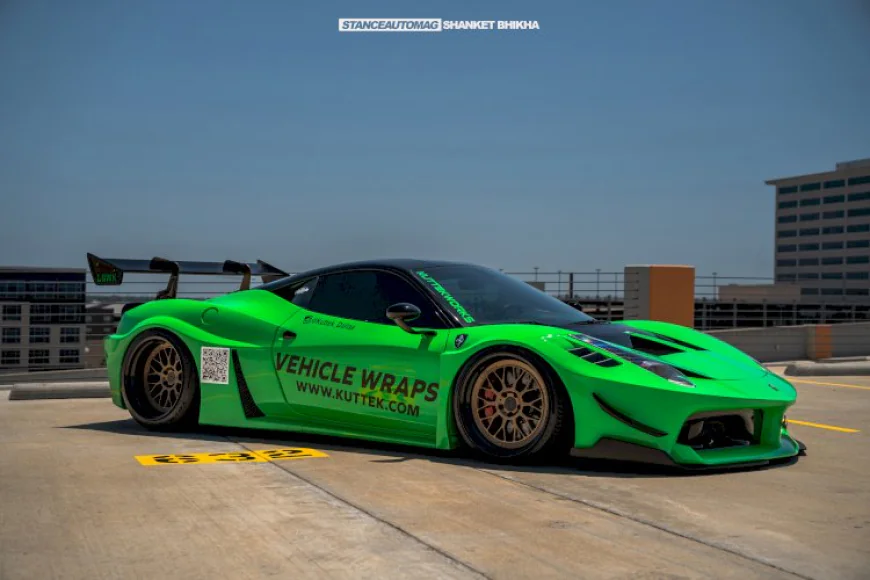
2011 Ferrari 458 Italia Liberty Walk Widebody Air Ride Custom Build
How Did LB★Performance Become LB★WORKS?
LB★Performance came first, while LB★WORKS developed from the more radical idea of using exposed over-fenders and visibly cutting into the car's original body.
In 2009, Liberty Walk took the LB★Performance Murciélago to the SEMA Show in Las Vegas. This was the world debut of LB★Performance, and although the response from people attending the show was positive, it didn't immediately translate into the kind of sales the company needed.
That could easily have been the end of the story.
Instead, Kato and his team doubled down.
By 2012 they had developed a new version of the Murciélago with what would become the signature LB★WORKS approach. The body was cut, wider works-style fenders were fitted and the rivets were left visible rather than hidden away.
On a six-figure Lamborghini, that was a pretty serious statement.
It also looked completely different from the polished, almost untouchable image normally associated with exotic cars. Liberty Walk was effectively saying that a supercar could be treated like a Japanese project car — cut, widened, lowered, rebuilt and turned into something personal.
The reaction at the 2012 SEMA Show was much stronger, and LB★WORKS began to establish itself internationally.
Why Did Liberty Walk Start Cutting Supercars?
Liberty Walk started cutting supercars because Wataru Kato wanted to bring the rebellious spirit of Japanese modification culture to cars that were rarely treated that way.
That is probably the easiest way to understand the entire Liberty Walk philosophy.
A standard Lamborghini, Ferrari or Nissan GT-R already has a carefully engineered shape. Most aftermarket companies work around that shape. Liberty Walk's approach is different. The original design becomes the starting point rather than the final answer.
Fenders can be cut. Arches can be widened. Bumpers can be replaced. Wheels can be pushed further outward. Ride height can be dropped dramatically. The car becomes a physical expression of the owner's taste.
It is also why Liberty Walk has always been a little divisive.
Some people look at a factory Lamborghini and see something that shouldn't be touched. Others look at one and immediately think about how they would change it. Liberty Walk built an entire international business around appealing to the second group.
And whether you love the results or think they're completely outrageous, it's difficult to argue that the cars are forgettable.

Libertywalk Acura NSX - Team F7LTHY
What Makes LB★WORKS Different From Other Widebody Kits?
LB★WORKS stands out because its widebody designs deliberately make the modification itself part of the visual identity.
A lot of widebody cars try to create the illusion that the wider body was always part of the original design. Liberty Walk often does the opposite. The exposed hardware, dramatic arches and obvious changes to the body make it clear that somebody has been in there with tools.
That honesty is part of the appeal.
The style also draws heavily from older Japanese custom-car culture, where dramatically altered bodywork, low ride heights and aggressive wheel fitment were used to create cars that looked nothing like their factory counterparts.
Liberty Walk took those ideas and scaled them up to machinery that could cost hundreds of thousands of pounds.
That contrast is what made the brand so interesting. A Lamborghini wearing Japanese-inspired over-fenders wasn't supposed to make sense on paper. On a show stand, though, it certainly got people talking.
Why Are Liberty Walk Cars So Popular?
Liberty Walk cars became popular because they combine instantly recognisable styling with a strong philosophy of personal expression.
The brand didn't rely solely on making expensive cars wider. It created an identity that could be recognised from a photograph without necessarily needing a badge or caption.
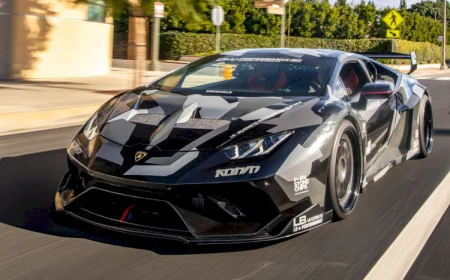
A Liberty Walk car tends to have a certain stance. The body sits low, the arches are dramatic and the wheels fill the available space. Depending on the model, there might be a large rear wing, an aggressive front splitter and visible fasteners holding the widebody treatment together.
More importantly, the cars look like projects.
That matters in enthusiast culture. People don't only want a finished product; they want a story. They want to see how a car got there, what was changed and why the owner chose those particular parts.
Liberty Walk's success came partly from understanding that. The company was selling body kits, but it was also selling a way of looking at cars.
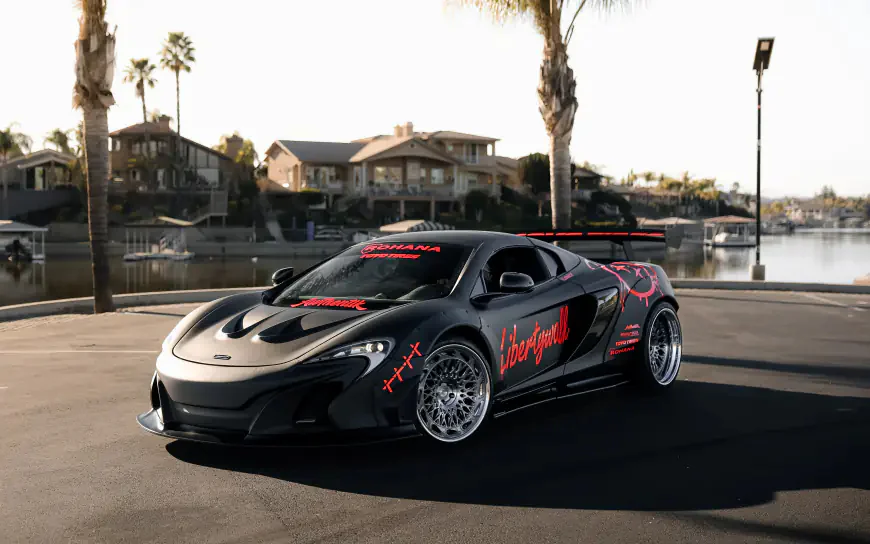
McLaren 650S Liberty Walk Build – A Journey of Passion
How Did Wataru Kato Turn Liberty Walk Into a Global Brand?
Wataru Kato turned Liberty Walk into a global brand by taking a very Japanese approach to car modification and putting it in front of an international audience.
The early SEMA appearances were crucial. The 2009 LB★Performance Murciélago introduced the concept to a huge American audience, while the 2012 LB★WORKS Murciélago pushed the idea much further.
After that, the range expanded quickly.
Liberty Walk developed designs for cars including Ferrari, Nissan GT-R, BMW, Porsche, Lamborghini and many others. The company also developed LB★Nation, extending the styling philosophy into a broader selection of more accessible performance and domestic-market cars.
The important thing is that Kato didn't abandon the original idea as the business grew. The cars could change, the manufacturers could change and the markets could change, but the underlying philosophy remained fairly consistent: make the car more dramatic, more individual and more expressive.
That consistency is a big part of why the Liberty Walk name became so strong.
What Happened to the Original LB★WORKS Murciélago?
The original LB★WORKS Murciélago has a particularly personal place in Liberty Walk history because it was built from the Lamborghini belonging to Kato's close friend and customer.
Liberty Walk's own account of the story adds another layer to the car. Shortly before his friend passed away following a serious illness, Kato promised him that he would make his Lamborghini the most famous one in the world.
The car was eventually transformed again, becoming a D1 Grand Prix competition machine. Kato retained the car personally, making it more than simply an early Liberty Walk project.
It became a reminder of where the whole LB★WORKS idea came from in the first place — not from a marketing department trying to invent a trend, but from a customer asking a friend to make his Lamborghini something special.
That human element is easy to lose when a brand becomes global. In this case, though, it is one of the most interesting parts of the story.
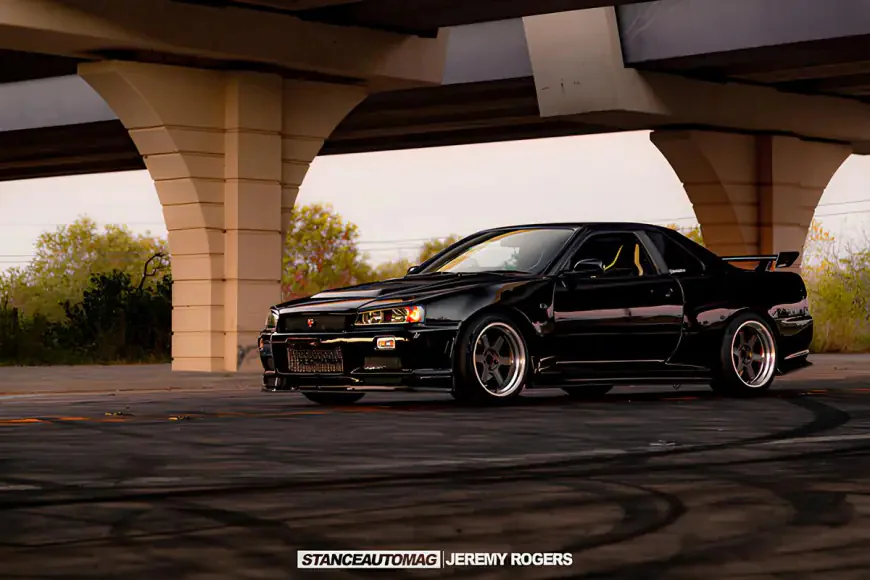
The Liberty Walk Skyline GTR34: Owning My Dream Car
Did Wataru Kato Invent the Widebody Style?
Wataru Kato did not invent widebody cars or Japanese custom-car culture, but he created a distinctive interpretation of those ideas that became strongly associated with Liberty Walk.
Wide arches, aggressive stance and heavily modified bodywork had existed in Japanese car culture for decades. Liberty Walk's achievement was bringing those ideas into a completely different part of the automotive world.
The company took a visual language that had traditionally belonged to Japanese enthusiast cars and applied it to Lamborghinis, Ferraris and other high-end machinery.
That crossover helped introduce a much wider audience to Japanese-inspired widebody styling.
It also helped make the idea of modifying an exotic car feel less taboo. Today, cutting the body of a supercar still makes plenty of enthusiasts nervous, but the concept is no longer as alien as it once was.
Liberty Walk played a major role in changing that conversation.
What Is Liberty Walk's Legacy?
Liberty Walk's legacy is that it turned Japanese custom-car attitude into a globally recognised design language.
The company officially dates its establishment to 1993, while LB★Performance arrived in 2008 and LB★WORKS followed as the more radical evolution of that approach. Those dates matter because they show that Liberty Walk's global success wasn't an overnight social-media phenomenon.
There were years of work behind the brand before the famous Lamborghini builds started appearing at international shows.
And perhaps the most important part is that Kato's approach has always been about freedom of expression. Liberty Walk doesn't really make sense if you look at the cars purely through the lens of factory correctness. The point is that the owner gets to decide what their car should be.
That philosophy has travelled remarkably well.
From Japanese car meets to major international shows, Liberty Walk has created cars that are immediately recognisable, deliberately controversial and, above all, difficult to ignore.
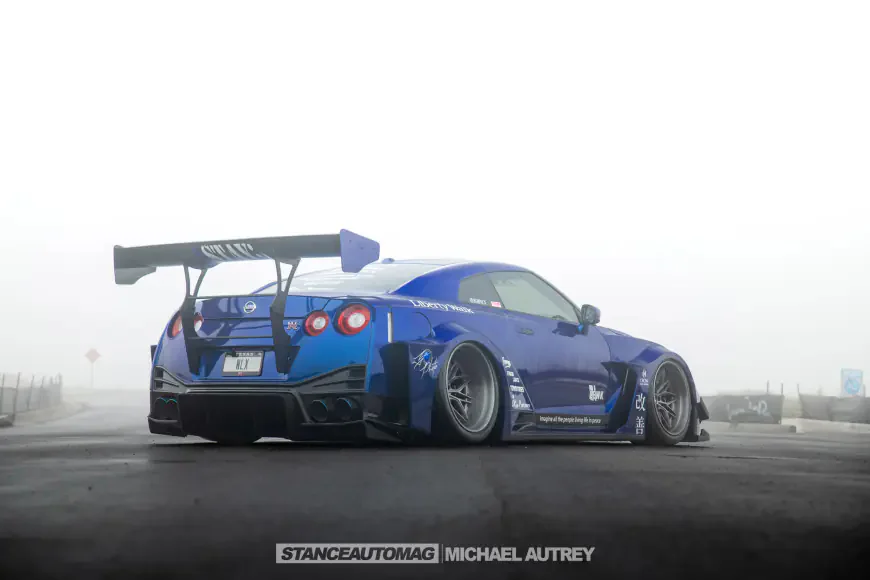
2012 LBWK Takumi Masters Nissan GT-R: The Dream Realized
Where Did Liberty Walk's Style Come From?
Liberty Walk's style came from Japanese custom-car culture, particularly the rebellious tradition of dramatically modifying cars rather than simply preserving factory design.
The company's own history specifically connects its approach with the old Japanese spirit of kaizō, or modification, as well as the exaggerated bodywork and attitude found in older Japanese custom styles.
That connection is important because it explains why the Liberty Walk look doesn't always follow conventional supercar design rules.
A Lamborghini might normally be treated as something precious that needs to remain visually pure. Liberty Walk treats it more like a blank canvas.
That doesn't mean Kato ignores the original design. In fact, the company has repeatedly emphasised respect for the shapes of the cars it modifies. The goal is to create something different without losing the identity of the original machine.
It's a difficult line to walk, and that's probably part of why Liberty Walk cars generate such strong opinions.
Why Is Wataru Kato Important to Japanese Car Culture?
Wataru Kato is important to Japanese car culture because he helped take a distinctly Japanese approach to modification and turn it into an internationally recognised automotive brand.
There are plenty of famous Japanese tuning companies, and Liberty Walk isn't the only company to influence the global modified-car scene. What makes Kato's story interesting is the sheer range of cars he was willing to work with.
The company didn't stay inside one comfortable niche.
It moved from imported cars to supercars, from Lamborghinis to Japanese performance cars, from American machinery to more mainstream models. The common thread was always the same willingness to modify rather than simply preserve.
That attitude has influenced the way enthusiasts think about widebody builds today. Whether someone is building a Nissan Skyline, a BMW, a Porsche or a Lamborghini, the basic idea that a car can be radically reshaped to express the owner's personality is now firmly established.
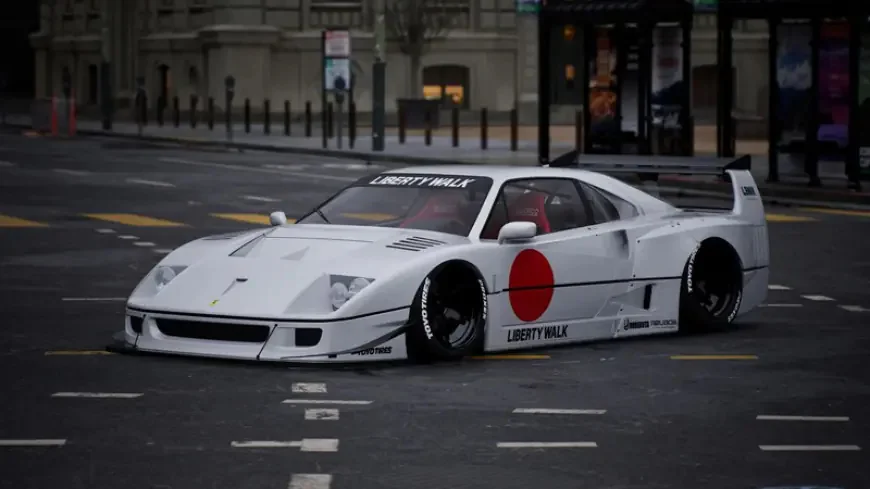
The Liberty Walk F40: A Bold Reimagining
The Liberty Walk Story Is Really About More Than Body Kits
The answer to who founded Liberty Walk is straightforward: Wataru Kato founded Liberty Walk in 1993. But stopping there misses the interesting part.
The real story is about what happened after that foundation.
A customer wanted a Lamborghini. Then that Lamborghini needed to be more dramatic. A Murciélago became the starting point for LB★Performance. The first SEMA appearance didn't immediately produce the commercial success Liberty Walk wanted. Instead of backing away, Kato and his team went further, creating the LB★WORKS Murciélago and turning the visible act of cutting and widening the car into part of the design.
From there, the idea spread.
Liberty Walk became a brand that people could recognise from across a show hall. The cars were loud without necessarily relying on sound, and controversial without needing an explanation. They represented the idea that owning an expensive car doesn't mean you have to leave it alone.
That's probably the biggest reason the company has remained relevant.
In a world where many cars are becoming more similar, more digitally controlled and harder for owners to personalise, Liberty Walk represents the opposite direction. Cut it. Widen it. Lower it. Make it yours.
And that goes right back to Wataru Kato.
Owners Liberty Walk Cars Here On Stance Auto:
- McLaren 650S Liberty Walk Build – A Journey of Passion
- 2011 LBWK Ferrari 458 Italia: The Ultimate Supercar
- Libertywalk Acura NSX - Team F7LTHY
- 2012 LBWK Takumi Masters Nissan GT-R: The Dream Realised
- Unique 2012 LBWK Fiat 500 Abarth: A Turbocharged Masterpiece
- The Liberty Walk F40: A Bold Reimagining
For more on modified cars, Japanese car culture and the wider world of automotive builds, visit Stance Auto Magazine. You can also find the magazine through our Amazon store.
 Like
0
Like
0
 Dislike
0
Dislike
0
 Love
0
Love
0
 Funny
0
Funny
0
 Angry
0
Angry
0
 Sad
0
Sad
0
 Wow
0
Wow
0