








































.png)






![[HOONIGAN] Ken Block's GYMKHANA NINE](https://img.youtube.com/vi/_bkX5VkZg8U/maxresdefault.jpg)







































![[HOONIGAN] KEN BLOCK'S GYMKHANA SEVEN: WILD IN THE STREETS OF LOS ANGELES](https://cdn.motor1.com/images/mgl/2KlO4/s1/ken-block-london-tour-directors-cut.jpg)




























Toyota Supra MK4 vs MK5: Old School vs New School JDM Icon
Toyota Supra MK4 vs MK5 comes down to old-school 2JZ tuning versus modern B58 performance — here's how the two generations compare for a modified build.
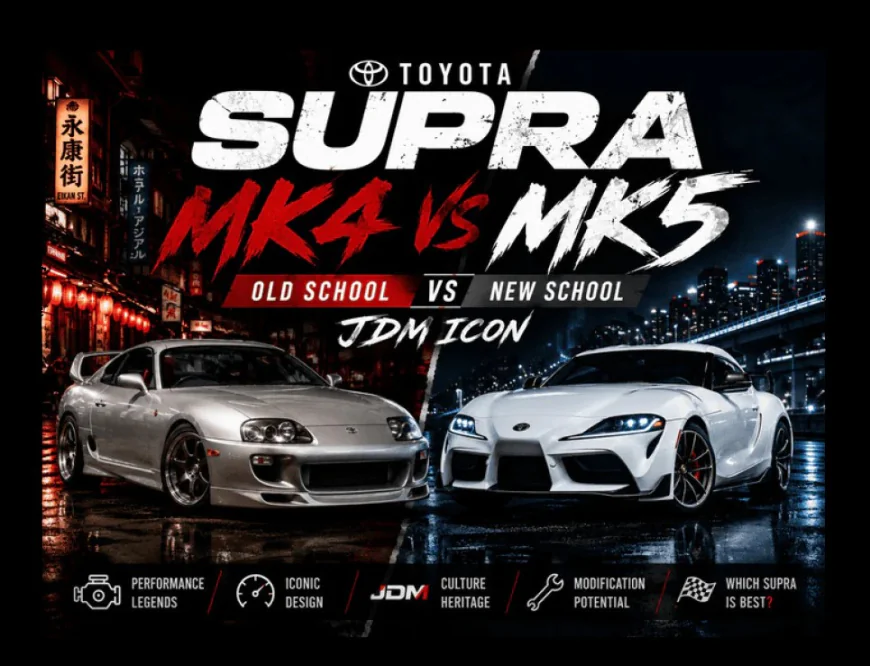
MK4 vs MK5: Old School vs New School JDM Icon
The Toyota Supra is a turbocharged sports coupe built across five generations since 1978, with the fourth-generation A80 and fifth-generation A90 standing as the two most fought-over among enthusiasts today. The Toyota Supra MK4 vs MK5 debate isn't really a fair fight on paper, separated as they are by 17 years and a completely different badge-sharing partner, but that's exactly what makes it such a good argument. One is the car that built a tuning legend on the back of an over-engineered straight-six, and the other is a genuinely fast modern machine that had to fight for JDM credibility from the day it launched.
If you've read our breakdown of the best Skyline GT-R for a modified build, you'll already know this kind of generational argument rarely has a clean winner. The Supra is no different, and honestly, that's the fun of it.
Toyota Supra MK4 vs MK5: What's Actually Different?
The two generations are separated by weight, engine architecture and, controversially, how much of the car was actually engineered by Toyota versus BMW. The MK4 is the older, heavier-feeling but mechanically simpler car built entirely in-house by Toyota, running the now-legendary 2JZ-GTE twin-turbo straight-six. The MK5, badged the GR Supra, was co-developed with BMW and shares its platform and B58 engine with the Z4, a fact that's fuelled more forum arguments than almost any other modern JDM-adjacent car. Understanding that split is the whole key to where each car's strengths and weaknesses come from.
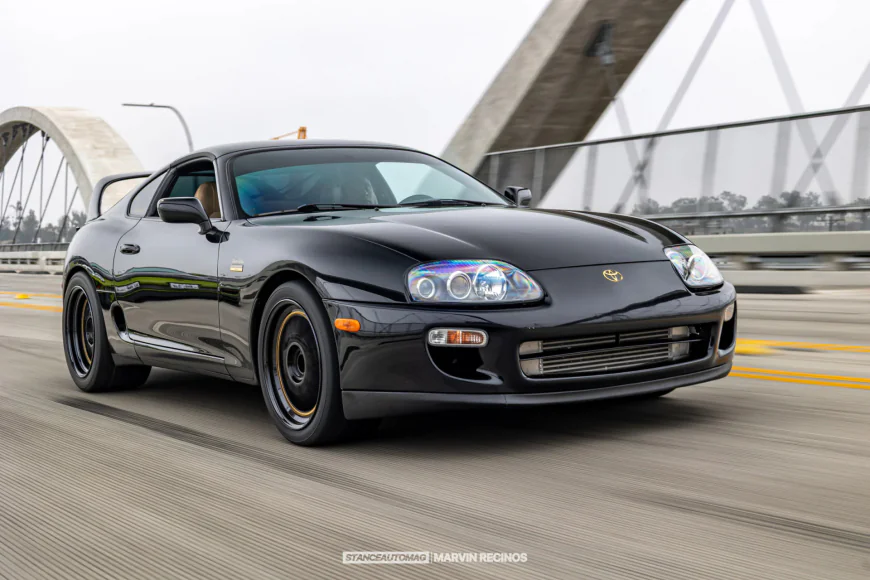
The MK4 Supra: Where JDM Legend Status Began
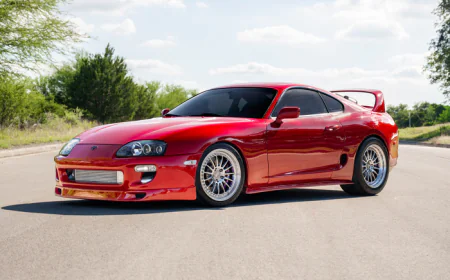
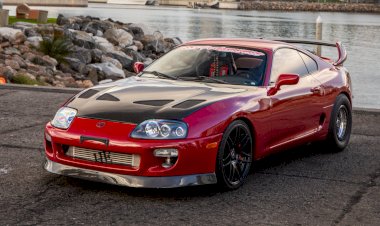
The A80-generation Supra arrived in 1993 and became one of the defining cars of JDM culture almost by accident, helped along enormously by a starring role in the original The Fast and the Furious. What actually earned it that reputation, though, is the 2JZ-GTE engine underneath the bonnet — a cast-iron block so over-engineered from the factory that 700-800bhp on stock internals became a well-known, well-documented ceiling long before forums turned it into folklore. Specialists like Titan Motorsports have built entire businesses around pushing that platform even further, from billet main caps to full dry-sump race builds, precisely because the block keeps taking abuse that would destroy most other factory engines.
The trade-off is that the MK4 is a heavier, less technologically advanced car to actually live with. Weighing in from around 1,510kg depending on spec, it doesn't have the outright agility of the GR Supra, and the interior and infotainment feel every bit their age now. What it does have is character, mechanical simplicity, and a reputation that's arguably bigger than the car itself at this point.
That reputation comes with a real cost, though. MK4 values have climbed steadily for over a decade now, and genuinely clean, unmolested Twin Turbo examples with the six-speed manual command serious money on both sides of the Atlantic. A lot of what's left on the used market has already been modified to some degree, which means buying one today often means inheriting someone else's build decisions, good or bad, rather than starting from a blank slate. Anyone serious about an MK4 project should budget for a proper pre-purchase inspection, because a cheap, tired 2JZ with hidden issues can turn into an expensive lesson fast.
The MK5 GR Supra: New School Performance
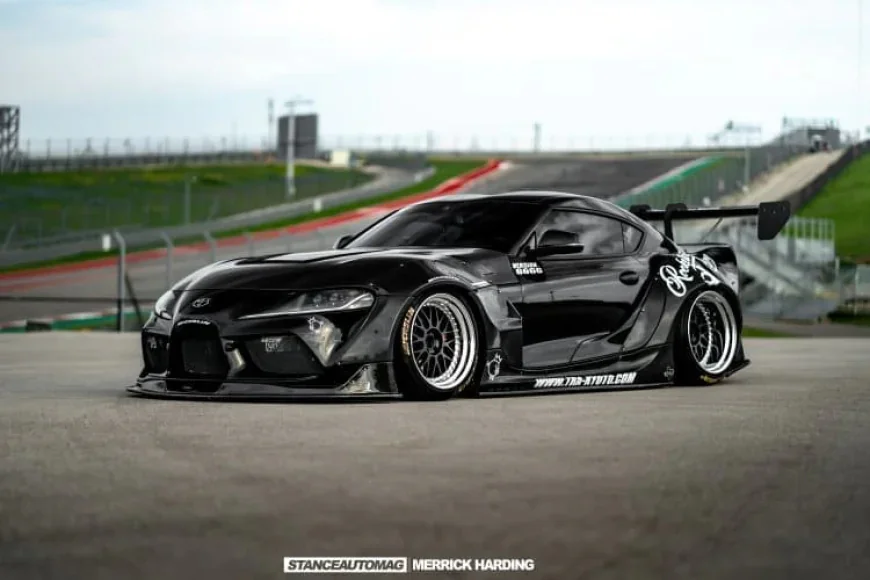
The A90 GR Supra landed in 2019 after a 17-year absence from Toyota's lineup, developed in partnership with BMW under Toyota Gazoo Racing, Toyota's motorsport division. That partnership gave the car a genuinely excellent chassis, a lighter kerb weight than its predecessor at around 1,410kg, and the turbocharged B58 straight-six borrowed from BMW's own performance line-up. It's a properly quick, properly balanced car straight out of the factory, and the tuning scene caught onto the B58's own strong reputation for handling big power on stock internals almost immediately.
What it doesn't have, at least according to a vocal chunk of JDM purists, is a genuinely Toyota-engineered heart. That argument has cooled somewhat as the GR Supra has built its own results on track and its own tuning culture on the street, but it's still worth knowing if you're buying one expecting the same badge-loyalty reception the MK4 gets at a meet.
What tends to win people over once they've actually driven one is how planted and communicative the chassis feels, particularly after Toyota added a proper six-speed manual option a couple of years into production, addressing one of the loudest early complaints about the car. Depreciation has also worked in buyers' favour so far, with used prices softening enough that a well-specced GR Supra now sits within reach of a lot of buyers who'd never have considered an equivalent MK4. For anyone building rather than restoring, that's a meaningful advantage — more of the budget goes into mods rather than just getting into the car in the first place.
Which Supra Has More Tuning Potential?
Both engines are genuinely strong starting points, so the Toyota Supra MK4 vs MK5 tuning question comes down to what kind of ceiling you're chasing rather than one platform being simply better than the other. The 2JZ-GTE's reputation for shrugging off huge boost on a stock bottom end is basically unmatched in mainstream JDM tuning, which is why drag and time attack builds still lean on MK4 shells even decades later. The B58, meanwhile, has proven itself capable of similarly serious power with the right supporting mods, and specialists like Extreme Turbo Systems now build full turbo kits for both the MK4's 2JZ and the GR Supra's B58, which tells you plenty about how seriously the newer platform is being taken.
Where the cars diverge is support infrastructure. The MK4 has had over 30 years for the aftermarket to mature around it, so parts, knowledge and secondhand components are everywhere. The GR Supra's scene is younger but growing fast, and its shared parts bin with BMW's B58-powered cars means the tuning world it draws from is bigger than most people realise.
Quick Spec Comparison
-
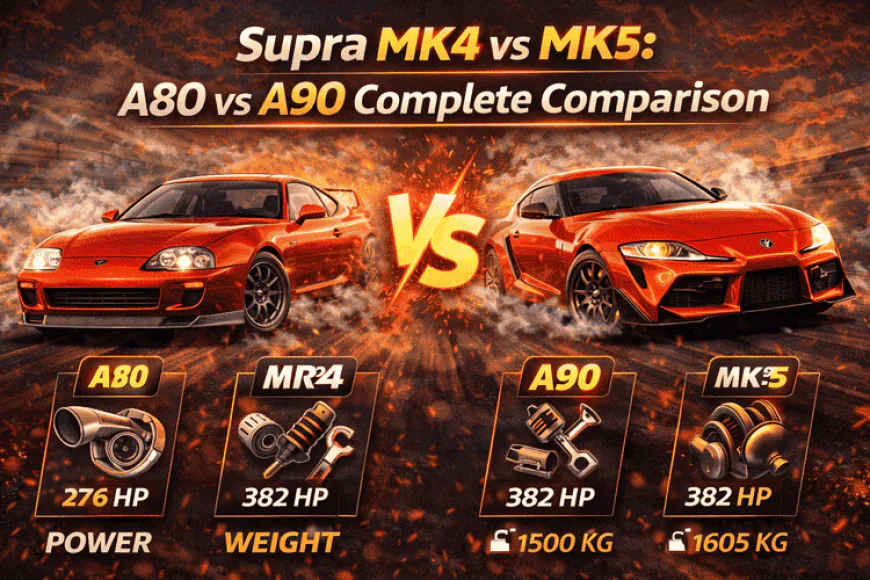
MK4 Supra / A80 (1993–2002): ~1,510kg, 2JZ-GTE twin-turbo straight-six, fully Toyota-engineered, legendary tuning headroom
-
MK5 GR Supra / A90 (2019–present): ~1,410kg, B58 turbo straight-six, co-developed with BMW, modern chassis and electronics
Which Supra Is Better as a Daily-Driven Build?
The GR Supra is the easier car to live with day to day, and it isn't particularly close. Modern safety equipment, a proper infotainment system, adaptive suspension on higher trims and none of the ergonomic quirks that come with a 30-year-old interior all add up to a car you can genuinely commute in without compromise, even once it's been mildly modified. The MK4, by contrast, rewards patience — ageing electrics, a cabin that was never designed with modern expectations in mind, and the general wear you'd expect from a car most examples have now covered well over 150,000 miles.
That doesn't make the MK4 a bad daily, plenty of owners run them year-round without issue, but it does mean going in with realistic expectations about maintenance. Track use flips the picture slightly. A built MK4 on the right tyres and suspension setup is an absolute weapon for the money once the fundamentals are sorted, largely because the platform's aftermarket has had decades to mature. The GR Supra holds its own here too, and its factory chassis balance means it needs less remedial work to get track-ready in the first place, even if the ceiling once heavily built is arguably lower for now, simply because the tuning world hasn't had as long to push it.
Insurance and running costs are worth factoring into the Toyota Supra MK4 vs MK5 decision too, particularly in the UK where both cars sit in higher brackets than their badges might suggest. A modified MK4 with a big turbo and forged internals can be genuinely expensive to insure once specialist cover is factored in, and parts sourced from Japan or the US carry shipping and import costs on top of the part price itself. The GR Supra, still under Toyota's main dealer network in most markets, tends to be simpler and cheaper to keep serviced through official channels, even once warranty cover has run out, which matters if you'd rather spend your budget on mods than on keeping the car roadworthy.
Which Supra Should You Buy?
If you want the raw, mechanical, endlessly-tunable original with three decades of proven reliability behind its tuning potential, the MK4 is still the one that built the legend and still deserves it. If you want a genuinely excellent modern chassis, real factory performance out of the box, and a tuning scene that's growing by the year, the GR Supra makes a very strong case for itself, badge debates aside.
"I always said I'd never buy anything with BMW parts in it, and then I actually drove one," is a sentiment that comes up more often than MK4 loyalists would probably like to admit. There's no wrong answer in the Toyota Supra MK4 vs MK5 argument, only a different kind of JDM icon depending on which era speaks to you.
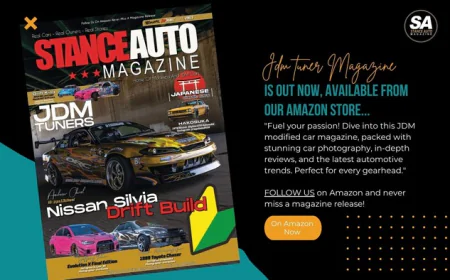
For more JDM comparisons, builds and buying guides, head over to Stance Auto Mag — and if you want to see more legends like these in print, our full magazine archive is available through our Amazon store.
 Like
0
Like
0
 Dislike
0
Dislike
0
 Love
0
Love
0
 Funny
0
Funny
0
 Angry
0
Angry
0
 Sad
0
Sad
0
 Wow
0
Wow
0