













































































.png)












![[HOONIGAN] Ken Block's GYMKHANA NINE](https://img.youtube.com/vi/_bkX5VkZg8U/maxresdefault.jpg)





































































![[HOONIGAN] KEN BLOCK'S GYMKHANA SEVEN: WILD IN THE STREETS OF LOS ANGELES](https://cdn.motor1.com/images/mgl/2KlO4/s1/ken-block-london-tour-directors-cut.jpg)







































What Is LB★WORKS? The Story Behind Liberty Walk's Famous Widebody Style
What is LB★WORKS? Discover how Liberty Walk created its famous Japanese widebody style, from the Lamborghini Murciélago to the cars that made LB★WORKS a global icon.

What Is LB★WORKS?
LB★WORKS is Liberty Walk's signature widebody custom-car style, built around dramatically widened bodywork, aggressive stance, visible hardware and the Japanese spirit of kaizō, or modification. It is the part of Liberty Walk's story that turned a Japanese custom-car philosophy into a globally recognised look, particularly after the company applied it to cars such as the Lamborghini Murciélago.
The name is now familiar to anyone who follows modified supercars, Japanese tuning or the modern widebody scene. But LB★WORKS wasn't created as a generic collection of bolt-on arches. It came from a very specific idea: take the rebellious attitude of Japan's older custom-car culture and apply it to machinery that most people would consider far too expensive, too exotic or simply too important to cut up.
That attitude is what makes an LB★WORKS car immediately recognisable. The arches are wider, the ride height is usually much lower, the wheels sit deep into the new bodywork and the fasteners are often deliberately visible. Instead of pretending the car has always looked that way, LB★WORKS makes the modification itself part of the design.
And that is really the point.
How Did LB★WORKS Start?
LB★WORKS began with Liberty Walk's decision to take Japanese modification culture and bring it to high-end cars, with the Lamborghini Murciélago becoming the defining early project.
Liberty Walk was established in 1993. Its official history records the LB★Performance Lamborghini Murciélago launching in 2008, appearing at SEMA in Las Vegas in 2009, and the LB★WORKS Lamborghini Murciélago being announced at SEMA in 2012. Liberty Walk's official history is the best reference for that timeline.
The story behind it is even more personal than those dates suggest. Liberty Walk explains that the original LB★WORKS Murciélago prototype was built from the beloved Lamborghini of Wataru Kato's close friend and customer. Shortly before his friend's death from a serious illness, Kato promised to make his Lamborghini the most famous one in the world. The car was later reborn as a D1 Grand Prix competition machine and remains in Kato's personal ownership.
That gives the first LB★WORKS car a story beyond the body kit. It wasn't simply a marketing exercise. There was a real relationship behind the build, and that helps explain why Liberty Walk talks about its cars in terms of passion, spirit and soul rather than just parts.
Where Did the LB★WORKS Style Come From?
The LB★WORKS style came from Japanese custom-car culture, particularly the old-school Works Style and the more rebellious kaidō racer and bosozoku-influenced approach to modifying cars.
Liberty Walk describes its philosophy through the Japanese word kaizō, meaning modification. The company connects that idea with the Showa-era Japanese custom scene, where bumpers could be removed, headlights changed, over-fenders added and bodywork altered to create cars that were deliberately different from anything leaving the factory.
That history matters because LB★WORKS didn't invent the idea of cutting a car and making it wider. The clever part was transferring that attitude into another part of the automotive world.
A Japanese custom car could be low, wide and obviously modified. A Lamborghini was normally expected to be preserved, polished and treated almost like sculpture. Liberty Walk decided those two worlds didn't need to stay separate.
The result was something that looked slightly rebellious even when parked beside other modified cars.
And that's why the style works so well visually. You can see where the factory car ends and the Liberty Walk interpretation begins.
Why Does LB★WORKS Use Riveted Widebody Fenders?
LB★WORKS uses visibly fastened widebody fenders because the hardware reinforces the idea that the car has been deliberately modified rather than designed that way at the factory.
The exposed bolts or rivets are one of the easiest ways to identify the style. Instead of smoothing the arches into the original bodywork and trying to create an OEM-looking finish, the over-fenders often remain visually separate.
It is almost a statement: yes, this car has been cut, widened and rebuilt.
That is important to the character of the design. A hidden widebody conversion can look expensive and sophisticated, but an LB★WORKS car is generally more confrontational. The hardware, deep arches and dramatic stance make the modification impossible to miss.
It also connects modern LB★WORKS builds with the older Japanese styles that influenced them. The visual language is not trying to be delicate.
It's supposed to make you stop and look.
What Makes an LB★WORKS Car Different?
An LB★WORKS car is different because the bodywork, stance and visual aggression are treated as one complete design rather than a collection of separate aftermarket parts.
A typical build can involve new front and rear sections, over-fenders, side skirts, diffusers, a rear wing, different wheels and a much lower suspension setup. The exact parts vary by model, but the overall philosophy stays recognisable.
Liberty Walk's current LB★WORKS catalogue covers a huge range of cars, from the Lamborghini Murciélago and Ferrari models through to BMWs, Audis, Porsches, Nissan GT-Rs, Toyota 86s, Subaru BRZs, Honda NSXs, Suzuki models and modern cars such as the Tesla Model 3. The official LB★WORKS archive shows just how broad the range has become.
That range is important.
LB★WORKS isn't simply a Lamborghini styling company. The Lamborghini made the style famous, but the underlying idea can be applied to very different cars.
The result is a kind of visual family resemblance. Change the badge and the body shape, and you can still recognise the philosophy.

Why Was the Lamborghini Murciélago So Important?
The Lamborghini Murciélago was important because it gave Liberty Walk the perfect canvas for proving that Japanese widebody culture could work on an exotic supercar.
The standard Murciélago already had huge presence. Its proportions, low roofline and wide body made it look dramatic without any help from the aftermarket. That made the Liberty Walk treatment a risky proposition.
There wasn't much room for subtlety.
The LB★WORKS version pushed the Lamborghini into a different visual category. Wider arches made the already broad car look enormous, while the lower stance and aggressive aero changed the character of the whole machine.
Liberty Walk still references the Murciélago heavily in its current body-kit range, including limited-edition versions and later LB-Silhouette WORKS interpretations.
The company says the original LB★WORKS Murciélago was limited to 20 cars when it went on sale in 2013. That limited run helped turn the early design into something collectors and enthusiasts would remember rather than simply another aftermarket kit.
If you want to understand why that particular car mattered, it is also worth reading our earlier article on who founded Liberty Walk and the story of Wataru Kato.
What Is the Difference Between LB★Performance and LB★WORKS?
LB★Performance was the earlier Liberty Walk supercar programme, while LB★WORKS took the concept into a more visibly modified and more recognisable widebody direction.
This distinction is easy to miss because the two names are closely connected. Liberty Walk's official history places the LB★Performance Murciélago launch in 2008, followed by its SEMA debut in 2009. The LB★WORKS Murciélago was then announced at SEMA in 2012.
Think of LB★Performance as an important part of the road to LB★WORKS rather than a completely separate universe.
The early Lamborghini proved that Liberty Walk could apply its design thinking to an exotic car. LB★WORKS pushed that thinking further, making the over-fender treatment, exposed fasteners and dramatic proportions central to the identity.
That progression is one of the most interesting parts of the company's history because it shows how a single build philosophy developed into a full design language.
Why Are LB★WORKS Cars So Wide?
LB★WORKS cars are wide because the extra bodywork creates the aggressive proportions Liberty Walk is known for while allowing wider wheels and a lower, more planted stance.
The width isn't just there for show, although looking outrageous is certainly part of the appeal.
Wider arches change the relationship between the wheels and the body. Instead of the wheels appearing tucked underneath a factory shell, the entire car seems to sit around them. When the suspension is lowered and the fitment is carefully set up, the result is a much more dramatic silhouette.
That is particularly effective on supercars.
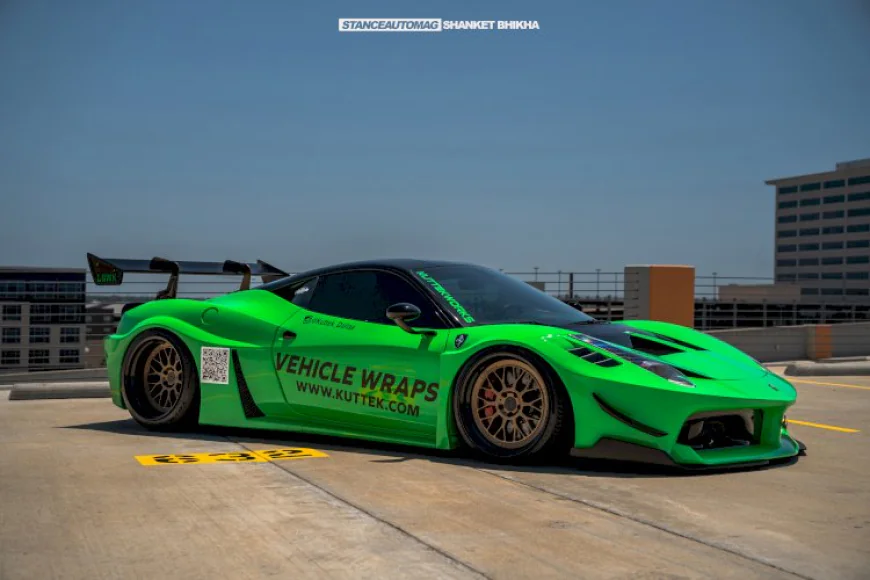
A Lamborghini, Ferrari or McLaren already has a low roof and a wide track, so adding exaggerated arches makes those proportions even more extreme. On a Japanese performance car, the same approach can create an entirely different personality.
The important thing is that LB★WORKS treats the body and the wheels as a single visual package.
Is LB★WORKS Only for Supercars?
No, LB★WORKS is not only for supercars; Liberty Walk has developed the style for Japanese cars, European cars, American cars and even smaller or more unusual models.
The official catalogue shows LB★WORKS versions for cars including the BMW M3 E92, BMW M4, Audi R8, Porsche 997, Mercedes-Benz G63, Ford Bronco, Jeep Wrangler, Toyota 86/Subaru BRZ, Suzuki models, Honda NSX, Nissan GT-R and many others.
That expansion is a big reason the style has survived.
If LB★WORKS had remained tied exclusively to expensive Italian supercars, it would have stayed a niche look. Instead, Liberty Walk created a design language that enthusiasts could recognise across very different vehicles.
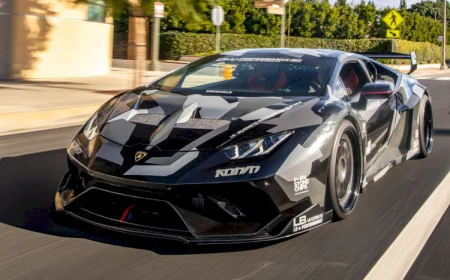
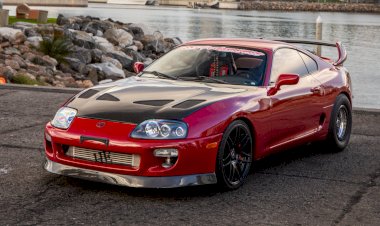
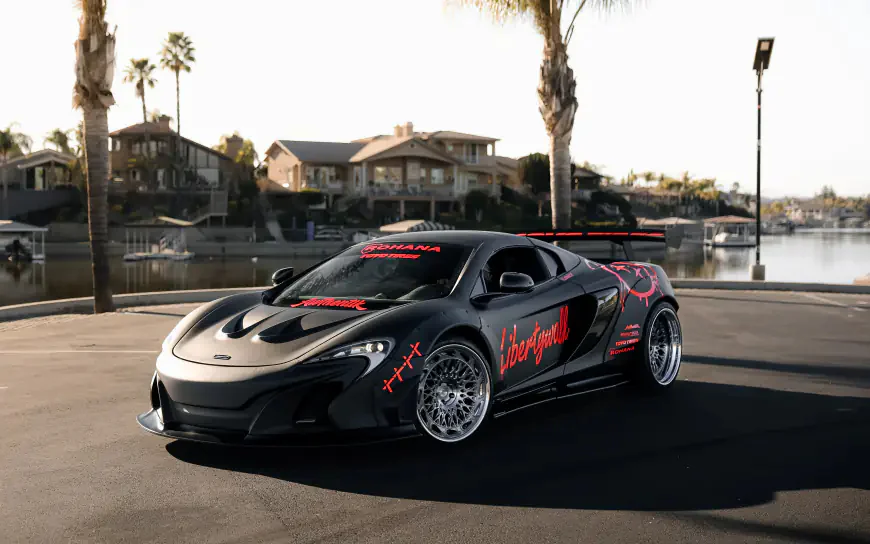
You can see that philosophy in the Liberty Walk cars already featured on Stance Auto, including the Liberty Walk Toyota Supra build, the Lamborghini Huracán Liberty Walk build, the McLaren 650S Liberty Walk build and the Liberty Walk F40.
Those real cars show something a catalogue never quite can: how different owners interpret the same basic philosophy.
What Does LB★WORKS Mean for Japanese Car Culture?
LB★WORKS matters to Japanese car culture because it helped take an established Japanese modification attitude and put it in front of a global audience.
The significance isn't simply that Liberty Walk made widebody kits.
Japan already had a deep custom-car scene. Wide arches, low suspension, aggressive wheel fitment and heavily altered bodywork had existed in various forms for decades. What Liberty Walk did was package that attitude into a recognisable international brand and apply it to cars from manufacturers that enthusiasts around the world already knew.
That crossover changed the conversation around modified supercars.
Before the Liberty Walk movement became established, cutting into a Ferrari or Lamborghini could seem almost sacrilegious. After years of seeing these cars transformed at SEMA, Tokyo Auto Salon and other major events, the idea became far less unusual.
The company even expanded into gaming, signing a Need for Speed licensing agreement in 2015 according to its official history.
That sort of exposure helped move the look beyond specialist tuning circles.
Why Do People Love or Hate LB★WORKS?
People love or hate LB★WORKS because the style deliberately challenges the idea that an expensive car should be left visually untouched.
There is no pretending that a riveted widebody Lamborghini is subtle.
Some enthusiasts see the original shape of a supercar as something that shouldn't be altered. Others see the same car as an opportunity to create something personal. LB★WORKS exists firmly on the second side of that argument.
That's actually a strength.
Car culture needs styles that create an opinion. If everybody agrees, the build probably isn't pushing very far.
Liberty Walk's own history acknowledges that its approach has attracted criticism, but frames that criticism as part of its philosophy of freedom of expression. The company also says every LB★WORKS car is handcrafted individually and that mass production is not its principle, with the aim that no two cars should be exactly the same.
That helps explain why the style has remained so recognisable. It isn't trying to make every car identical.
It's trying to make every car unmistakable.

What Cars Are Famous for Having LB★WORKS Kits?
Some of the most famous LB★WORKS cars are the Lamborghini Murciélago, Lamborghini Aventador and Huracán, Ferrari 458, Nissan GT-R, BMW M3 E92, Porsche 997 and a growing collection of Japanese, American and European models.
The Murciélago remains the historic reference point, but Liberty Walk's official body-kit archive shows how far the idea has travelled. The catalogue now includes everything from Lamborghini and Ferrari to Nissan, Toyota, BMW, Porsche, Audi, Mercedes-Benz, Ford, Jeep, Honda and Suzuki.
The Lamborghini connection is still particularly strong. Liberty Walk currently lists numerous Lamborghini interpretations, including LB★WORKS Murciélago, Huracán and Aventador models alongside the more extreme LB-Silhouette WORKS cars.
For anyone wanting to explore the cars beyond the history, Liberty Walk's official body-kit range is a useful reference point.
Is LB★WORKS the Same as Liberty Walk?
LB★WORKS is a Liberty Walk brand and styling programme, but the terms aren't completely interchangeable.
Liberty Walk is the company and wider automotive brand. LB★WORKS is one of its most recognisable customisation lines. Alongside it, Liberty Walk has developed other labels and styles, including LB★Performance, LB-Silhouette WORKS and various vehicle-specific programmes.
That distinction becomes useful when you start looking through older Liberty Walk history.
The early LB★Performance Murciélago helped establish the company's supercar direction. LB★WORKS then became the more famous widebody identity. Later designs became even more elaborate, including silhouette-style builds that exaggerate the proportions further.
So when somebody says "Liberty Walk", they may be talking about the company as a whole.
When they say "LB★WORKS", they're usually talking about the unmistakable widebody style that helped make the company famous.
What Is the Legacy of LB★WORKS?
The legacy of LB★WORKS is that it helped turn Japanese custom-car attitude into a global visual language for modified cars.
The timeline tells the story neatly. Liberty Walk was established in 1993. The LB★Performance Murciélago appeared in 2008, reached SEMA in 2009 and the LB★WORKS Murciélago was announced in 2012. By 2013 the company had taken the Murciélago prototype to Italy for Lamborghini's 50th anniversary celebrations and offered a limited run of LB★WORKS Murciélagos.
From there, the style spread across manufacturers and markets.
But the real legacy isn't a particular bumper or over-fender.
It's the idea behind them.
A car doesn't have to remain exactly how the manufacturer delivered it. A supercar doesn't have to be treated like a museum piece. A Japanese modification philosophy can be applied to a Lamborghini, a Nissan GT-R, a Porsche, a BMW or a car that costs a fraction of any of them.
That's what LB★WORKS made normal.
It gave people permission to be excessive.
And in a car scene where originality is becoming harder to find, that still counts for a lot.

LB★WORKS Is More Than a Widebody Kit
So, what is LB★WORKS?
It is Liberty Walk's signature expression of Japanese custom-car culture — a deliberately wide, low and aggressive approach to modifying cars that grew from the company's early supercar work and became globally recognised through the Lamborghini Murciélago.
But the interesting part isn't really the arches.
It's the attitude behind them.
LB★WORKS took the old Japanese idea of kaizō, of cutting, changing and rebuilding a car to make it personal, and put it on some of the world's most recognisable performance cars. The result was never going to please everyone, and that was probably part of the point.
From the original Murciélago to modern GT-Rs, Porsches, BMWs and Japanese builds, LB★WORKS has become a visual shorthand for a certain kind of automotive rebellion.
If the Wataru Kato story explains the man behind Liberty Walk, and our Liberty Walk: The Art of Automotive Transformation article looks at the wider philosophy, this is the bit that ties the two together: LB★WORKS is where Liberty Walk's Japanese modification philosophy became a global style of its own.
For more modified-car features, Japanese car culture and real-world builds, visit Stance Auto Magazine. You can also find the magazine through our Amazon store.
 Like
0
Like
0
 Dislike
0
Dislike
0
 Love
0
Love
0
 Funny
0
Funny
0
 Angry
0
Angry
0
 Sad
0
Sad
0
 Wow
0
Wow
0