




















































.png)











![[HOONIGAN] Ken Block's GYMKHANA NINE](https://img.youtube.com/vi/_bkX5VkZg8U/maxresdefault.jpg)




















































![[HOONIGAN] KEN BLOCK'S GYMKHANA SEVEN: WILD IN THE STREETS OF LOS ANGELES](https://cdn.motor1.com/images/mgl/2KlO4/s1/ken-block-london-tour-directors-cut.jpg)































What Is LB-Silhouette WORKS? Liberty Walk's Most Extreme Widebody Style
What is LB-Silhouette WORKS? Discover how Liberty Walk evolved its famous widebody philosophy into an even more dramatic style for supercars and Japanese icons.
What Is LB-Silhouette WORKS?
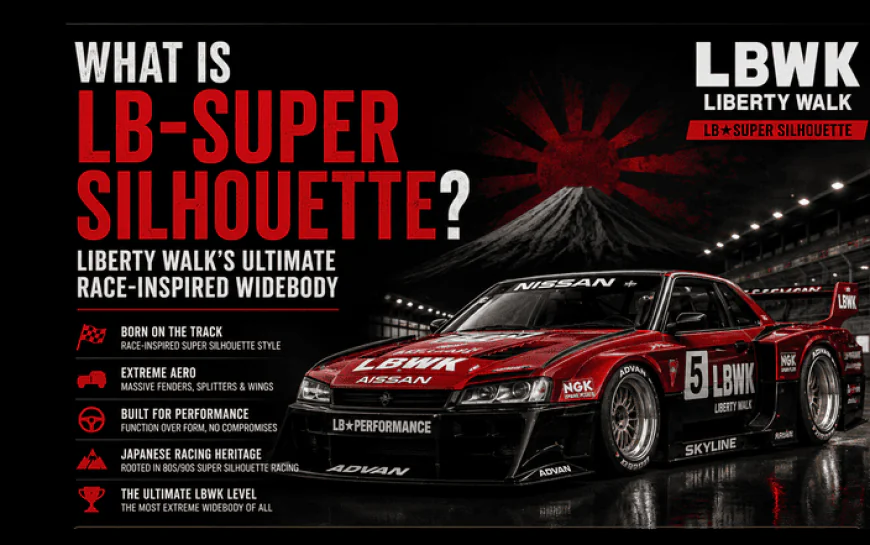
LB-Silhouette WORKS is Liberty Walk's more extreme widebody design programme, combining the company's signature over-fenders and aggressive stance with exaggerated racing-inspired proportions. It developed after the success of LB★WORKS and pushed the idea further, creating cars that look closer to modern interpretations of classic silhouette racers than conventional road-going widebody builds.
If LB★WORKS made Liberty Walk famous, LB-Silhouette WORKS showed what happened when the company decided that wide wasn't quite wide enough.
The visual difference can be dramatic. The arches become larger, the aero becomes more purposeful and the overall body shape can look almost like a racing car that has somehow escaped the circuit and ended up on the road. On some models, the transformation is so extensive that the original car becomes almost secondary to the new silhouette.
And that's the keyword here.
Silhouette.
The idea is to change the outline of the car itself.
How Did LB-Silhouette WORKS Start?
LB-Silhouette WORKS officially became a Liberty Walk brand in 2018, when the company announced the LB-Silhouette Works GT Ferrari 458.
That puts the programme after several important stages in Liberty Walk's development. The company had already established LB★Performance, launched LB★WORKS and expanded its range across Lamborghinis, Ferraris, Nissan GT-Rs, BMWs and other performance cars. According to Liberty Walk's official history, the Silhouette Works GT brand was established in 2018, with the Ferrari 458 announced that year.
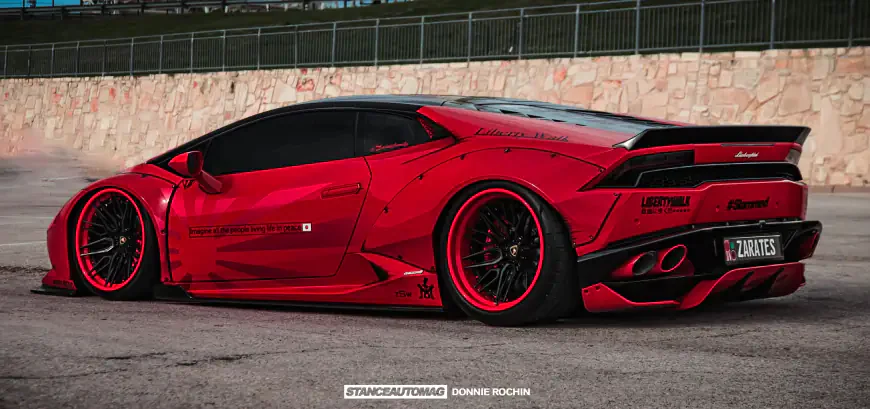
The following year, Liberty Walk announced an LB-Silhouette Works Huracán GT at SEMA. Later came the Aventador GT Evo and Corvette, while the range continued to expand into cars such as the Murciélago, R33 GT-R, ER34 Skyline and Mazda RX-7 FD.
So this wasn't a completely new direction.
It was the next step.
Liberty Walk had already discovered that people wanted cars that looked dramatically different. LB-Silhouette WORKS simply turned the dial much further.
Why Is It Called Silhouette WORKS?
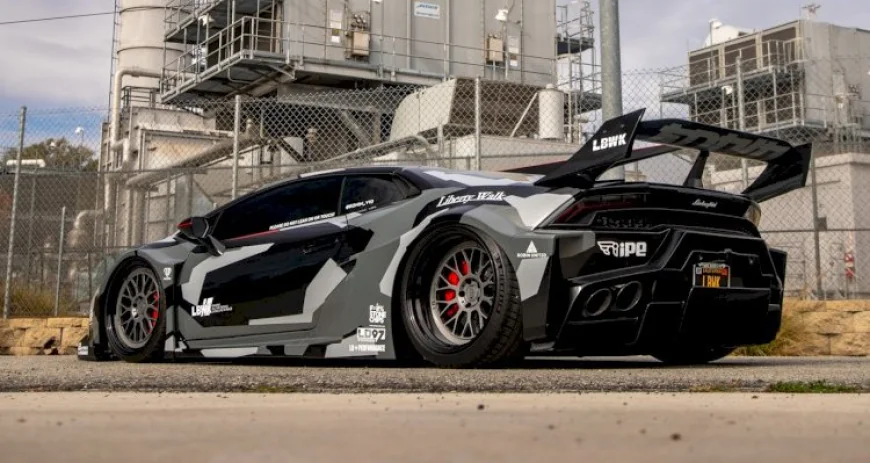
The name Silhouette WORKS reflects the way the design changes the entire outline and visual proportions of the vehicle rather than simply adding a few wider panels.
Think about looking at a normal Ferrari 458 from a distance.
You recognise the roof, the glasshouse, the wheel arches and the basic relationship between the front and rear of the car. Now imagine stretching the arches outward, adding larger aerodynamic sections, changing the stance and fitting wheels that fill the new bodywork.
The car is still a 458.
But its silhouette has changed.
That's what makes the name so appropriate.
The design isn't just about making the car wider. It's about creating a new visual identity around the original platform.
What Makes LB-Silhouette WORKS Different From LB★WORKS?
LB-Silhouette WORKS takes the familiar LB★WORKS formula and pushes it towards a more race-inspired, full-body transformation.
LB★WORKS is already dramatic. Its over-fenders, visible fasteners and aggressive stance became a visual signature for Liberty Walk.
Silhouette WORKS goes further by making the aerodynamic shape feel more integrated into the whole body.
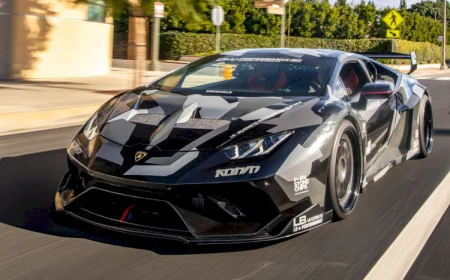
On the Lamborghini Huracán, Ferrari 458 and other models, the effect is much more than simply bolting on larger arches. The front and rear proportions, side sections and aero elements work together to create a more complete transformation.
Then there are the LB-Super Silhouette cars.
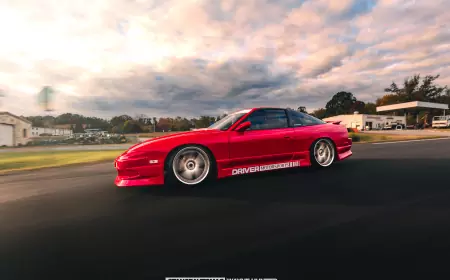
Those take the idea into another direction again, drawing heavily from the visual language of Japanese racing machines and classic silhouette cars. Liberty Walk's current catalogue includes Super Silhouette versions of the Nissan 180SX, R32 Skyline, Mazda FD3S RX-7, S15 Silvia and ER34 Skyline.
That distinction is worth remembering.
LB-Silhouette WORKS is the broader design family, while LB-Super Silhouette pushes the racing influence even harder.
Why Does LB-Silhouette WORKS Look Like a Race Car?
LB-Silhouette WORKS looks like a race car because Liberty Walk deliberately exaggerates the relationship between the body, wheels and aerodynamic surfaces, borrowing visual cues from competition cars and Japan's historic Works Style culture.
- There is a certain honesty to the design.
- The cars don't try to hide the fact that they're modified.
- The arches are huge. The aero is obvious. The stance is low. The wheels are pushed out to meet the new bodywork.
Instead of smoothing everything into a factory-looking finish, Liberty Walk creates a car that appears to have been rebuilt around its wheels and aerodynamic shape.
That is especially effective on the Japanese Super Silhouette cars, where the connection to historic racing culture becomes much more obvious. The result is aggressive without needing to rely entirely on graphics or bright colours. The body shape does most of the talking.
Which Cars Have LB-Silhouette WORKS Kits?
Liberty Walk's LB-Silhouette WORKS range includes supercars such as the Ferrari 458, Lamborghini Huracán, Lamborghini Murciélago and Aventador, alongside increasingly wild Japanese and American applications.
The current official catalogue lists examples including:
Supercars
- Ferrari 458 GT
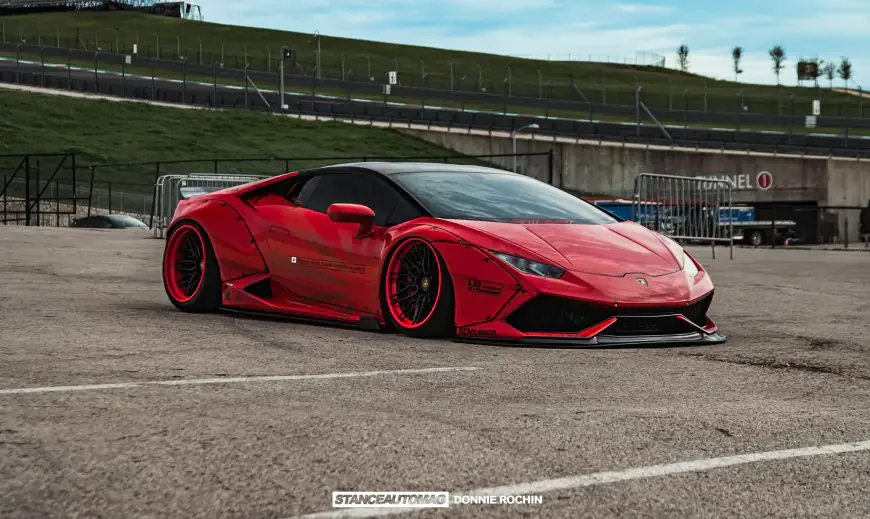
- Lamborghini Huracán GT
- Lamborghini Aventador GT Evo
- Lamborghini Murciélago GT Evo
- Ferrari 458 Full Dry Carbon
- Chevrolet Corvette C8
Japanese Performance Cars
- Nissan Skyline R33 GT-R
- Nissan Skyline R32 Super Silhouette
- Nissan Skyline ER34 Super Silhouette
- Nissan Silvia S15 Super Silhouette
- Mazda RX-7 FD3S Super Silhouette
That variety is important because it shows how Liberty Walk has moved beyond one particular formula.
The same underlying idea can work on an Italian V8, a Japanese rotary coupe or a Nissan GT-R.
What Is the Difference Between LB-Silhouette WORKS and LB-Super Silhouette?
LB-Super Silhouette is the more explicitly racing-inspired branch of Liberty Walk's silhouette philosophy, with designs that reference the dramatic proportions of Japanese Super Silhouette-era competition cars.
This is where the connection to Japanese motorsport becomes particularly interesting.
The classic Super Silhouette category produced some of Japan's most outrageous-looking touring and sports cars, with massive aerodynamic extensions, wide arches and shapes designed to look spectacular as well as perform.
Liberty Walk takes that visual memory and reinterprets it for modern cars.
The Nissan R32 Skyline, Nissan 180SX, Mazda RX-7 FD3S and Nissan Silvia S15 are particularly obvious examples in the current catalogue.
- They're not factory race cars.
- They're modern interpretations of a racing attitude.
And that distinction is important because Liberty Walk isn't simply reproducing an old motorsport body shape. It's using the old visual language as inspiration for modern builds.
Why Is the Ferrari 458 Important to LB-Silhouette WORKS?
The Ferrari 458 is important because it was the model Liberty Walk used to establish the LB-Silhouette WORKS GT brand in 2018.
That first Silhouette Works Ferrari helped demonstrate the direction clearly.
The 458 already had a low, wide and highly sculpted body. Liberty Walk added an even more dramatic interpretation, turning the car into something that looked closer to a GT racer than a standard road-going Ferrari.
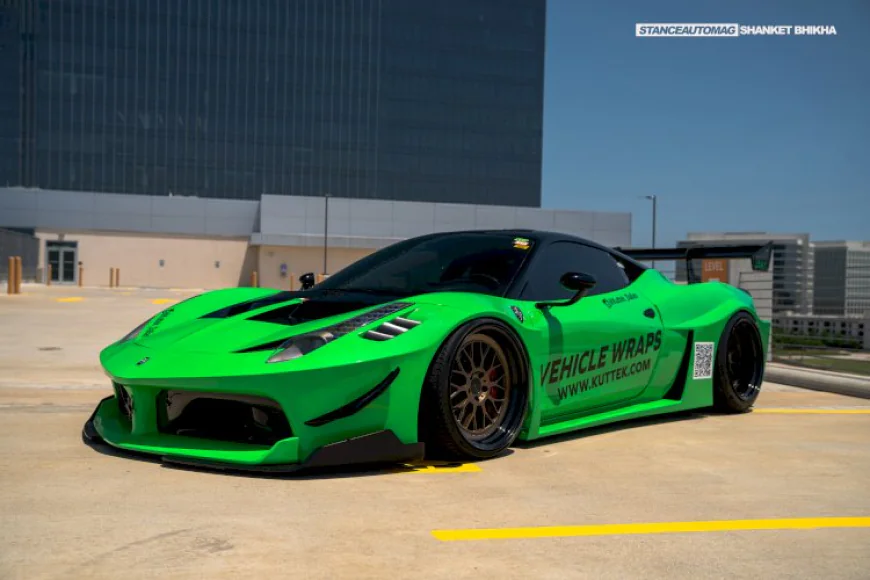
Stance Auto has a real example of this style in its 2011 Ferrari 458 Italia Liberty Walk Silhouette build. The car combines the Liberty Walk Silhouette widebody with Air Lift Performance suspension, a huge chassis-mounted wing, custom wheels and a green wrap.
It's a useful real-world example because it shows how the kit works when an owner takes the basic Liberty Walk design and builds an entire car around it. The result isn't simply a body kit fitted to a Ferrari. The suspension, wheels, aero and finish all reinforce the same visual idea.
What Does a Real LB-Silhouette Build Look Like?
A real LB-Silhouette build works best when the body kit, wheels, suspension and details are treated as one complete design rather than separate modifications.
The Ferrari 458 featured on Stance Auto is a good example. The build uses 20-inch LD97 Forged wheels, Air Lift Performance 3P management, a custom airbag-over-coilover system and Toyo R888R tyres alongside the Liberty Walk Silhouette kit.
The exterior also includes a modified Liberty Walk wing mounted to the chassis, a vented hood, front canards and other details that make the whole car feel like one cohesive project. That is really where the Silhouette idea comes alive: you can fit a widebody kit to a car and stop there, or you can use the new body shape as the starting point for everything else. The second approach is what gives these cars their presence.
How Does LB-Silhouette WORKS Fit Into Liberty Walk's History?
LB-Silhouette WORKS fits into Liberty Walk's history as the next major design stage after LB★Performance and LB★WORKS, taking the company's Japanese widebody philosophy into an even more dramatic direction.
Liberty Walk's official timeline makes the progression fairly clear. LB Performance Murciélago arrived in 2008, LB★WORKS followed in 2012, and the Silhouette Works GT brand was established in 2018. The later timeline includes the Huracán GT, Aventador GT Evo, Corvette and Murciélago GT Evo.
That makes the three names easier to understand.
- LB★Performance introduced Liberty Walk's supercar approach.
- LB★WORKS established the famous widebody identity.
- LB-Silhouette WORKS pushed the proportions and racing influence even further.
They're not unrelated body-kit names.
They're stages in the development of the same broader philosophy.
Why Are LB-Silhouette WORKS Cars So Extreme?
LB-Silhouette WORKS cars are extreme because Liberty Walk deliberately uses excess as part of the design language rather than trying to make the modification disappear.
That approach is especially obvious on the Lamborghini and Ferrari builds.
These are already expensive, dramatic cars. Making them wider and more aggressive could easily have become messy.
Instead, Liberty Walk generally works from the proportions outward.
- The arches create width.
- The wheels fill the arches.
- The suspension brings the car down.
- The aero connects the front and rear.
- And the final silhouette ties everything together.
It's a fairly simple recipe, but getting the proportions right is what makes it work.
The best builds look intentional from every angle.
Does LB-Silhouette WORKS Still Follow Japanese Car Culture?
Yes. LB-Silhouette WORKS still follows Liberty Walk's Japanese custom-car philosophy, even when the underlying car is European or American.
That cultural connection is one of the most interesting parts of the brand.
Liberty Walk's official history describes its broader philosophy around freedom of expression and Japan's rebellious Works Style custom culture. The company says its cars are handcrafted individually and that it aims not to build the same car twice.
That idea explains why the style can move so easily between a Lamborghini, a Ferrari and a Nissan.
- The car changes.
- The attitude doesn't.
- And that's probably the best way to understand Liberty Walk as a whole.
- It isn't really about one body kit.
- It's about a particular way of looking at modification.
Why Has LB-Silhouette WORKS Become So Popular?
LB-Silhouette WORKS has become popular because it offers something that is increasingly difficult to achieve with modern performance cars: a completely different identity.
Manufacturers spend enormous amounts of money making their cars distinctive, but once a model becomes popular, thousands of them eventually exist.
- A widebody can change that.
- A serious Liberty Walk conversion can make a car almost unrecognisable from its factory form.
The Stance Auto archive shows that appeal across several real Liberty Walk builds. The Lamborghini Huracán Liberty Walk was described by its owner as the first Liberty Walk Silhouette GT kit installed on that kind of car in the United States, while the Ferrari 458 build demonstrates how the same design language can be combined with an entirely personalised wheel, suspension and wrap setup.
That's the difference between buying a body kit and building a car.
- The kit gives you the starting point.
- The owner gives it a personality.
LB-Silhouette WORKS Is Liberty Walk Turned Up to Eleven
LB-Silhouette WORKS is essentially Liberty Walk's widebody philosophy pushed into a more dramatic, race-inspired form.
It grew out of the success of LB★WORKS, but it wasn't content to simply repeat the same formula.
The Ferrari 458 established the Silhouette Works GT direction in 2018. The Huracán followed, then the Aventador GT Evo, Corvette and Murciélago GT Evo, while the Super Silhouette branch brought the same exaggerated attitude to cars such as the R32 Skyline, 180SX, RX-7 and S15 Silvia.
That makes LB-Silhouette WORKS one of the clearest examples of how Liberty Walk has evolved.
The company started with Japanese custom-car culture, It applied that thinking to supercars. LB★WORKS made the widebody style globally recognisable. Then Silhouette WORKS asked what would happen if the whole idea became even more extreme. The answer is sitting in the shape of the car itself, and once you understand that, the name makes perfect sense.
If you want to explore the wider story, start with who founded Liberty Walk and the story of Wataru Kato, then read what LB★WORKS actually means and how LB★Performance helped create the Liberty Walk supercar style.
For more modified-car features, Japanese car culture and real-world builds, visit Stance Auto Magazine. You can also find the magazine through our Amazon store.
 Like
0
Like
0
 Dislike
0
Dislike
0
 Love
0
Love
0
 Funny
0
Funny
0
 Angry
0
Angry
0
 Sad
0
Sad
0
 Wow
0
Wow
0