































































.png)









![[HOONIGAN] Ken Block's GYMKHANA NINE](https://img.youtube.com/vi/_bkX5VkZg8U/maxresdefault.jpg)















































![[HOONIGAN] KEN BLOCK'S GYMKHANA SEVEN: WILD IN THE STREETS OF LOS ANGELES](https://cdn.motor1.com/images/mgl/2KlO4/s1/ken-block-london-tour-directors-cut.jpg)



































What Is LB★Performance? Liberty Walk's Original Supercar Widebody Style
What is LB★Performance? Discover how Liberty Walk's original supercar programme helped shape the aggressive widebody style that became the foundation for LB★WORKS.
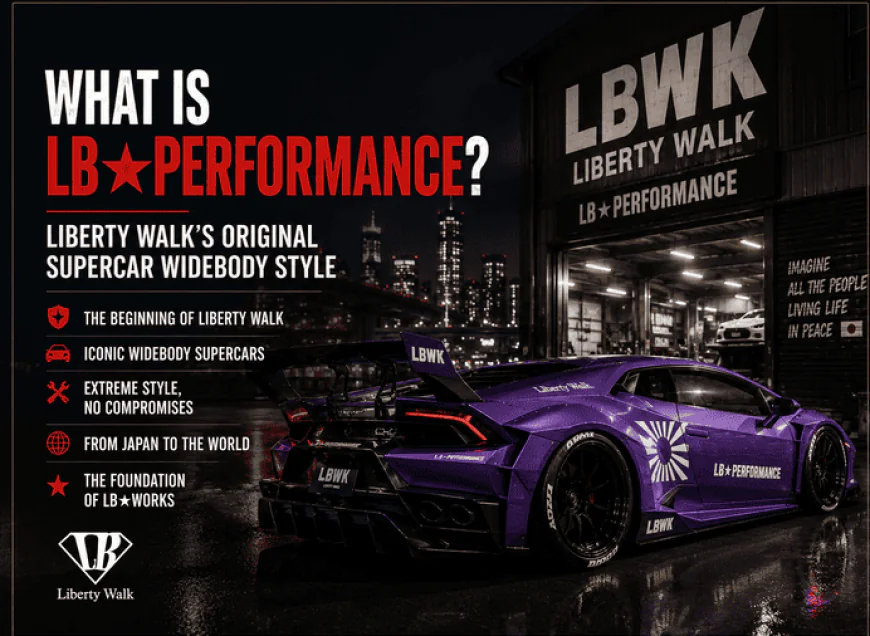
What Is LB★Performance?
LB★Performance was Liberty Walk's original supercar-focused styling programme, taking the company's Japanese approach to dramatic body modification and applying it to exotic cars such as the Lamborghini Murciélago. It was an important step in the development of the Liberty Walk look that would later become famous worldwide through LB★WORKS.
If you've come across Liberty Walk recently, it's easy to assume that LB★WORKS was always the main event. The huge arches, exposed fasteners and ridiculously wide stance are now so closely associated with the company that the name almost feels inseparable from the style.
But there was a stage before that.
LB★Performance was part of the period when Wataru Kato and the Liberty Walk team were proving that their Japanese custom-car philosophy could work on cars that had traditionally been treated very differently. The Lamborghini Murciélago became the crucial example. Instead of leaving an Italian supercar almost untouched, Liberty Walk started asking what would happen if you approached it with the same attitude used to build a seriously modified Japanese car.
The answer was loud, wide and impossible to ignore.
How Did LB★Performance Begin?
LB★Performance developed as Liberty Walk began applying its Japanese modification philosophy to high-end European supercars, with the Lamborghini Murciélago becoming its defining early project.
Liberty Walk's official history records the company's establishment in 1993 and the launch of the LB★Performance Lamborghini Murciélago in 2008. The car then appeared at the SEMA Show in Las Vegas in 2009, giving the company a much larger international stage.
Those dates matter because the project arrived at an important moment for modified-car culture. Japanese tuning had already built a serious international following, but the idea of heavily altering an exotic Italian car still made plenty of enthusiasts uncomfortable.
Liberty Walk didn't seem particularly worried about that.
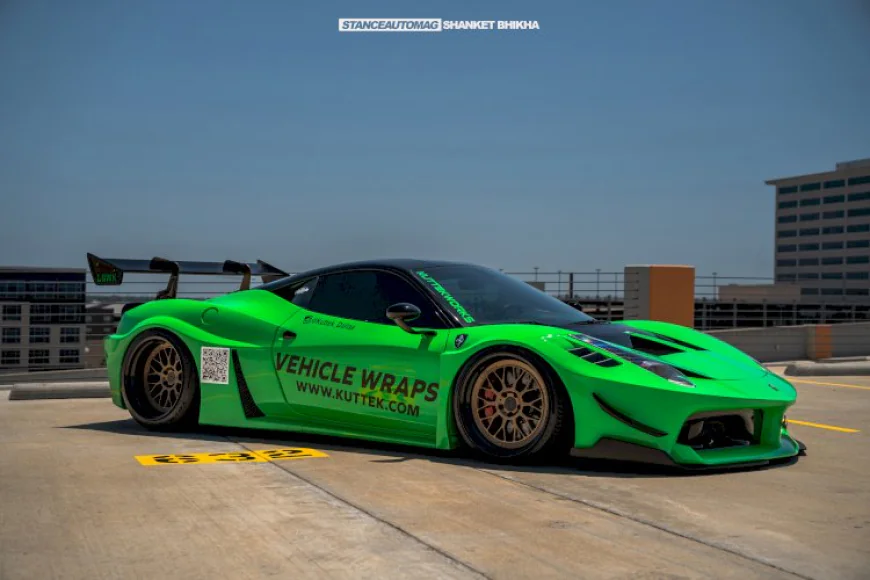
The Murciélago was already a dramatic machine, yet the LB★Performance interpretation pushed it towards the visual language of Japanese custom cars. The body became wider, the stance became more aggressive and the distinction between factory car and modified car became part of the design.
It was less about making a Lamborghini look factory-perfect and more about making it look like your Lamborghini.
Why Was the Lamborghini Murciélago So Important to Liberty Walk?
The Lamborghini Murciélago was important because it gave Liberty Walk a high-profile platform on which to demonstrate that Japanese widebody culture could work on an exotic supercar.
There was a certain amount of madness to the idea.
A Murciélago wasn't a cheap car. It wasn't an obvious candidate for cutting, extending and rebuilding. Its factory shape had been designed by one of the world's most famous supercar manufacturers, so modifying it this aggressively was always going to provoke an opinion.
But that was precisely why it worked.
The LB★Performance Murciélago showed that the principles Liberty Walk had developed within Japanese car culture didn't need to stop at Japanese cars. The same thinking could be applied to an Italian V12.
The result wasn't subtle, and it wasn't supposed to be.
The wide arches changed the proportions of the car while the lower stance and aggressive aero made it appear even more planted. The wheels became a much bigger part of the visual story, sitting deep inside the widened bodywork rather than simply filling the original arches.
It was the sort of car that could be recognised from halfway across a show.
What Makes LB★Performance Different From a Normal Widebody Kit?
LB★Performance differs from a conventional widebody kit because it treats the body, stance and overall attitude of the car as one design rather than simply adding extra width.
A lot of widebody conversions are designed to look almost factory. The goal is often to make the car wider without making the modification obvious.
Liberty Walk took a different route.
The extra bodywork became part of the identity. The arches could be dramatic, the hardware visible and the stance deliberately extreme. Rather than hiding the fact that the car had been modified, the design celebrated it.
That idea would become even more obvious with LB★WORKS.
LB★Performance therefore makes more sense when you see it as part of the evolution of Liberty Walk's visual language. It wasn't simply another catalogue of body panels. It was a way of asking how far the company's Japanese custom-car philosophy could be pushed.
And once the Murciélago proved the idea worked, there was no obvious reason to stop at one car.
Where Does the Japanese Influence Come From?
The Japanese influence behind LB★Performance comes from a long tradition of modifying cars through kaizō, or modification, rather than simply preserving factory specifications.
Liberty Walk's philosophy connects its work with older Japanese custom-car culture, including the Showa-era scene where owners changed bumpers, lights, arches and bodywork to create something personal.
That background is important because the visual language of Liberty Walk can look strange if you only view it as a modern supercar styling exercise.
Look at it through the lens of Japanese custom culture and it makes more sense.
The idea isn't necessarily that a car should look expensive and untouched. The idea is that a car should reflect the personality of the person building it.
That's why an LB★Performance car can look deliberately raw in places. The visible fasteners, exaggerated arches and aggressive stance aren't imperfections that need to be hidden.
They're part of the message.
What Happened Between LB★Performance and LB★WORKS?
LB★Performance helped establish Liberty Walk's supercar direction, while LB★WORKS later sharpened that philosophy into the distinctive widebody identity most enthusiasts recognise today.
The timeline is useful here.
Liberty Walk says the LB★Performance Murciélago launched in 2008 and appeared at SEMA in 2009. The LB★WORKS Murciélago was announced at SEMA in 2012.
That gap gave Liberty Walk time to refine the idea.
The original supercar work showed that the company could take its Japanese approach into the exotic-car world. LB★WORKS then made the widebody treatment itself the centre of the identity.
The difference can be subtle if you're looking at individual parts, but culturally it's significant.
LB★Performance helped prove the concept.
LB★WORKS turned it into a movement.
That is why the two names are worth understanding separately, even though they sit under the same Liberty Walk umbrella.
Why Did Liberty Walk Put Supercars on Widebody Kits?
Liberty Walk put supercars on widebody kits because widening and lowering an exotic car dramatically changes its proportions and allows the company to express its Japanese custom-car philosophy in a completely different environment.
There was also a practical visual reason.
Supercars already have low roofs, broad tracks and aggressive shapes. Add substantial over-fenders and the silhouette becomes almost cartoonishly wide.
That's not necessarily a criticism.
In the right setting, that excess is exactly what makes the car memorable.
The approach works particularly well with cars like the Murciélago because its original design already has strong geometric lines. The Liberty Walk treatment doesn't need to invent presence from nothing. It exaggerates what is already there.
The wheels become more important too. A wider body needs the right wheel and tyre combination to look balanced, which is why stance and fitment are so closely tied to the LB★Performance philosophy.
The bodywork creates the canvas.
The wheels finish the picture.
Which Cars Became Associated With LB★Performance?
The Lamborghini Murciélago is the car most closely associated with the early LB★Performance story, but Liberty Walk's supercar work expanded into other models as the brand developed.
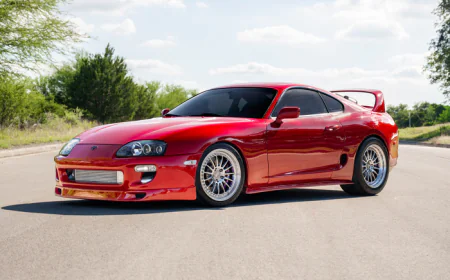
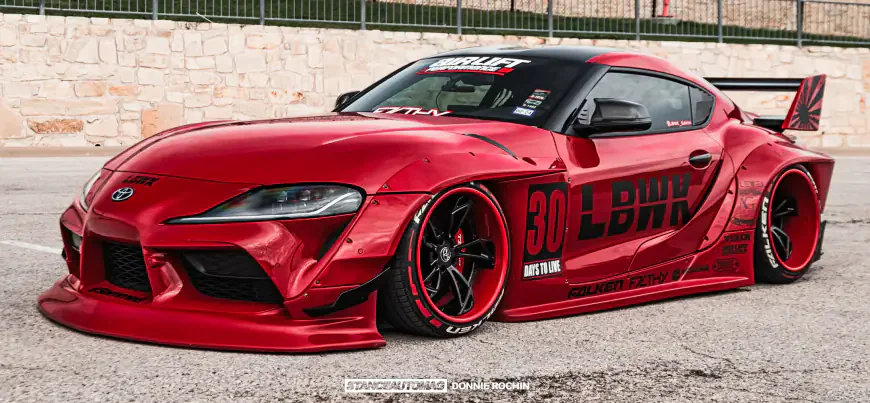
The company's wider body-kit catalogue now covers a huge range of vehicles, and Stance Auto has real-world examples that show just how far that philosophy has travelled. Our Liberty Walk Toyota Supra build, for example, takes the familiar LBWK approach into the modern Japanese performance-car world, while our McLaren 650S Liberty Walk build shows the same attitude applied to a completely different kind of exotic.
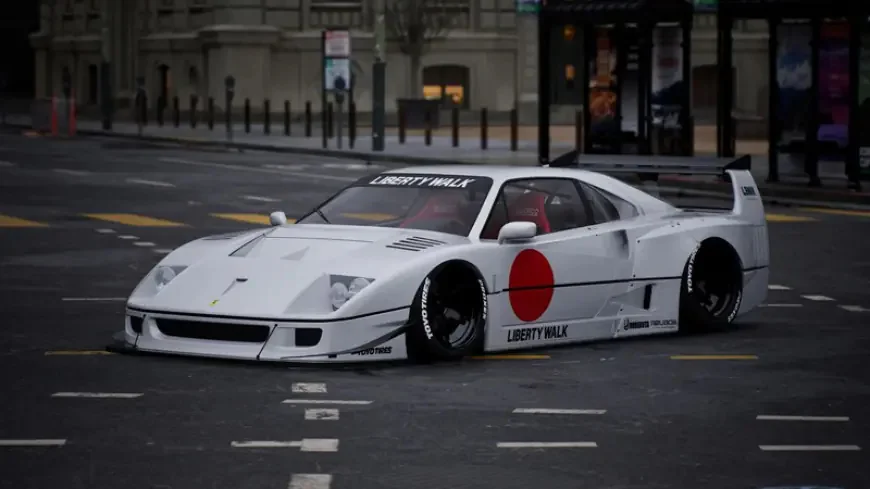
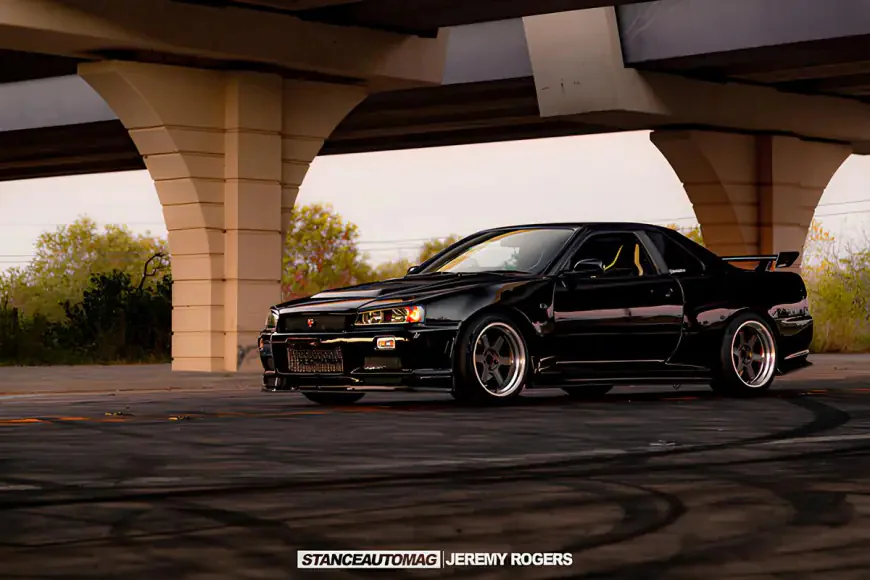
There's also a LibertyWalk Acura NSX build, a Liberty Walk Skyline GTR34, and even the Liberty Walk F40. Looking at those cars side by side makes the point better than any catalogue could: the philosophy was never really about one particular manufacturer.
The Murciélago was the breakthrough.
After that, the question became what other cars could be transformed using the same thinking?
Liberty Walk's answer has been pretty much everything.
And that is part of the reason the company has become so recognisable. You can see an LBWK build without immediately knowing the exact model and still understand the visual language.
How Did LB★Performance Help Change Supercar Modification?
LB★Performance helped change supercar modification by making extreme Japanese-style body modification acceptable, or at least much more visible, on expensive exotic cars.
Before this style became internationally established, there was a stronger expectation that a Ferrari or Lamborghini should remain close to its factory design.
Liberty Walk challenged that idea, and the reaction to its cars is still easy to understand when you look at the real builds. The Liberty Walk F40 is a perfect example because it takes one of Ferrari's most revered shapes and deliberately pushes it into a much more aggressive custom direction. At the other end of the spectrum, the Liberty Walk Skyline GTR34 shows how the same philosophy can feel completely natural on a Japanese icon.
The company effectively asked enthusiasts to stop treating an expensive car as something that could only be admired and start treating it as something that could also be creatively rebuilt.
That doesn't mean everybody suddenly agreed with the approach.
Far from it.
Some enthusiasts still hate seeing rare or expensive cars cut up. Others love the freedom of taking something already special and making it completely personal.
That disagreement is actually part of the appeal.
A good car-culture movement doesn't need universal approval.
It needs people talking.
What Does LB★Performance Mean for Liberty Walk Today?
LB★Performance remains important because it represents the stage when Liberty Walk established its identity in the international supercar world before LB★WORKS became the dominant name.
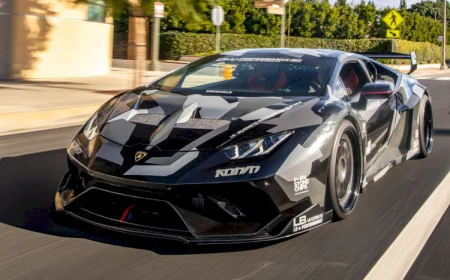
Today, when people see an LBWK Lamborghini or Ferrari with massive arches and an aggressive stance, they are seeing the result of years of experimentation. You can see that progression in the real cars featured on Stance Auto, from the Liberty Walk Lamborghini Huracán to the McLaren 650S Liberty Walk.
The early LB★Performance projects helped establish that Liberty Walk could work with exotic machinery without losing its Japanese identity.
The company didn't need to become a traditional European tuning house.
It could remain Japanese and bring that perspective into the supercar world.
That's a surprisingly important distinction.
Liberty Walk didn't simply copy European styling trends and add wider arches. It brought a different automotive culture to the conversation.
And that difference is still visible in its cars.
What Is the Relationship Between LB★Performance and Wataru Kato?
Wataru Kato is central to the LB★Performance story because his personal approach to Japanese car culture helped shape the philosophy Liberty Walk brought to the supercar market.
Kato's story is worth understanding alongside the cars because Liberty Walk has always presented its work as something driven by passion rather than purely commercial product development.
The early Murciélago project is particularly significant. According to Liberty Walk's own history, the original LB★WORKS Murciélago prototype was based on the Lamborghini of Kato's close friend and customer, and Kato had promised to make the car famous before his friend's death.
That story helps put the later LB★WORKS success into perspective.
The cars weren't appearing from nowhere.
They came from relationships, ideas and a willingness to experiment.
If you haven't read it yet, our article on Who Founded Liberty Walk? The Story of Wataru Kato and LB★WORKS gives the background on the man who built the company and the philosophy behind it.
Why Does LB★Performance Still Matter?
LB★Performance still matters because it was one of the key steps that turned Liberty Walk from a Japanese custom-car business into a globally recognised automotive design brand.
The later LB★WORKS name may be more famous, but the earlier LB★Performance work shouldn't be forgotten.
Without those first supercar projects, the visual language that became associated with LBWK would have developed very differently.
The Murciélago proved that the idea had international potential. SEMA gave Liberty Walk an enormous stage. The attention created an audience. And that audience gave the company room to develop even more ambitious projects.
From there came the next stage.
LB★WORKS.
And that is where the widebody philosophy really exploded.
LB★Performance Was the Beginning, Not the End
LB★Performance is best understood as the bridge between Liberty Walk's Japanese custom-car roots and the global LB★WORKS movement that followed.
The Lamborghini Murciélago was the crucial early statement. It showed what happened when a Japanese approach to modification was applied to an Italian V12 without trying to soften the result.
- The arches were wide.
- The stance was low.
- The bodywork was obvious.
- And the car had attitude.
That combination became the foundation for something much bigger.
LB★Performance helped Liberty Walk prove that its ideas could travel. LB★WORKS then took those ideas and gave them a name that enthusiasts around the world would recognise.
The next question is the obvious one: what exactly is LB★WORKS, and why did it become so influential?
For more modified-car features, Japanese car culture and real-world builds, visit Stance Auto Magazine. You can also find the magazine through our Amazon store.
 Like
0
Like
0
 Dislike
0
Dislike
0
 Love
0
Love
0
 Funny
0
Funny
0
 Angry
0
Angry
0
 Sad
0
Sad
0
 Wow
0
Wow
0